
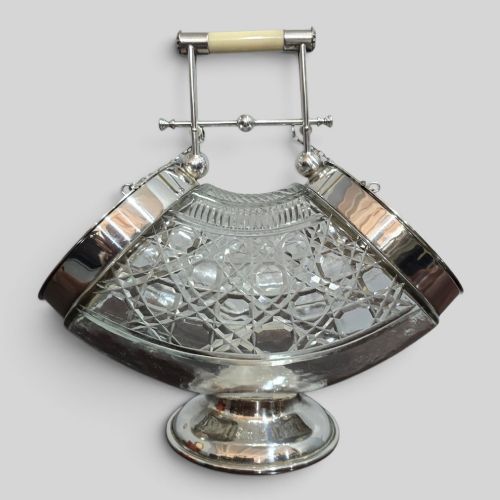
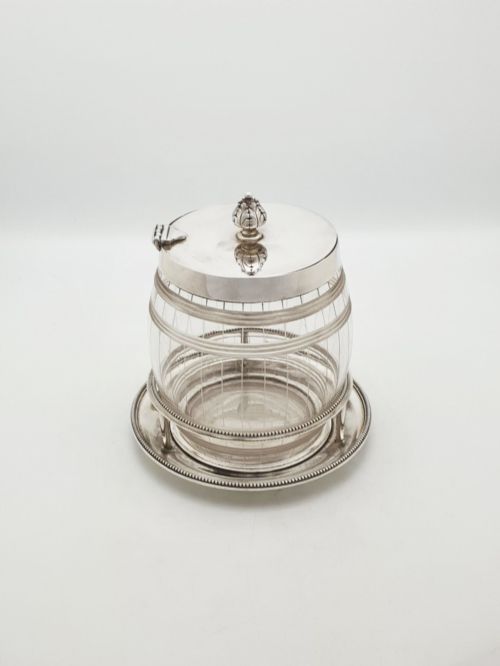
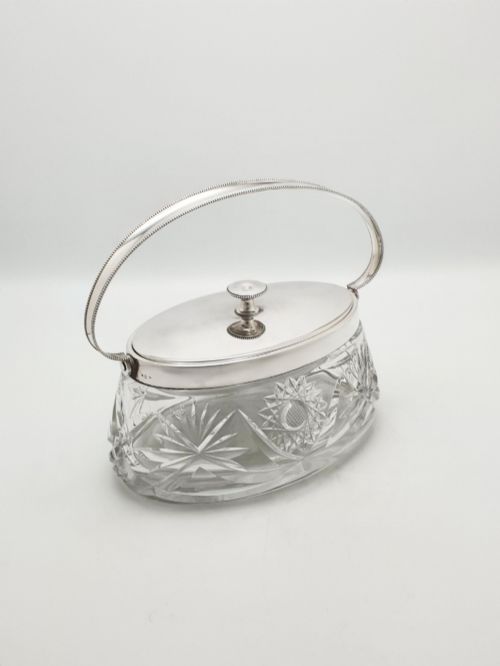


Silver Plate Glass Barrel
A silver plate glass barrel brings Victorian and Edwardian dining tables a wonderful combination of practical storage and sparkling presentation.
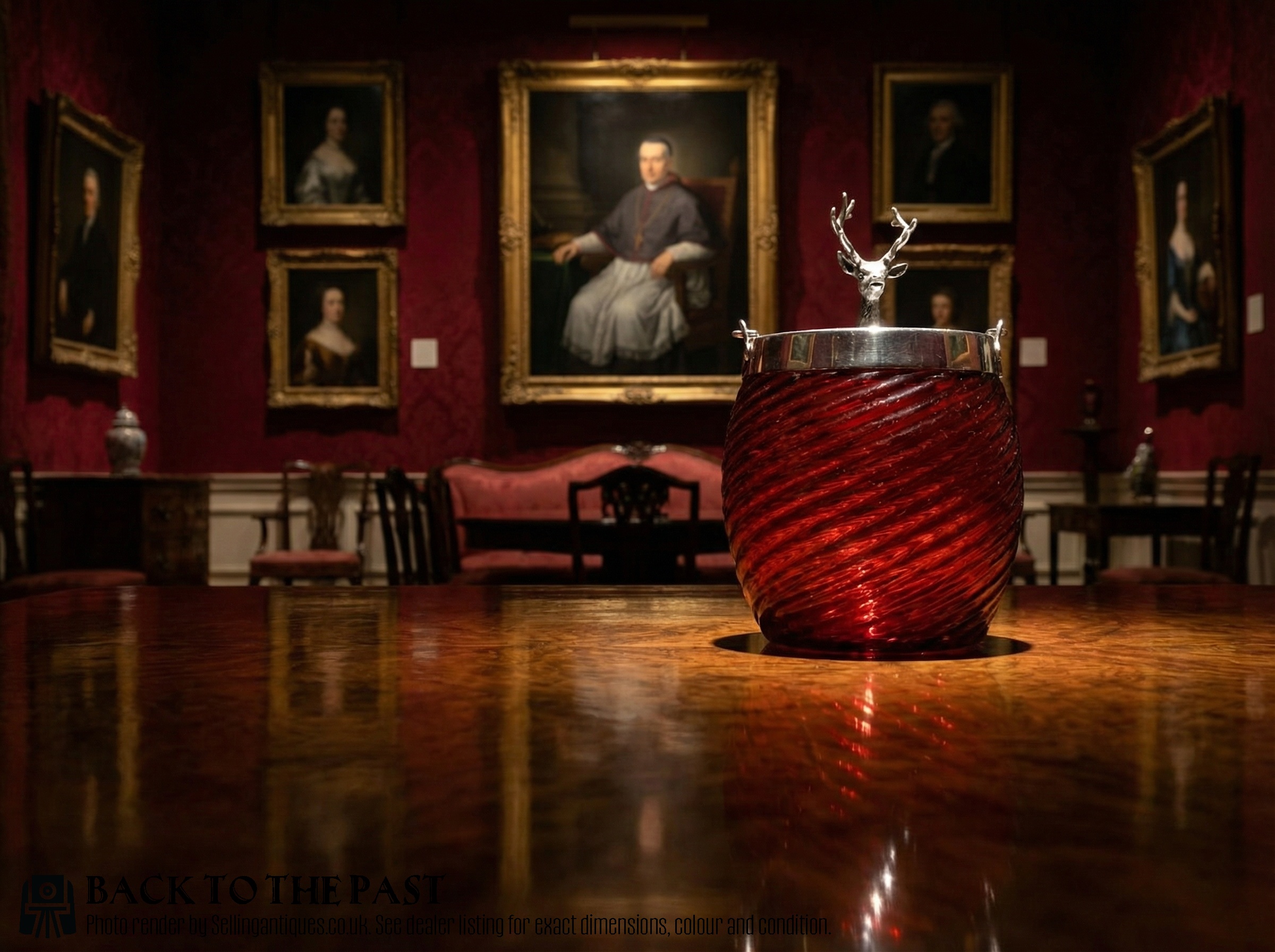
Silver Plate Glass Barrel
A silver plate glass barrel is primarily encountered on this page as a biscuit barrel, a container designed to keep biscuits fresh on the parlour sideboard. The selection spans the Victorian, Edwardian, and Art Deco periods, encompassing pieces made during the nineteenth and early twentieth centuries.
Beyond biscuit storage, the form extends to spirit barrels, brandy barrels, water jugs, and ice pails equipped with taps and stands. These vessels frequently feature heavy glass bodies paired with cast and plated mounts, handles, and hinged lids.
Materials and Technique
Makers utilised heavy-walled glass, cutting and faceting the material into hobnail patterns, fern engravings, or twisted three-handled forms, while alternative examples employed vibrant cranberry glass and frosted crystal. This glass body was then fitted with electroplated mounts, swing handles, and finials cast in base metals.
Internal mechanisms and accessories often included cork seals, silver-plated spigots, and matching stands or tot pails, combining glassblowing with metal plating and smithing techniques.
Heraldic dragon finials peer down from Victorian lids, standing guard over nineteenth-century biscuit supplies.
Assessing the Pieces
The distinction between standard production and the finest work lies in the depth and clarity of the glass cutting, the weight of the silver plating, and the crispness of cast details such as heraldic finials. Makers who invested in heavier metal mounts and deeply refractive crystal produced substantial vessels that maintain their structural integrity.
Design ambition also divides the range, separating plain cylindrical containers from pierced stands, automated mechanisms, and richly coloured cranberry vessels with gilt highlights.
Elkington·WMF·Walker & Hall·John Grinsell & Sons·Hukin & Heath
The Silver Plate Glass Barrel Glossary
- Biscuit barrel
- A covered ceramic or glass container used in the nineteenth century for serving biscuits at the table. These vessels typically sit on a sideboard and feature a hinged metal lid.
- Silver plate
- A layer of silver bonded to a base metal core such as nickel silver or Britannia metal. This process gained widespread popularity during the Victorian era for domestic tableware.
- Hobnail cut
- A decorative pattern of intersecting faceted cuts on glassware that resembles the hobnails found on heavy boots. It creates a textured, highly reflective surface.
- Spigot
- A small tap or spout fitted to spirit and water barrels for dispensing liquids. They often incorporate a cork or ground glass seal to prevent leaks.
- Finial
- A decorative knob or ornament attached to the top of a lid. On these barrels, they frequently take the form of heraldic animals or cast foliage.
Silver Plate Glass Barrel: Frequently Asked Questions
What were silver plate glass barrels used for?
These vessels served primarily as biscuit boxes or spirit containers in Victorian and Edwardian dining rooms and drawing rooms. Households placed them on sideboards to store dry biscuits or dispense drinks during social gatherings.
The heavy glass body kept contents secure while the silver-plated mounts provided an ornamental appearance suited to formal hospitality. Some variants functioned specifically as water jugs, ice pails, or brandy dispensers with taps.
How do I clean a silver plate glass barrel?
Wash the glass body by hand in warm soapy water using a soft cloth, taking care around engraved or cut surfaces. Avoid submerging plated mounts for extended periods to protect the underlying base metal.
Polish the silver plate gently with a dedicated microfibre cloth and a mild, non-abrasive silver polish. Ensure all parts are completely dry before reassembling the lid and handle.
How can I tell the period of a barrel?
Examine the style of the glass cutting, the weight of the metal mounts, and any maker marks stamped onto the silver plate. Victorian pieces often feature heavy hobnail or fern engravings paired with elaborate cast finials.
Edwardian and later twentieth-century examples frequently show simpler geometric facets, Jugendstil influences, or cleaner lines associated with Art Deco design. Maker stamps also help narrow down the decade of production.
Are replacement liners easy to find?
Original glass liners were individually fitted to each metal frame during manufacture, meaning direct replacements are uncommon. Finding an exact match for depth and rim diameter requires searching specialist antique suppliers.
Many surviving pieces retain their original glass bodies, which remain the most desirable configuration for collectors. Checking measurements carefully is essential if a replacement liner is needed.