
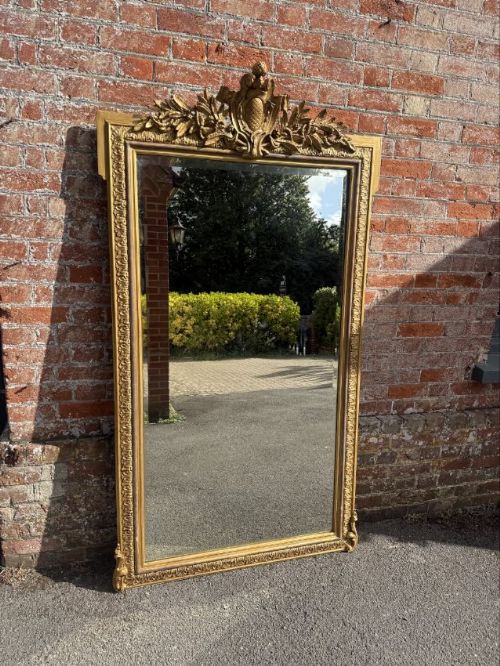
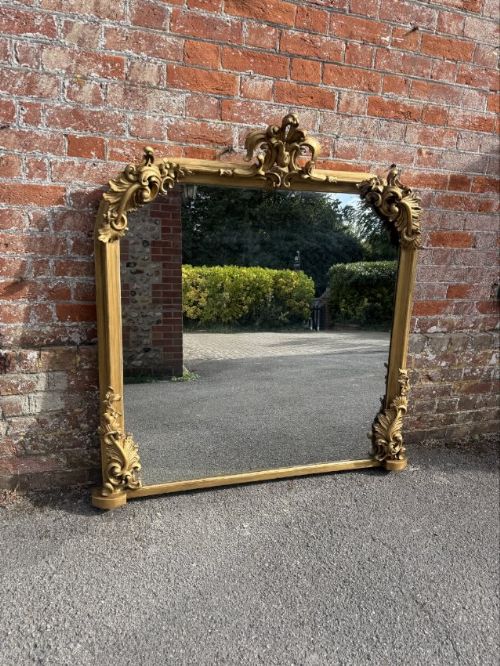
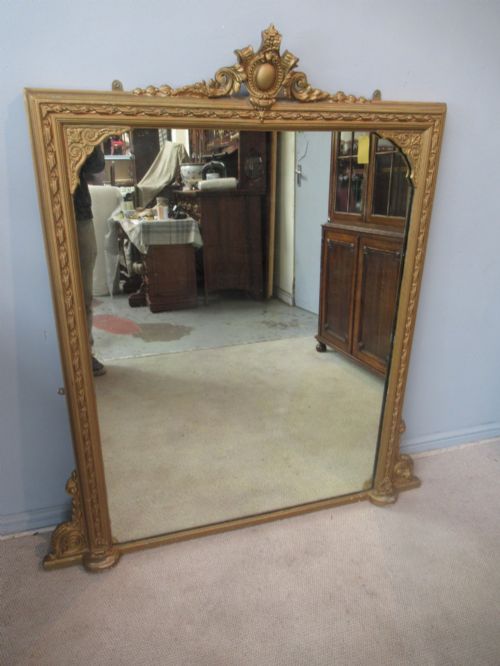
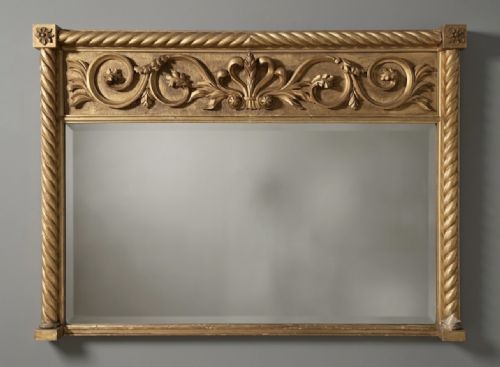
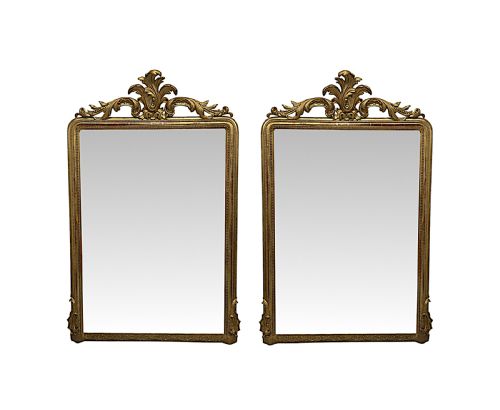
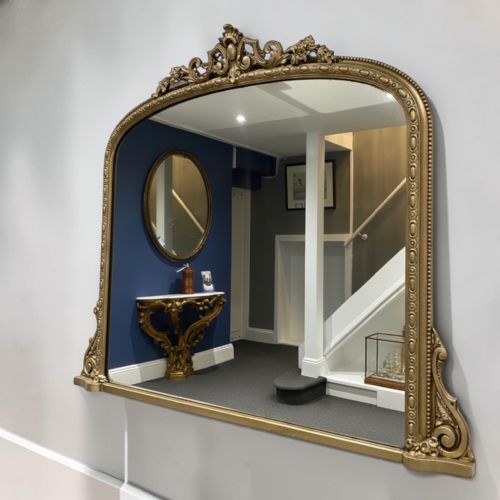
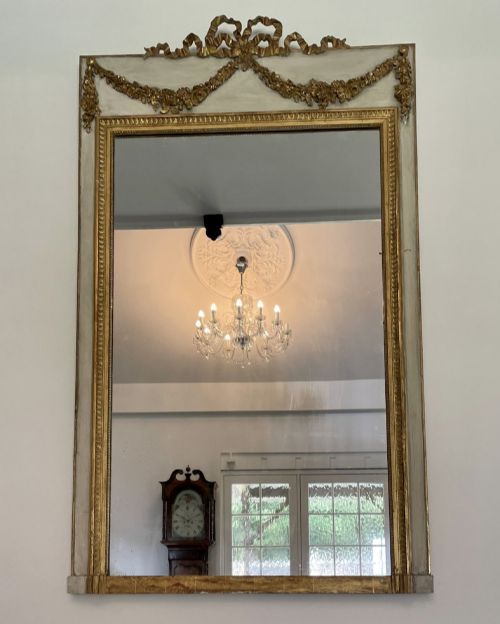
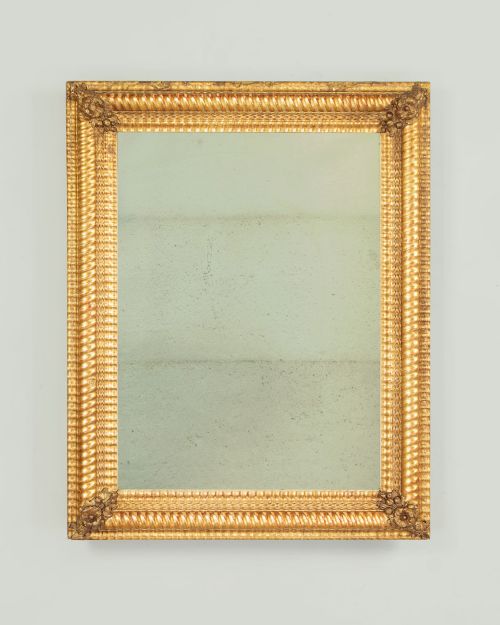
Victorian Giltwood Overmantel
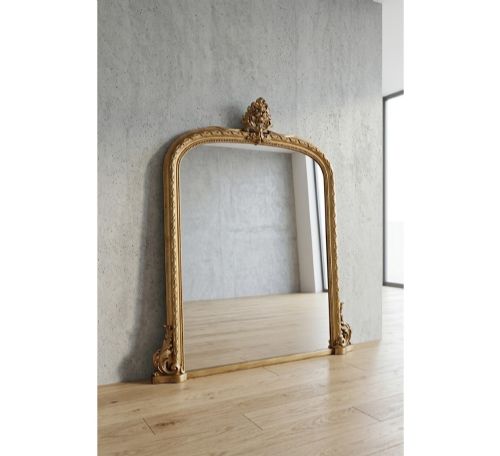
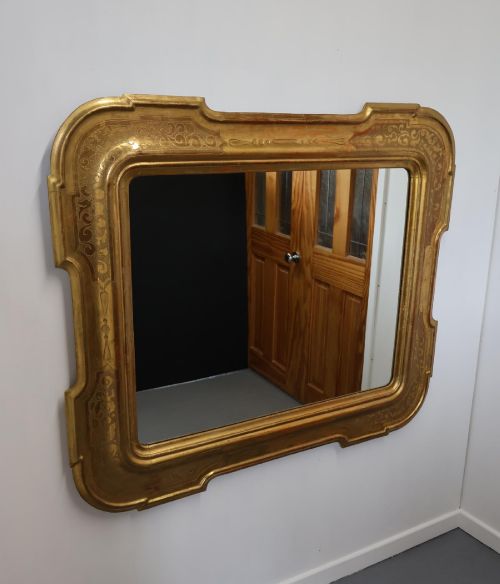
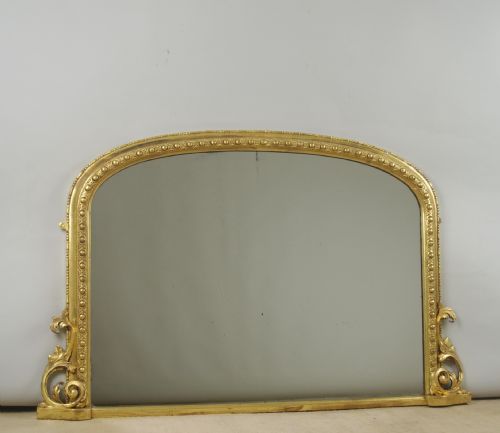
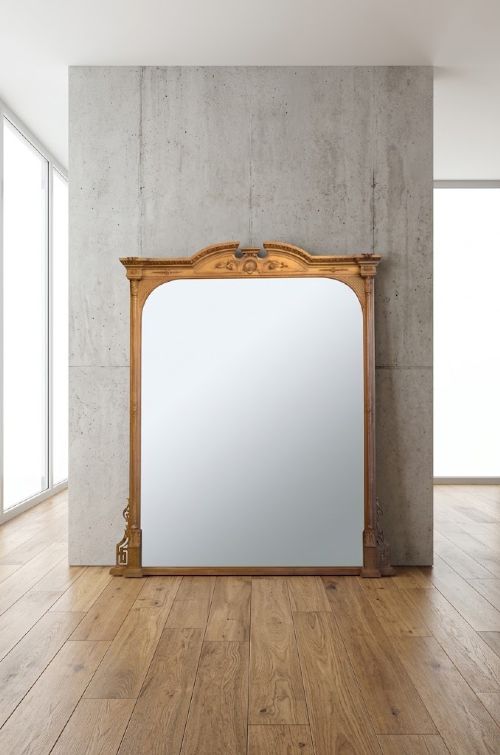
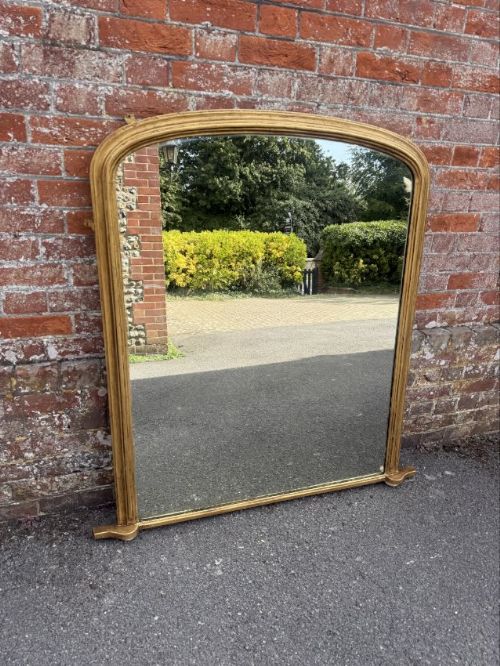
A victorian giltwood overmantel brings grand scale and reflective light to a room, framing a fireplace with nineteenth-century presence.
Victorian Giltwood Overmantel
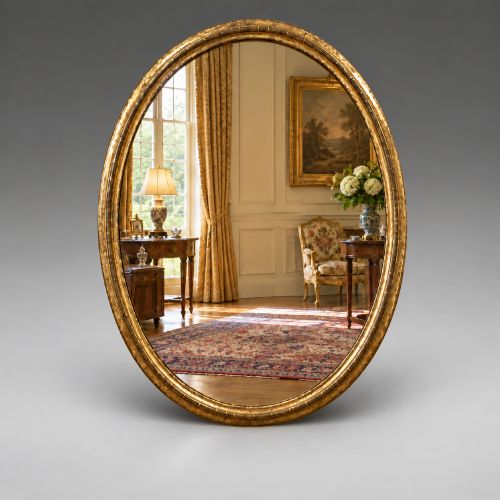
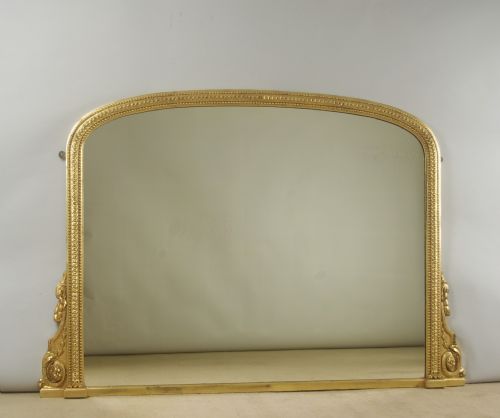
A victorian giltwood overmantel is a large mirror designed to sit above a mantelpiece, reflecting interior light and anchoring the fireplace wall. The pieces found here span the nineteenth century, including examples from the eighteen-fifties through to nineteen hundred, and originate from both English and French workshops.
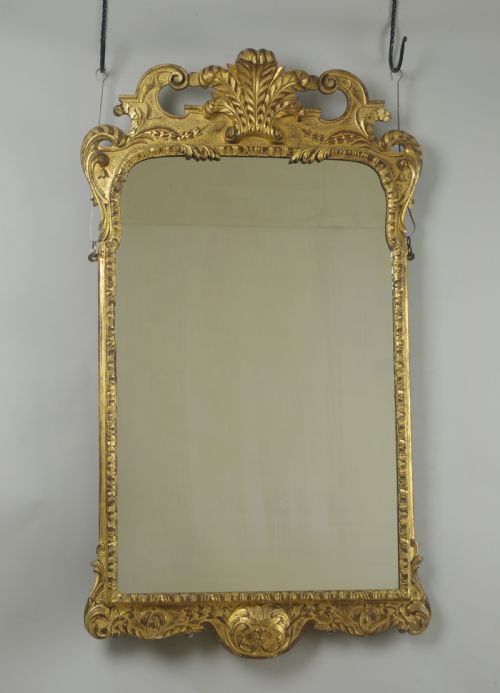
Most examples present substantial proportions, often featuring arched tops, shaped frames, or triple plate configurations. Stylistic influences vary widely across the selection, ranging from Rococo Revival and French Chateau designs to Chinese Chippendale and Florentine interpretations.
How They Were Made
Carved wooden foundations provide the structural framework for these mirrors, shaped from timber before receiving applied layers of gesso to build up intricate surface details. Artisans then gilded these prepared surfaces using gold leaf or applied compositions to achieve a brilliant metallic finish.
The glazing consists of mirror glass, frequently featuring bevelled edges or displaying natural ageing in the form of foxing. Frames incorporate decorative motifs such as acanthus leaves, rope twists, hour-glass ribbing, and tulip carvings.
What Varies in Quality
The definition and depth of the hand-carved wood and gesso ornamentation separate standard production from exceptional examples. Crisp relief work in motifs like acanthus leaves or rope twists indicates superior craftsmanship.
The preservation of the original silvered plate and the character of the glass itself influence desirability. Authentic period mirror plates with original foxing carry distinct historical charm compared to modern replacements.
John Taylor And Son
The Victorian Giltwood Overmantel Glossary
- Overmantel
- A mirror specifically proportioned to hang on the wall directly above a fireplace mantel. These pieces were traditionally designed to coordinate with the architecture of nineteenth-century reception rooms.
- Gesso
- A plaster-like mixture applied to a wooden frame to create a smooth surface for gilding. It allows craftsmen to model deep, intricate relief details before the application of gold leaf.
- Foxing
- The natural oxidation and ageing of a mirror plate that creates dark spots and speckled patterns. This chemical change occurs over many decades beneath the glass surface.
- Giltwood
- Timber that has been coated with gold leaf or gold paint to give the appearance of solid gold. It defines the bright, reflective aesthetic characteristic of nineteenth-century reception mirrors.
- Pier glass
- A tall mirror designed to hang on the pier, the section of wall space situated between two windows. These mirrors reflect additional daylight into the centre of a room.
Victorian Giltwood Overmantel: Frequently Asked Questions
Where should an overmantel mirror be hung?
These mirrors are traditionally positioned directly above a fireplace mantelpiece to anchor the chimney breast and reflect light across the room. Their substantial scale allows them to function as the primary focal point of an interior.
While designed for fireplaces, large examples also work effectively mounted on main salon or hallway walls as standalone statement pieces.
How do I identify a nineteenth-century frame?
Nineteenth-century frames typically utilise heavy timber construction coated with built-up gesso layers beneath gold leaf or gilt finishes. Closer inspection often reveals hand-carved details and period joinery methods unique to the era.
Glass plates of this period may also exhibit characteristic irregularities and natural foxing acquired over generations of exposure.
What is foxed glass on a mirror?
Foxing refers to the natural speckling and dark ageing spots that develop behind the glass surface as the silvering degrades over time. This chemical process occurs gradually across decades and centuries.
Many collectors prize original foxed plates for the authentic historical character and soft reflection they bring to an antique mirror.
Are these mirrors heavy to mount?
These pieces possess substantial weight due to their dense wooden frames, thick gesso mouldings, and large glass plates. Secure wall fixing into structural brickwork or studs is essential for safe installation.
Professional installation is recommended to support the significant load and ensure the frame hangs level above the mantel.