


Victorian Fireplace Glass
Victorian fireplace glass primarily comprises grand overmantel mirrors and decorative firescreens designed to reflect hearthside warmth and candlelight across a nineteenth-century room.
Victorian Fireplace Glass
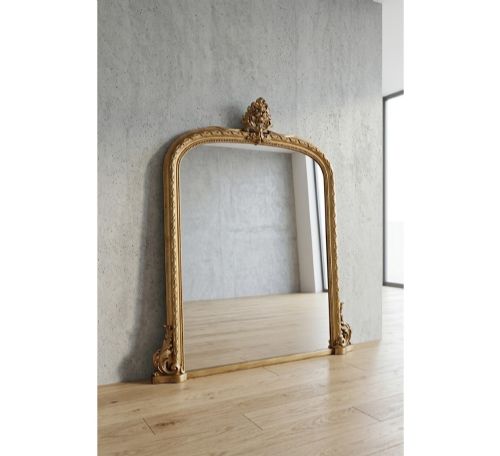
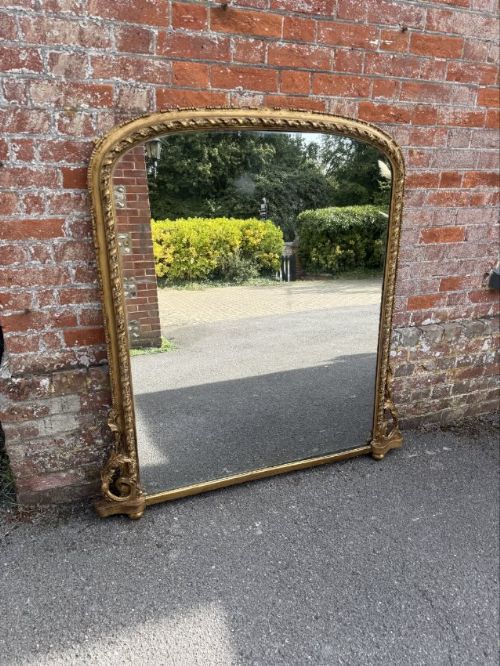
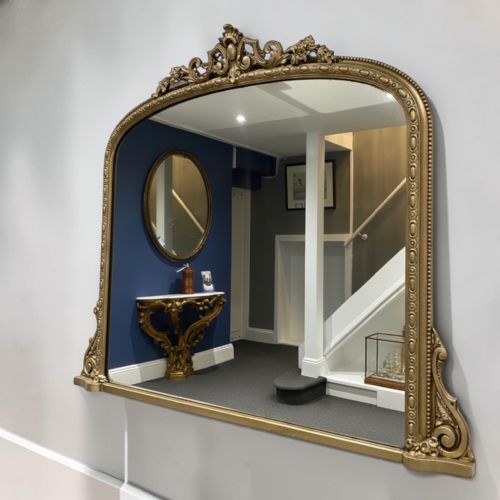
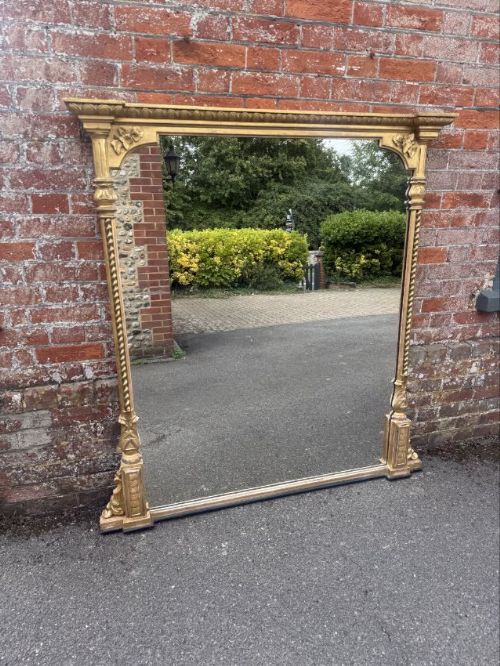
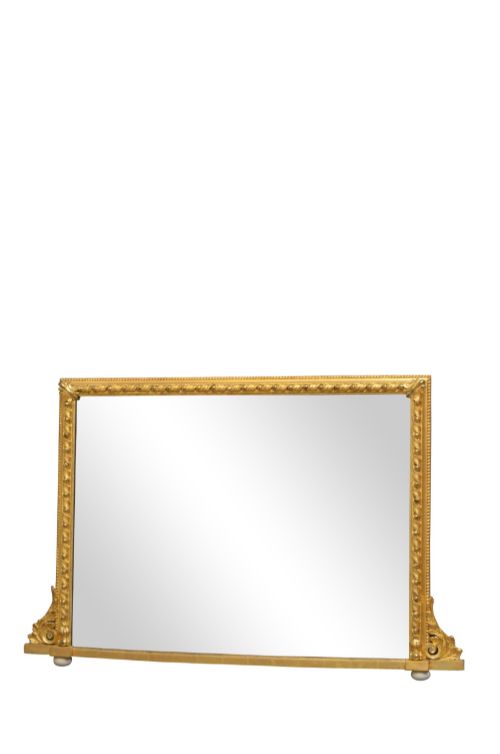
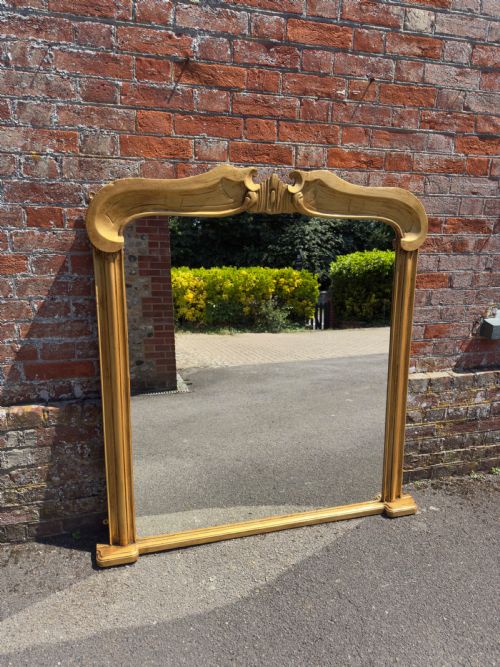
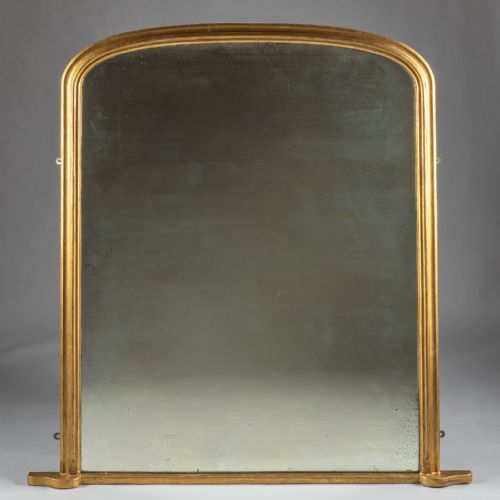
Victorian fireplace glass most commonly takes the form of large overmantel mirrors designed to sit directly upon the mantelpiece shelf above a fireplace. These pieces were built to command the principal reception room, utilising reflective surfaces to amplify natural light and the glow of the hearth during darker months.
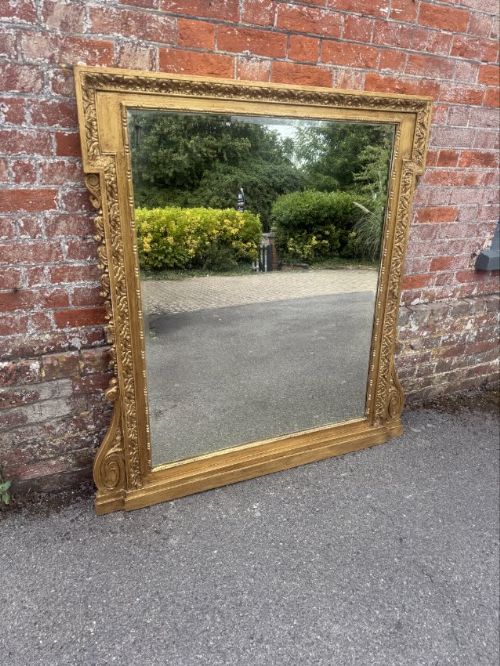
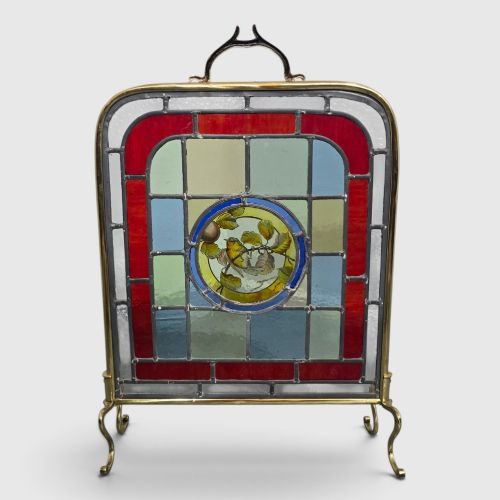
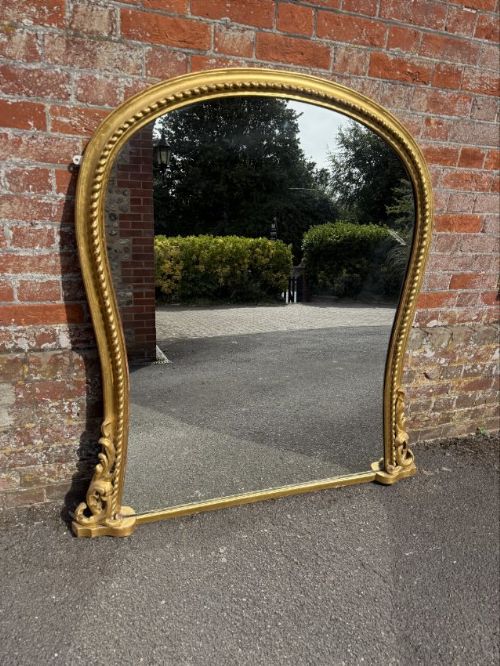
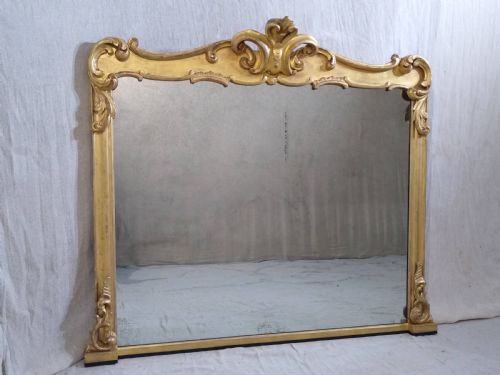
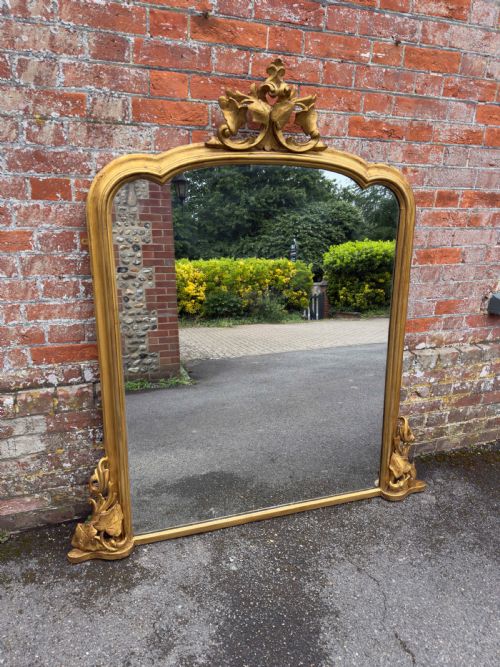
The materials and styles seen across these pieces span the mid to late nineteenth century, reflecting the stylistic shifts from Neoclassical and Rococo Revival to the later Arts and Crafts movement. Examples range from giltwood arched overmantels with intricate gesso ornamentation to iron-framed screens holding vibrant leaded glass.
Materials and Construction
The frames of these large overmantel mirrors rely heavily on carved wood, gesso, and composition applied over a wooden base to take heavy gilding or paint. Craftsmen built up decorative mouldings like rope twists and classical motifs in relief before applying gold leaf or parcel-gilt finishes.
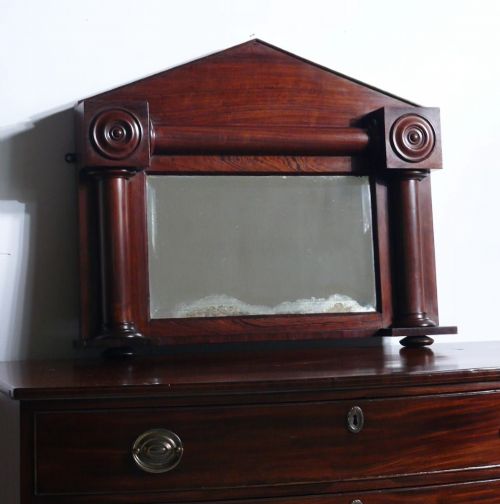
Mirror plates of the period frequently exhibit original silvering characteristics, such as foxing and bevel-cut edges, housed within sturdy wooden carcases of pine, oak, walnut, or mahogany. Fire screens integrate stained glass or decorated panels supported by brass or iron stands.
Some Victorian mirrors spent over a century reflecting the same mantel clock before finally moving to a new home.
Factors of Distinction
Quality in these pieces is dictated by the depth and precision of the carved woodwork and the crispness of the gesso mouldings applied to the frame. Superior examples display hand-modelled relief work and well-balanced proportions that integrate harmoniously with architectural mantelpieces.
The integrity of the original mirror glass and the richness of the gilding also distinguish finer items. Original foxed mirror plates that retain their authentic character without modern replacement hold greater period integrity than heavily restored alternatives.
The Victorian Fireplace Glass Glossary
- Overmantel mirror
- A large mirror specifically proportioned to hang on the wall or rest upon the shelf directly above a fireplace. These frames often feature arched tops or elaborate pediments.
- Gesso
- A plaster-like mixture applied to a wooden frame and carved or moulded into decorative reliefs before gilding. It provides the smooth, textured base for gold leaf.
- Foxed glass
- Mirror glass showing spots, speckles, or discoloration caused by the degradation of the silver backing over decades. Collectors value this natural ageing for its authentic period appearance.
- Rope twist
- A carved wooden moulding resembling a twisted rope, frequently utilised on Victorian mirror frames to add texture and visual movement.
- Firescreen
- A domestic screen placed before a fireplace to protect occupants from excessive heat when a fire was burning, or to hide an empty grate.
Victorian Fireplace Glass: Frequently Asked Questions
What is a Victorian overmantel mirror?
A Victorian overmantel mirror is a large wall or mantel glass specifically designed to sit above a fireplace opening. They were fundamental to nineteenth-century interior schemes for bouncing light around the principal rooms of a house.
These pieces typically feature substantial wooden frames finished in gilt, paint, or natural hardwoods like mahogany and walnut. Their proportions were engineered to match the scale of period mantelpieces.
How were fireplace glass screens used?
Fireplace glass screens served both a decorative and a practical purpose in the nineteenth-century home. During winter, they could deflect excessive radiant heat, while in summer they adorned an unused hearth.
Stained glass screens also added colour and privacy to a room while blocking drafts coming down the chimney flue. They were movable pieces, unlike the fixed overmantel mirrors attached to the wall.
What does original foxed glass mean?
Original foxed glass refers to mirror plates that have aged naturally over time, developing small dark spots or cloudiness in the reflective backing. This chemical alteration occurs as moisture interacts with the silvering behind the glass.
Many buyers look for this characteristic because it proves the mirror plate is contemporary to the Victorian frame rather than a modern replacement. It gives the glass a soft, distinctive sheen.
How do I identify a Neoclassical style mirror?
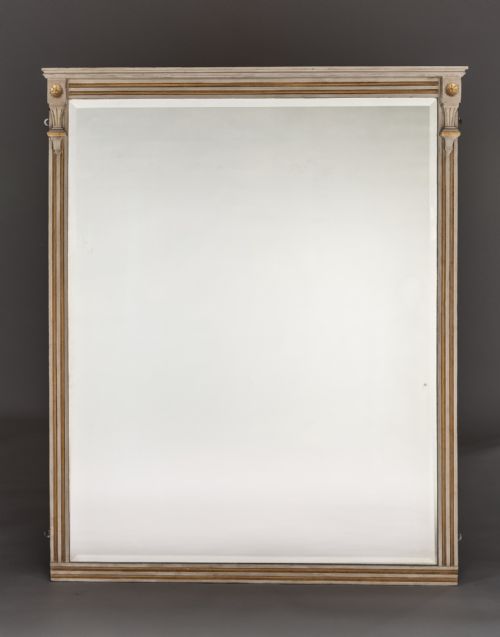
Neoclassical style mirrors draw inspiration from classical Greek and Roman architecture, featuring symmetry, urn motifs, columns, and restrained decorative details. These pieces contrast with the more exuberant curves of Rococo Revival designs.
In Victorian interpretations, you often find crisp linear framing combined with classical ornamentation executed in gesso and giltwood. The overall effect is orderly and architectural.