


Victorian Fretwork Table
These Victorian fretwork tables combine intricate pierced wooden framework with practical surfaces, offering both decorative charm and utility for the home.
Victorian Fretwork Table
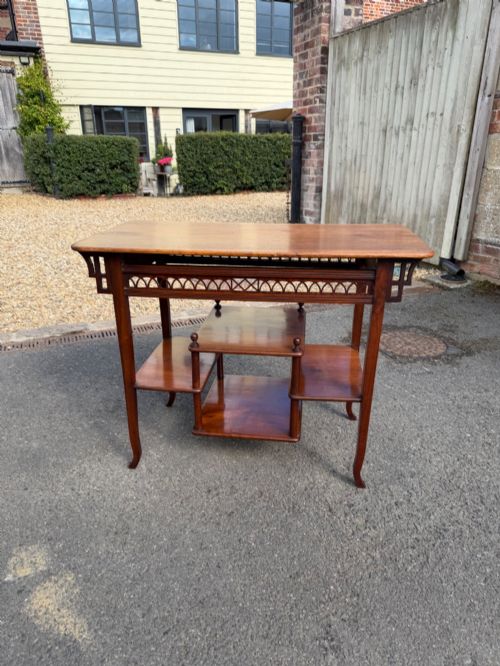
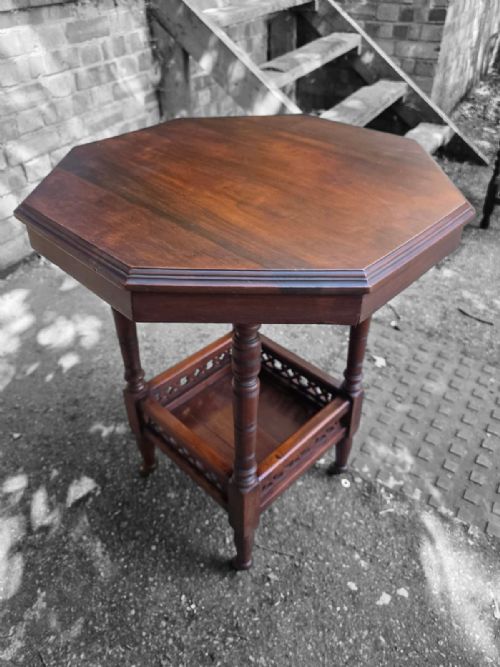
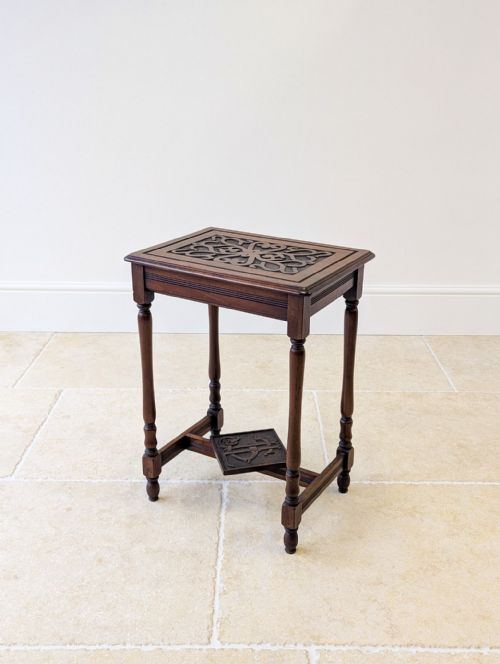
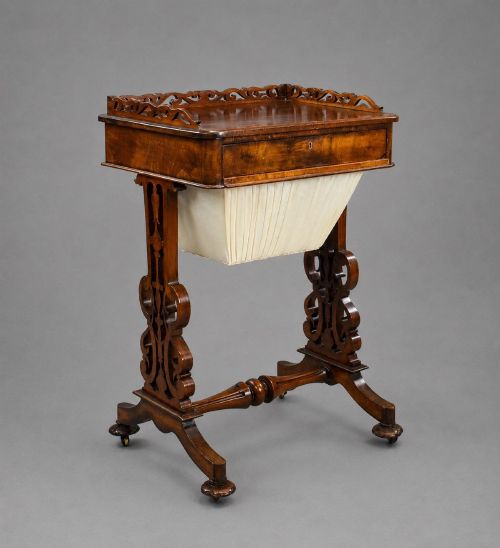
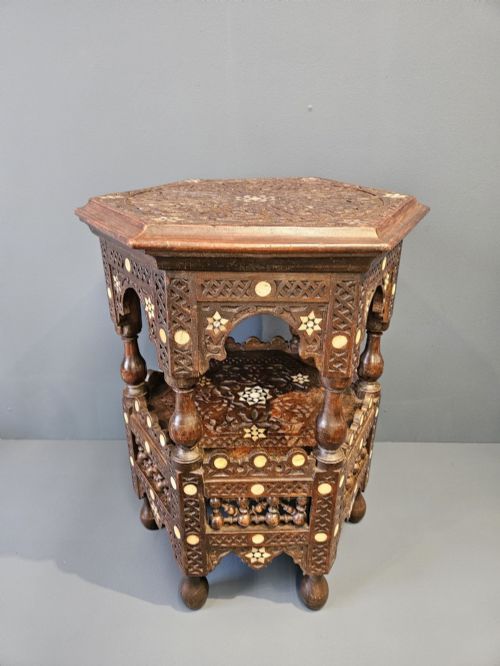
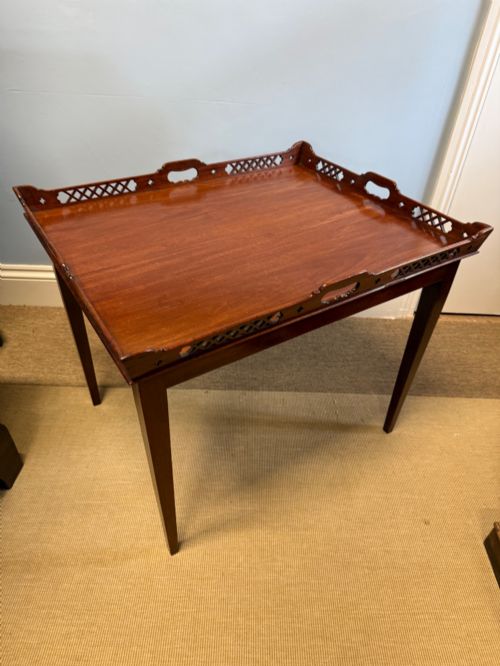
A Victorian fretwork table brings together distinct styles from the nineteenth century, including Chippendale Revival, Aesthetic Movement, and Anglo-Indian designs. These pieces often take the form of occasional tables, side tables, and whatnots that serve multiple functions in a room.
The materials span from rich burr walnut and mahogany to rosewood, teak, and satinwood, often enhanced with brass or ceramic details. Makers of the period drew on diverse global influences, producing everything from octagonal lamp tables to console tables with pierced decoration.
Materials and Technique
Cabinetmakers utilised dense timbers such as mahogany, walnut, and rosewood to provide a stable base for detailed pierced work. These woods were chosen for their deep grain and durability, allowing artisans to cut intricate patterns without compromising the structural integrity of the table.
Joinery techniques combined traditional framing with precise fret-sawing to create openwork panels and brackets. Surfaces were finished to highlight natural figuring, particularly in burr walnut veneers, while carved elements were shaped by hand.
Listings feature items from the Victorian period, spanning the nineteenth and early twentieth centuries.
Evaluating Construction
Quality rests in the crispness of the pierced fretwork and the selection of timber veneers used across the top and sides. Superior examples display sharp edges in the carved details and careful matching of wood grain on prominent surfaces.
The stability of the joints and the weight of the timber indicate the standard of production. Finer tables maintain rigid frames despite intricate openwork, while simpler versions rely on heavier, less refined construction.
Edwards and Roberts
The Victorian Fretwork Table Glossary
- Fretwork
- Openwork ornamentation formed by cutting patterns through thin wood with a fret-saw. This technique defines the decorative character of many nineteenth-century display and occasional tables.
- Canterbury
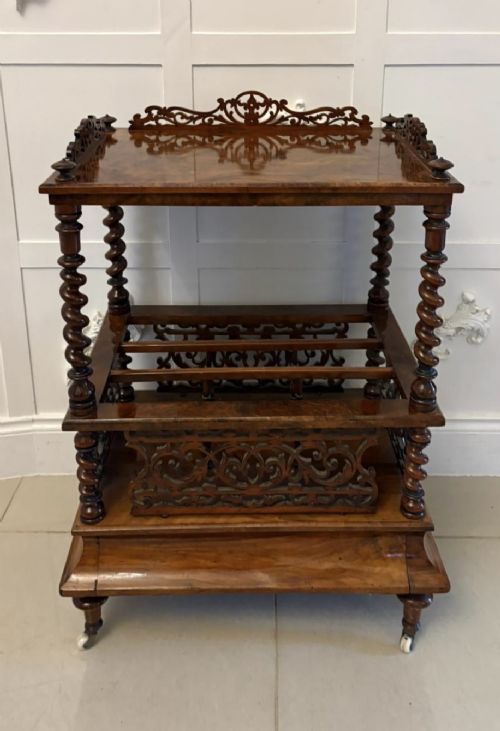
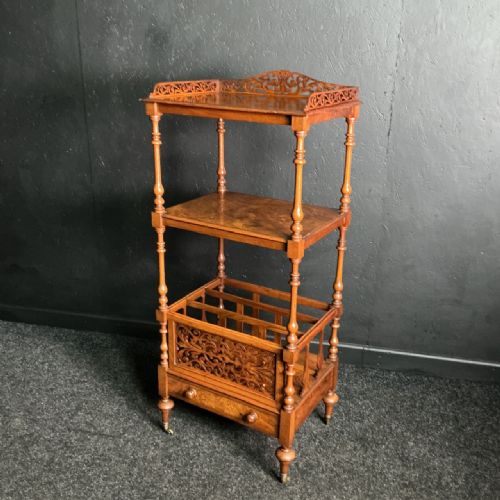
- A low stand featuring partitions for sheet music, books, or magazines, often combined with a small table or whatnot top. These pieces frequently incorporate turned supports and castors.
- Whatnot
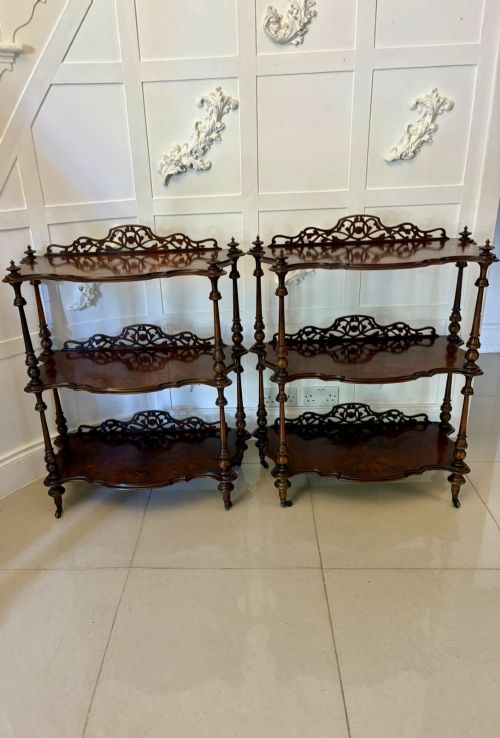
- A piece of open shelving with multiple tiers supported by slender columns or pillars, used for displaying ornaments. They appear in rectangular, corner, and demi-lune formats.
- Occasional table
- A small, movable table designed for specific, temporary uses around a room. They emerge in various shapes including octagonal, oval, and heart forms during the Victorian period.
- Sutherland table
- A narrow drop-leaf table with hinged flaps that fold down almost vertically. The design allows the piece to be stored compactly against a wall when not in use.
Victorian Fretwork Table: Frequently Asked Questions
What is a Victorian fretwork table used for?
These tables function primarily as occasional surfaces for lamps, books, or decorative items within living spaces and parlours. Their compact dimensions allow them to fit easily beside seating or in smaller corners.
Many examples incorporate lower shelves or partitions, serving multiple domestic roles simultaneously as display stands or compact storage units.
Where were these tables made?
Production took place in British workshops and factories during the nineteenth century, alongside imported pieces from Anglo-Indian and oriental traditions. London firms contributed significant output using both domestic and exotic woods.
Global design influences led to varied regional interpretations, incorporating regional carving styles while maintaining standard European furniture forms.
How do I care for antique wood surfaces?
Maintenance requires avoiding direct sunlight and excessive moisture to protect old polishes and prevent timber splitting. Gentle dusting with a dry cloth preserves the finish without damaging delicate pierced sections.
Occasional application of appropriate wax feeds the wood and maintains the natural lustre of walnut, mahogany, and rosewood surfaces.