


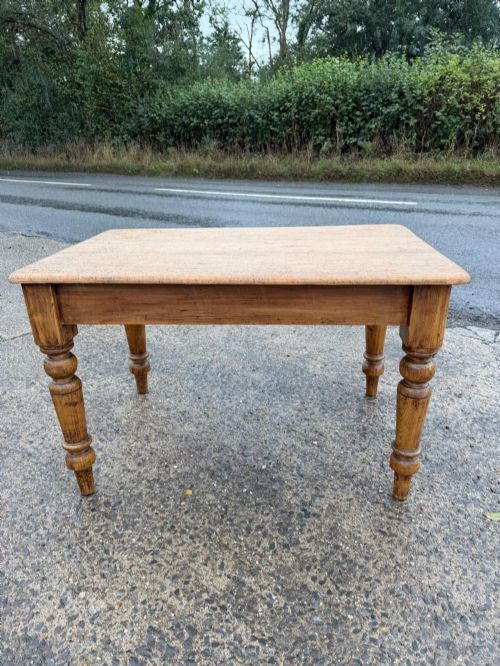
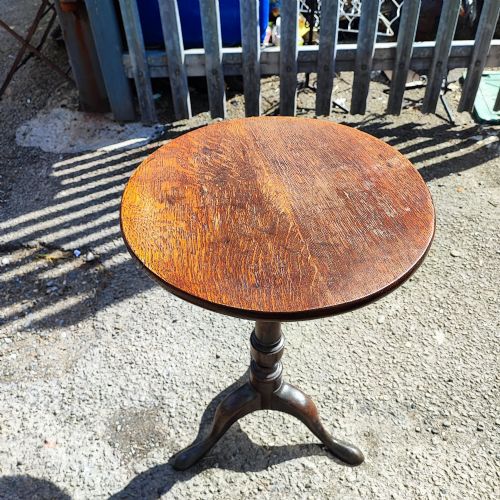
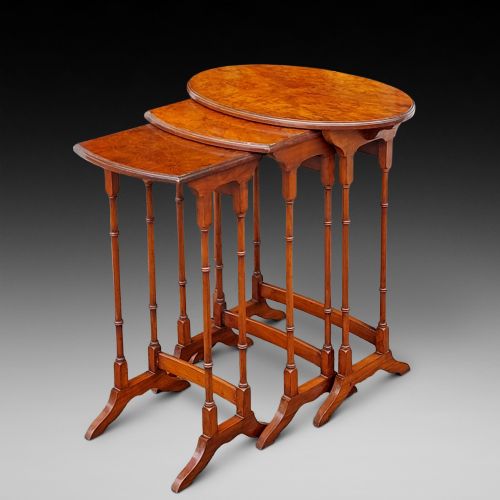
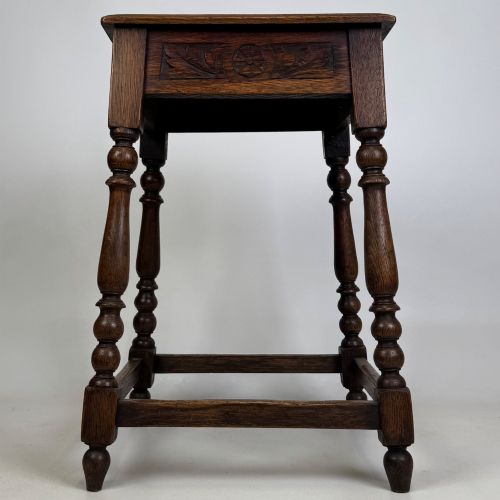
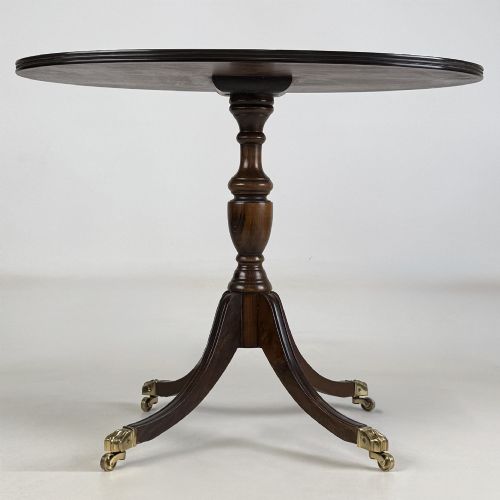
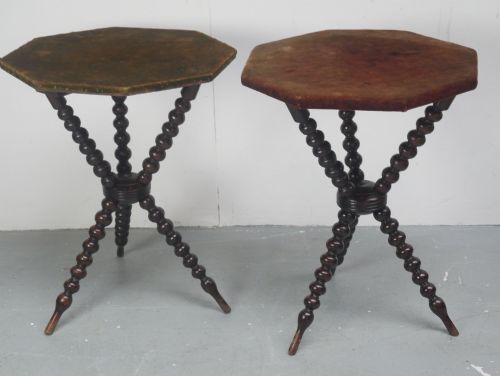
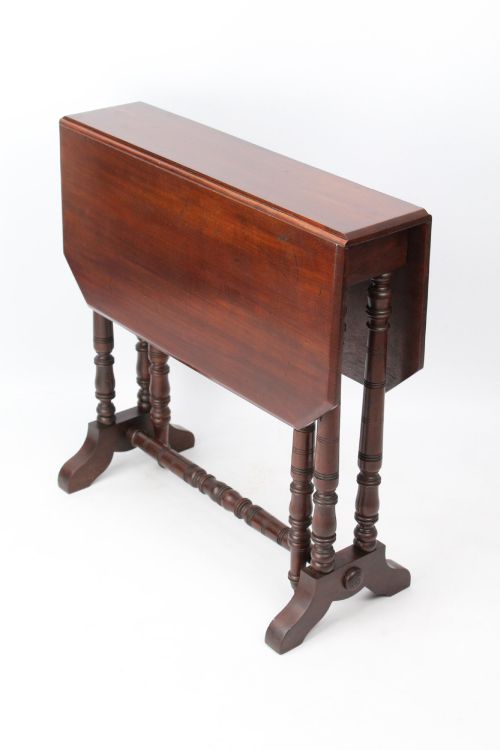
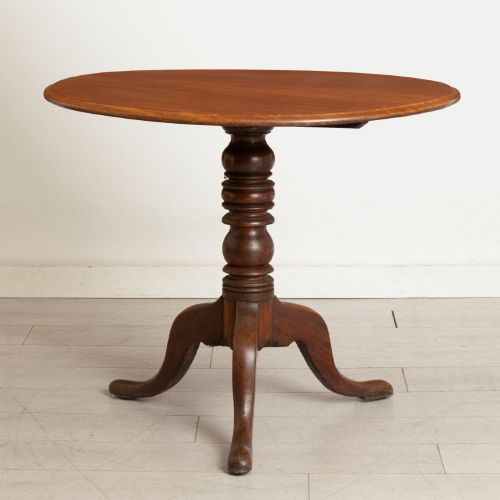
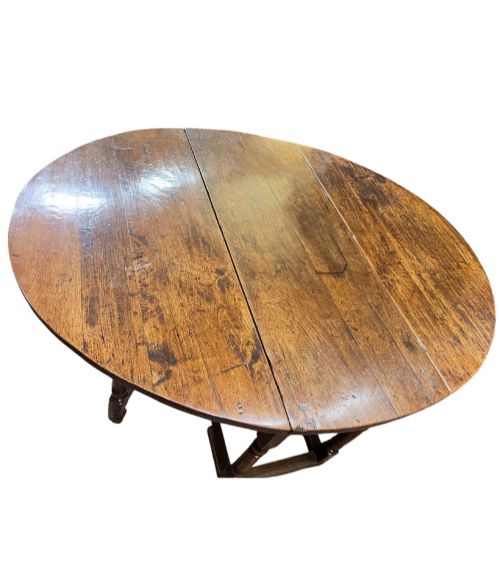
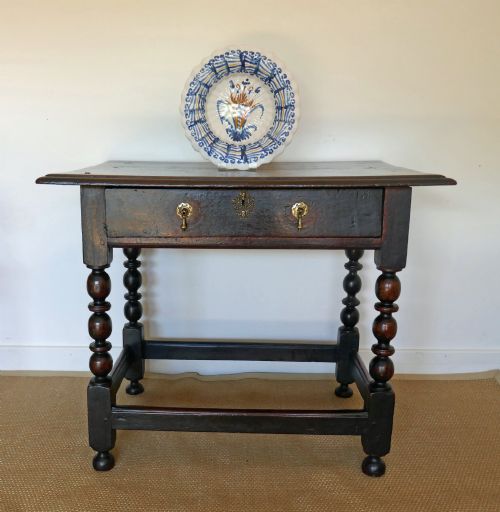
Turned Leg Accent Table
A turned leg accent table provides practical surface space while displaying the characteristic profile of shaped wooden supports.
Turned Leg Accent Table
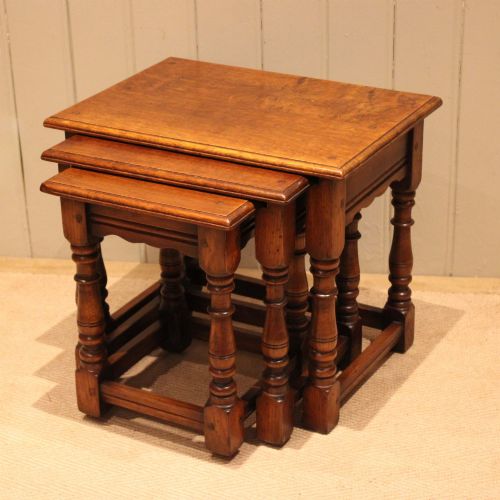
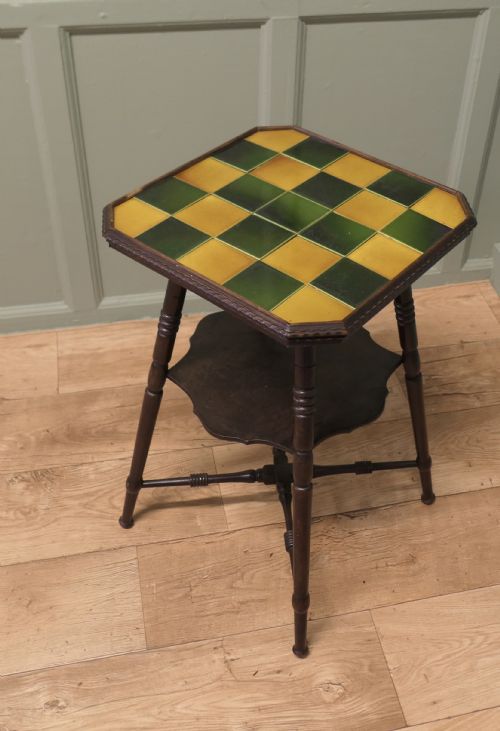
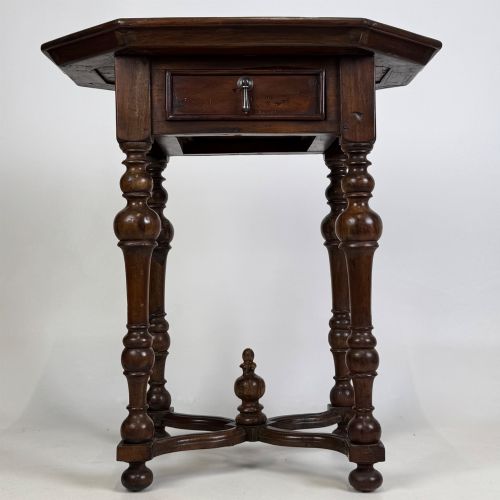
A turned leg accent table encompasses small furniture forms designed to stand beside seating or against walls in domestic interiors. When searching for a turned leg accent table, buyers encounter side tables, occasional tables, wine tables, and nests of tables spanning periods from the seventeenth century through the Edwardian era. These pieces serve functional roles as compact surfaces for lamps, books, or decorative objects within a room.
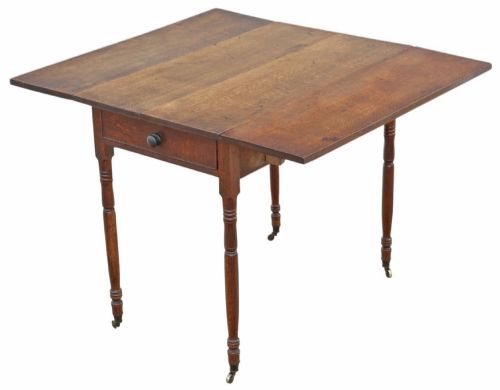
The materials utilised across these tables reflect traditional cabinet-making timbers, predominantly oak, mahogany, walnut, and elm. Craftspeople shaped the supporting legs on a lathe to create cylindrical profiles, sometimes incorporating tapering or bulbous sections depending on the prevailing style of the period. Forms range from simple tripod wine tables to gateleg designs and multi-tiered nesting sets.
Examples originate from diverse design movements, including Georgian, Victorian, Edwardian, Jacobean Revival, Arts and Crafts, and William and Mary styles. Earlier seventeenth and eighteenth-century items often display robust construction in solid oak or walnut, whereas later nineteenth and twentieth-century interpretations introduce lighter proportions and burr veneer surfaces.
How they were made
Makers constructed these tables primarily from solid hardwoods such as oak, mahogany, walnut, yew, and elm, occasionally applying decorative veneers like burr walnut or burr oak to top surfaces. Joinery techniques varied according to the period, employing traditional mortise and tenon joints for structural stability in earlier oak examples and precise dowelling or framing methods in later pieces.
The distinctive legs were shaped using a woodturning lathe, a process that produced uniform cylindrical, baluster, or bobbin forms. Craftspeople then joined these turned supports to tabletops, aprons, and stretchers using hand tools, ensuring the piece remained balanced and rigid during daily use.
Listings feature turned leg accent table forms spanning from the seventeenth-century William and Mary period through to Edwardian designs in oak, mahogany, and walnut.
What varies in quality
The standard of a turned leg accent table depends largely on the selection of timber and the precision of the turning work on the legs. Superior examples exhibit carefully matched grain patterns, tight joinery, and well-balanced proportions that maintain stability without excessive reinforcement.
Finer pieces often display thoughtful detailing in the carving or edge moulding of the tabletop and aprons, distinguishing them from utilitarian items produced in larger quantities. The condition of the original surface finish, whether polished wood or patinated timber, also influences the character and integrity of the piece.
Shapland & Petter·Hindley and Sons
The Turned Leg Accent Table Glossary
- Gateleg table
- A table with hinged drop leaves supported by legs that swing out like gates. This design allows the surface to expand for use and fold down for compact storage.
- Sutherland table
- A narrow drop-leaf table featuring exceptionally slender legs and a folding action where both leaves drop almost vertically. It is typically designed for easy relocation within a room.
- Tripod table
- A small freestanding table supported by a central pillar resting on three spreading feet. This construction provides stability on uneven floors.
- Drop-leaf table
- A table with a fixed central section and hinged flaps on either side that can be raised and supported. This configuration adjusts the surface area according to spatial requirements.
- Patina
- The surface sheen and mellowed appearance acquired by wood over decades of handling, exposure to light, and polishing. It indicates the age and organic history of the material.
Turned Leg Accent Table: Frequently Asked Questions
What is a turned leg accent table used for?
These small tables function primarily as movable surfaces for holding lamps, beverages, books, or decorative items beside seating arrangements. Their compact dimensions allow them to fit into tight spaces where larger furniture is impractical.
Historically, specific forms like wine tables or occasional tables were adapted for specialised domestic tasks. Today, they serve a similar role in modern interiors, adding wooden texture and period character to living areas.
How do I identify the period of an accent table?
Dating relies on observing the combination of timber species, construction methods, and stylistic details present in the piece. For instance, seventeenth-century examples typically feature heavy oak construction with simple jointing, while Edwardian pieces often utilise lighter hardwoods and burr veneers.
Examining the underside and interior surfaces reveals tool marks and joinery techniques that corroborate the era of manufacture. Hardware, such as hinges and drawer pulls, also provides clues when original to the piece.
Are these tables sturdy enough for daily use?
Most solid hardwood tables from these periods were built for practical domestic service and remain structurally sound. Traditional joinery methods provide considerable strength despite the slender proportions of turned supports.
Regular placement on level flooring and careful handling prevent unnecessary stress on joints and hinges. Minor movement in timber over time is natural and rarely compromises overall stability.
What is the difference between a side table and an occasional table?
A side table generally refers to a small piece designed to stand against a wall or beside other furniture, frequently featuring a drawer or shelf. An occasional table is a broader term for any small, movable table brought out for specific uses as needed.
Both forms utilise turned legs across various historical periods, sharing similar dimensions and placement flexibility within a home.