
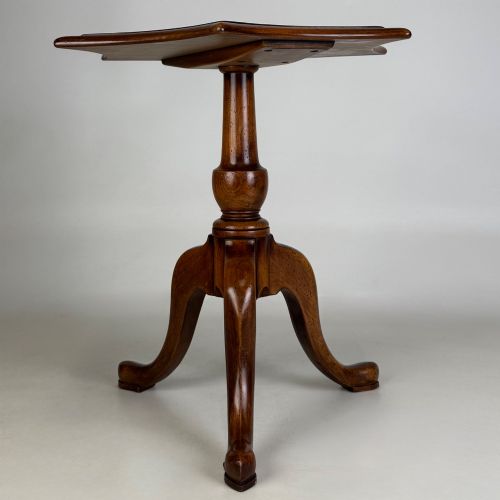
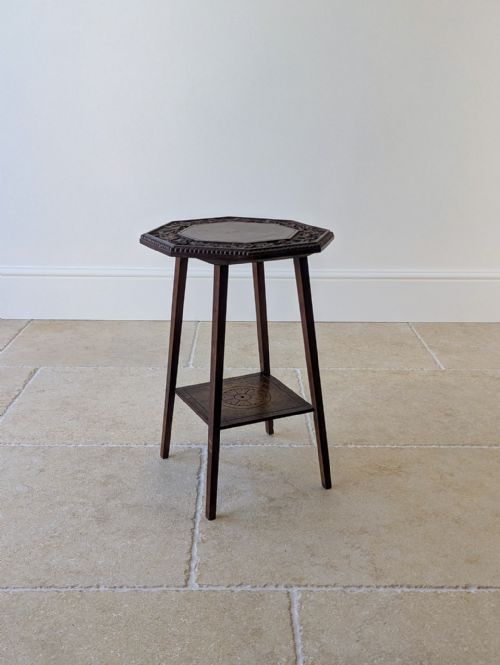
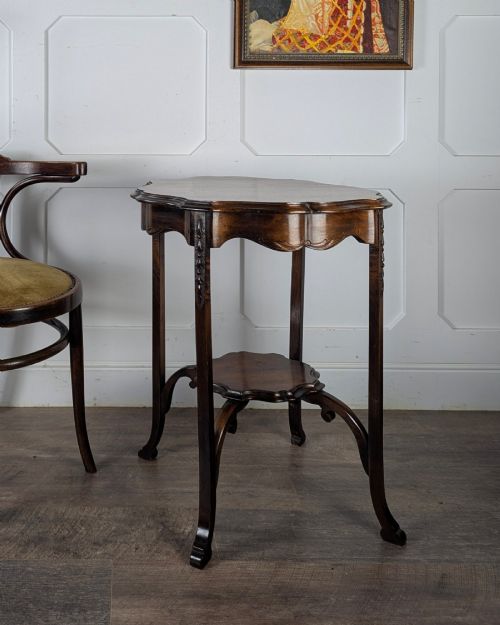
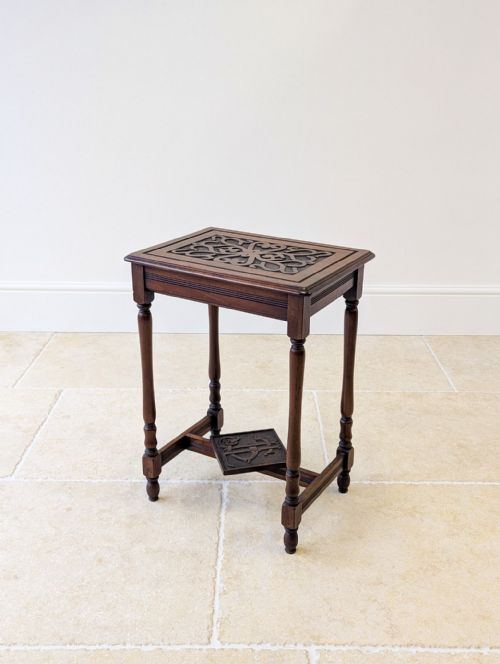


Small Walnut Plant Stand
These small walnut plant stand options bring compact timber character and rich grain into a room, offering a neat stage for greenery or display.
Small Walnut Plant Stand
Buyers seeking a small walnut plant stand typically encounter compact occasional tables and side tables shaped by Victorian, Edwardian, and Art Deco hands. These pieces serve primarily as pedestals or low tables, providing a stable surface for decorative plants within a room.
The selection ranges from nineteenth-century Victorian and Arts and Crafts designs to early twentieth-century Edwardian and 1930s examples. Walnut forms the core material across these eras, occasionally accompanied by ebonised wood or burr walnut veneer.
How they were made
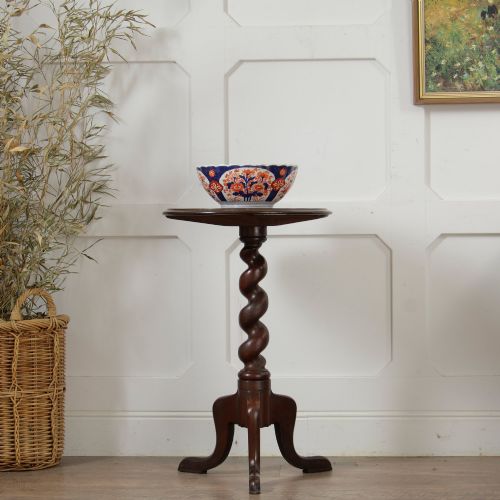
Craftsmen utilised solid walnut and burr walnut veneer, frequently applying inlay wood and brass details to enrich the surface. Structural variety includes barley twist pedestals and occasional table frames characteristic of the late nineteenth and early twentieth centuries.
Workshop methods combined traditional timber joining with decorative veneering techniques. Makers shaped the walnut to highlight natural grain patterns, sometimes finishing surfaces with velvet inserts or ebonised accents.
Current listings demonstrate walnut as the dominant material, accompanied by brass, ebonised wood, and burr walnut veneer across Victorian and Edwardian periods.
What varies in quality
Distinctions in quality often rest upon the selection of timber, particularly the depth of burr walnut veneer and the precision of inlaid wood details. Superior examples display careful attention to the grain and structural balance of pedestals and table legs.
The refinement of period stylistic elements, such as Arts and Crafts joinery or barley twist turning, separates standard production from finer work. Materials like brass fittings and contrasting ebonised wood further influence the overall character of a piece.
The Small Walnut Plant Stand Glossary
- Burr walnut veneer
- A thin slice of figured walnut timber applied to a secondary wood base to showcase swirling growth patterns. This technique creates decorative surface movement on table tops.
- Barley twist
- A spiral turning technique used on table legs and central pedestals. It adds sculptural depth to nineteenth-century and Edwardian furniture frames.
- Ebonised wood
- Timber treated to resemble ebony, providing dark contrast. Makers used this finish to highlight structural lines on Victorian and Arts and Crafts pieces.
- Occasional table
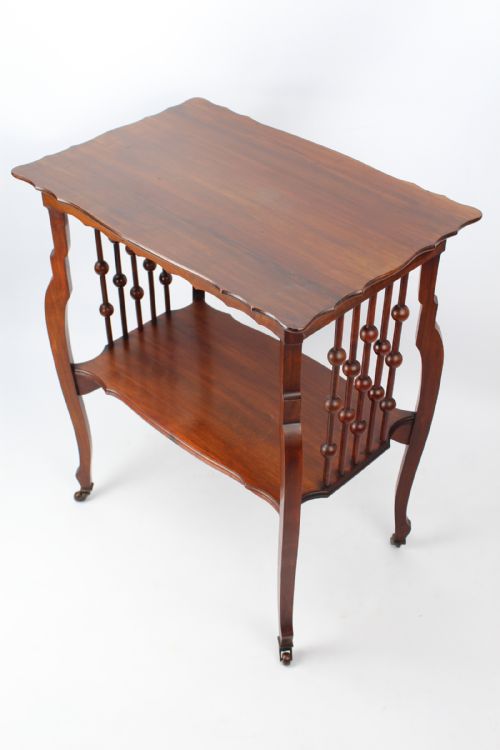
- A small, moveable table designed for specific, intermittent use rather than central seating. These versatile forms frequently function as plant stands or display surfaces.
Small Walnut Plant Stand: Frequently Asked Questions
What periods do these walnut plant stands come from?
The available pieces span the nineteenth and twentieth centuries, encompassing Victorian, Edwardian, and Art Deco eras. Production dates range from the late 1800s through the 1930s.
Victorian and Arts and Crafts examples often feature turned pedestals, while later twentieth-century pieces reflect simpler decorative treatments.
How were these tables used originally?
These compact pieces served as side tables, occasional tables, or dedicated plant stands in period homes. Their modest footprint allowed them to fit easily into corners or beside seating.
They provided a stable raised platform for heavy ceramic pots, lamps, or decorative ornaments.
What materials besides walnut appear on these stands?
Walnut serves as the primary timber, appearing as solid wood or as burr walnut veneer. Secondary materials include brass fittings, ebonised wood accents, and inlay wood decoration.
Some surfaces incorporate velvet panels or trims, reflecting the aesthetic preferences of late nineteenth-century and early twentieth-century makers.
How can I tell an Arts and Crafts stand apart?
Arts and Crafts pieces tend to emphasise honest construction and natural timber grain without excessive ornamentation. They frequently date from the late Victorian period around 1890 to 1900.
These tables often display simpler geometric forms and handcrafted timber details compared to ornate revival styles.