


Victorian French Side Table
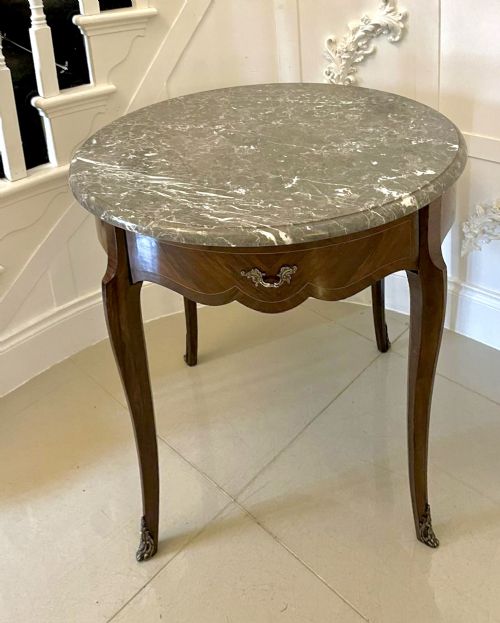
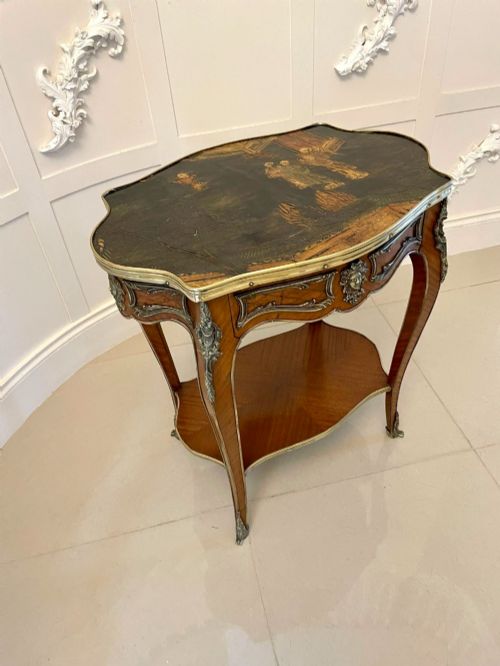
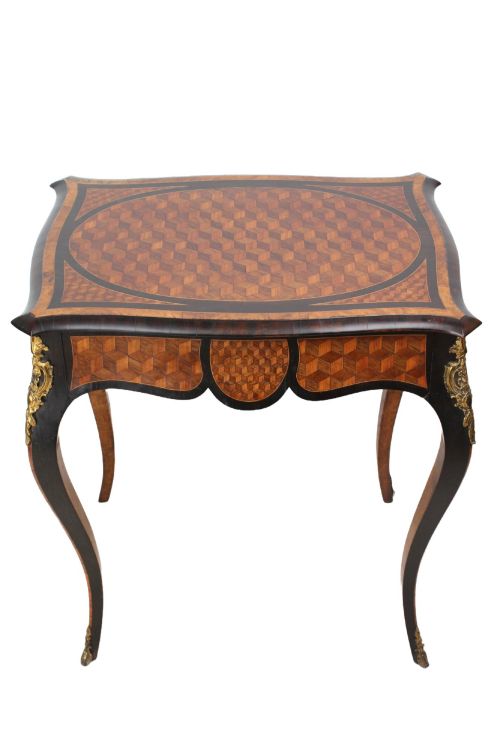
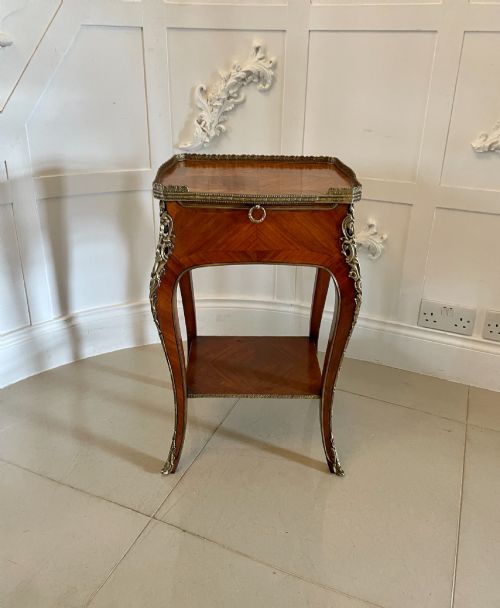
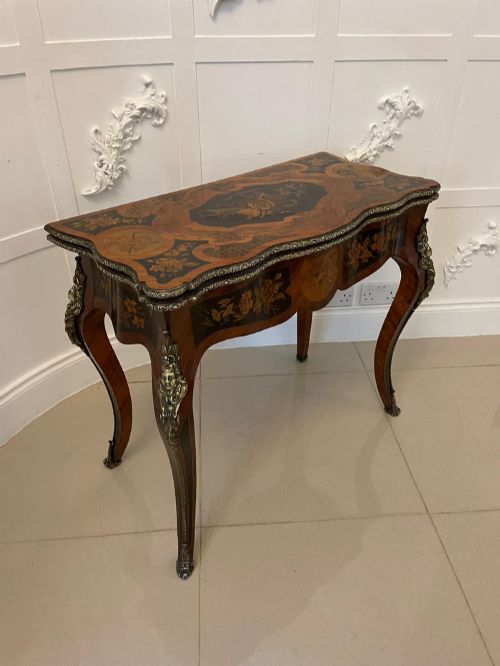
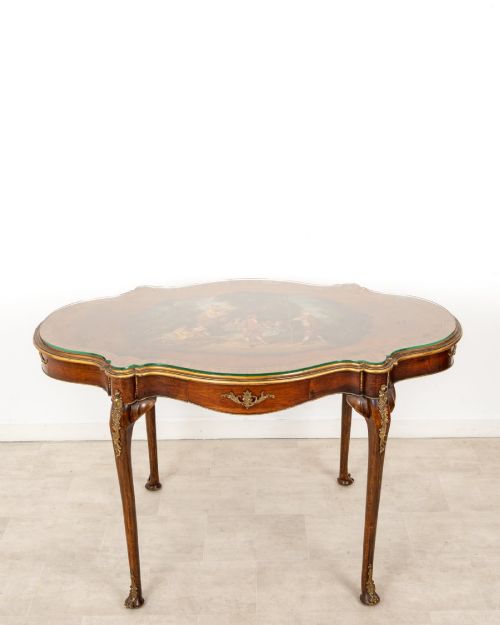
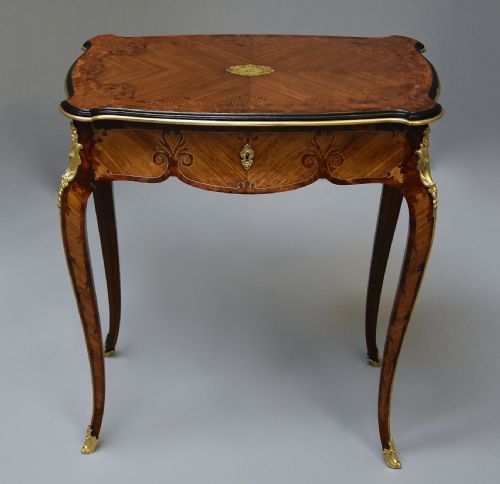
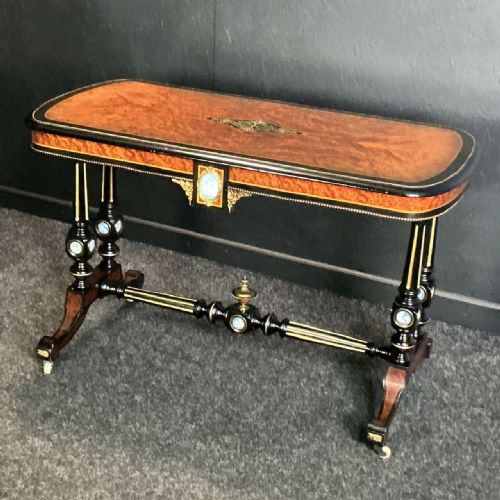
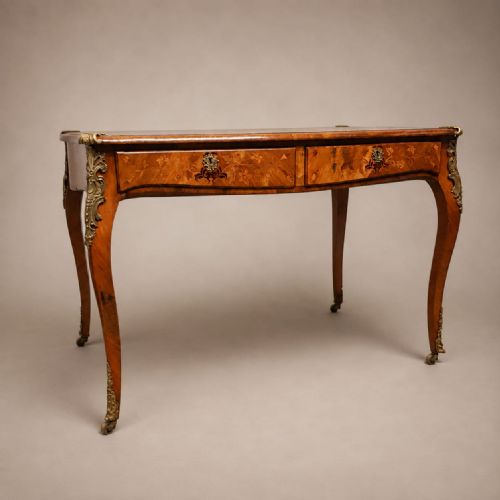
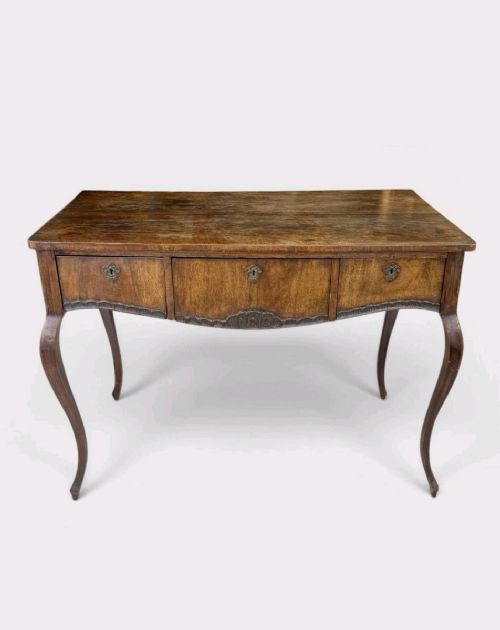
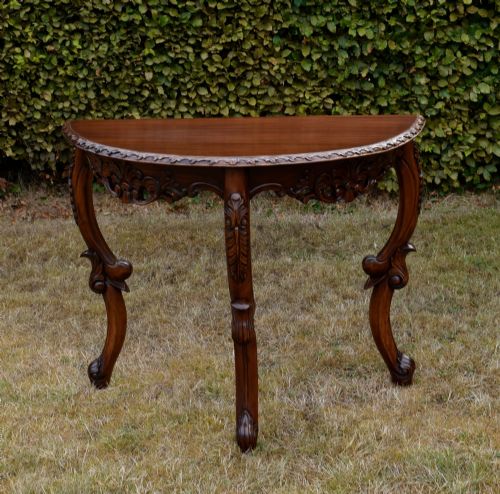
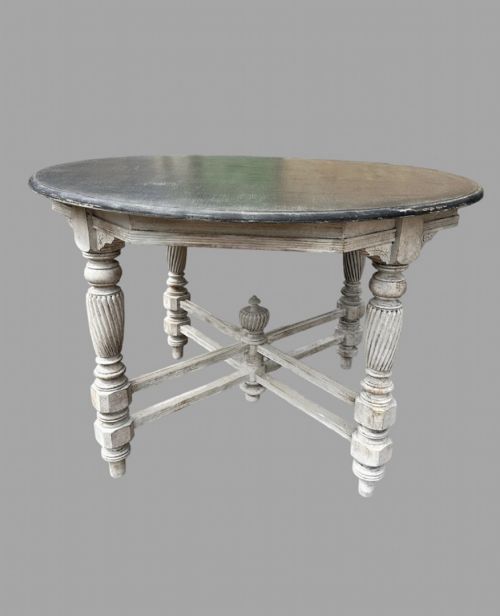
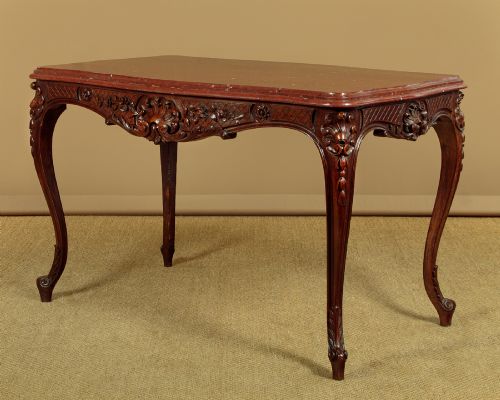
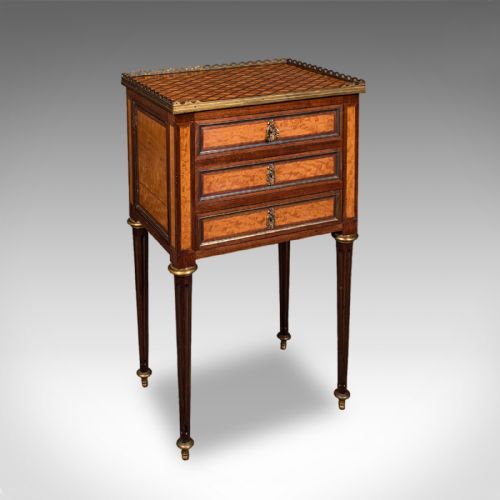
These pieces are a victorian french side table, bringing continental revival forms and rich marquetry into the home.
Victorian French Side Table
A victorian french side table brings together continental revival aesthetics and domestic utility from the nineteenth century. Buyers searching this phrase will find a variety of freestanding forms, including centre tables, lamp tables, and occasional pieces designed to sit centrally or against a wall. These items frequently display influences from Louis XV and Louis XVI revivals, alongside Napoleon III and nineteenth-century French styling.
The versions most commonly met on this page combine English domestic scale with continental decorative techniques such as parquetry, marquetry, and ormolu mounts. Makers and workshops from the period produced these tables in walnut, kingwood, mahogany, and rosewood, often topped with inset marble or polished timber. They served as functional surfaces for lamps, writing, or display, functioning as focal points within reception rooms.
Materials and Technique
Makers constructed these tables using solid timber carcases overlaid with decorative veneers including kingwood, walnut, satinwood, and rosewood. Detailed parquetry and marquetry inlay created geometric patterns or floral motifs across the top and sides. These wooden surfaces were frequently framed by cast or chased ormolu and gilt bronze mounts, highlighting the curves of the revival forms.
Many examples feature inset marble tops, ranging from white to rouge and block marble, secured within wooden or bronze lips. Structural elements such as cabriole legs and serpentine aprons relied on traditional joinery combined with heavy mounts to ensure stability. Where applicable, sophisticated internal mechanisms and fitted drawers added practical utility to the decorative exterior.
Some tables hide clever mechanical drawers designed to hold unexpected writing kits or vanity accessories for the Victorian drawing room.
Qualities of Construction
The standard of a victorian french side table is determined by the crispness of its cast ormolu mounts and the precision of its timber veneers. Finer examples display hand-chased detail in the bronze work and tightly fitted marquetry that integrates seamlessly into the surrounding wood. Lesser pieces rely on stamped, repetitive metalwork and simpler painted or plain timber surfaces without inlay.
The choice of materials also dictates the grade of the piece, with heavy inset marble slabs and dense exotic hardwoods marking the upper tier of production. Structural integrity in the joints and the smoothness of any mechanical drawers or drop leaves reflect the original workshop investment. Signed pieces or those carrying attribution to established makers demonstrate the highest level of contemporary craftsmanship.
JAS Shoolbred·Edwards & Roberts·Gabriel Viardot
The Victorian French Side Table Glossary
- Ormolu
- Gilded bronze mounts applied to furniture for decorative effect. This technique was widely utilised in French revival pieces to accent corners and borders.
- Marquetry
- The art of applying decorative pieces of veneer to a structure to form intricate designs. Craftsmen used various contrasting timbers to create pictorial or geometric motifs.
- Parquetry
- A geometric mosaic of wood pieces used for decorative floors and tabletops. It differs from marquetry through its strict repeating angular patterns.
- Etagere
- A set of open shelves for displaying small ornaments or books. These tiered tables often featured delicate supports and inlaid surfaces.
- Console table
- A table designed to be fixed against a wall, frequently supported by ornate legs or brackets. They often feature marble tops and mirror the architectural style of the room.
Victorian French Side Table: Frequently Asked Questions
What is a French revival side table?
A French revival side table is a nineteenth-century piece inspired by earlier continental designs from the reigns of Louis XV and Louis XVI. These tables incorporated ornate mounts, curved legs, and decorative veneers to satisfy British demand for continental aesthetics.
They were typically placed in drawing rooms or parlours to hold lamps, clocks, or small decorative objects, combining utility with ornamental status.
How do I identify kingwood and marquetry?
Kingwood is a dense, exotic timber characterised by rich dark violet-brown tones with lighter golden streaks. Marquetry involves cutting and fitting contrasting wood veneers together to create detailed pictorial or geometric patterns across the table top.
Together, these materials denote higher quality nineteenth-century production, frequently seen on tables influenced by French cabinet-making traditions.
Where should I place a centre table?
A centre table is finished on all sides and designed to stand free in the middle of a room rather than against a wall. This makes them ideal as focal points in large reception spaces or libraries where they can be viewed from every angle.
They work well holding table lamps, garnitures, or books, provided there is sufficient floor space around them for comfortable movement.
What distinguishes an ormolu mount?
Ormolu refers to gilded bronze mounts cast in relief and applied to the corners, legs, and aprons of furniture. Finer examples display sharp, hand-finished chasing that accentuates the curves of the woodwork.
These metal ornaments protect vulnerable edges while adding a reflective metallic contrast to the dark exotic timbers beneath.