


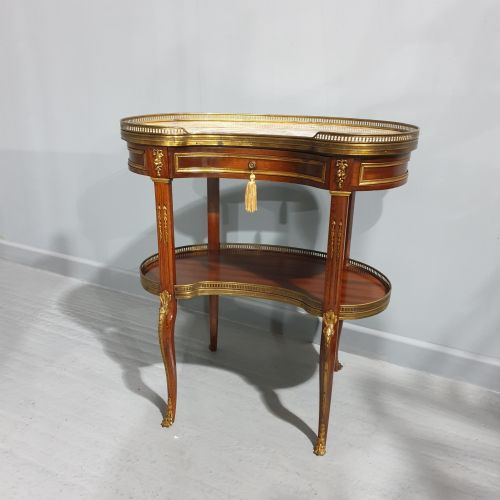


Edwardian Kingwood Table
An Edwardian kingwood table brings sophisticated French-influenced design and rich timber grain to sitting rooms and libraries.
Edwardian Kingwood Table
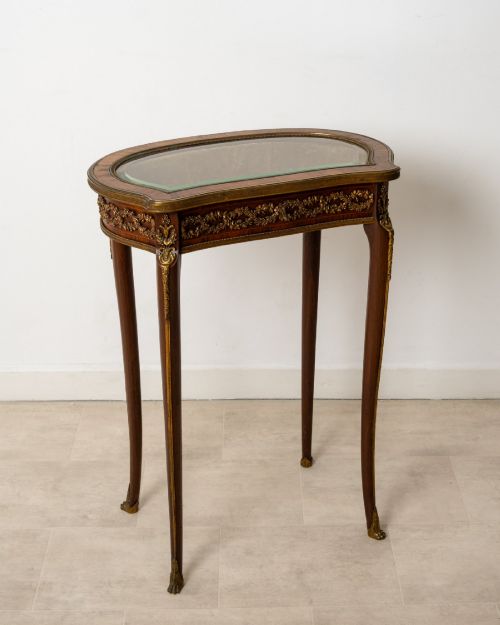
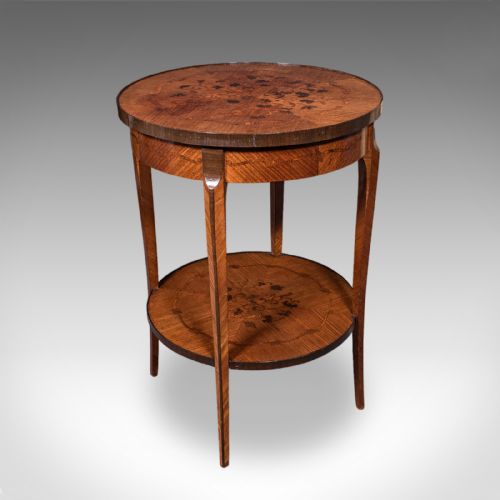
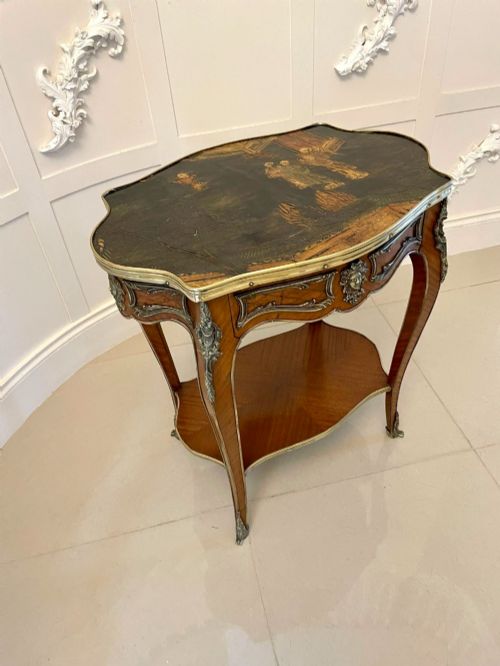
An edwardian kingwood table encompasses versatile occasional furniture, display vitrines, and striking centre pieces created during the early twentieth century alongside related Victorian interpretations. The surviving examples draw heavily upon French Rococo Revival and Louis XV styles, frequently employing serpentine lines and delicate proportions.
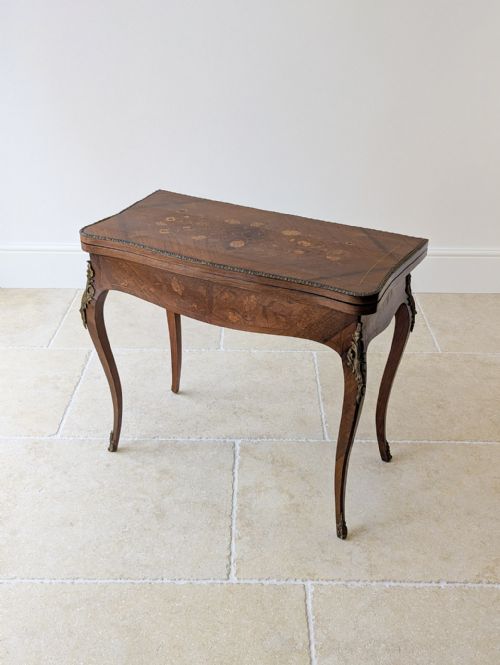
Buyers regularly encounter side tables, card tables, and occasional stands alongside larger centre tables mounted in ormolu. These pieces bridge the gap between functional household surfaces and decorative works of art, reflecting the period taste for continental aesthetics.
Materials and Construction
Makers utilised dense kingwood veneer applied over solid secondary timbers, often framing the rich grain with contrasting satinwood crossbanding and intricate marquetry. Brass and ormolu mounts accentuate the curved contours of these surfaces.
Advanced cabinetmaking techniques enabled the creation of complex kidney-shaped tops, hinged folding leaves for card tables, and glazed compartments for bijouterie displays.
Listings demonstrate that edwardian kingwood tables frequently incorporate brass and ormolu mounts alongside satinwood and rosewood crossbanding.
Assessing Craftsmanship
The standard of execution in the marquetry inlay and the crispness of the cast ormolu mounts dictate the overall tier of the piece. Superior examples display seamless veneer matching across complex curves and substantial bronze mounts rather than lightweight substitutes.
Internal construction details, such as oak-lined drawers and original brass hardware, differentiate standard production items from exhibition pieces produced by notable makers.
Collingson & Lock·François Linke·Robert Strachan and Co
The Edwardian Kingwood Table Glossary
- Kingwood
- A dense, heavily figured Brazilian timber featuring rich dark brown tones and violet streaks, prized for decorative veneer.
- Ormolu
- Gilded bronze mounts cast and chased in elaborate decorative motifs, applied to enrich the corners and legs of tables.
- Crossbanding
- A border of veneer laid with the grain running perpendicular to the main surface to frame panels of marquetry.
- Marquetry
- Elaborate patterns formed by fitting together contrasting pieces of wood veneer to create pictorial or geometric designs.
- Vitrine
- A glass-topped or glass-sided display table designed for exhibiting small ornaments and precious objects.
Edwardian Kingwood Table: Frequently Asked Questions
What is an edwardian kingwood table used for?
These versatile pieces served various functions in period homes, from holding table lamps and displaying decorative items to providing surfaces for letter writing and card games.
Today, they suit similar roles as accent furniture in living spaces, adding warmth and historical character to a room.
How do I identify french influence?
French influence appears through characteristic Louis XV revival shapes, including cabriole legs, serpentine edges, and extensive use of gilt bronze ormolu mounts.
Tables often adopt forms like kidney shapes or vitrines that originated in eighteenth-century France before being revived in Britain.
Is kingwood different from rosewood?
Kingwood belongs to the same botanical family as rosewood but possesses a distinctively lighter violet-brown background marked with sharp, darker streaks.
Cabinetmakers valued it specifically for striking veneer work and intricate geometric crossbanding on high-status tables.
How should I care for veneer?
Protect the delicate timber surfaces by keeping tables away from direct sunlight and maintaining steady indoor humidity to prevent the veneer from lifting.
Regular dusting with a dry cloth preserves the polished finish without risking moisture damage to the antique timber.