


Victorian Footed Ceramic Bowl
A victorian footed ceramic bowl offers practical charm and decorative presence, bringing classic nineteenth-century craftsmanship directly to your table or sideboard.
Victorian Footed Ceramic Bowl
A victorian footed ceramic bowl combines utility and display, typically taking the form of a fruit bowl, comport, or footed pottery bowl from the nineteenth century. These pieces stand upon raised bases or feet, elevating the vessel to catch the eye in any room.
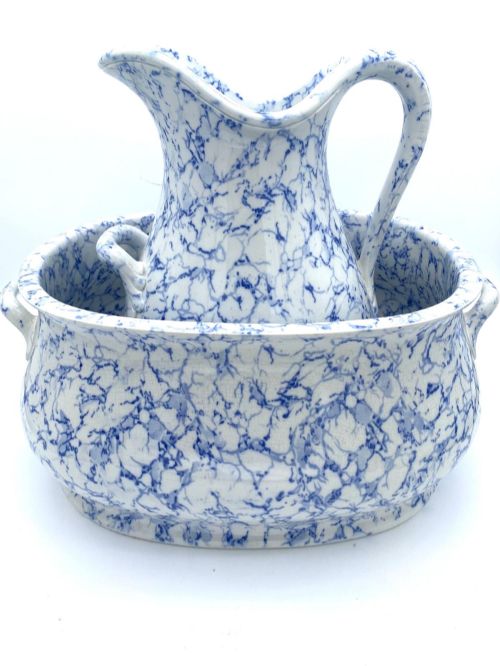
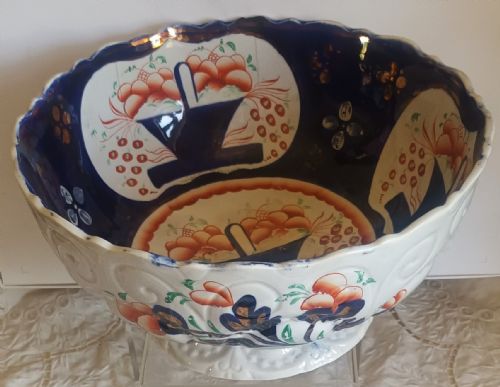
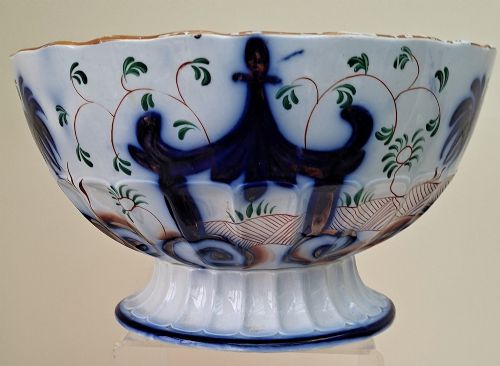
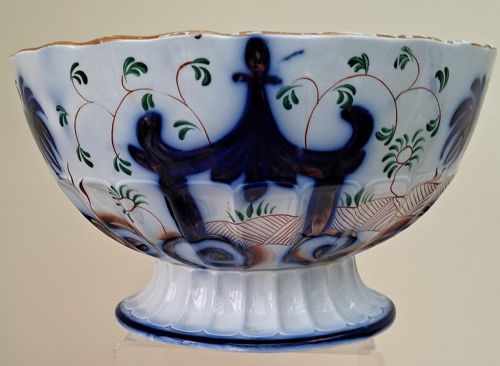
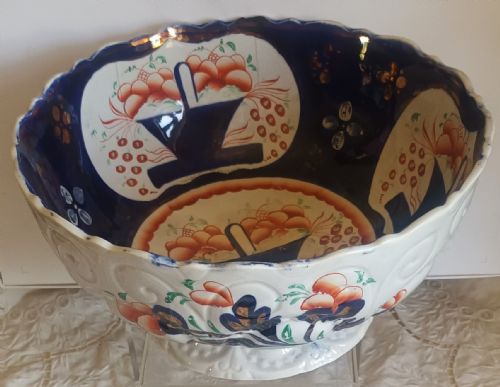
The selection here spans earthenware, porcelain, and ironstone, reflecting the varied ceramic bodies used during the period. You will encounter traditional patterns such as Gaudy Welsh alongside blue and white designs and ironstone comports.
While the search centres on Victorian examples, the listings also include pieces from the Georgian, Regency, and Edwardian eras. These encompass styles ranging from French Rococo Revival to Victorian Chinoiserie and Chelsea-Derby influences.
Materials and Construction
Potters of the period utilised earthenware, porcelain, and durable ironstone to form these vessels, often shaping them into comports, footed bowls, and wash sets. Earthenware and ironstone provided sturdy bodies suitable for daily use and heavy decorative painting, whilst porcelain allowed for finer, more delicate walled forms.
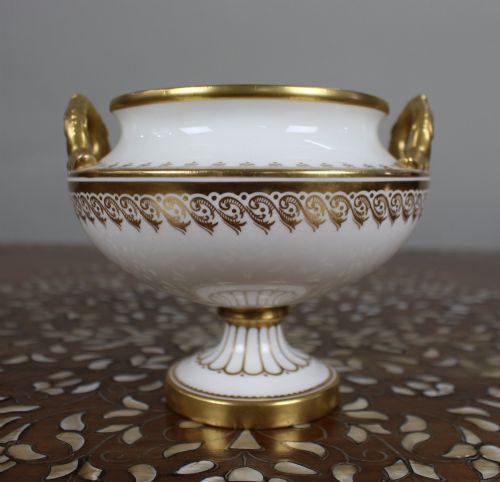
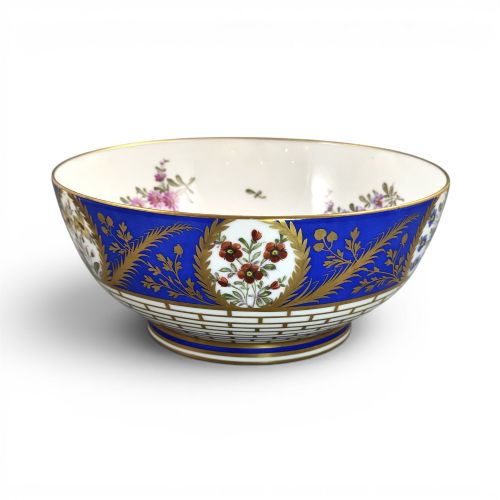
Decoration relied heavily on hand-applied enamels, flow blue techniques, and gilding with gold leaf. Potters built up rich patterns like the Gaudy Welsh floral and pagoda motifs, or applied red scale designs to ironstone, sealing the decoration beneath or over the glaze through careful kiln firing.
Listings feature periods spanning from the Georgian era through the nineteenth century into Edwardian times, using earthenware, porcelain, and ironstone.
Judging Quality and Execution
The refinement of the ceramic body and the crispness of the moulding set pieces apart. Finer porcelain and well-poured ironstone maintain sharp lines on foot rims and handles, whereas lower tiers show distortion from the kiln or heavy, clumsy potting.
Painted and gilded details reveal the hand of the maker. Superior bowls display precise brushwork in enamels and clean applications of gold leaf, while simpler or less accomplished pieces exhibit blurred transfer prints and careless colour fills.
Minton·Samson·Mason·Sevres·Royal Worcester Hadley
The Victorian Footed Ceramic Bowl Glossary
- Comport
- A shallow bowl raised on a high foot, traditionally used for serving fruit or sweetmeats at the table. These pieces often feature prominent ironstone or porcelain construction.
- Ironstone
- A dense, heavy type of earthenware patented in the nineteenth century for its durability. It resists chipping and served as a robust base for colourful enamel decoration.
- Gaudy Welsh
- A style of colourful pottery characterised by cobalt blue, copper lustre, and vibrant iron-red enamels. It frequently appears in floral and pagoda patterns on domestic tablewares.
- Flow Blue
- A ceramic transfer-printing technique where the cobalt blue pigment bleeds slightly into the glaze during firing. This creates a soft, hazy aesthetic popular on nineteenth-century vessels.
- Gilding
- The application of gold leaf or powdered gold to ceramic surfaces for embellishment. It highlights handles, rims, and painted motifs.
Victorian Footed Ceramic Bowl: Frequently Asked Questions
How were footed ceramic bowls used originally?
These vessels served primarily as table centrepieces for displaying fruit or serving comports during formal meals. They also functioned as decorative bowls and washing items within nineteenth-century domestic interiors.
Over time, their role shifted toward pure display, allowing households to showcase rich ceramic bodies, gilding, and transfer-printed patterns on sideboards and mantelpieces.
Can I use an antique bowl for serving food?
While many ironstone and earthenware bowls were built for dining, older glazes and lead-based enamels require caution with modern acidic foods. Gentle hand washing preserves the historic surface.
For dry items like fruit, these bowls remain functional, though many collectors prefer to exhibit them safely away from daily dining routines.
How do I distinguish Victorian pieces from Regency ones?
Regency items often lean towards Neoclassical lines with restrained forms, whereas Victorian pieces frequently embrace bolder patterns like Gaudy Welsh floral motifs and heavier ironstone bodies. Comparing the weight and decorative palette helps clarify the era.
Examining the underside for maker marks or pattern names also provides firm clues to the manufacturing decade.
What does ironstone mean in these bowls?
Ironstone is a heavy, durable ceramic material patented to withstand robust daily use while mimicking the appearance of true porcelain. It forms a sturdy base for vibrant enamels.
Its toughness made it the material of choice for large fruit comports and heavy kitchen or dining tablewares.