


Victorian Flatback Ceramic Figures
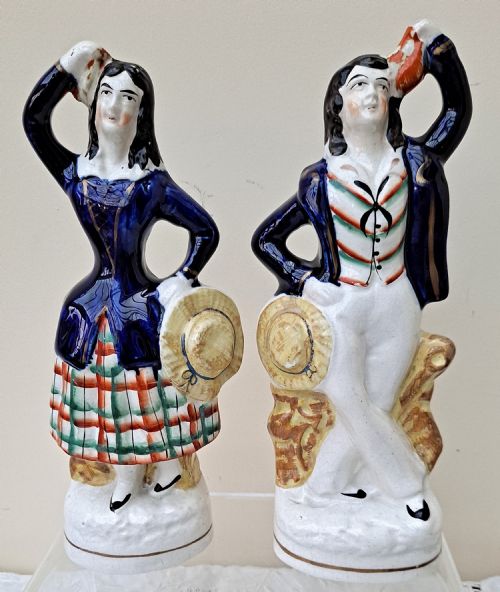
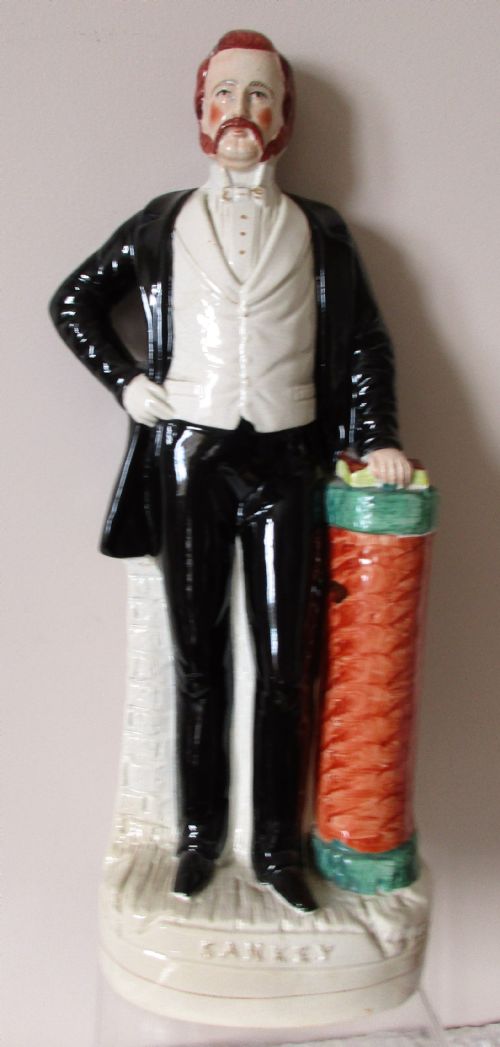
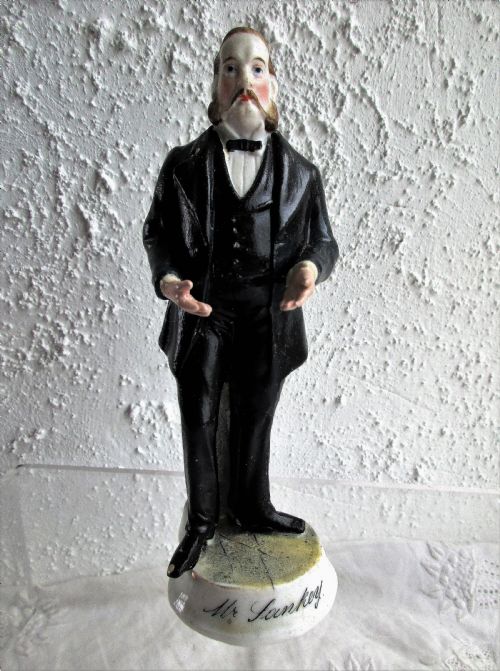
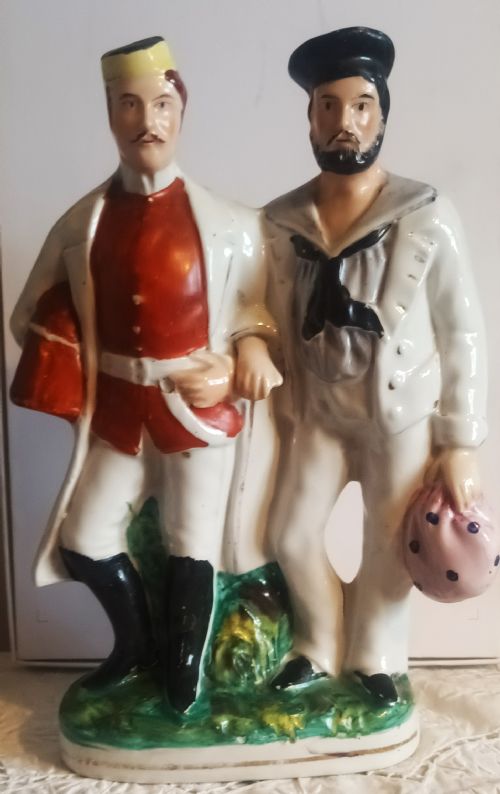
These victorian flatback ceramic figures are nineteenth century earthenware ornaments designed to sit against a wall, bringing theatrical and royal portraiture into domestic parlours.
Victorian Flatback Ceramic Figures
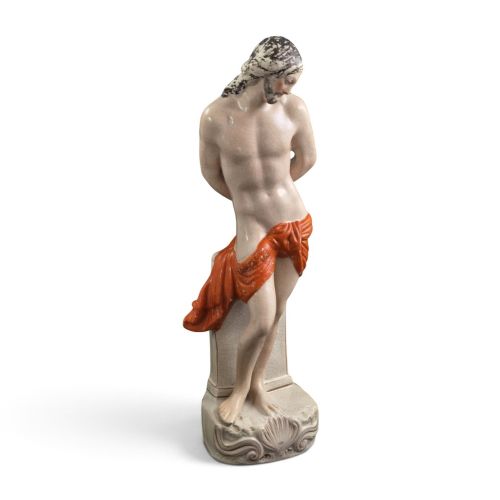
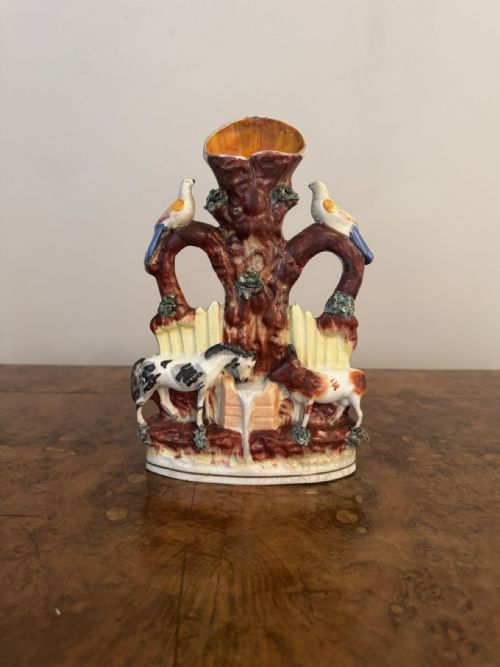
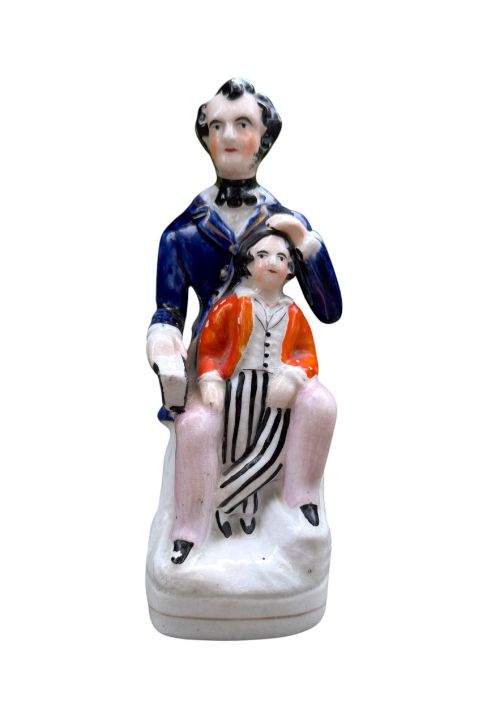
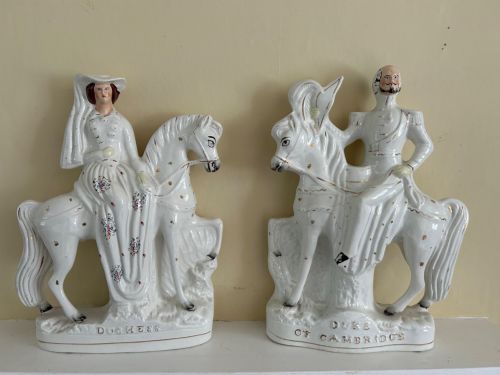
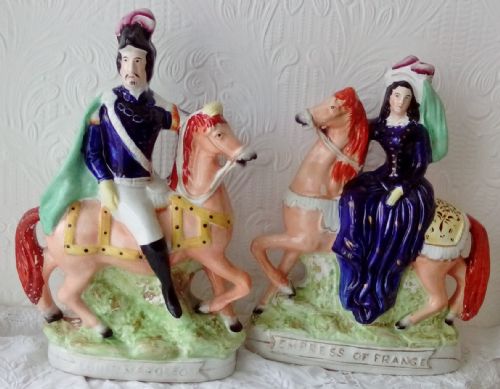
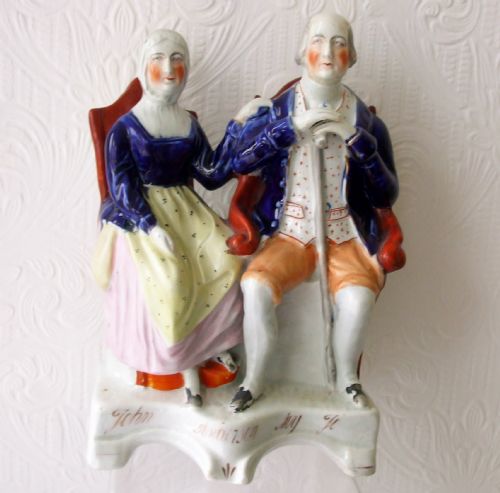
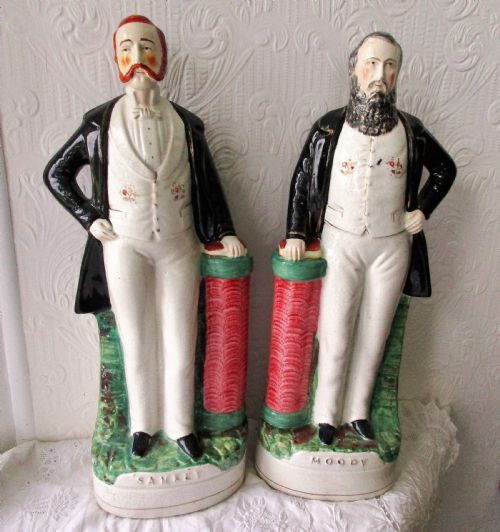
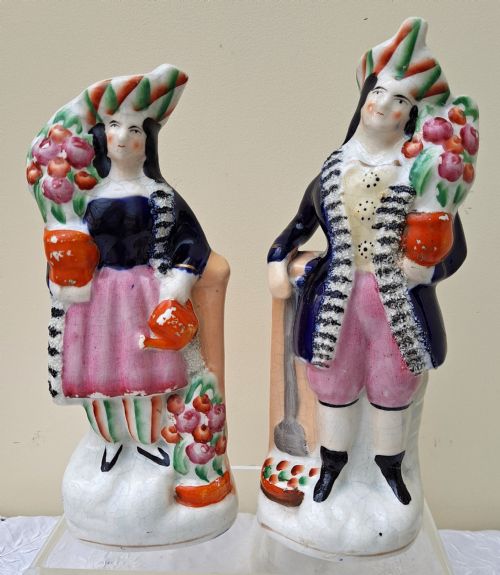
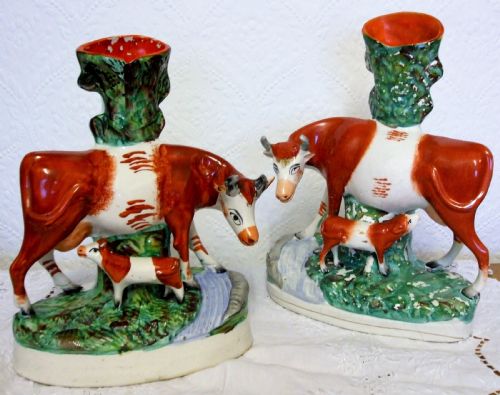
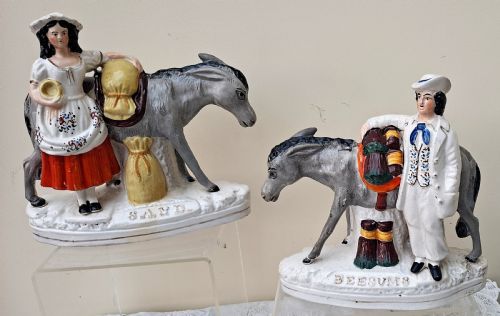
Victorian flatback ceramic figures comprise nineteenth century Staffordshire pottery pieces modelled with detailed fronts and unglazed, flat backs intended to face a wall on a mantelpiece. These domestic ornaments range from single portrait figures and equestrian groups to spill vases and architectural models like castles or cottages.
The subjects draw heavily from contemporary royalty, theatrical performers, literary characters, and exotic animals such as zebras and deer. Pairs of figures representing companions or historical figures form a substantial portion of the output seen across the nineteenth century.
Makers produced these works throughout the Victorian period, with dates clustering from the middle decades through to the end of the century. The forms serve primarily as decorative mantel ornaments rather than utilitarian vessels, though spill vases combine display with the practical function of holding matches.
Materials and construction
Potters utilised earthenware bodies shaped using moulds, creating the hollow, flat-backed construction characteristic of these chimney ornaments. This pressing technique allowed workshops to turn out consistent portrait figures and animals in large quantities.
Workers applied lead glaze over the ceramic body to seal the porous earthenware and provide a smooth, shiny surface. Enamel paint and gilt detailing were then added over the glaze, often supplemented by cobalt blue highlights on bases and clothing.
Listings span the nineteenth century, featuring earthenware bodies finished with lead glaze, enamel paint, and gilt highlights.
Judging quality and modelling
Scale and ambition also separate standard domestic ornaments from superior works, particularly in large equestrian groups or multi-figure portrait compositions. The balance of the glaze and the clean execution of the flat back reveal the care taken in the pottery kiln.
The Victorian Flatback Ceramic Figures Glossary
- Flatback
- A pottery figure modelled with a detailed front and a flat, partially unglazed back designed to stand against a wall.
- Spill vase
- A hollow ceramic cylinder incorporated into a figure group, intended to hold wooden spills for lighting pipes or candles.
- Earthenware
- A porous ceramic body fired at lower temperatures, standard for nineteenth century Staffordshire domestic pottery.
- Lead glaze
- A glossy vitreous coating applied to ceramics before firing, giving these figures their characteristic shine.
Victorian Flatback Ceramic Figures: Frequently Asked Questions
What rooms were these figures made for?
Victorian households placed these earthenware ornaments predominantly on mantelpieces in parlours and living rooms where guests gathered. The flat back allowed the pieces to sit flush against the wall on narrow shelves.
They functioned as visual talking points, displaying the owner's interest in current events, royalty, or theatrical performances.
Why are the backs unglazed?
Potters left the reverse of these ornaments flat and largely unglazed so the pieces could rest flush against a wall without tipping forward. This also saved time and materials during the kiln firing process.
Since the figures were meant to be viewed solely from the front, finishing the back was unnecessary.
Are pairs of figures common?
Potters frequently produced these ceramic figures in matching pairs to flank a clock or mirror on a mantelpiece. Subjects often included royal couples, theatrical duos, or companion animals.
Finding a complete pair adds significantly to the historical context of the display.