


Antique English Mantel Ornaments
These antique English mantel ornaments bring hearths and shelves alive with Victorian spaniels, Staffordshire dogs, porcelain stags, and glazed ceramic figures.
Antique English Mantel Ornaments
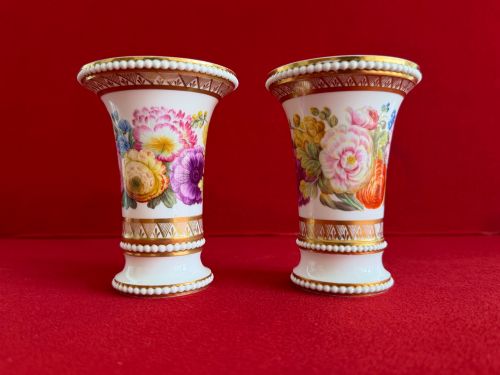
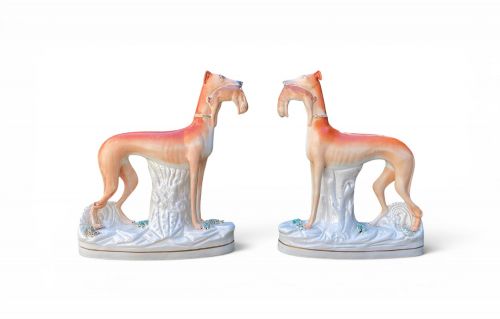
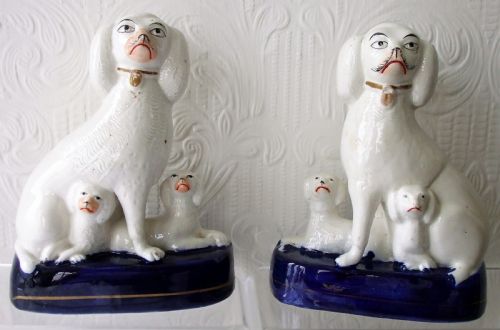
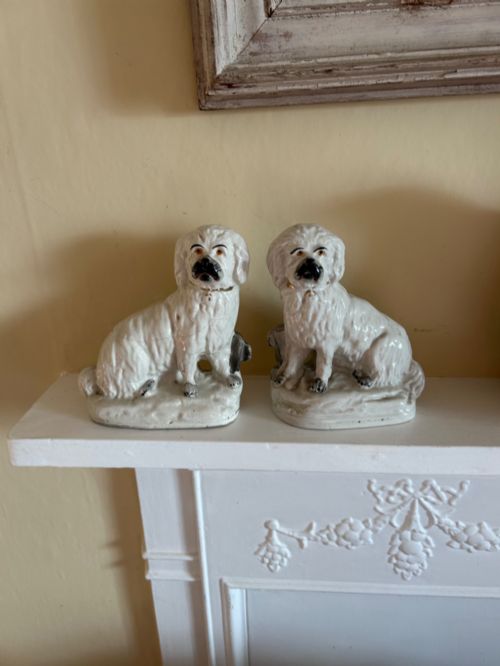
When you search for antique English mantel ornaments, you encounter a distinct tradition of ceramic figures, pottery pairs, and decorative fireplace ornaments designed to command attention above a hearth. The most common versions on this page are nineteenth century Staffordshire pottery figures, particularly pairs of spaniels, greyhounds, poodles, and lions made to stand symmetrically on either side of a clock or grate.
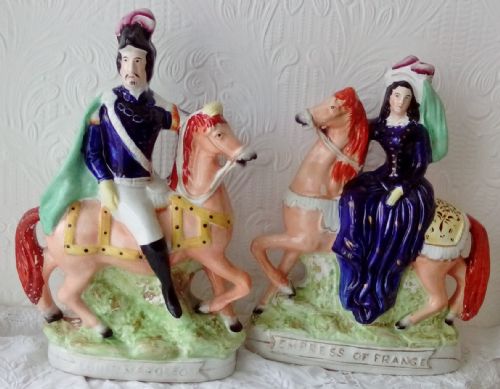
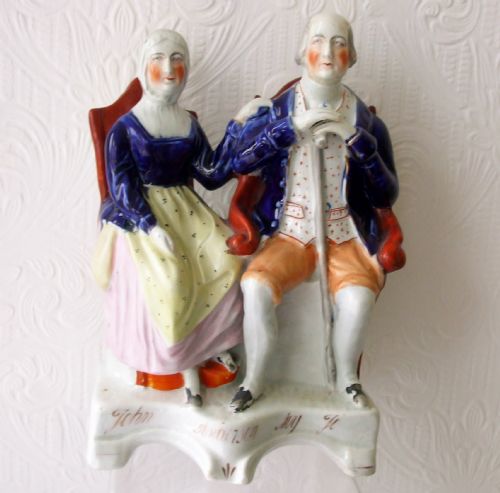
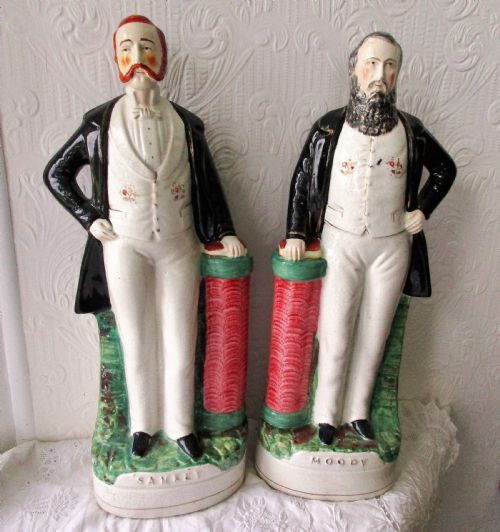
The selection extends beyond dogs to include portrait figures of historical and literary subjects, flat back castles, porcelain stags with bocage, and glazed cornucopia. Dating ranges from mid Georgian pieces through the Victorian era up to the end of the nineteenth century, uniting domestic ceramic animal sculpture with decorative mantel display.
How they were made
Potters shaped these earthenware and ceramic ornaments using moulds before applying lead glaze, enamel paint, and occasional gold leaf highlights. The underside and flat backs of many Victorian Staffordshire figures reveal the slip-cast or press-moulded construction typical of domestic pottery production.
Porcelain figures from earlier Georgian periods, such as Derby models, employed fine ceramic pastes fired at higher temperatures to support delicate background elements like bocage foliage. Metal ornaments utilise giltwood, gilt bronze, and champleve enamel, demonstrating the variety of materials brought to nineteenth century mantel decoration.
Common animal forms include Staffordshire greyhounds, poodles, lions, stags, and spaniels.
What varies in quality
The presence of a matched pair, particularly among Staffordshire dogs and ceramic animals, significantly elevates a piece. Superior modelling brings life to subjects like greyhounds and spaniels, whereas weaker examples suffer from muddy glazes and hurried, heavy-handed decoration.
The Antique English Mantel Ornaments Glossary
- Flat back
- A ceramic figure designed with an unglazed or simply finished flat rear surface intended to stand flush against a mantelpiece wall. This method saved material and production time for Staffordshire potters.
- Bocage
- An intricate background of applied ceramic foliage, leaves, and flowers found behind porcelain figures. It creates a naturalistic bower that frames animals or human subjects.
- Comforter spaniels
- The quintessential pair of Staffordshire pottery dogs placed on Victorian mantelpieces. They earned this name because households treated them as quiet, steadfast companions guarding the hearth.
- Lustre
- A metallic glaze applied to ceramics to produce an iridescent, reflective sheen. It captures candlelight and firelight effectively on a dark mantel shelf.
Antique English Mantel Ornaments: Frequently Asked Questions
Where did mantel ornaments sit?
These decorative figures stood directly on the mantel shelf above the fireplace, usually arranged symmetrically around a central clock or mirror.
Pairs of Staffordshire dogs and lions faced inward toward one another, creating a balanced display that anchored the room's focal point.
How do I date Staffordshire figures?
Dating relies on stylistic clues, glaze characteristics, and subject matter such as Victorian portrait figures or literary characters. Mid nineteenth century pieces often feature deep lead glazes and hand-painted details before mass production increased later in the era.
Examining the flat back construction and the vibrancy of the enamel paint also helps narrow down the manufacturing decade.
Were these dogs meant for children?
Despite representing animals and pets, these ceramic figures served as adult decorative ornaments for the main reception rooms rather than toys.
They stood out of reach on high mantel shelves to display household respectability and a fondness for domestic animals.
What is bocage on porcelain?
Bocage is a decorative backdrop made of applied ceramic leaves and branches surrounding figures like porcelain stags. This delicate foliage mimics a wooded thicket in miniature.
It requires careful handling because the intricate glazed ceramic branches are prone to chipping over time.