




Earthenware Equestrian Figure
An earthenware equestrian figure brings horses and riders into the room, ranging from Tang Dynasty pottery to Victorian Staffordshire pottery.
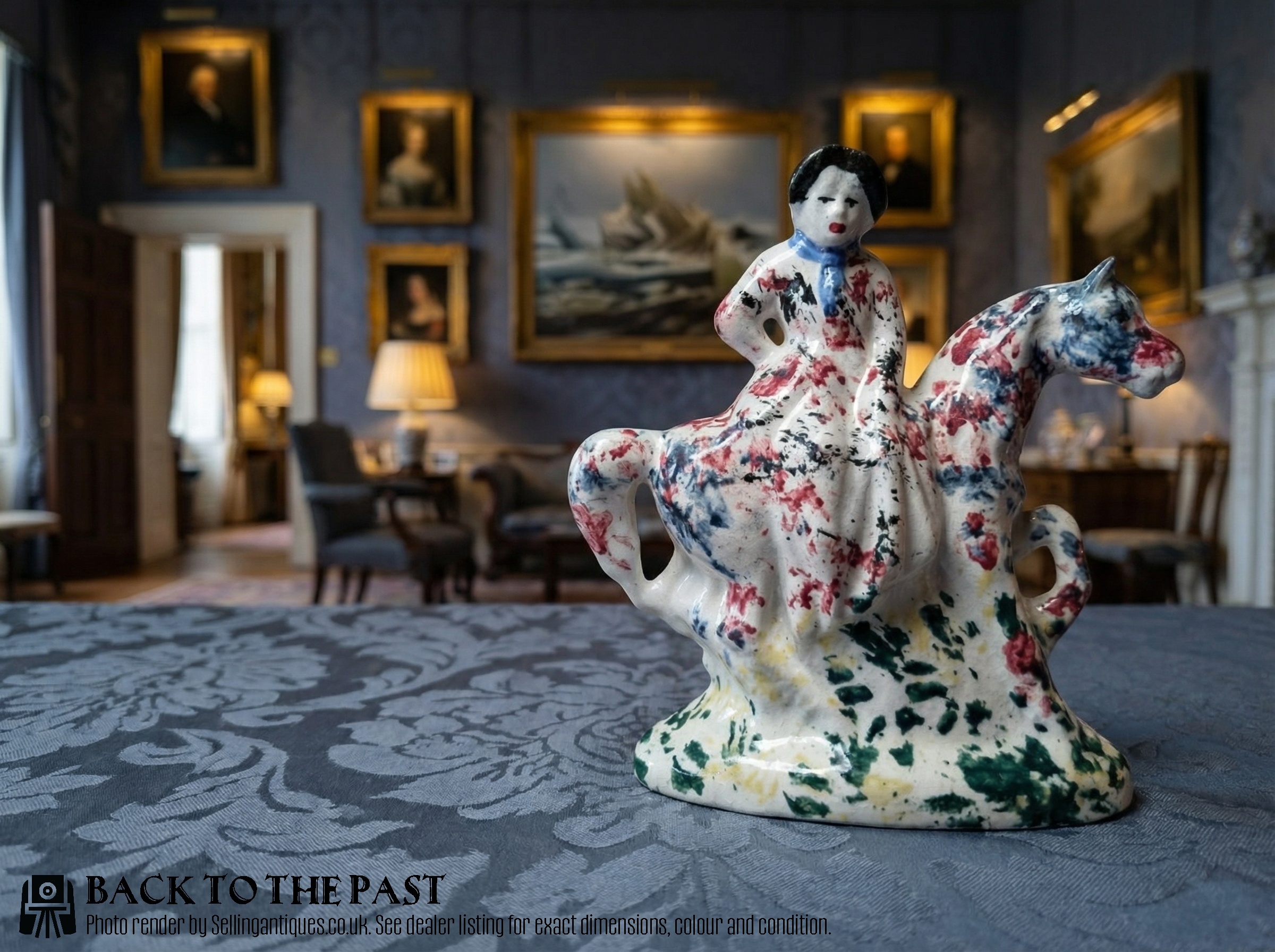
Earthenware Equestrian Figure
An earthenware equestrian figure depicts a horse and rider in ceramic, capturing subjects from Chinese history and Victorian Staffordshire pottery. These sculptures portray historical leaders, literary figures, royalty, and everyday riders upon horseback.
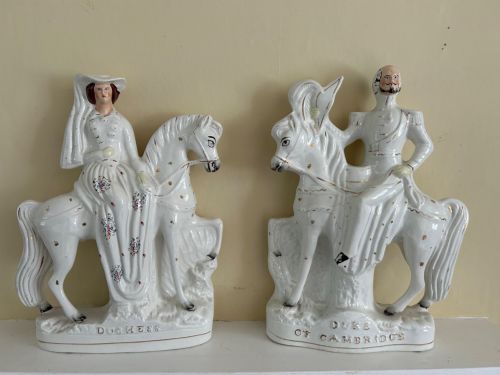
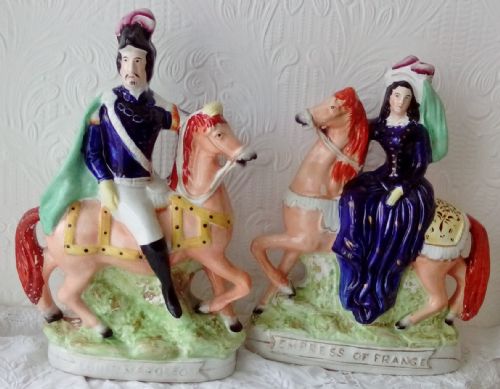
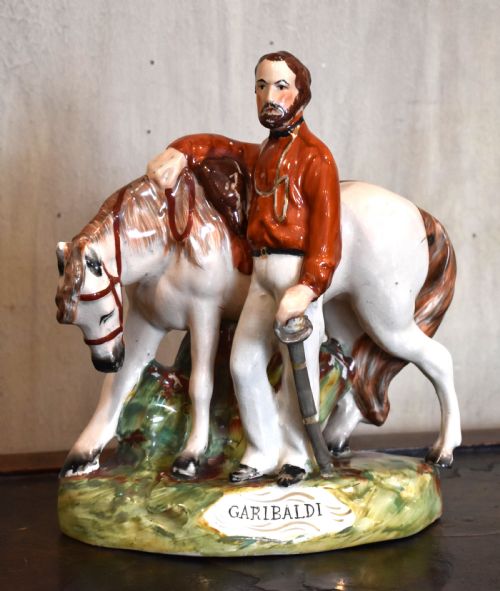
The versions most commonly met on this page span the nineteenth century, particularly Victorian Staffordshire pottery flatback figures. English potteries produced these ornamental pieces to sit on mantelpieces, portraying figures like Joan of Arc, the Duke and Duchess of Cambridge, and Scottish Highlanders.
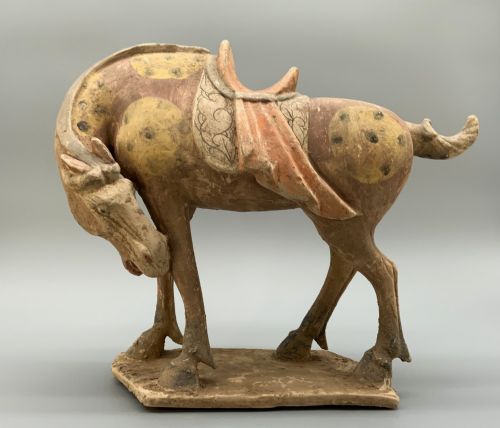
Earlier Chinese examples also appear, representing Tang Dynasty pottery horses and figures created for burial tombs. Collectors encounter both ancient funerary sculpture and nineteenth century British folk tradition under this single heading.
How they were made
Potters shaped these earthenware equestrian figure pieces using clay and terracotta, often employing moulds to form the complex shapes of horse and rider. Figures were hollowed to prevent cracking during firing in the kiln.
Surface decoration relies on glazes, enamel, and mineral pigment to add colour and detail to the fired ceramic. Staffordshire potters applied hand painting over or under the glaze, while Tang examples utilised lead-based Sancai glazes that ran across the clay during firing.
Materials across these entries include earthenware, terracotta, mineral pigment, enamel, and Sancai glaze.
What varies in quality
The distinction between ordinary and superior pieces lies in the crispness of the modelling and the control of the glaze. Master potters achieved dynamic posture and fine facial details that lesser workshops missed, resulting in a lively silhouette rather than a stiff block.
Hand painting dictates the visual success of the piece, with careful brushwork on the eyes, harness, and costume separating fine studio or factory output from hasty commercial production. Preservation of the original enamel and glaze without excessive restoration maintains the integrity of the surface.
The Earthenware Equestrian Figure Glossary
- Flatback
- A ceramic figure modelled fully on the front and sides while the reverse remains largely unadorned or flat. Potters designed these pieces to stand neatly against a wall on a mantelpiece.
- Sancai
- A type of lead-glazed pottery associated with the Tang Dynasty that typically employs amber, green, and creamy white colours. These glazes interacted on the clay body to create subtle streaks and pooling effects.
- Staffordshire pottery
- Earthenware produced in the industrial towns of Staffordshire, England, famous for domestic figures and mantel ornaments. These factories turned out vast quantities of portrait and narrative subjects during the nineteenth century.
- Terracotta
- Fired unglazed clay of a brownish-red colour used to form sculptural bodies. The material provides a porous base that accepts pigments and glazes.
- Earthenware
- Porous ceramic fired at lower temperatures than stoneware or porcelain. It requires a glaze to hold liquids and forms the structural body for most of these figures.
Earthenware Equestrian Figure: Frequently Asked Questions
Where did these figures sit in a Victorian home?
Victorian Staffordshire pieces stood proudly on mantelpieces, sideboard tops, and in parlour display cabinets where guests could admire the subjects. Their flat backs allowed them to sit flush against the wall.
They served as decorative conversation pieces that displayed the owner's interest in politics, royalty, and current events.
How do I spot a Victorian Staffordshire piece?
Look for earthenware bodies finished with bright enamel colours, often featuring a hollow interior and a flat or partially finished reverse. Common subjects include Scottish Highlanders, military leaders, and literary characters.
The potting style is robust and folk-art inspired, typical of nineteenth century English regional kilns.
What is the difference between Tang Dynasty and Victorian pieces?
Tang Dynasty examples originate from ancient Chinese burial practices and utilise mineral pigments or Sancai glazes on heavy terracotta. They date back many centuries and reflect Eastern funerary art.
Victorian figures are nineteenth century British ceramics designed for domestic mantel display, using slip-cast or moulded earthenware with painted enamel details.
How should I clean my equestrian ceramic figure?
Dust the surface gently with a soft, dry brush to remove particles without disturbing old enamels or glazes. Avoid using water or chemical cleaners, particularly on antique pieces with fragile surface pigments.
Keeping the figure out of direct sunlight prevents the painted colours from fading over time.