


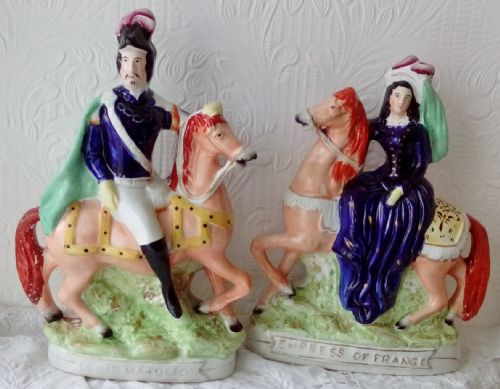


Staffordshire Flatback Horse
A Staffordshire flatback horse brings nineteenth-century British earthenware figure modelling straight into a room with its bright enamelled colours and simple charm.
Staffordshire Flatback Horse
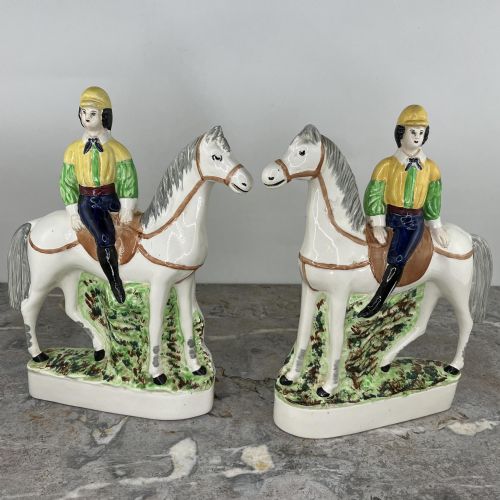
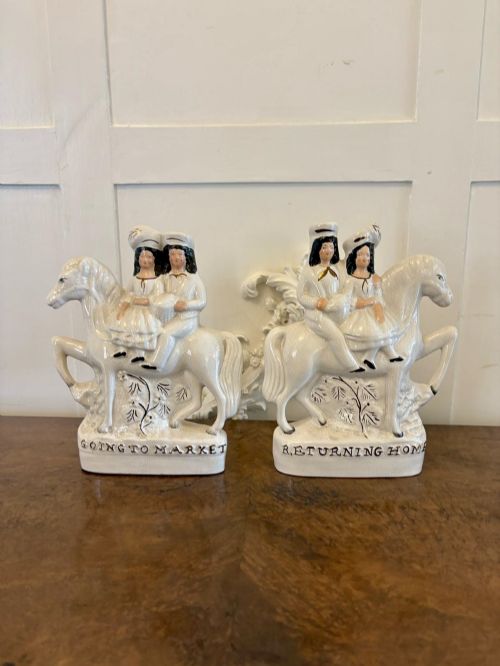
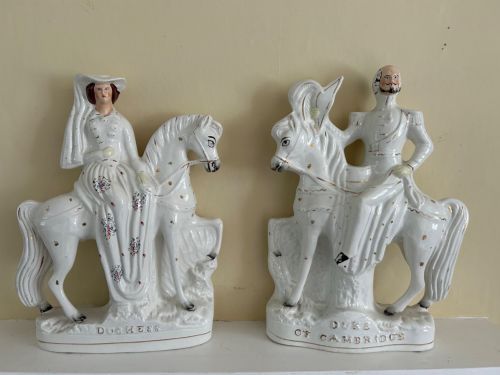
A Staffordshire flatback horse is a nineteenth-century earthenware figure designed to stand against a wall with an unglazed or simply finished back. These decorative ceramics portray equestrian subjects ranging from military leaders and royalty to literary heroes and everyday riders.
Most examples found here date to the Victorian era, particularly clustering around the mid to late nineteenth century. The selection typically includes individual models, matched pairs, and spill vases featuring mounted figures such as jockeys, highwaymen, and highlanders.
How They Were Made
Potters shaped these figures using earthenware clay, often pressing the damp material into moulds to create the hollow flatbacked form. The pieces received a lead glaze to seal the surface before firing in the kiln.
Staffordshire Flatback Horse Retail Price Guide 2026
Typical asking prices for staffordshire flatback horse among the pieces listed under this phrase on Sellingantiques today, from the lower quarter to the upper quarter. They describe what is for sale here now, not the wider market.
Nineteenth-century potters modelled everything from highwayman Tom King to leopard hunters, proving Victorians loved an equine adventure.
What Varies in Quality
The standard of modelling largely determines the visual success of a piece, separating crisp, expressive anatomy from softer, more generic casting. Skilled hands in the pottery made facial expressions and equine stance much more convincing.
Hand painting also dictates the tier of a figure, as careful brushwork on the enamel colours and controlled application of glaze create cleaner lines and greater depth than hasty decoration.
The Staffordshire Flatback Horse Glossary
- Flatback
- A ceramic figure modelled fully on the front and sides while the reverse remains flat and largely unadorned. This construction allowed potters to save on material and let the piece sit flush against a mantelpiece.
- Earthenware
- A porous pottery body fired at lower temperatures than stoneware or porcelain. It requires a glaze to hold liquids and provides the standard base for Victorian Staffordshire figures.
- Lead glaze
- A shiny glass-like coating containing lead oxide applied to earthenware before firing. It gives these figures their characteristic glossy finish and deepens the appearance of the underlying body.
- Enamel paint
- Opaque coloured decoration applied over the fired glaze and hardened in a muffle kiln. It supplies the bright reds, blues, and blacks seen on riders and their mounts.
- Spill vase
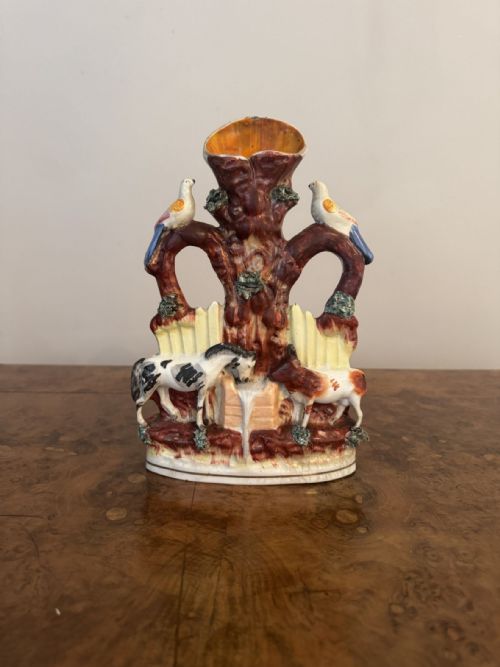
- A hollow vertical cylinder incorporated into a ceramic figure to hold wooden spills for lighting fires. Many equestrian designs integrate this practical household feature behind the horse and rider.
Staffordshire Flatback Horse: Frequently Asked Questions
Where were these figures displayed originally?
Victorian households typically placed these earthenware pieces on mantelpieces in parlours and sitting rooms. Their flat backs made them ideal for resting securely against walls or on narrow shelves.
Displaying them high up also kept the brightly enamelled colours and gilt highlights safely in view of family members and visiting guests.
Why do some horses appear as pairs?
Potters frequently produced Staffordshire figures in matched sets to balance the visual weight of a mantelpiece. Symmetrical pairs depicting riders or royal figures created a formal arrangement popular in Victorian interior decoration.
Owners often separated or reunited these pairs over time, which explains why single examples also appear on the market today.
What subjects besides royalty are shown?
Equestrian models frequently depicted historical figures, military heroes, literary characters, and local personalities known to the British public. Subjects ranged from legendary riders and hunters to jockeys and musicians on horseback.
These varied themes allowed buyers to choose figures that reflected their personal interests, current news events, or patriotic sentiments.
How do you clean glazed earthenware?
Dusting these figures gently with a soft, dry brush preserves the hand-painted enamel and lead glaze. Moisture can sometimes damage fragile nineteenth-century paints or penetrate old clay bodies through microscopic crazing.
Avoiding harsh cleaning agents and water keeps the delicate surface decoration stable and secure for years to come.