


Ceramic Horse Figurine
These ceramic horse figurine examples span Victorian Staffordshire flatbacks and Tang Dynasty style pottery.
Ceramic Horse Figurine
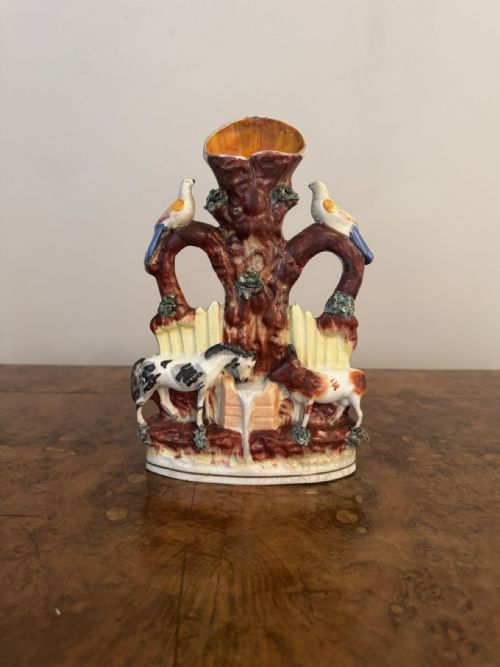
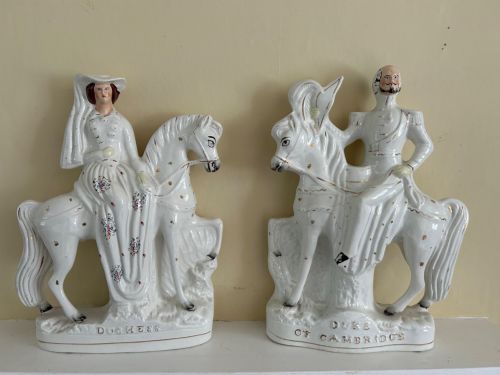
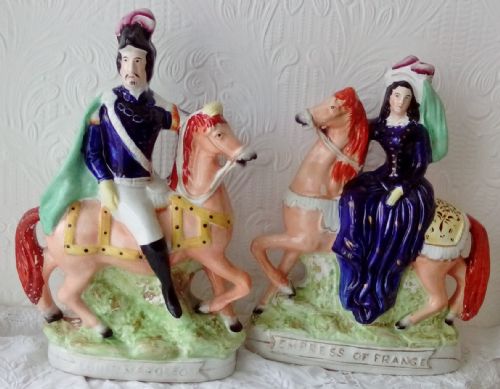
A ceramic horse figurine captures equestrian subjects in earthenware and terracotta, most frequently appearing here as Victorian Staffordshire flatback figures. These pieces depict historical personages, royalty, and literary characters mounted on horseback, alongside straightforward animal studies.
The selection extends from early Chinese earthenware through Japanese porcelain to nineteenth-century European output. Buyers encounter equestrian portraits of military leaders, royal children, and Scottish Highlanders alongside traditional animal forms.
Staffordshire flatbacks dominate the current gathering, characterised by hollow backs designed for display on mantelpieces. These figures present specific characters like Joan of Arc, Garibaldi, and highwayman Tom King.
Materials and construction
Makers shaped these pieces from clay, earthenware, terracotta, and porcelain, applying lead glazes and enamel colours to the surfaces. Figures were typically slip-cast or pressed into moulds before firing in kilns.
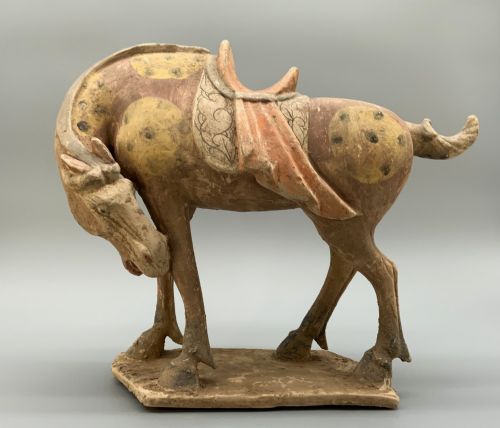
Decoration relied on hand-painted enamel colours and rich glazes, including the characteristic Sancai multi-colour palette seen on Tang style pieces. Earthenware bodies received smooth lead glazes to seal the porous clay.
Victorian Staffordshire figures represent the primary category, joined by Japanese Edo period porcelain and Chinese Tang style pottery.
Quality and execution
The fineness of hand-painting and modelling distinguishes superior examples from standard production. Crisp facial details, carefully rendered tack on the horses, and rich enamel palettes separate the finer items.
Condition and the retention of original glazes and enamel decoration heavily influence the standing of an individual piece. Early forms, such as Tang Dynasty pottery, derive their status from age and historical survival.
Mikawachi Kilns·Royal Dux
The Ceramic Horse Figurine Glossary
- Flatback
- A figure modelled in the round at the front with a flat, unglazed or minimally decorated back designed for placement against a wall. This construction method saved clay and reduced weight.
- Earthenware
- Porous pottery fired at lower temperatures than stoneware or porcelain. It requires a glaze to become impermeable to liquids.
- Sancai
- A three-colour glaze technique traditionally used in Chinese pottery, most commonly featuring amber, green, and cream tones. These glazes run and mingle naturally during the firing process.
- Staffordshire
- A generic term for pottery manufactured in the region of Stoke-on-Trent, encompassing numerous smaller potteries. Figures from this area are particularly noted for popular folk art subjects.
- Lead glaze
- A glossy coating containing lead oxide applied to pottery before firing. It produces a smooth, glassy finish that enhances the underlying colours.
Ceramic Horse Figurine: Frequently Asked Questions
What are ceramic horse figurines?
These pieces are moulded and hand-painted sculptural representations of horses and riders produced across various centuries.
They range from utilitarian earthenware figures to museum-quality ancient pottery.
How old are these figures?
The selection spans from pre-sixteenth century Chinese pottery to nineteenth-century Victorian Staffordshire and early twentieth-century European ceramics.
Most items originate from the Victorian period between 1800 and 1900.
Where were Staffordshire figures displayed?
Victorian flatback figures were specifically designed for display on mantelpieces and high shelves. Their unglazed flat backs allowed them to sit flush against cottage walls.
This placement made them prominent decorative elements in nineteenth-century homes.
How do I identify a flatback?
Turn the piece around to check the rear surface, which is typically flat and minimally finished compared to the detailed front. This method was standard for Staffordshire manufacturers.
It distinguishes mantelpiece ornaments from figures modelled fully in the round.