




Victorian Staffordshire Horses
Victorian Staffordshire horses are characteristic ceramic figures and wall brackets that bring distinct nineteenth-century folk charm to a mantelpiece.
Victorian Staffordshire Horses
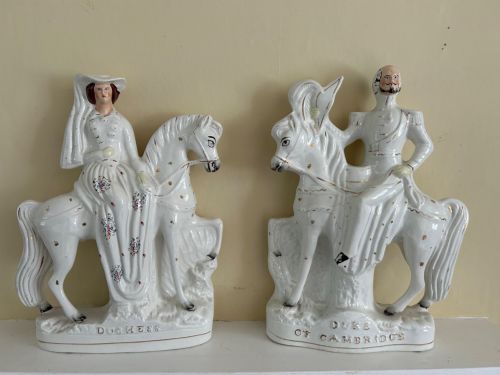
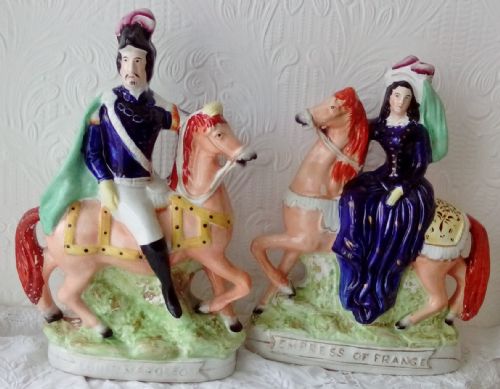
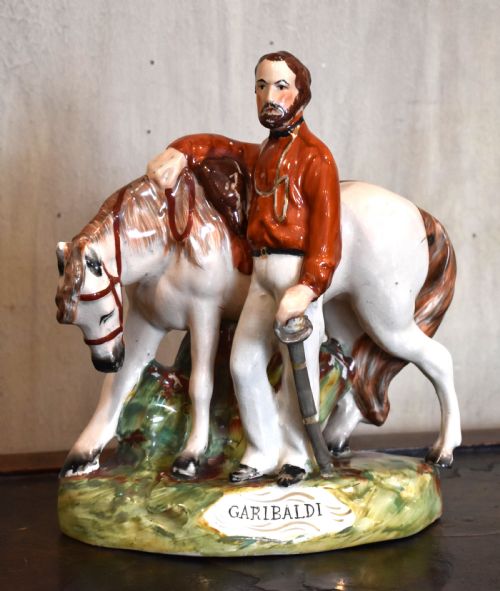
When you search for Victorian Staffordshire horses, you are looking at nineteenth-century earthenware figures and wall brackets depicting animals and riders. These pieces capture subjects ranging from white horses and pairs of jockeys to historical figures like Joan of Arc, Garibaldi, and the Duke and Duchess of Cambridge.
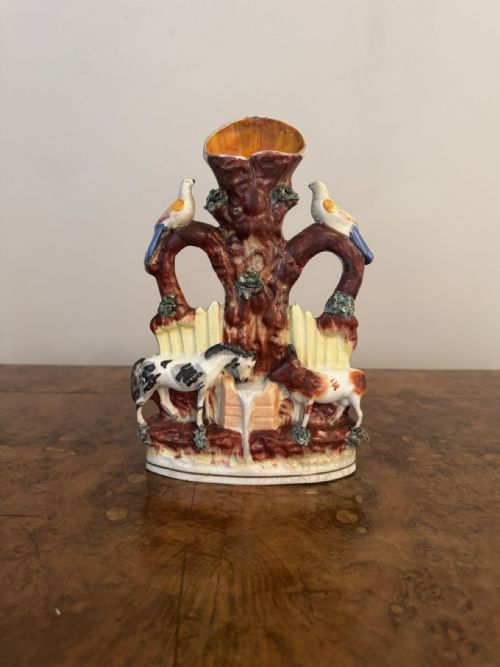
The versions you are most likely to meet on this page include flatback pottery figures of Scottish Highlanders and highwaymen on horseback, alongside spill vases and pairs of mounted children. They span the Victorian era, with specific examples appearing from around eighteen-sixty to eighteen-eighty.
How they were made
These figures are formed from earthenware and glazed ceramic, utilising lead glaze to create a smooth surface finish. The bodies are typically slip-cast or hand-pressed in local potteries during the nineteenth century.
Listings combine earthenware and glazed ceramic materials with enamel paint and gilt decorations across the Victorian period.
What varies in quality
Quality in these ceramic figures rests primarily on the crispness of the moulding and the artistic skill applied to the hand-painting. Better examples display careful brushwork on the faces, harness details, and clothing rather than hasty, broad strokes.
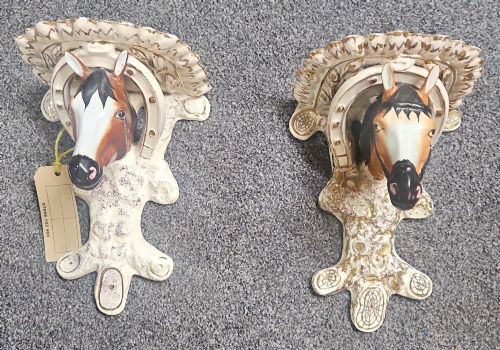
The complexity of the subject also influences the piece, separating standard symmetrical pairs of animals from elaborate equestrian groups featuring historical personalities, spill vases, or architectural wall brackets.
The Victorian Staffordshire Horses Glossary
- Flatback
- A figure moulded with a detailed front and a largely unglazed, flat reverse designed to sit flush against a wall. This technique saved time and material during production.
- Spill vase
- A hollow ceramic tube incorporated into the figure design to hold wooden spills for lighting fires. They combine domestic utility with decorative display.
- Lead glaze
- A shiny glass-like coating containing lead applied to earthenware before firing. It waterproofs the clay body and deepens the underlying colours.
- Earthenware
- A porous pottery body fired at lower temperatures than stoneware or porcelain. It serves as the standard substrate for Victorian Staffordshire figures.
Victorian Staffordshire Horses: Frequently Asked Questions
Where were these figures made?
These ceramic figures originate from the potteries of Staffordshire in England during the nineteenth century. Local workshops produced them for domestic mantelpiece display.
They reflect popular tastes, current events, and historical figures of the Victorian period rather than exact portraits from life.
How do I clean ceramic figures?
Dust these pieces gently with a soft, dry brush to prevent accumulation in the crevices of the glaze. Avoid using harsh cleaning agents or submerging them in water.
Moisture can penetrate unglazed areas on flatback bases and potentially damage the historic earthenware body over time.
Are pairs common in Staffordshire pottery?
Potters frequently produced Staffordshire figures in matching pairs to flank mantelpieces and mirrors in Victorian homes. Pairs often depict symmetrical animals, matched riders, or complementary historical subjects.
Single figures also appear, particularly larger flatback pieces designed to stand alone as central decorative room ornaments.
What subjects besides horses appear?
The listings show figures depicting historical and literary characters such as Garibaldi, Joan of Arc, and highwaymen alongside royal children and musicians. Animals like leopards and white horses also form distinct categories within the broader tradition.
Some pieces integrate functional elements, such as horse head wall brackets or spill vases attached to the equestrian figures.