




Victorian Female Statue
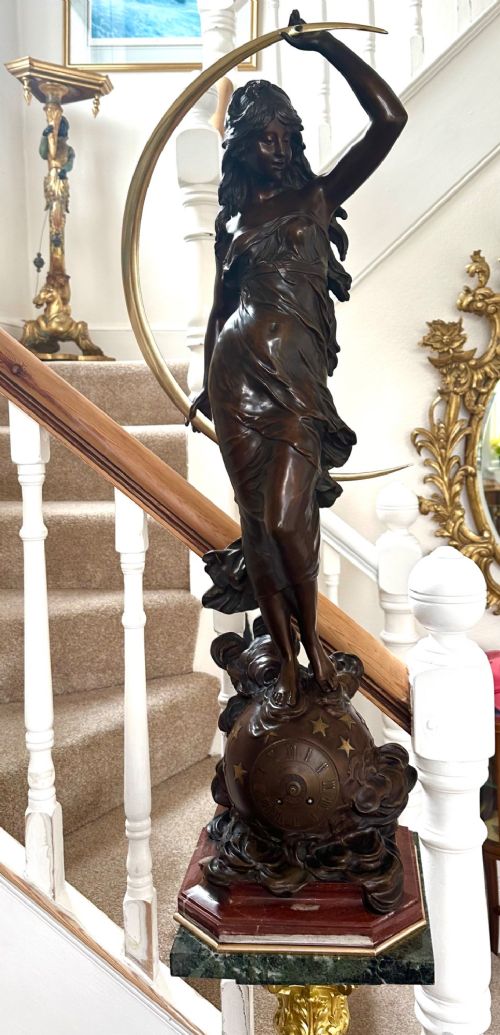
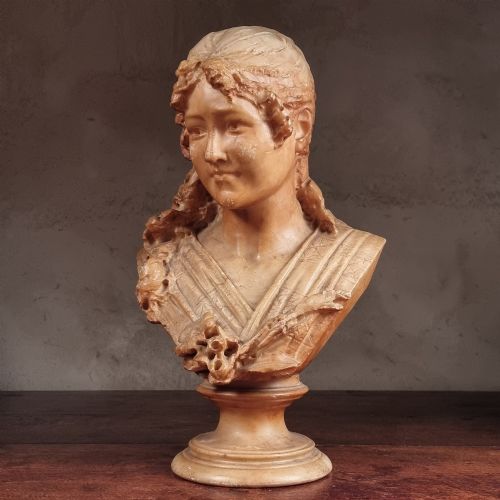
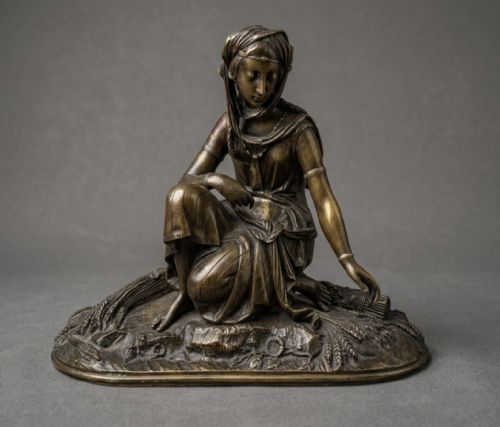
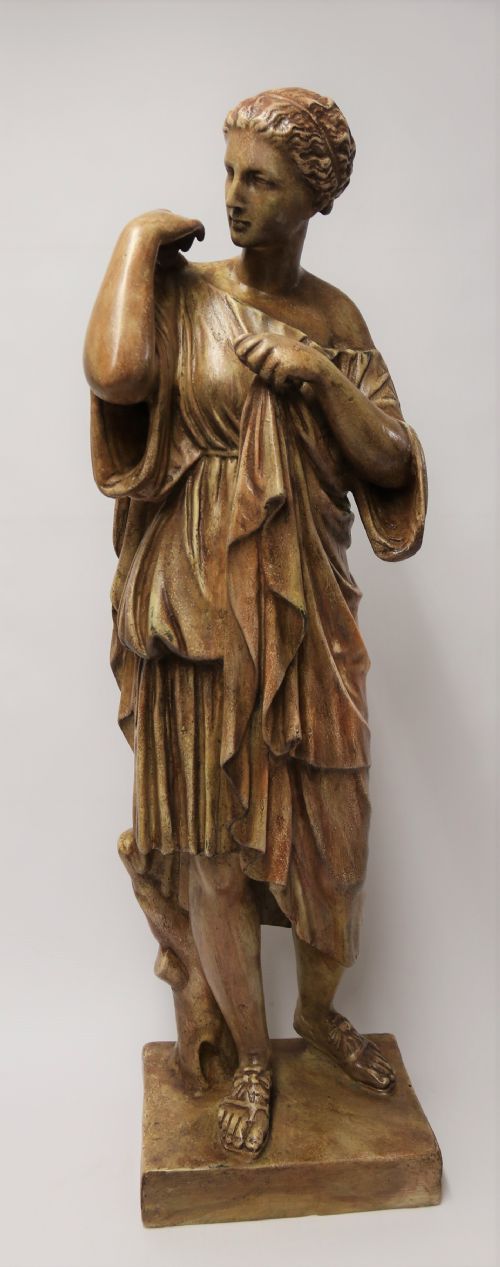
When you search for a victorian female statue, you encounter classical figures and portraits cast in bronze, carved in marble, and moulded in parian porcelain.
Victorian Female Statue
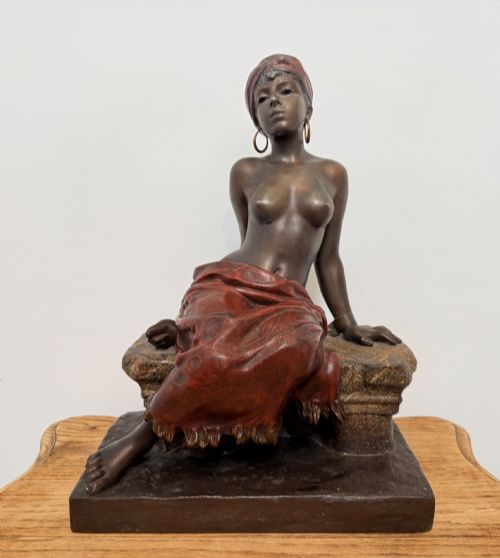
A victorian female statue encompasses full-length sculptures, busts, and figurines depicting classical deities, historical heroines, and allegorical subjects. These pieces span the nineteenth century, drawing heavily on neoclassical, art nouveau, and orientalist traditions.
You meet subjects ranging from mythological figures like Diana and Venus to literary characters and domestic portraits of young women and girls. Materials shift between cast bronze, carved marble and alabaster, and various ceramic bodies.
The scale ranges from small cabinet figurines to large pedestal-mounted sculptures and table lamps. Makers utilised diverse workshops across Britain, France, and Austria to produce these decorative works.
Materials and methods
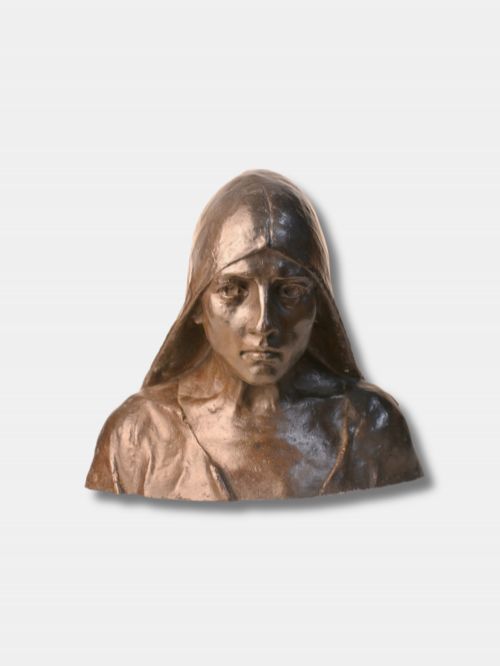
Statues and busts are produced through metal casting, stone carving, and ceramic moulding. Bronze figures utilise the lost-wax or sand-casting methods, often finished with patination or cold painting.
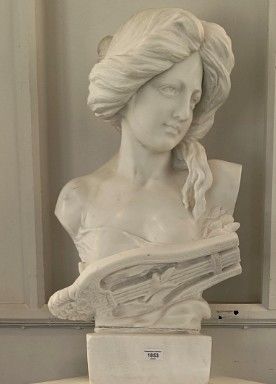
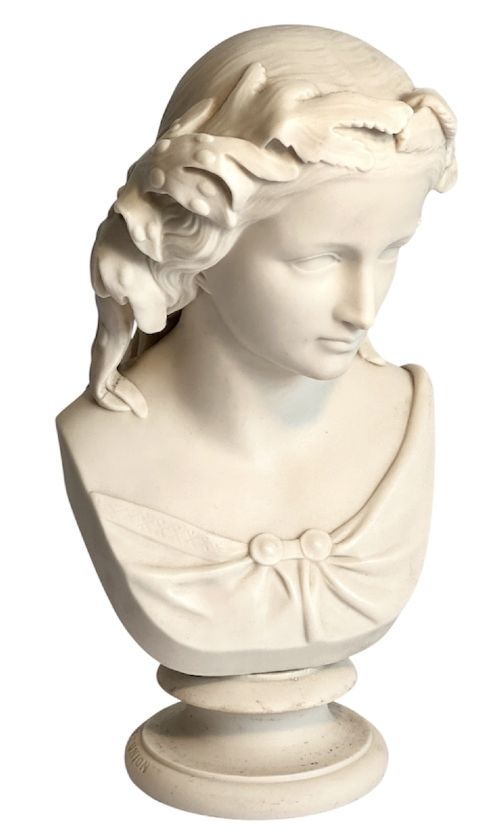
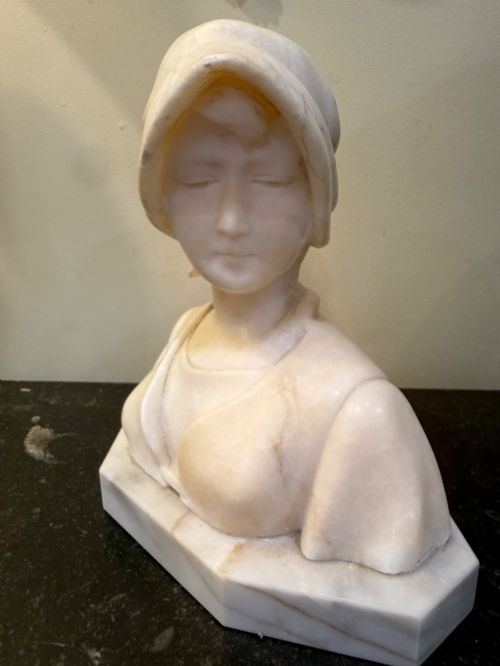
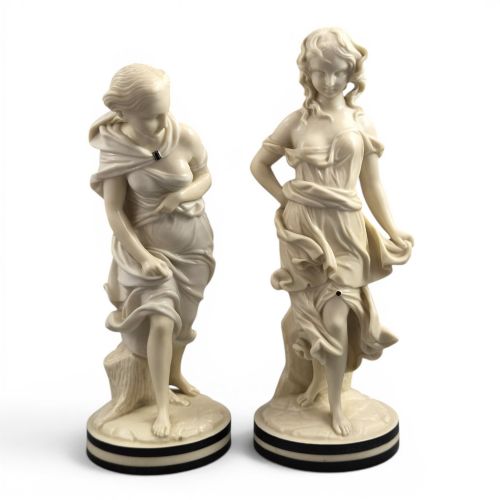
Marble and alabaster pieces involve hand-carving from solid blocks, frequently paired with contrasting coloured marble bases. Parian porcelain and bisque figures are slip-cast in ceramic moulds and fired in kilns to achieve a fine biscuit texture resembling marble.
One nineteenth-century sculptor chose to immortalise a female ibex with meticulously carved horns.
Distinguishing craftsmanship
Carved marble and alabaster demonstrate skill through the subtlety of surface polish and the naturalistic rendering of skin and fabric folds. Ceramic figures rely on precise detail preservation during the firing process.
August Moreau·E Villanis·James Hadley·Emile Jespers·Bernard Bloch·Gregoire·Royal Worcester·Copeland·Royal Dux·Jean Jules Cambos·Vion Baury
The Victorian Female Statue Glossary
- Parian porcelain
- A fine-grained, unglazed porcelain developed to imitate carved marble. It gained popularity during the nineteenth century for producing detailed portrait busts and classical figurines.
- Alabaster
- A soft, translucent stone used for carving statues and portrait busts. Its fine grain allows artisans to achieve gentle translucency in sculptural details.
- Bisque porcelain
- Unglaved ceramic fired once to create a matte, porous finish. It captures delicate facial expressions and intricate costume details without surface glare.
- Spelter
- A zinc alloy utilised as a less costly alternative to bronze during the nineteenth century. It accepts metallic finishes well and often supports figural lamps and decorative models.
Victorian Female Statue: Frequently Asked Questions
How do I identify a parian porcelain figure?
Parian porcelain possesses a smooth, unglazed surface that closely resembles carved marble rather than glossy household china. The material feels dense and cool to the touch.
These pieces often display crisp moulding detail on classical drapery and hair without the shiny finish typical of glazed ceramics.
What is the difference between a bust and a statue?
A bust represents a person from the chest or shoulders up, focusing on facial likeness and expression. A statue depicts the entire figure, standing or seated.
Both forms were popular throughout the nineteenth century in marble, bronze, and ceramic materials.
Where were these statues made?
Nineteenth-century female sculptures originated across Europe, with major production centres in Britain, France, Austria, and Italy. Foundries and potteries in these regions supplied domestic and international markets.
Specific works often reflect the distinct sculptural traditions of their country of origin.
How do I care for marble and alabaster?
Dust these stone sculptures gently with a dry, soft cloth to prevent particulate buildup. Avoid using water, oils, or chemical cleaners on porous surfaces like alabaster.
Keep the pieces away from direct sunlight and extreme temperature fluctuations to protect the finish.