

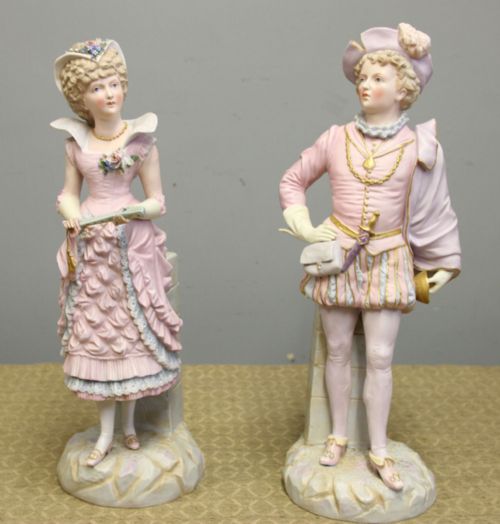


Pastel Painted Figurine
These pastel painted figurine selections offer classic figural charm for interiors seeking soft, historic character.
Pastel Painted Figurine
When searching for a pastel painted figurine, collectors examine ceramic and porcelain representations of human figures, children, and fisher folk dating from the mid eighteenth century through to the early twentieth century. These sculptural objects encompass French, German, and English origins, appearing as single pieces or balanced pairs designed for display.
The most common examples on this page date from the nineteenth century, including Victorian pieces, French porcelain figures, and German works produced by factories such as Sitzendorf and Volkstedt. Formats range from simple ceramic bisque figures of young boys and girls to elaborate figural candlesticks and garden scenes.
Earlier eighteenth century English examples, such as Bow porcelain figures featuring soft paste ceramic bodies and historic marks, also appear among the selections. These sculptures bring traditional craft and delicate chromatic detailing into domestic spaces.
How They Were Made
Maker workshops utilised porcelain, soft paste porcelain, and ceramic bisque, shaping the clay into detailed human forms and natural bases. Biscuit or unglazed bisque porcelain provides a matte surface texture, while glazed porcelain offers a smooth, glossy finish.
Pastel Painted Figurine Retail Price Guide 2026
Typical asking prices for pastel painted figurine among the pieces listed under this phrase on Sellingantiques today, from the lower quarter to the upper quarter. They describe what is for sale here now, not the wider market.
Several figures spend their days permanently holding fishing nets and gardening baskets while indoors.
What Varies in Quality
The sophistication of the underlying ceramic body also distinguishes the range, moving from standard commercial earthenware and bisque to translucent soft paste porcelain and detailed glazed porcelain. Elaborate supporting elements, such as floral bases and gilt highlights, demonstrate higher ambition in the workshop.
Volkstedt Porcelain·Sitzendorf·Bow·Meissen
The Pastel Painted Figurine Glossary
- Bisque porcelain
- Un-glazed porcelain fired once to create a matte, porous surface resembling marble. It became popular in the nineteenth century for detailed sculptural figures.
- Soft-paste porcelain
- An artificial porcelain composition fired at lower temperatures than hard-paste, common in early English factories. It exhibits a warm tone under the glaze.
- Gilt
- A thin layer of gold applied to the surface of ceramics or metal mounts to accent details. It enhances the decorative presence of the object.
- Rococo Revival
- A nineteenth-century design style reviving the asymmetrical scrolls, shell motifs, and naturalism of the eighteenth century. It frequently appears in Victorian decorative arts.
- Figural candlestick
- A functional lighting device incorporating a sculptural human or animal figure into the stem or base. These pieces combine utility with decorative display.
Pastel Painted Figurine: Frequently Asked Questions
How do I date an antique porcelain figure?
Dating relies on examining the characteristics of the ceramic body, the style of painting, and any factory marks stamped or painted on the base. Comparing the piece to documented examples from known periods helps establish its age.
Changes in glazing techniques and stylistic cues such as Victorian or Rococo Revival dress also provide reliable chronological indicators.
What is the difference between bisque and porcelain?
Bisque porcelain is fired without a final clear glaze, leaving a matte, porous texture that highlights fine sculptural detail. Glazed porcelain receives a vitreous coating that creates a glossy, impervious finish.
Both materials were used across different European factories depending on the desired aesthetic effect.
How should I display figural candlesticks safely?
Display these delicate ceramic pieces on stable, level surfaces away from heavy foot traffic or direct sunlight. Using museum wax underneath the base adds stability if placed on open shelves.
Avoid positioning them too close to active heat sources that might affect historic materials.