



Art Nouveau Terracotta Sculpture
Art nouveau terracotta sculpture brings fluid, organic lines and lifelike figures straight into a room through the warmth of fired clay.
Art Nouveau Terracotta Sculpture
Art nouveau terracotta sculpture comprises figurative works, busts, wall reliefs, and centrepieces shaped from clay during the late nineteenth and early twentieth centuries. These objects capture the characteristic whiplash curves, floral motifs, and naturalistic forms of the movement.
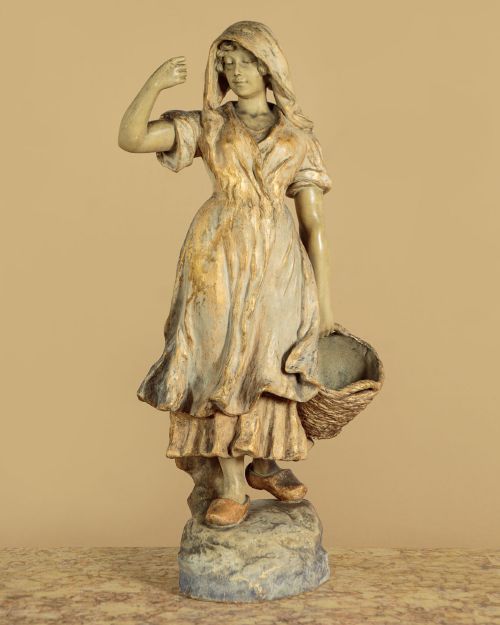
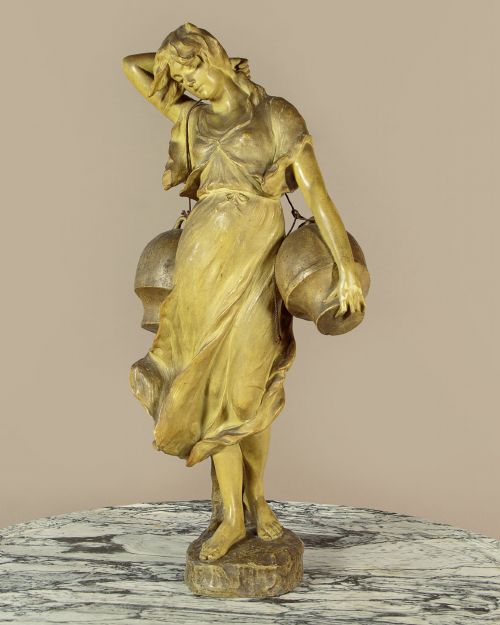
Buyers meet works originating from Austria, France, and Bohemia, spanning the Victorian and Edwardian eras. Figures range from water carriers and maidens to mythological subjects such as Cupid and Psyche.
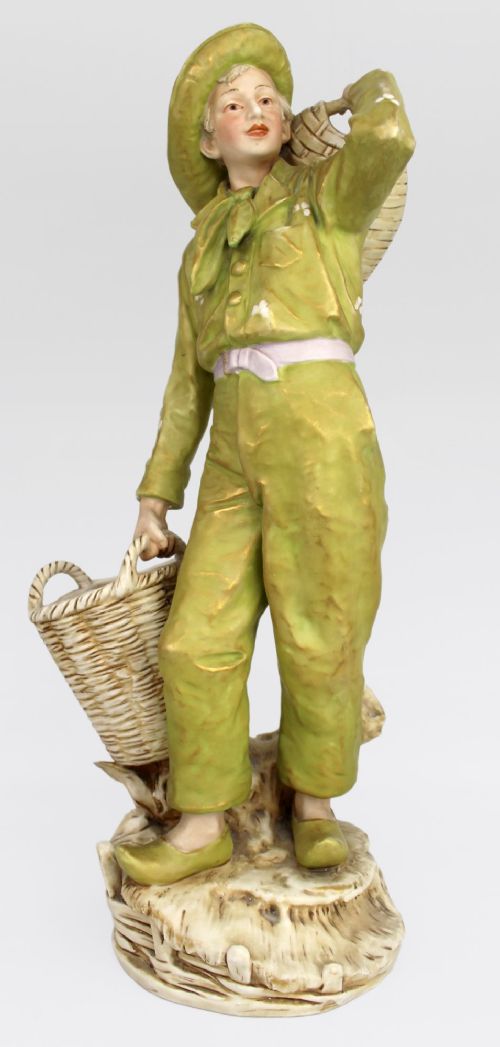
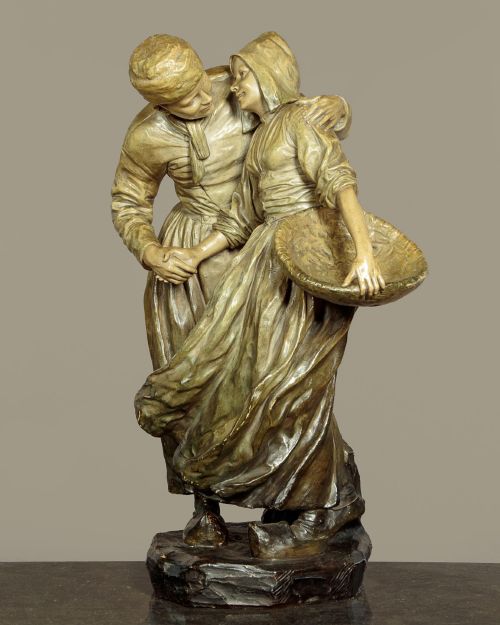
The material gives each piece a substantial weight and a matte or painted surface texture distinct from bronze or marble. Figures often depict female beauties, allegorical characters, or pastoral scenes rendered with expressive drapery.
How they were made
Makers utilised slip casting and hand-modelling techniques to shape earthenware and terracotta clay into complex figurative compositions. Slips and liquid clays flowed into moulds to capture intricate details like hair, garments, and botanical ornamentation.
Surfaces received polychrome paint, pigment, bronzed slip, or gilt finishes after firing to accentuate the sculpted contours. Pigments applied directly to the porous clay body added colour to clothing, skin, and hair.
Several young women depicted in these sculptures appear lost in thought while balancing water jugs or tending to geese.
What varies in quality
The finesse of the modelling dictates quality, separating sharply defined facial expressions and fluid drapery from soft, indistinct casts. Master modellers achieved a sense of movement and anatomical realism that lesser workshop editions missed.
Surface treatment significantly influences character, as original polychrome paint, gilt accents, and bronzed slip retain the intended aesthetic of the period. Skilled application of pigment enhances depth, whereas flat or overworked surfaces obscure the underlying clay.
Goldscheider·Royal Dux·Friedrich Goldscheider·Ernst Whaliss·Georges Morin
The Art Nouveau Terracotta Sculpture Glossary
- Terracotta
- A porous, brownish-red fired earthenware clay used extensively for sculptural works. It hardens permanently in a kiln and takes paint or glaze well.
- Slip cast
- A manufacturing method where liquid clay slip is poured into a plaster mould. This process allows the production of intricate figures and hollow forms.
- Wall relief
- A sculptural design that projects from a flat background panel rather than standing freely in the round. These pieces were often hung on interior walls.
- Centrepiece
- A large decorative table ornament designed to be viewed from all sides. These elaborate figural groups anchored dining tables or display surfaces.
Art Nouveau Terracotta Sculpture: Frequently Asked Questions
How do I clean terracotta sculpture?
Dust surfaces gently with a soft, dry brush to prevent dirt accumulation in the recessed details of the clay. Avoid using water or liquid cleaners, as porous terracotta and applied pigments absorb moisture easily.
Keep pieces away from damp environments to protect the integrity of the fired body and any original painted finishes.
Where should I display these figures?
Place sculptures on stable surfaces where their weight is fully supported, such as sturdy sideboards or dedicated pedestals. Ensure wall reliefs hang securely from appropriate fixings suited to heavy earthenware.
Position pieces away from direct sunlight to prevent fading in the polychrome paint or pigments on the surface.
How can I tell the period?
Examine the stylistic cues and manufacturing marks that point towards the late nineteenth century, Victorian, or Edwardian eras. Art nouveau forms typically feature asymmetrical floral patterns and flowing female figures.
Look for impressed factory numbers, signatures, or workshop stamps on the base or reverse of the sculpture.
Are these pieces fragile?
Fired clay possesses considerable weight but remains susceptible to chipping or cracking if dropped or struck against hard surfaces. Protruding fingers, delicate drapery, and floral elements require careful handling.
Moving large busts or centrepieces demands a firm hold from the base rather than lifting by extended arms or decorative appendages.