



Victorian Etagere Bookcase
A victorian etagere bookcase brings multi-tiered shelving and display space into a room, offering both practical storage and elegant display for books and ornaments.
Victorian Etagere Bookcase
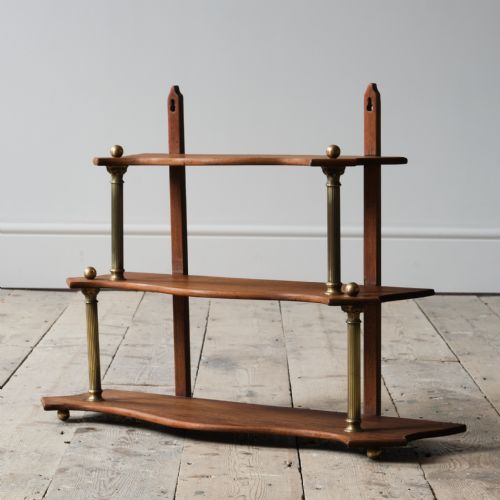
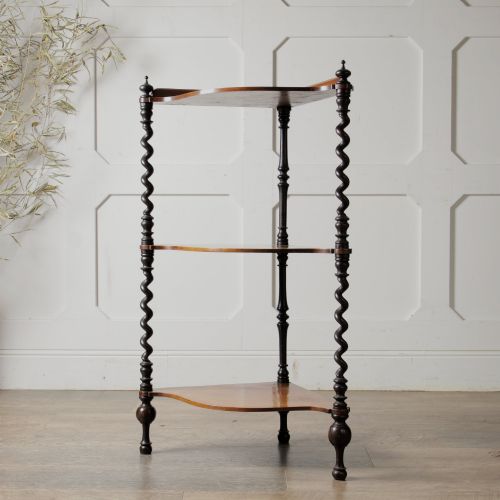
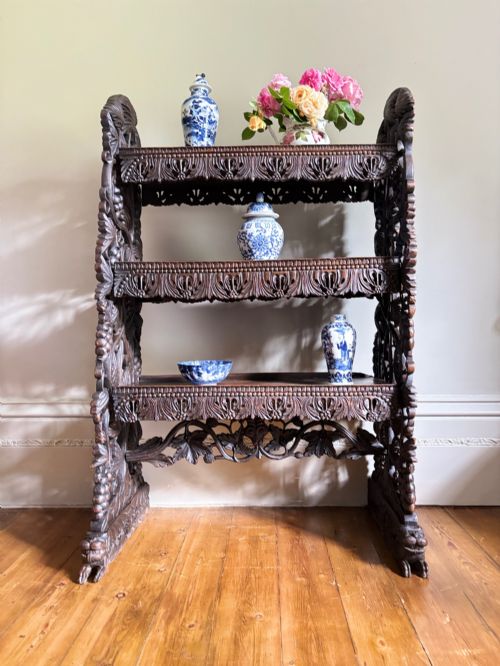
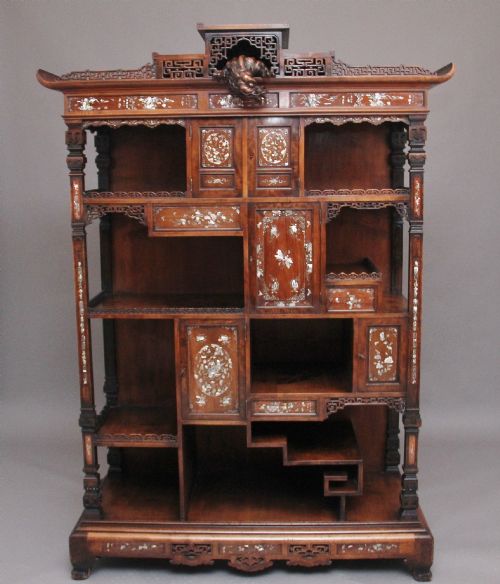
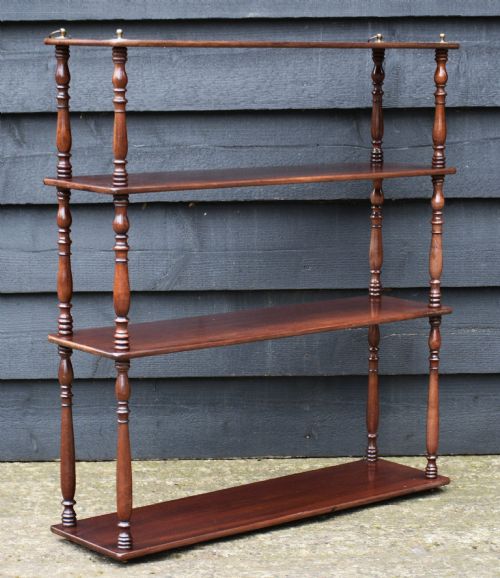
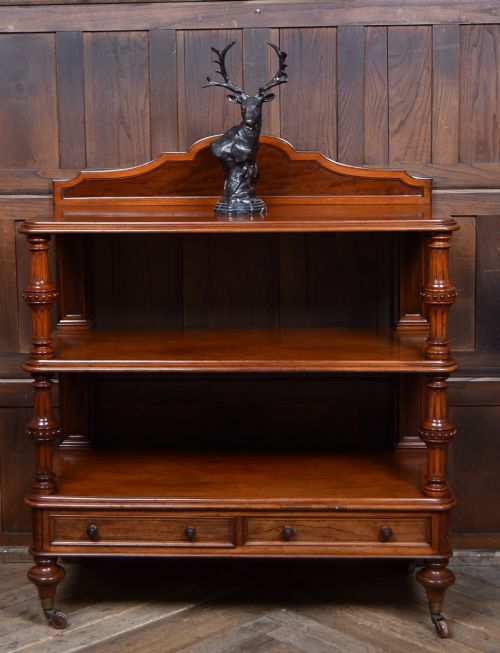
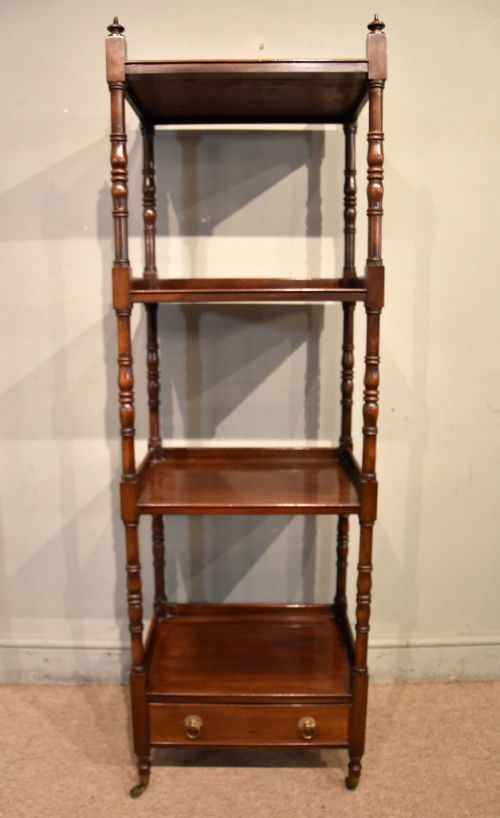
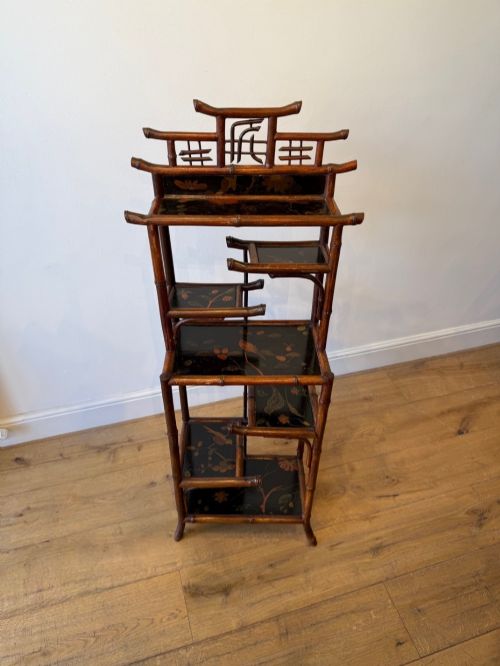
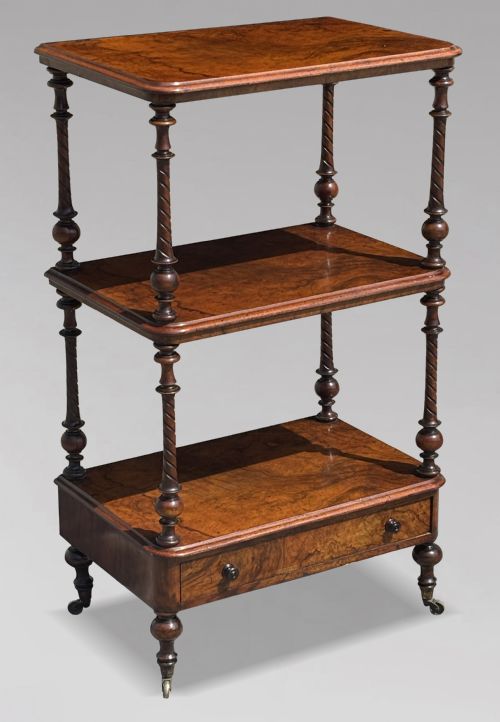
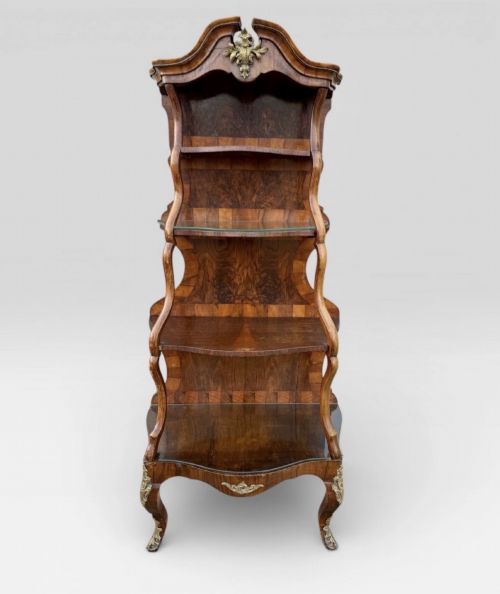
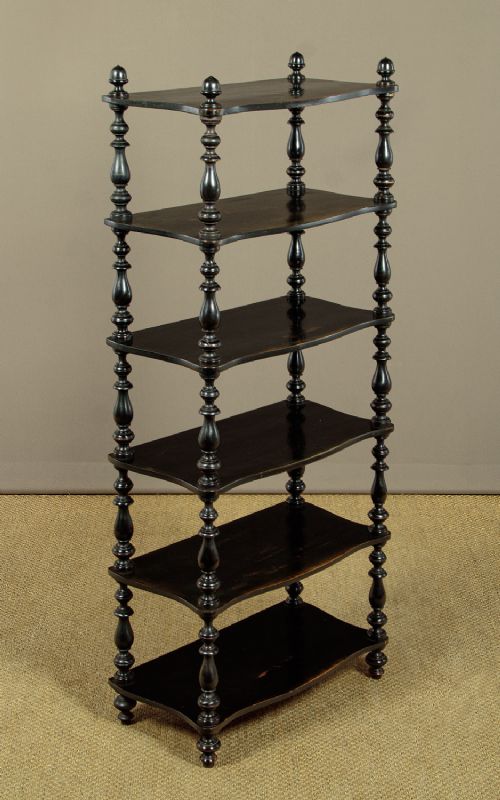
A victorian etagere bookcase combines open shelving with display surfaces, appearing frequently as multi-tiered whatnots, wall hanging shelves, and corner units. These pieces emerge from nineteenth-century workshops in forms ranging from three-tier standing structures to tall six-tier display stands.
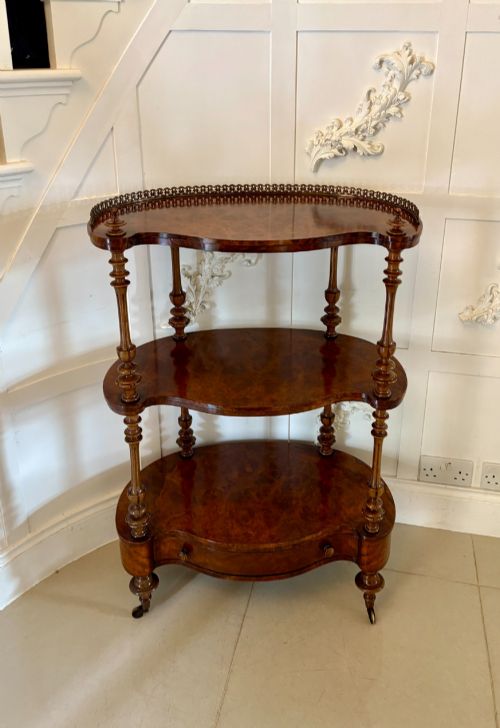
Makers utilised various configurations, including serpentine shapes, barley twist uprights, and integrated cabinets. The selection spans straightforward mahogany shelving units to elaborate inlaid burr walnut pieces designed to hold books and decorative objects.
Distinctions in Quality and Execution
Quality reveals itself in the selection of timbers and veneer work, where figured burr walnut and rich rosewood outrank standard secondary woods. The crispness of carved details and turned supports distinguishes standard production items from superior examples.
Proportion and stability define the architecture of these multi-tiered units. Finer pieces demonstrate careful attention to the balance of the tiers, secure joints, and harmonious brass or gilt metal accents.
Listings feature nineteenth-century pieces constructed from mahogany, rosewood, walnut, bamboo, and brass across various styles.
Gabriel Viardot
The Victorian Etagere Bookcase Glossary
- Etagere
- An open piece of furniture with multiple tiers for displaying small objects or books. It functions as both a decorative centrepiece and practical storage.
- Barley Twist
- A turned column resembling a spiral rope. This decorative woodworking technique appears frequently on upright supports of nineteenth-century stands.
- Burr Walnut
- Walnut timber taken from the growth growths of the tree, yielding highly figured and swirling grain patterns. Cabinet makers utilised these veneers on premium surfaces.
- Serpentine
- A furniture shape featuring a wavy, curving front edge with alternating convex and concave sections. It adds visual movement to cabinet fronts and shelf borders.
Victorian Etagere Bookcase: Frequently Asked Questions
What is a victorian etagere bookcase used for?
These pieces served nineteenth-century households primarily as versatile display surfaces for books, ceramics, and decorative ornaments in drawing rooms and parlours.
They allowed families to exhibit prized possessions across multiple open tiers while keeping daily reading material accessible within living spaces.
How do I distinguish between a whatnot and an etagere?
A whatnot typically refers to a traditional tiered freestanding shelving unit with vertical turned supports, originating strongly in the Victorian era.
An etagere often encompasses broader French-influenced display furniture, though both terms frequently overlap in nineteenth-century cataloguing.
Where should I place an etagere bookcase at home?
Standing models suit empty corners, hallway alcoves, or central wall spaces where their multi-tiered structure remains visible from various angles.
Wall-hanging versions fit neatly above sideboards or desks, utilising vertical space without occupying floor area.
What woods were used for these bookcases?
Cabinet makers relied heavily on rich hardwoods such as mahogany, rosewood, walnut, and burr walnut for durable and decorative framing.
Exotic materials like bamboo and padauk also appear, reflecting broader global design influences during the nineteenth century.