


Victorian Epergne Vase
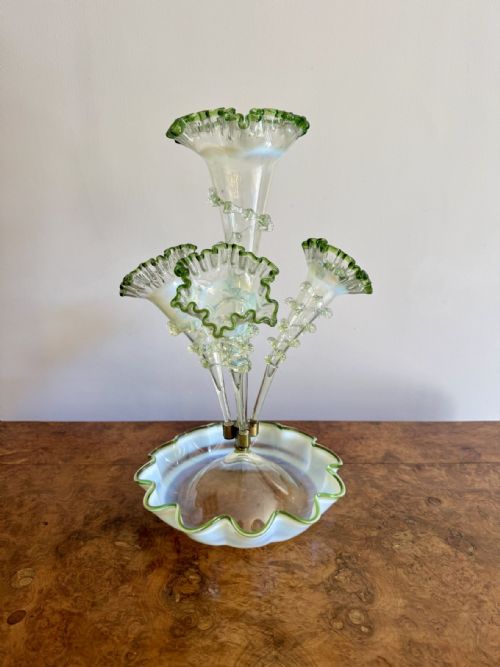
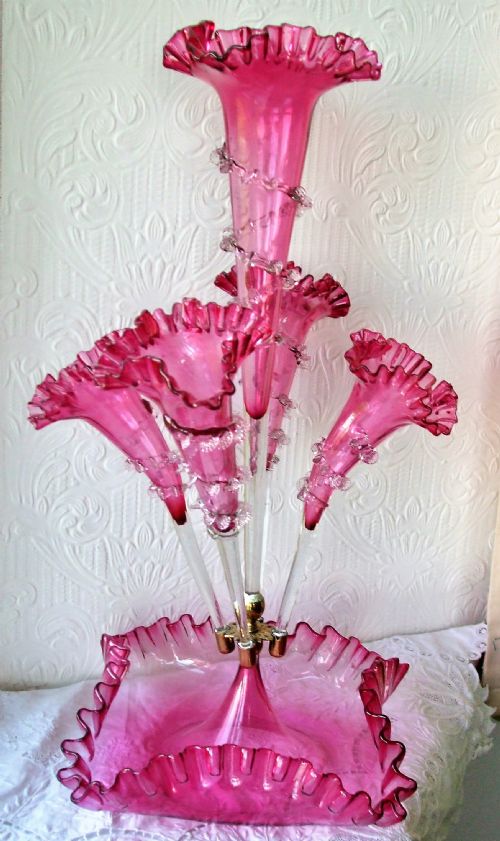
A victorian epergne vase stands as a dramatic table centrepiece, offering a dramatic rise of coloured glass trumpets held in metal or carved wood frames.
Victorian Epergne Vase
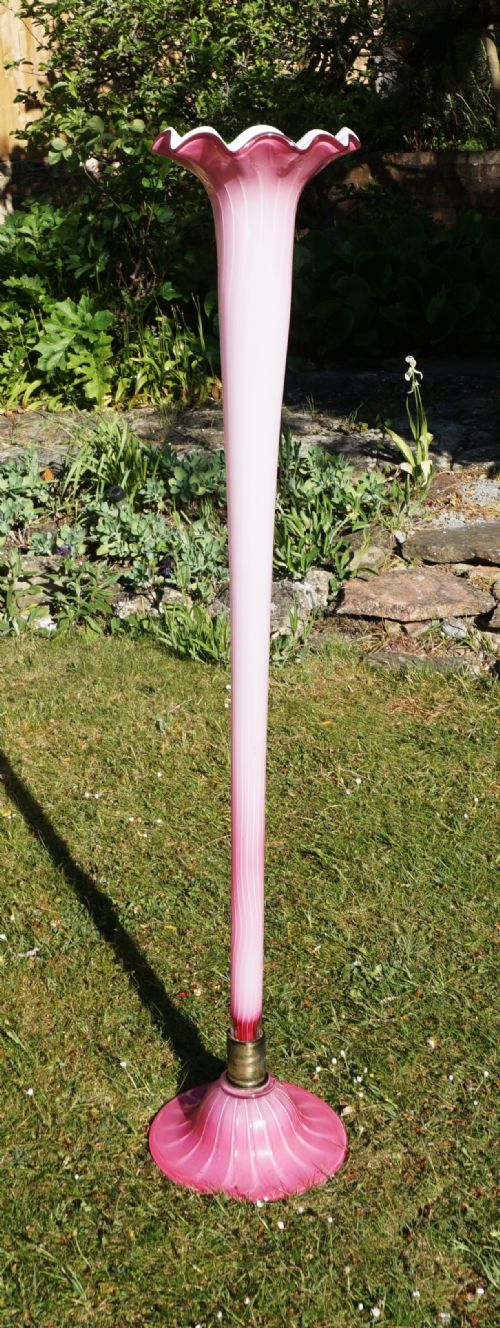
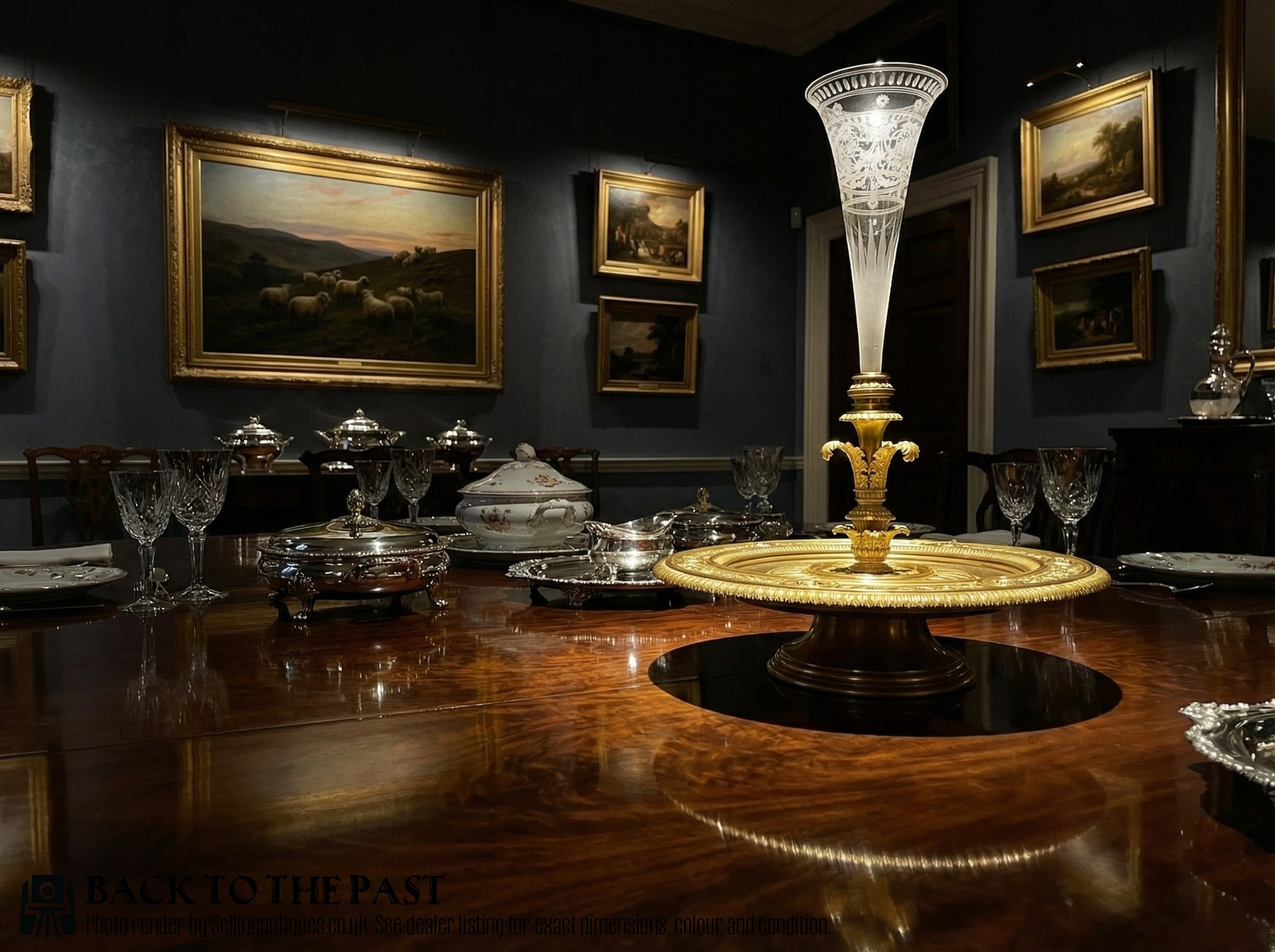
A victorian epergne vase is a multistemmed table centrepiece designed to hold flowers or fruit during formal dining. These pieces range from single trumpet vases to elaborate multicomponent constructions with hanging baskets and matching posy vases.
The version most commonly met on this page is the cranberry or uranium glass epergne, often featuring multiple trumpets set into a silver plated, bronze, or brass base.
Origins span English, French, and Black Forest workshops from the nineteenth century, encompassing styles from strict Victorian classicism to flowing Art Nouveau lines.
Materials and construction
Glass production relied on hand blowing and casing techniques, resulting in vivid colours such as cranberry, vaseline, and ruby, alongside clear crystal and opaque white variants.
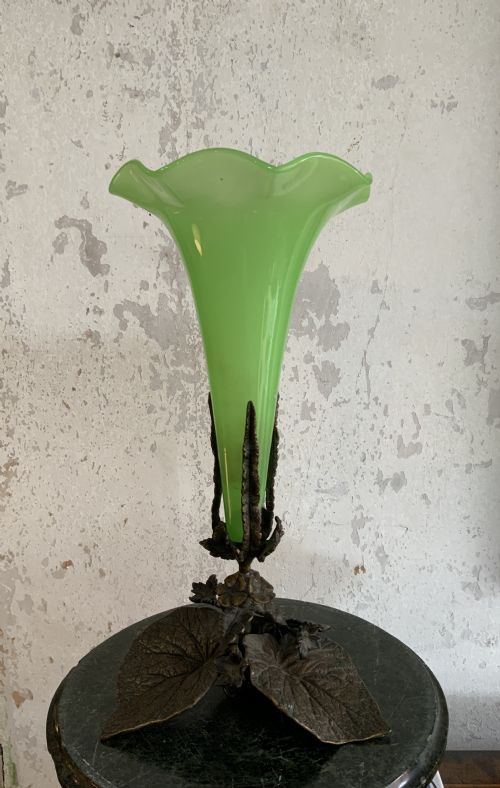
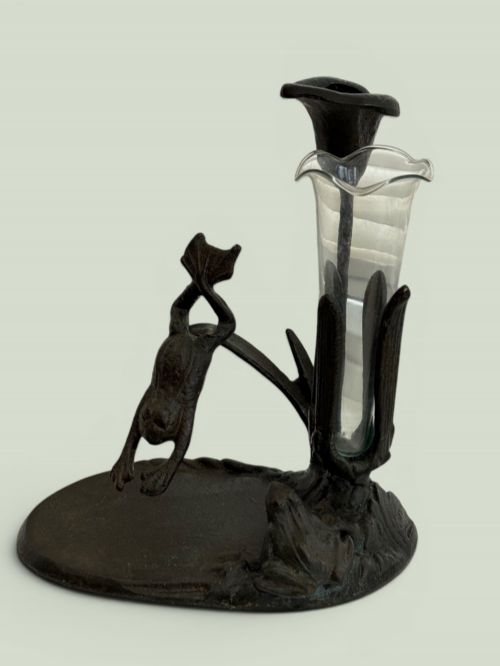
Metal mounts utilised silver plate, brass, white metal, and gilt bronze to support delicate glass trumpets, while carved wood provided structural bases for Black Forest pieces.
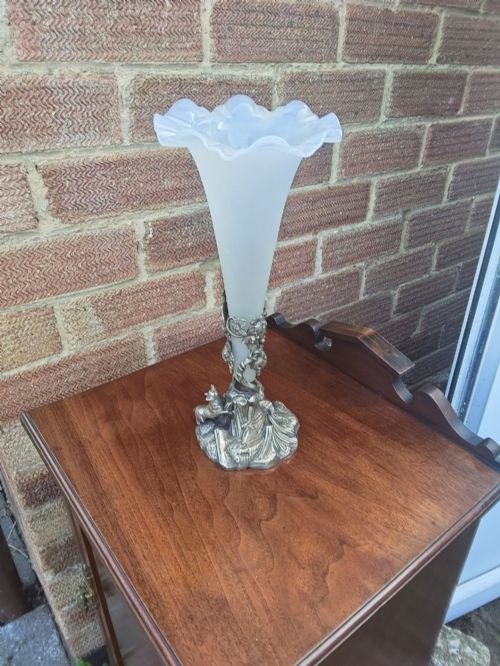
Foxes and grapes decorate the metal mounts of one nineteenth-century piece, bringing a touch of the hunt straight to the dining table.
Evaluating quality and proportion
Quality rests in the depth of colour within the glass and the crispness of hand-applied details such as frilled rims, etching, and applied trails.
The integrity of the structural base matters equally, where heavy gilt bronze, substantial silver plate, or detailed carved wood must support the weight of multiple glass trumpets safely.
Walker & Hall·Baccarat
The Victorian Epergne Vase Glossary
- Epergne
- A large table centrepiece designed with multiple arms or receptacles for fruit, sweets, or flowers. It serves as the principal decorative ornament on a dining table.
- Cranberry Glass
- Transparent glass coloured with gold chloride, producing shades from pale pink to deep ruby. It remains a defining material of nineteenth-century decorative glass.
- Uranium Glass
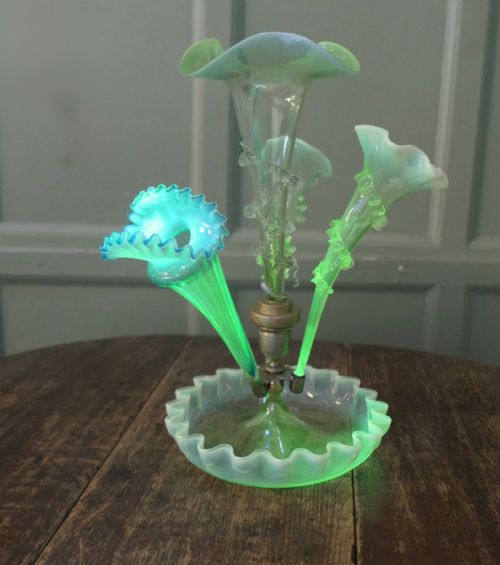
- Glass containing small amounts of uranium dioxide, which glows brightly under ultraviolet light. It appears in yellow, green, and vaseline tones.
- Trumpet Vase
- A tall, flaring vessel shaped like a musical horn. These form the primary vertical elements of multihorn table centrepieces.
- Jack-in-the-Pulpit
- A style of vase featuring a broad, folded rim resembling the spathe of a wild aron plant. This organic silhouette appears frequently in late nineteenth-century glass.
Victorian Epergne Vase: Frequently Asked Questions
What were epergnes used for?
These centrepieces sat in the middle of dining tables during formal meals to hold fruit, sweetmeats, or cut flowers.
Guests admired the colourful arrangement while conversing across the table, making the piece both a decorative ornament and a functional serving stand.
How do I clean an epergne?
Wash delicate glass components gently in lukewarm water using mild soap, avoiding harsh abrasives that might scratch the surface or damage applied trails.
Metal bases require dusting with a soft cloth and specific care depending on whether they are silver plated, brass, or gilt bronze.
What is vaseline glass?
Vaseline glass is a transparent, yellow-green glass that gains its distinct translucent colour from uranium oxide content.
It appears frequently in nineteenth-century table ornaments and glows a vivid green when exposed to ultraviolet light.
How can I tell a Victorian epergne from a later copy?
Examine the glass components for the pontil mark left by the snapping-off iron during hand blowing, alongside natural irregularities in thickness and colour.
Nineteenth-century examples also show appropriate wear to the underside of metal bases and hand-finished details on the mounts.