

Victorian Entry Hall Table
A victorian entry hall table greets visitors with practical surface space and distinct period character, making it a functional centrepiece for any reception area.
Victorian Entry Hall Table
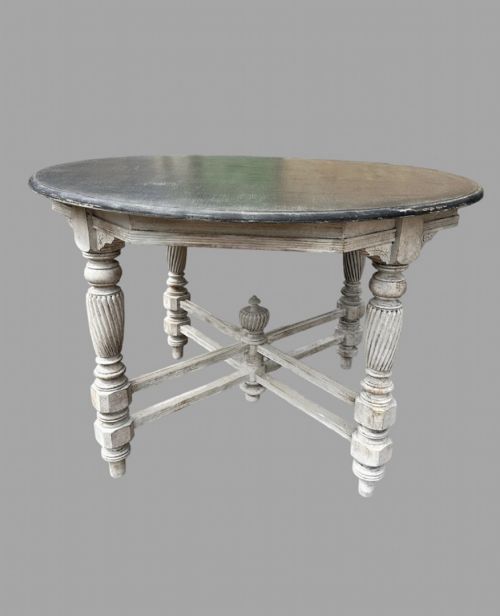
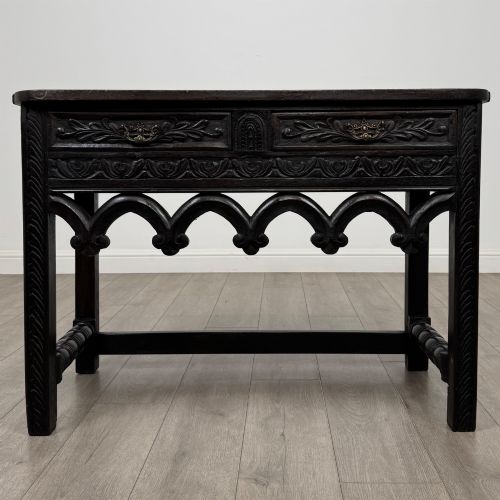
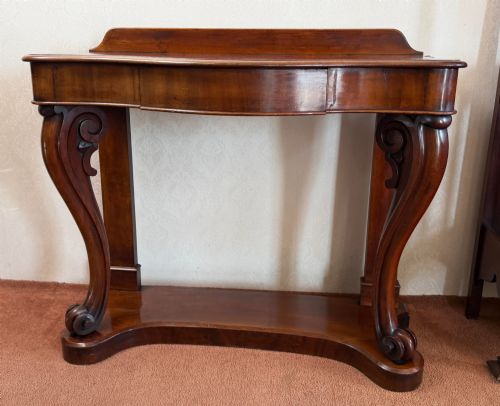
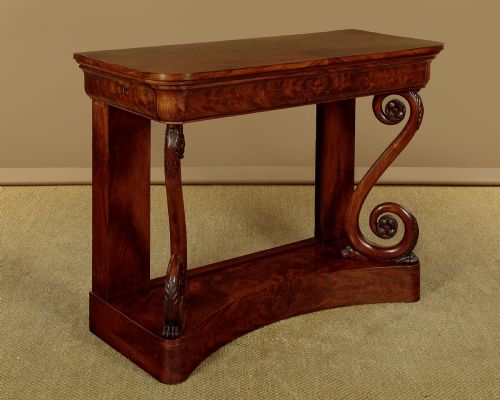
A victorian entry hall table serves as a functional anchor for corridors and reception rooms, providing a surface for daily essentials. The pieces gathered under this term span console tables, side tables, and centre tables designed to sit against walls or occupy the middle of a room.
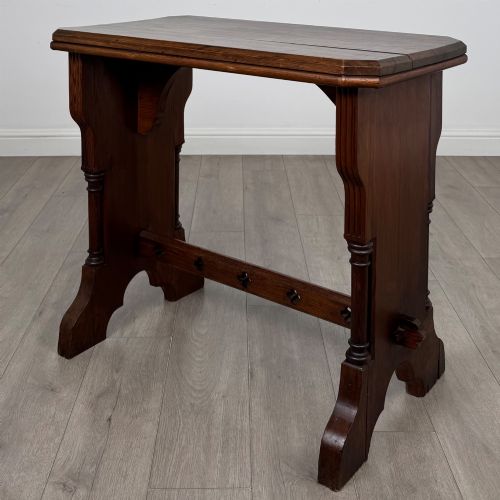
Most examples originate from the nineteenth century, encompassing styles from early Victorian austerity to Gothic Revival and Grand Regency interpretations. Woods such as mahogany, walnut, oak, and pitch pine dominate the selection, frequently paired with marble or glass tops.
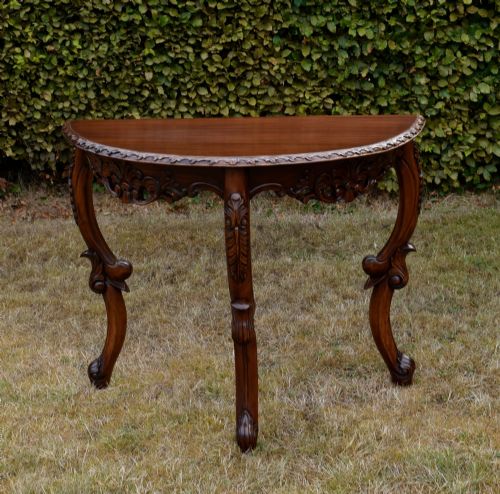
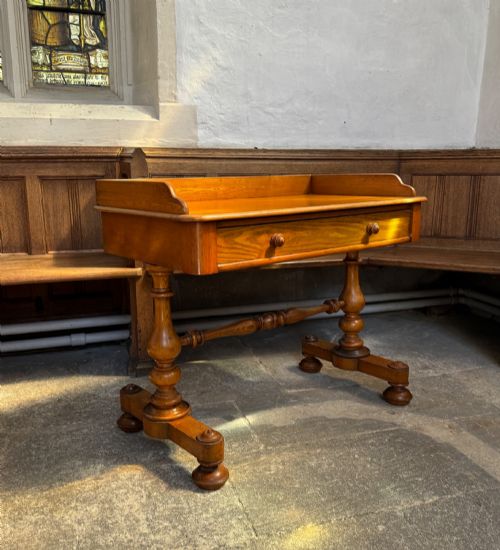
Variations include demilune shapes meant for tight spaces, tables fitted with single or double drawers, and elaborate hall stands combining multiple functions. Makers utilised native British timbers alongside exotic woods like rosewood and padauk to satisfy Victorian tastes.
How They Were Made
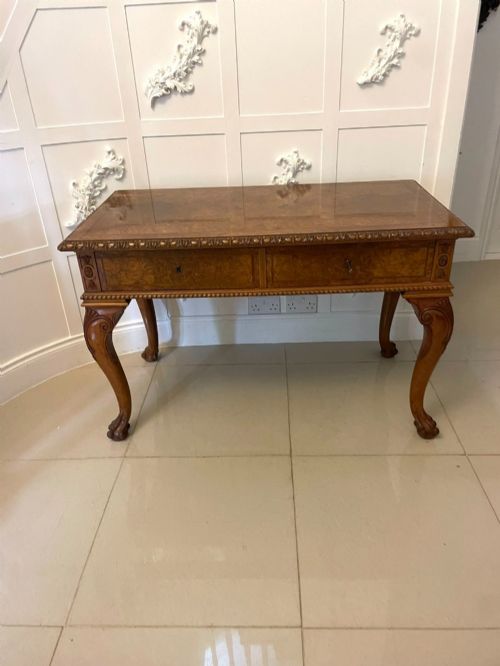
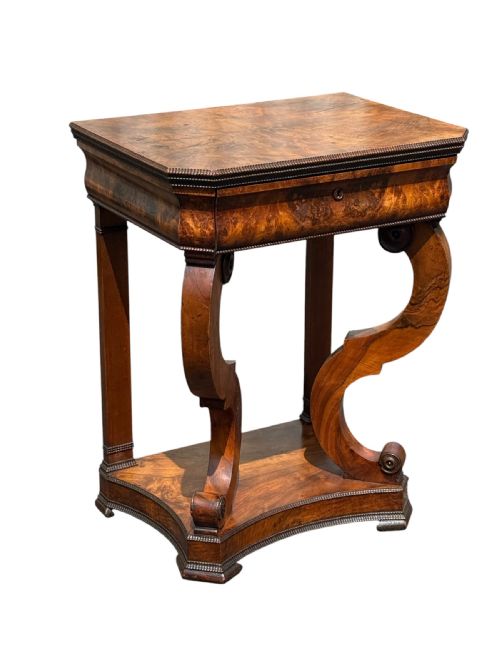
Cabinet makers relied heavily on solid hardwoods like mahogany, walnut, and oak for structural integrity, often applying figured veneers such as burr walnut to create striking visual patterns on tabletops. Joinery techniques included dovetailing for drawers and mortise-and-tenon joints for frames.
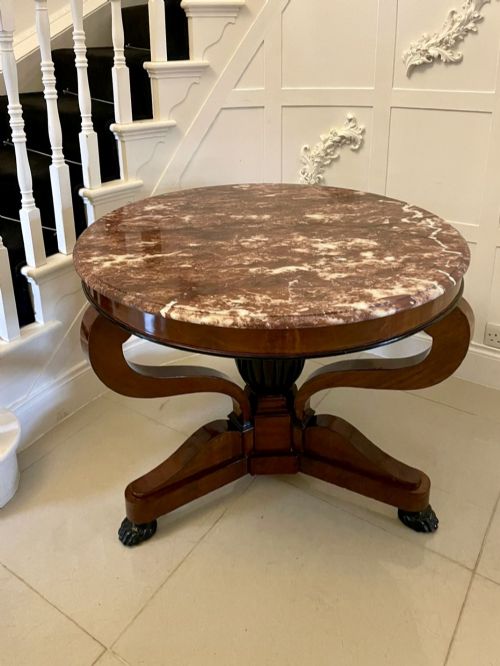
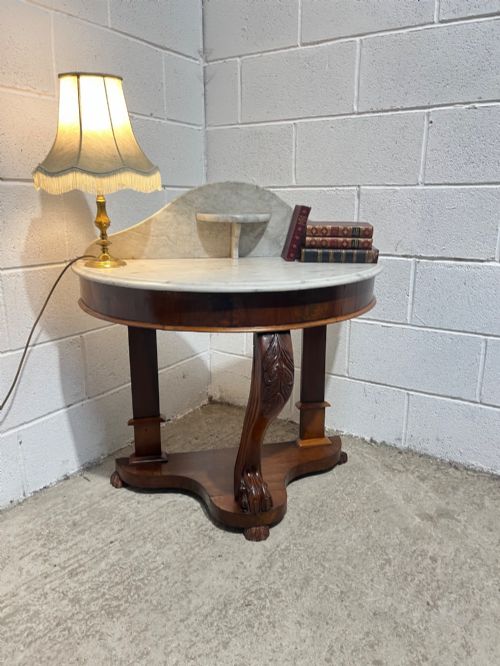
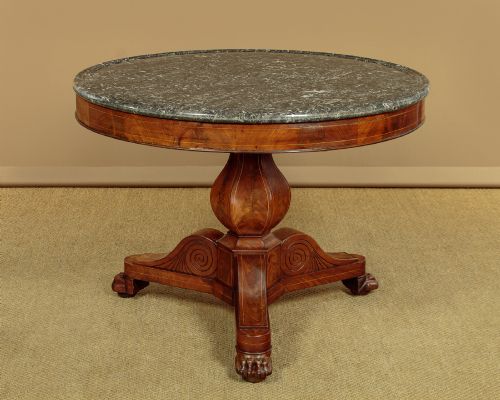
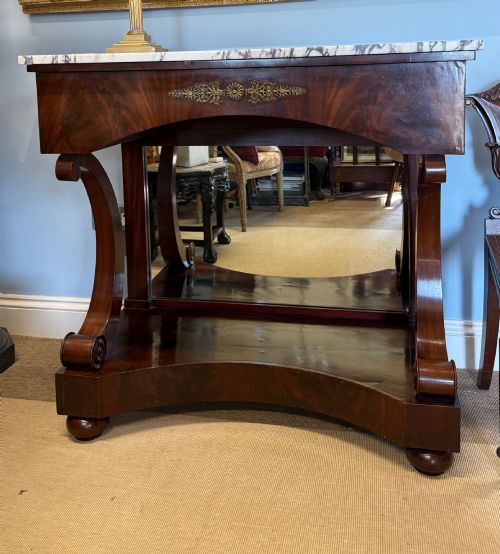
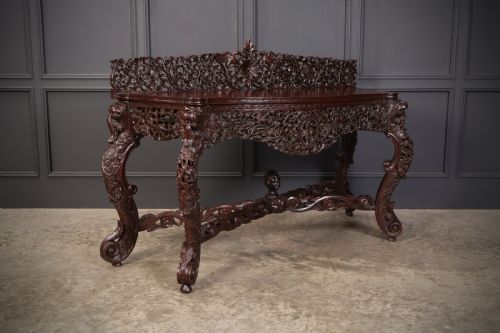
Marble slabs were imported and fitted directly into wooden console frames, particularly on pieces influenced by French design or intended for formal reception rooms. Carving was executed by hand, yielding deep relief work seen in Gothic Revival motifs and intricate rosewood or padauk scrollwork.
Periods represented span early Victorian, Gothic Revival, Regency, and Anglo-Indian styles.
What Varies In Quality
The choice of timber and the precision of its figure separate standard utility furniture from pieces intended for exhibition or grand reception rooms. Selecting finely grained burr walnut, figured mahogany, or specialised timbers like Killarney yew wood indicates a higher grade of manufacture.
Execution of carved ornamentation distinguishes workshops, where deep, crisp relief work demonstrates greater artisan skill than shallow or mechanical shaping. The integration of secondary materials, such as heavy marble slabs, inset marquetry, or fitted brass hardware, elevates the standing of a table.
Druce and Co·Egan Workshop
The Victorian Entry Hall Table Glossary
- Console table
- A table designed to stand against a wall, frequently supported by brackets or ornamental legs rather than four standard posts. They often feature shaped marble tops.
- Demilune
- A half-moon shape used for tables designed to sit flat against a wall in narrow hallways. This profile maximises surface area while minimising the projection into the walkway.
- Marquetry
- The art of applying pieces of veneer to a structure to form decorative patterns and pictorial designs. Craftsmen utilised contrasting timbers to achieve naturalistic multicoloured effects.
- Gothic Revival
- An architectural and decorative style drawing inspiration from medieval forms, featuring pointed arches, trefoils, and heavy carved oak. It gained significant popularity during the nineteenth century.
- Centre table
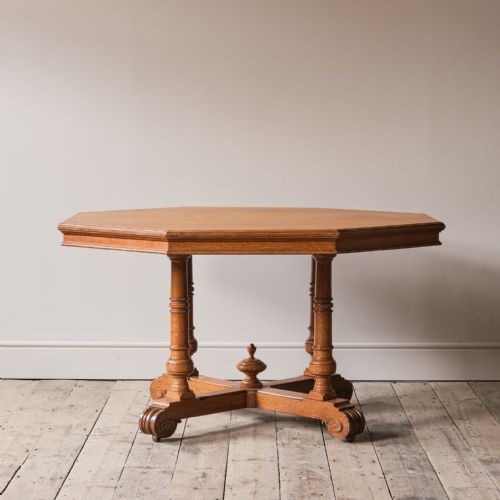
- A freestanding table finished on all sides, intended to occupy the middle of a room rather than sit against a partition. These pieces often feature circular or octagonal tops.
Victorian Entry Hall Table: Frequently Asked Questions
What is a victorian entry hall table used for?
These tables provide a convenient surface in reception areas and corridors for placing correspondence, keys, and decorative items. Many examples incorporate drawers for storage or lower shelves for additional organisation.
Larger versions double as serving tables or reception pieces, while demilune shapes fit flush against narrow walls to preserve floor space in tight entryways.
How do I distinguish between styles?
Gothic Revival pieces often display pointed arches, heavy carved oak, and austere structural lines. In contrast, French-influenced designs favour serpentine shapes, walnut veneers, and inset marble tops.
Regional variations introduce distinct timbers, such as pitch pine in country houses or exotic rosewood and padauk in more formal urban settings.
Where should I place a centre table?
Centre tables are designed to be freestanding and viewed from all angles, making them ideal for the middle of large hallways or open reception rooms. They require adequate clearance around them to allow movement through the space.
Because they lack a flat back for wall placement, pairing them with central lighting fixtures highlights their finished perimeter.
What woods were used in these tables?
Cabinet makers utilised native British hardwoods like oak, mahogany, and walnut for primary structures. Pine and pitch pine served as practical timbers for simpler side tables and washstands.
Exotic species such as rosewood, padauk, and yew wood appeared on exhibition-quality pieces, often complemented by intricate marquetry inlay or figured veneers.