

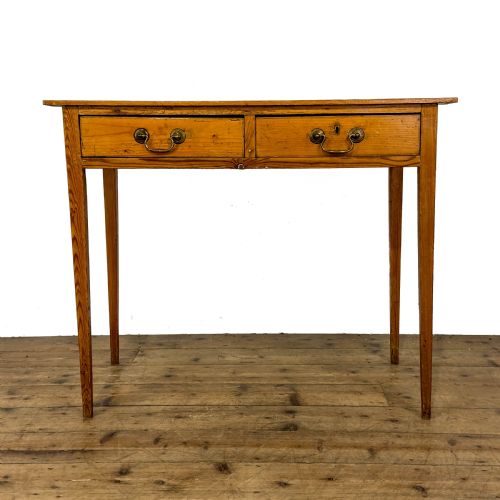


Victorian Entry Console Table
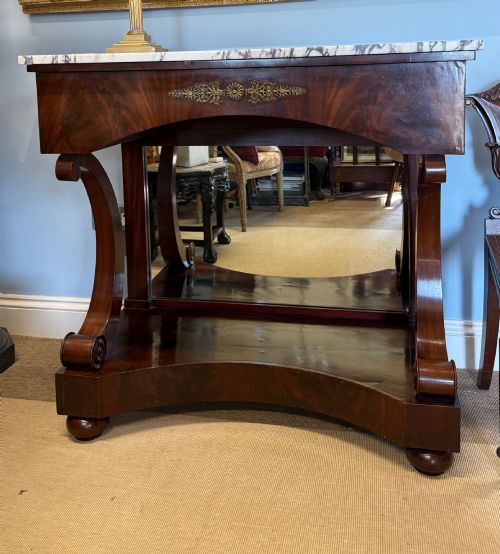
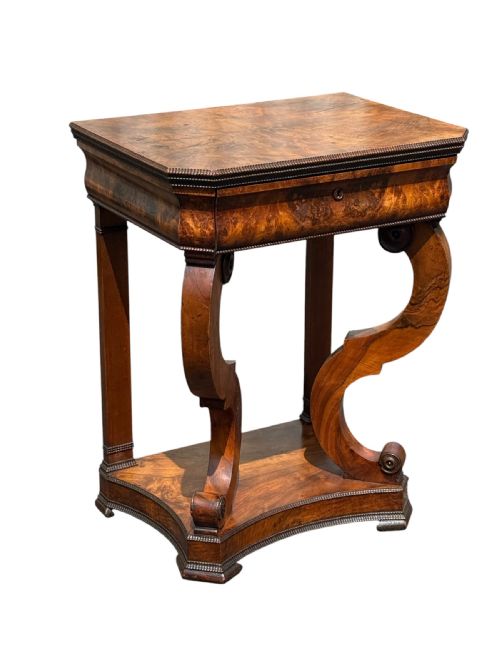
A victorian entry console table provides a practical surface for an entrance hall, combining timber frames with marble tops or drawer storage.
Victorian Entry Console Table
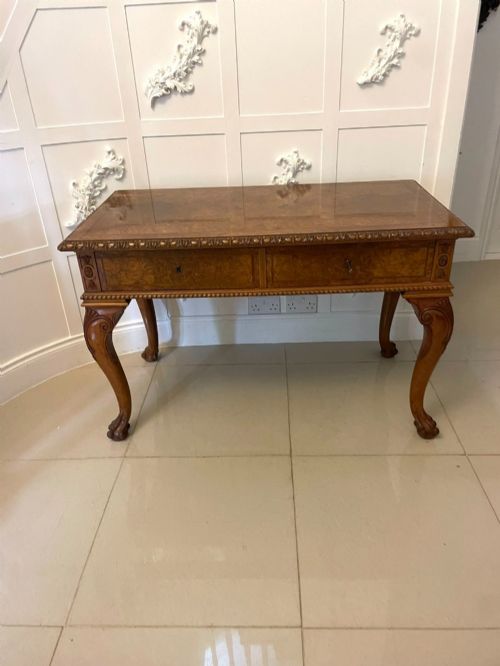
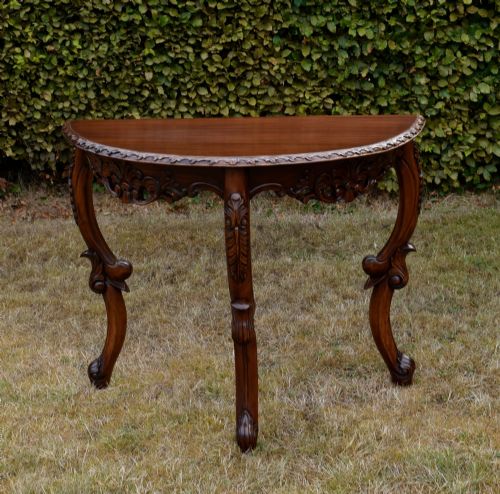
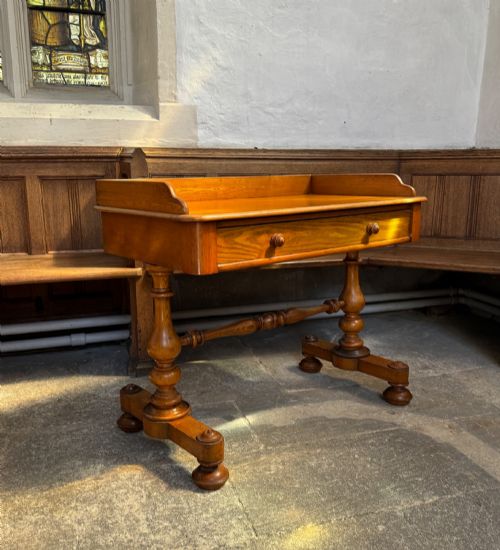
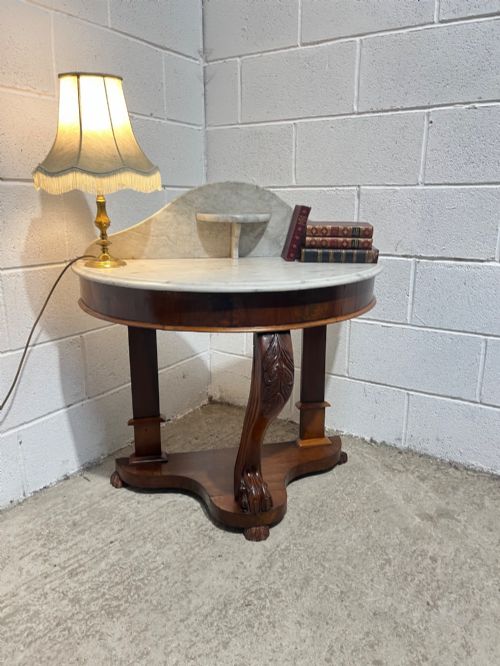
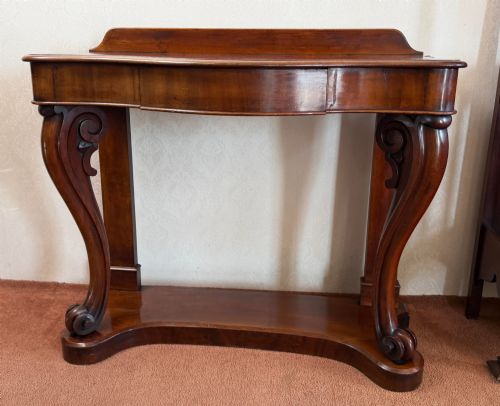
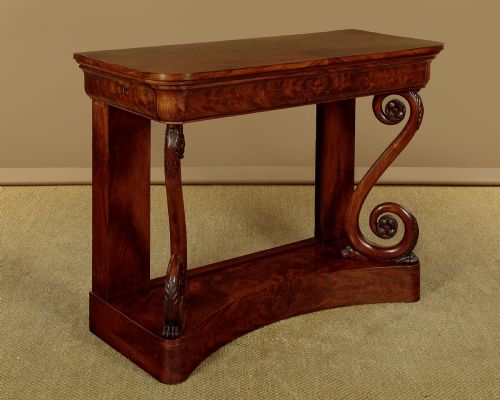
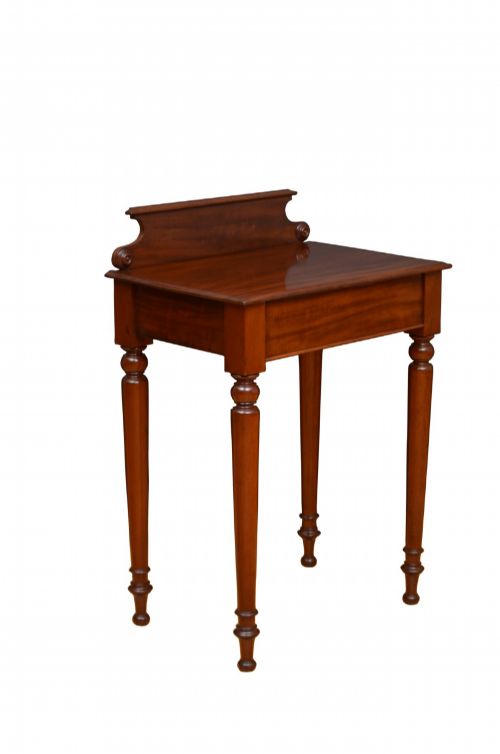
A victorian entry console table spans formats designed for hallways, corridors and reception spaces, appearing most often as mahogany or pine side and console tables from the nineteenth century.
Makers shaped these items as demilune, bow front or rectangular tables, frequently incorporating drawers or marble tops to suit narrow spaces.
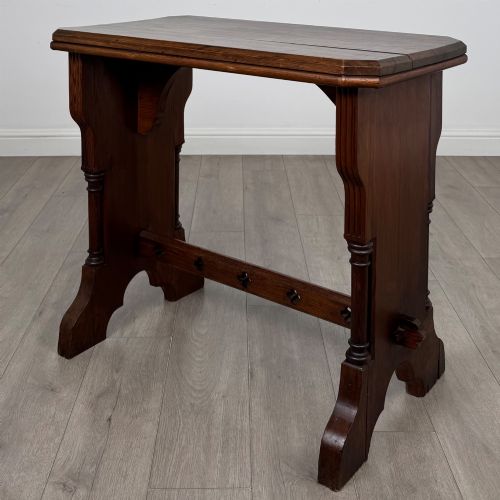
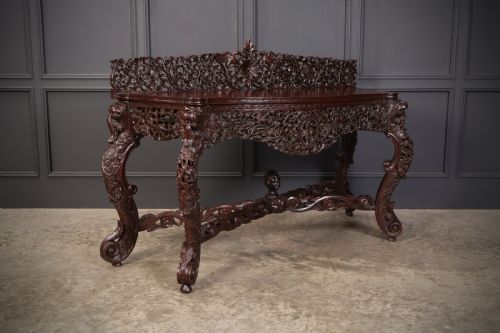
The selection includes regional variations such as pitch pine country pieces alongside grander mahogany and walnut examples reflecting gothic, rococo or classical tastes.
How they were made
Cabinetmakers utilised dense hardwoods like mahogany, walnut and rosewood alongside softer timbers such as pitch pine and deal, often pairing wooden frames with heavy polished marble slabs.
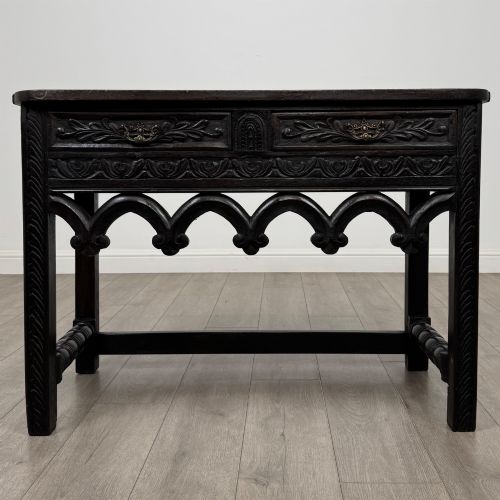
Construction involved traditional joinery techniques, turning for barley twist legs, and detailed hand-carving for Gothic or Rococo ornamentation.
Surfaces received hand-applied finishes or paint, while specialised variants integrated glass elements, brass hardware or mirrored backs.
What varies in quality
Quality rests upon the choice of timber, seen in the depth of figure within burr walnut or mahogany veneers and the soundness of structural pine carcases.
The precision of hand-carved details, from linenfold panels to gilded scrollwork, separates standard utility furniture from high-status reception pieces.
Proportion and form dictate desirability, where narrow depths for hallways and matched pairs command distinct architectural presence.
Druce and Co
The Victorian Entry Console Table Glossary
- Demilune
- Half-moon shape. This semicircular format fits flat against a wall, making it ideal for narrow hallways.
- Pier table
- A table designed to stand against a wall between two windows, often situated beneath a mirror.
- Pitch pine
- A dense, resinous softwood with prominent grain patterns. Cabinetmakers utilised this timber extensively for robust domestic furniture.
- Serpentine
- A wave-like curving shape. This contour flows outward in the centre and inward at the sides.
- Gallery
- A raised wooden or metal rail bordering the top of a table. This feature prevents items from sliding off the surface.
Victorian Entry Console Table: Frequently Asked Questions
Where should I place a console table?
These tables suit hallways, corridors and reception spaces where floor area is restricted. Their shallow depth allows them to sit flush against a wall without obstructing movement.
They function well beneath mirrors or paintings, providing an accessible surface for keys, post and decorative objects.
How do I identify a Victorian piece?
Nineteenth-century construction methods often reveal themselves through hand-cut dovetails in drawer construction and timber choices typical of the period, such as solid mahogany, walnut and pitch pine.
Stylistic cues like Gothic revival tracery, barley twist legs or heavy marble tops further point toward nineteenth-century origins.
Can these tables hold heavy items?
Most examples feature sturdy timber frames designed to support everyday objects like lamps and ceramic bowls.
Tables fitted with thick marble slabs possess substantial weight and stability, though care should still be taken with uneven floor surfaces.
What is the difference between a console and a side table?
Console tables traditionally stood against a wall, sometimes fixed in place with brackets or featuring legs primarily at the front. Side tables are fully freestanding with four legs supporting the structure independently.
In practical modern usage, makers and dealers often interchange these terms for nineteenth-century hallway furniture.