
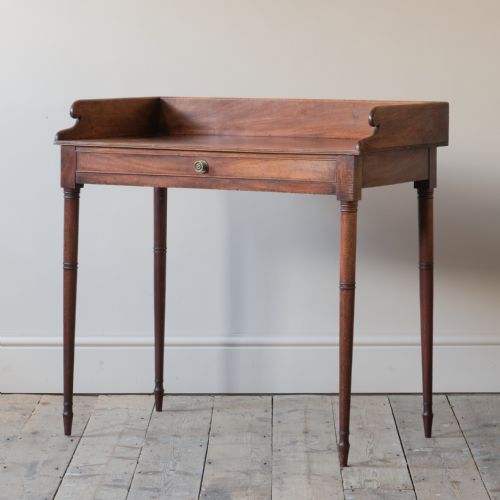
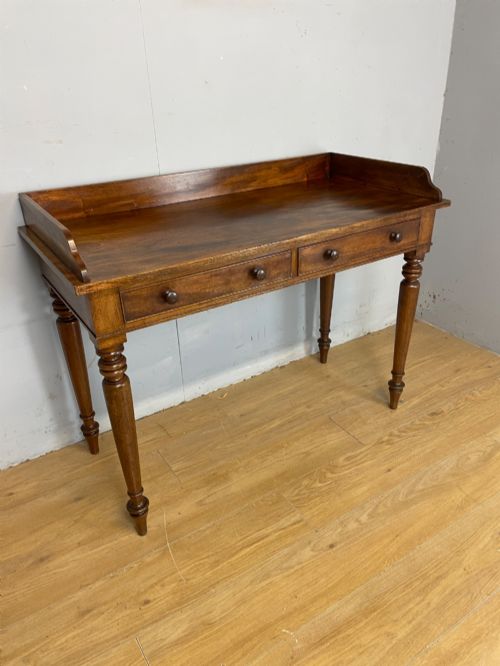
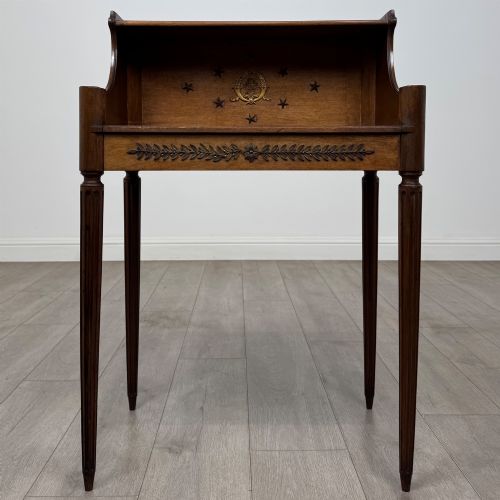
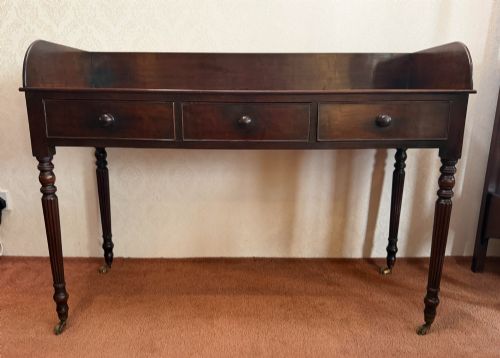

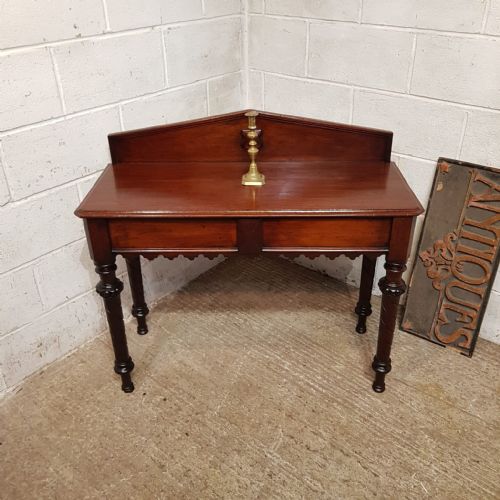

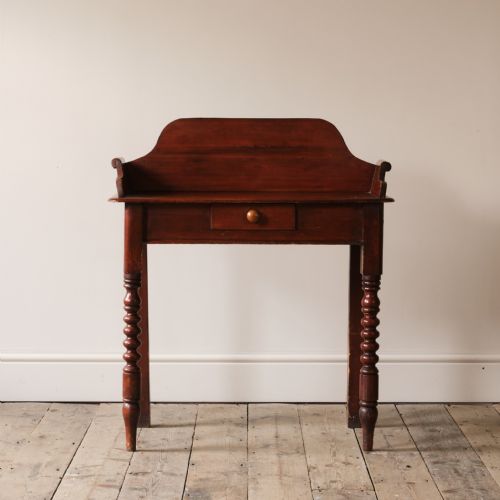


Gallery Back Side Table
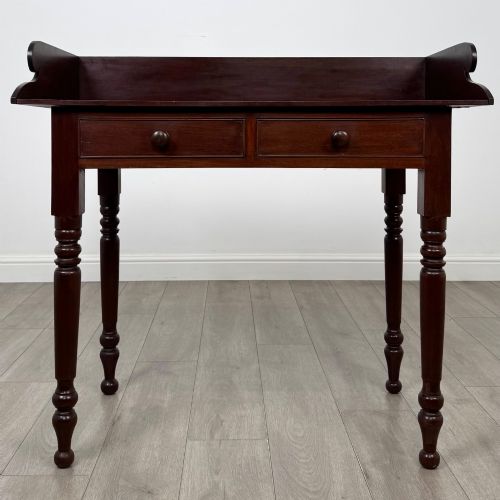
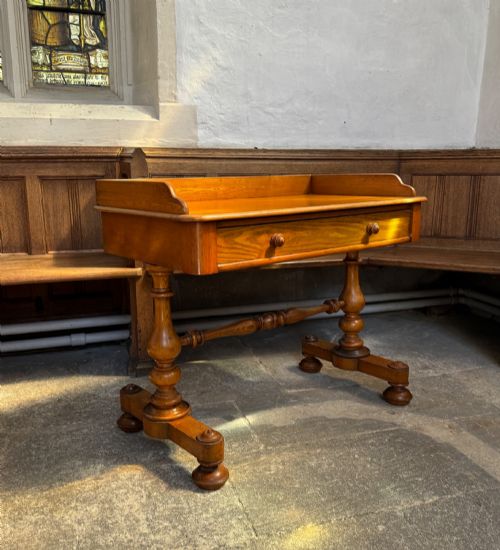
A gallery back side table brings upright timber protection to a surface, and these nineteenth-century examples combine functional raised rims with stable everyday proportions.
Gallery Back Side Table
A gallery back side table is a utilitarian or formal surface designed with an elevated rear barrier to prevent items from slipping off the back. When you search for gallery back side table, you encounter a mix of domestic forms originating primarily from the Georgian, Regency, and Victorian periods.
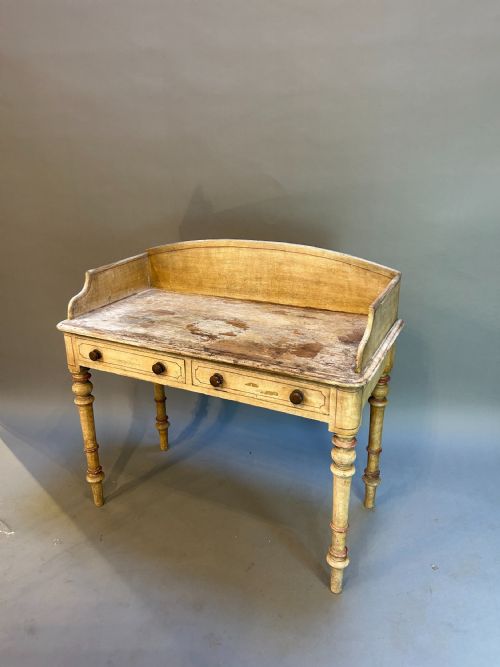
The pieces listed here span several related furniture types, most commonly side tables, washstands, writing tables, and console tables. Mahogany forms the predominant timber, alongside walnut, pitch pine, and painted softwood variants.
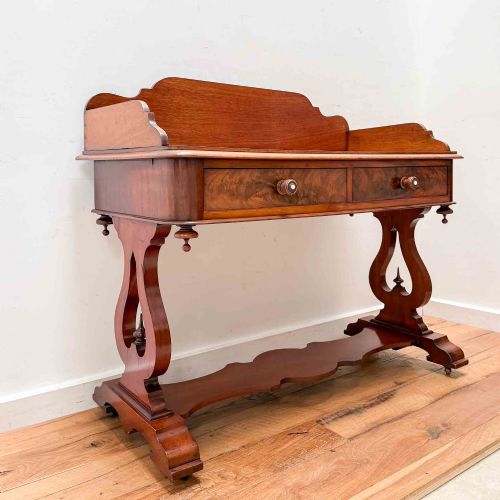
Victorian examples frequently incorporate raised wooden or tiled galleries, sometimes paired with drawers or marble surfaces. Earlier Georgian and Regency iterations rely on simpler timber upstands attached to slender framework.
How they were made
Cabinet makers constructed these tables using solid hardwoods such as mahogany and oak, alongside utilitarian softwoods like pine for washstands and secondary framing. Flame mahogany veneer appears on drawer fronts and primary surfaces to add visual depth to formal reception tables.
The gallery itself is typically integrated into the rear edge of the top board or joined separately through dowels and tongue-and-groove joints. Painted finishes, faux marble surfaces, and brass fittings appear on specific regional and period pieces.
Gallery Back Side Table Retail Price Guide 2026
Typical asking prices for gallery back side table among the pieces listed under this phrase on Sellingantiques today, from the lower quarter to the upper quarter. They describe what is for sale here now, not the wider market.
Mahogany and pine dominate the timber selection across these listings, spanning the Georgian, Regency, and Victorian periods.
What varies in quality
Quality in these tables depends on the selection of timber and the structural integrity of the joints connecting the gallery to the tabletop. Superior pieces display well-figured grain, such as flame mahogany, and retain their original brass hardware and backboards.
Simpler pine and painted washstands rely on honest utilitarian construction, where the preservation of original grain finishes and tile galleries determines the desirability of the piece.
Maples·Charles Bevan
The Gallery Back Side Table Glossary
- Gallery
- A raised wooden, brass, or tiled border running along the back and sides of a tabletop to keep objects secure. It is often carved from the same timber as the top or attached separately.
- Washstand
- A domestic table designed for personal ablutions, frequently featuring a splashback gallery, marble top, or shelf for a basin and jug. Many double functionally as side tables today.
- Frieze
- The horizontal band or rail beneath the tabletop, which often houses one or two drawers in side tables and writing desks. Drawer linings and dovetail joints within this section indicate period manufacturing standards.
- Patina
- The surface sheen and colour developed by timber over decades of handling, polishing, and exposure to light. Collectors value untouched patination on nineteenth-century surfaces.
- Console table
- A table designed to stand against a wall, sometimes supported by brackets or front legs, appearing in neoclassical and Victorian interiors with decorative timber or gilt frames.
Gallery Back Side Table: Frequently Asked Questions
What is a gallery back side table used for?
These tables function as hall surfaces, writing desks, and serving pieces where a raised rear barrier protects walls or keeps small objects from falling behind the furniture.
In nineteenth-century bedchambers and living spaces, similar forms held washbasins, stationery, or display items.
How do I identify a Victorian gallery back table?
Victorian examples frequently utilise mahogany or pitch pine, sometimes featuring turned legs, tiled upstands, or one to two frieze drawers beneath the surface.
Comparing the timber density and construction methods against standard nineteenth-century joinery helps confirm the period of manufacture.
Are these tables suitable for modern hallways?
Their modest depth and shallow rectangular footprints make them practical for narrow corridors, entryways, and reception rooms.
The raised gallery prevents keys and correspondence from slipping down behind the furniture.
What is the difference between a washstand and a side table?
Washstands were originally built for washing utensils and often include splashbacks, marble inserts, or lower shelves for basins.
Standard side tables focus on flat timber surfaces and drawer storage for general domestic use.