
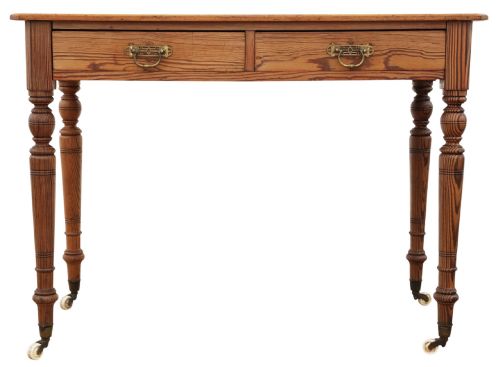
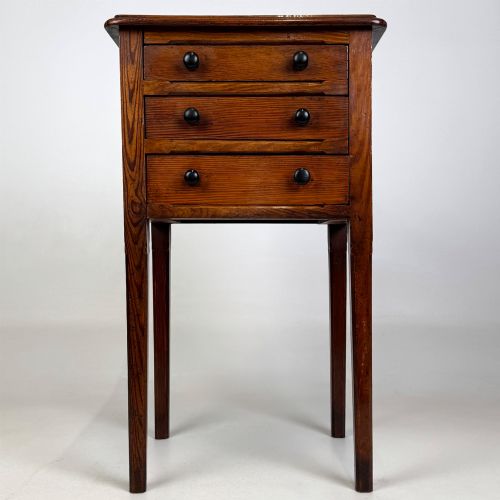
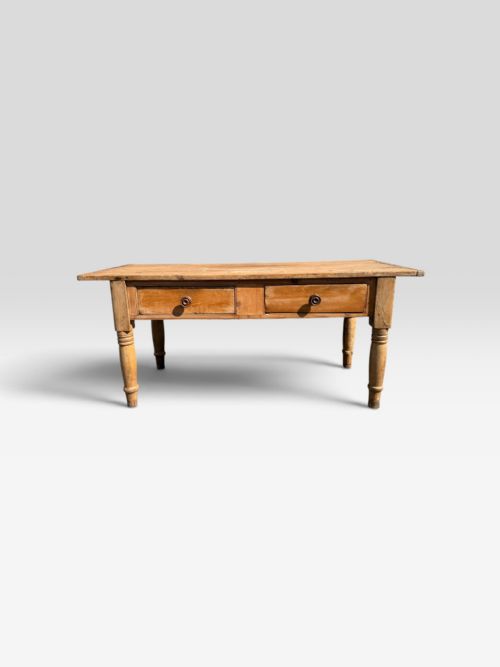
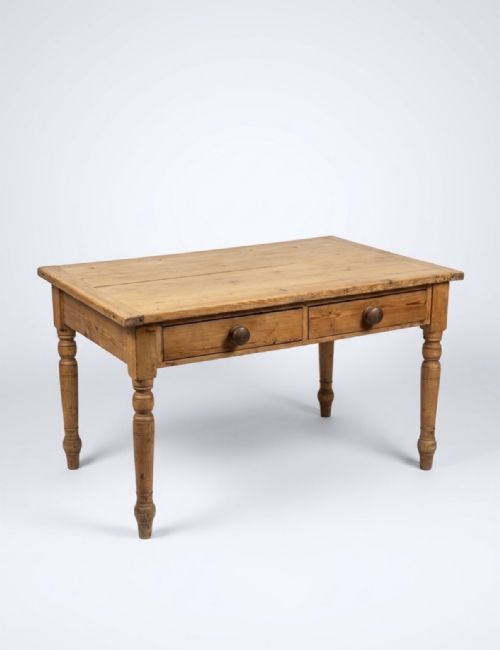
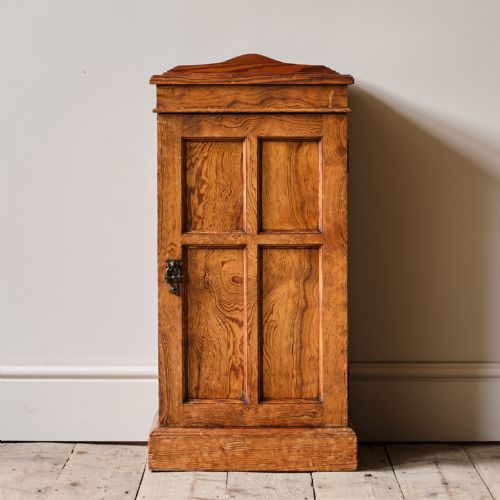
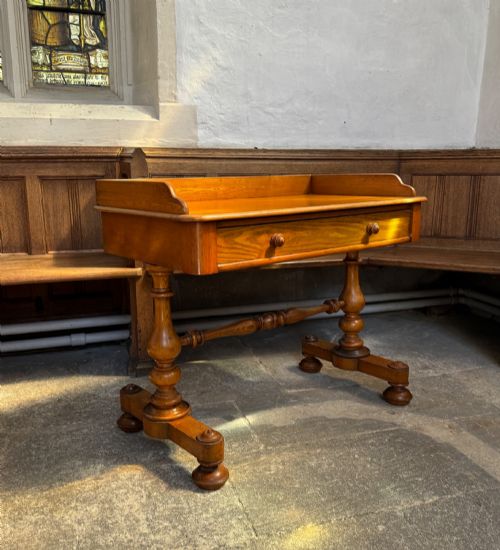
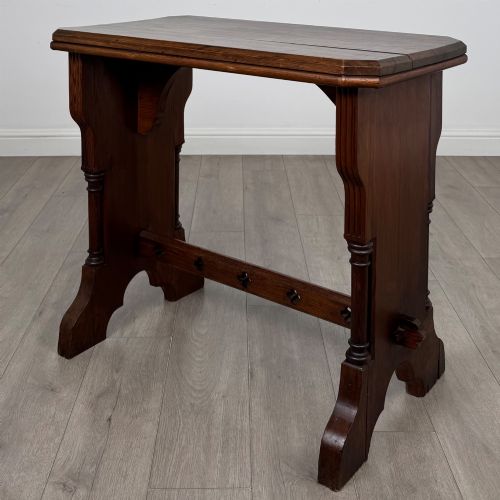
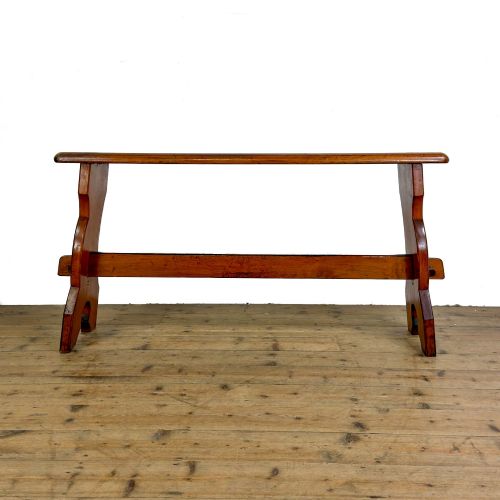
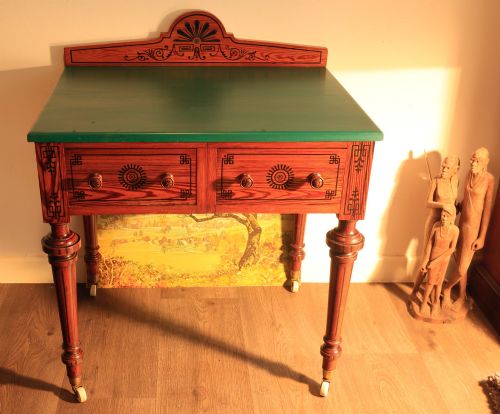


Pitch Pine Side Table
A pitch pine side table brings sturdy Victorian utility and dense resinous grain to a hallway, study or bedroom.

Pitch Pine Side Table
A pitch pine side table is a functional domestic or ecclesiastical piece originating mainly in the nineteenth century, most frequently encountered in Victorian forms such as side tables, washstands and writing desks. These sturdy furnishings utilise a timber prized for its prominent growth rings and durability, emerging in domestic interiors, farmhouses and institutions alike during the Victorian era.
The selection ranges from simple farmhouse and kitchen tables to Gothic Revival altar pieces and architectural console tables, spanning periods from the mid-nineteenth century to around nineteen-ten. Buyers commonly find utilitarian hall tables, washstands with lower tiers or side tables fitted with drawers, reflecting the practical demands of nineteenth-century households and chapels.
Materials and construction
The primary material is pitch pine, frequently accompanied by secondary timbers such as oak and pine, alongside hardware in brass and iron. Woodworkers selected pitch pine for its high resin content and strong linear grain, which yields a durable surface suited to heavy daily use in kitchens, halls and vestries.
Joinery techniques follow nineteenth-century workshop practices, combining solid timber planks with straightforward framing. Tables often feature turned or square legs, occasional ceramic elements, and fitted drawers or lift-up lids in more specialised forms like demi-lune hall tables and writing desks.
Pitch Pine Side Table Retail Price Guide 2026
Typical asking prices for pitch pine side table among the pieces listed under this phrase on Sellingantiques today, from the lower quarter to the upper quarter. They describe what is for sale here now, not the wider market.
Listings feature pitch pine combined with brass, iron, oak and ceramic elements across side tables, desks, washstands and altar tables.
Design and execution
Quality in these pieces rests upon the crispness of the joinery, the selection of the timber grain and the integrity of the design form. Pieces executed in specific architectural or Gothic Revival styles, particularly those reflecting the manner of AW Pugin, display more ambitious detailing than basic utility tables.
The handling of the resinous timber itself sets apart finer examples, where the figuring of the wood is integrated purposefully into the piece. Superior items maintain their original structural components, from brass hardware to secondary oak or pine elements, without heavy alterations to their original form.
Manner of AW Pugin
The Pitch Pine Side Table Glossary
- Pitch pine
- A durable North American and European timber known for its high resin content and striking, decorative grain pattern. It became popular in nineteenth-century British furniture for its strength and resilience.
- Gothic Revival
- An architectural and design style popular during the nineteenth century, drawing inspiration from medieval ecclesiastical forms. Pieces in this style often feature pointed arches, heavy chamfering and architectural mouldings.
- Demu-lune
- A half-moon shape used for console and hall tables designed to stand flush against a wall. This curved form appeared in unusual Victorian hallway furnishings.
- Ecclesiastical
- Pertaining to the church, describing furniture originally made for chapels, vestries or altars. These pieces frequently incorporate Gothic Revival details and solid pitch pine construction.
Pitch Pine Side Table: Frequently Asked Questions
Where should I put a pitch pine side table?
These tables suit hallways, studies and kitchens where their robust construction and distinctive grain can handle daily use. Narrow and freestanding formats fit well in transitional spaces like corridors or entryways.
More specialised forms, such as writing desks or pot cupboards, function effectively as occasional desks or bedside storage in period and contemporary interiors alike.
How do I identify a Victorian pitch pine table?
Look for the characteristic dense, resinous grain pattern and warm reddish-yellow tone of the pitch pine timber. Construction details such as hand-cut joinery and period hardware point to nineteenth-century origins.
Many examples carry specific design cues from the Victorian period, including Gothic Revival arches, turned legs or utilitarian drawer configurations typical of nineteenth-century workshops.
What is the difference between a side table and a hall table?
Hall tables often feature specific space-saving footprints, such as narrow proportions or demi-lune curved fronts designed to sit flat against an entryway wall. Some include lift-up lids or lower tiers for storing household items.
Side tables generally offer a more open surface and simpler rectilinear framing, intended for placement beside seating or against living room walls.
Can I use a pitch pine washstand as a side table?
Washstands adapt readily to modern living rooms or hallways as side tables, offering useful surface space and often lower shelves or drawers. Their nineteenth-century utility translates well to contemporary storage needs.
While originally built to hold wash basins and pitchers, their sturdy pitch pine construction supports lamps, books and decorative objects without difficulty.