
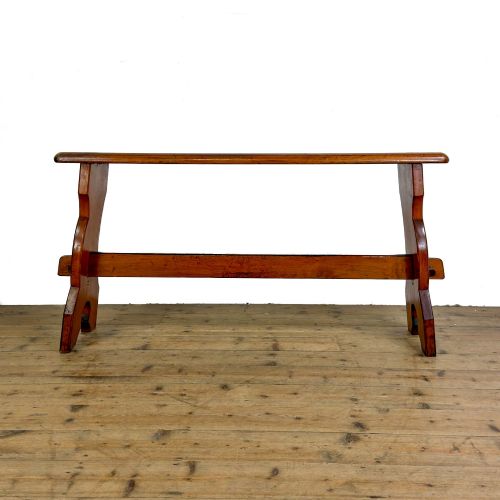
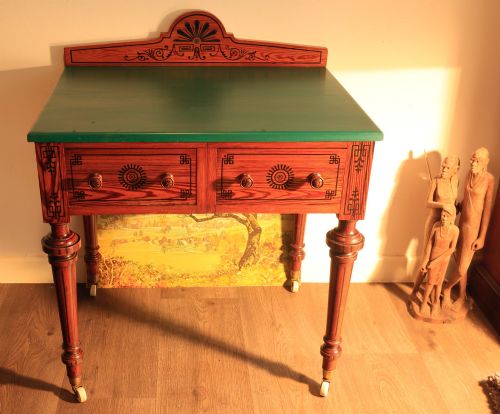


Pitch Pine Hall Table
A pitch pine hall table brings dense grain and quiet utility to an entryway, built from resinous timber that handles daily friction with ease.
Pitch Pine Hall Table
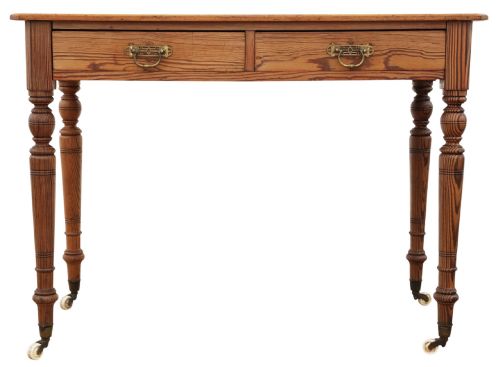
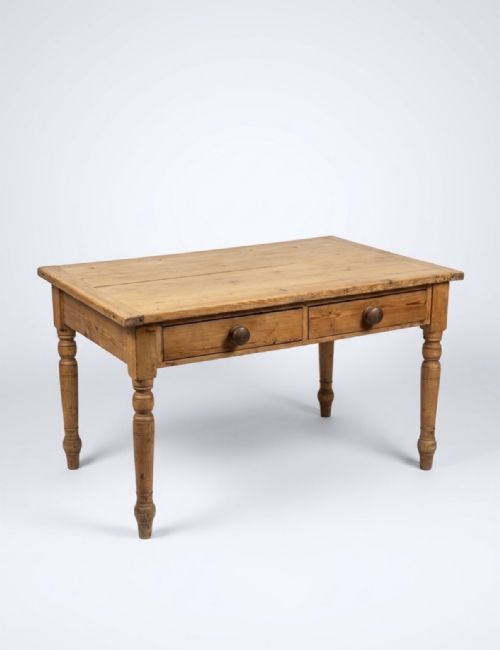
A pitch pine hall table stands as a practical surface in a narrow entrance, corridor, or passage. These pieces typically emerge from the Victorian era and the later nineteenth century.
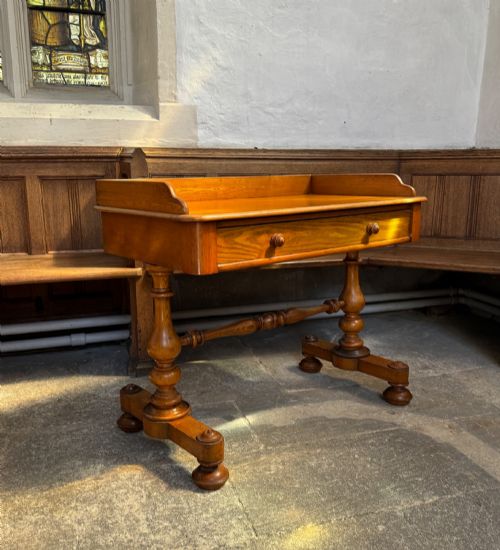
Buyers frequently encounter variations styled as side tables, servers, writing desks, and narrow freestanding consoles. The surviving examples often display the robust construction typical of Victorian country and Gothic revival workshops.
The form adapts readily to domestic use, offering a sturdy platform for post, keys, and lighting without dominating a narrow floor plan. Most examples remain faithful to the utilitarian origins of nineteenth-century domestic and ecclesiastical furnishings.
How they were made
Makers built a pitch pine hall table using heavily resinous timber known for its pronounced growth rings and durability. Carpenters often combined this primary wood with secondary pine, oak, or iron fixings.
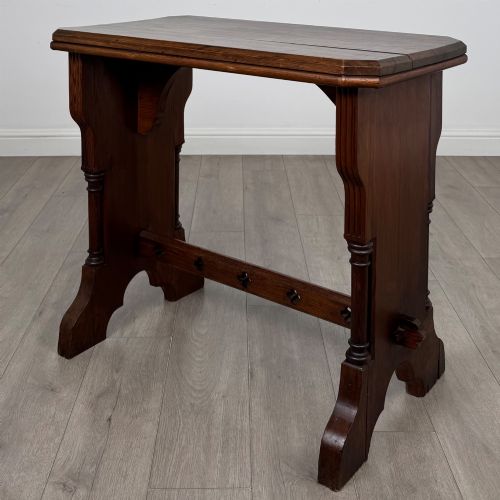
Construction techniques range from simple pegged joints to more elaborate Gothic revival detailing influenced by designers such as Augustus Welby Northmore Pugin. Surfaces were left plain or treated with traditional oils to accentuate the natural figuring of the wood.
Listings show these tables appearing primarily in Victorian styles, with Gothic revival and aesthetic movement details frequently accompanying the standard pitch pine and oak construction.
What varies in quality
Quality in a pitch pine hall table rests upon the density of the grain and the selection of timber. Finer pieces display striking, even figuring across the top board rather than knot-heavy utility planks.
Structural integrity and proportion distinguish superior examples from simpler ones. Tighter joinery, well-turned legs, and restrained architectural detailing elevate a piece from a utilitarian workshop build to a considered domestic furnishing.
AW Pugin
The Pitch Pine Hall Table Glossary
- Pitch pine
- A resinous North American and imported timber prized for its strength and bold grain pattern. It became popular in British furniture during the nineteenth century.
- Gothic Revival
- An architectural and decorative style drawing on medieval forms. This aesthetic influenced nineteenth-century tables with pointed arches, chamfered legs, and ecclesiastical severity.
- Console table
- A narrow table designed to stand flat against a wall. These forms suit hallways and corridors where floor space is limited.
- Washstand
- A domestic table originally made to hold a basin and jug. Many surviving examples now function as side or hall tables due to their convenient proportions.
- Demi-lune
- A half-moon shape. Tables with this profile fit snugly against a hallway wall while offering a curved front edge.
Pitch Pine Hall Table: Frequently Asked Questions
Will a pitch pine hall table fit a narrow hallway?
Many surviving nineteenth-century examples were designed specifically for compact spaces like passages and landings. Their shallow depth allows them to sit flush against a wall without obstructing foot traffic.
Measuring the available floor space and checking the table depth in the listing details ensures the piece clears doorways and radiators.
How do I clean and maintain pitch pine?
The dense, resinous nature of the timber makes it resilient to everyday dust and handling. A soft, dry cloth is usually sufficient for regular maintenance.
Avoid excessive moisture and harsh chemical polishes, which can strip traditional wax or oil finishes applied to the wood over the decades.
What is the difference between a side table and a hall table?
While the terms often overlap in nineteenth-century furniture, hall tables are typically narrower and longer to suit circulation spaces. Side tables may offer deeper proportions intended for principal rooms.
Both types share similar leg construction and timber selection, differing primarily in their intended placement within the Victorian home.
How can I tell if a table is Victorian?
Victorian pieces generally display construction methods characteristic of the nineteenth century, including hand-cut joints and timber characteristics specific to that era. The presence of pitch pine itself points heavily toward the nineteenth century.
Examining the underside, drawer construction, and wear patterns helps confirm the age and workshop origin of the piece.