


Antique Pitch Pine Console
These antique pitch pine consoles and tables offer heavy resinous grain and sturdy utility, prized for anchoring narrow hallways or austere interiors.

Antique Pitch Pine Console
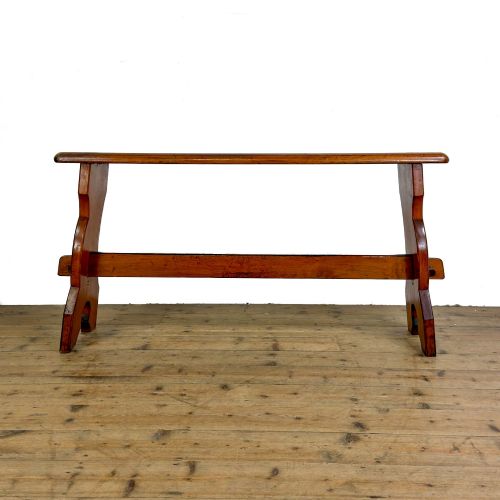
An antique pitch pine console represents a sturdy surface built primarily during the nineteenth century, often taking the form of side tables, hall tables, or serving tables. These pieces emerge predominantly from the Victorian era, spanning specific dates like 1870, 1880, and 1910.
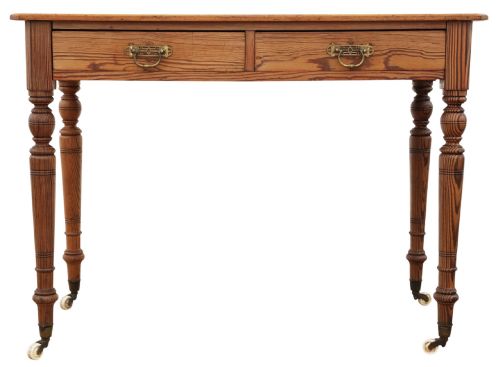
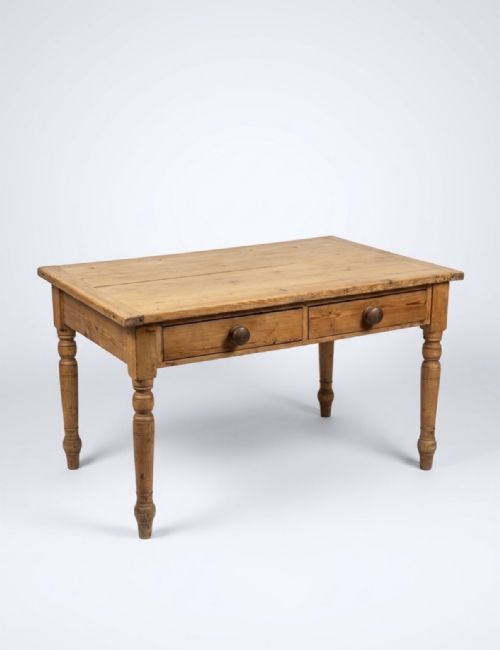
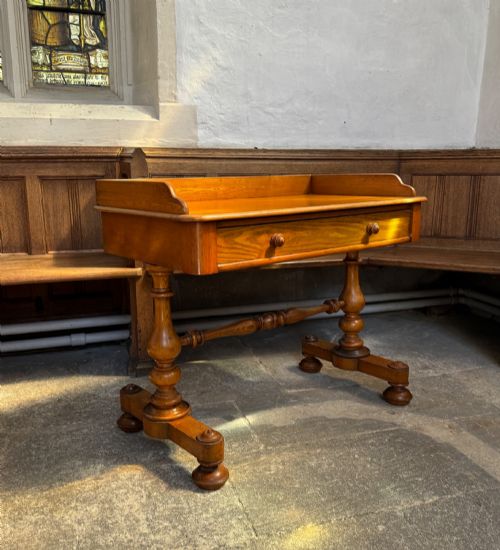
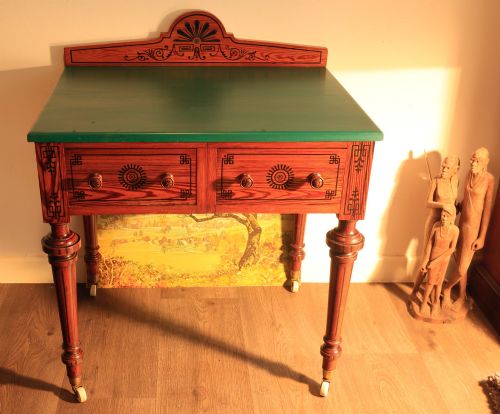
The physical formats recorded here range from narrow freestanding tables and altar tables to bow front demi-lune hall tables with lift-up lids, alongside utilitarian washstands and writing desks. Such variety shows how versatile this resilient timber proved for domestic and ecclesiastical utility alike.
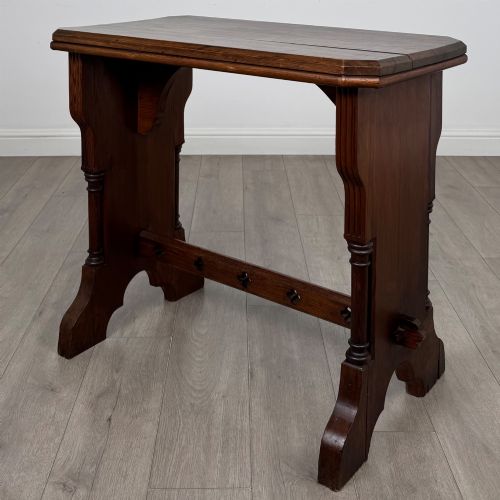
Buyers seeking an antique pitch pine console typically encounter Victorian country or Gothic Revival aesthetics, sometimes reflecting the architectural influence of designers like AW Pugin. These variations ground the furniture firmly in domestic, kitchen, or chapel settings of the period.
How they were made
Joinery relies heavily on solid pitch pine, a resinous and durable wood selected for structural framing and expansive tabletops. Secondary woods such as pine and oak occasionally support internal or lesser-seen components.
Hardware and structural reinforcement incorporate brass and iron fittings, visible in hinges, handles, or structural brackets. These metals provide functional contrast to the heavy, dense grain of the primary timber.
Materials span pitch pine, oak, standard pine, brass, and iron across various side, hall, and altar table forms.
What varies in quality
The visual hierarchy of these tables rests upon the density and figuring of the resinous pine grain across the surface top. Pieces displaying bold, uninterrupted resin streaks outshine plain utility boards.
Architectural ambition distinguishes standard domestic work from ecclesiastical or Gothic Revival examples executed in the manner of specific designers. Refined chamfering, ecclesiastical proportions, and unusual forms like demi-lune shapes elevate a piece beyond basic kitchen utility.
The Antique Pitch Pine Console Glossary
- Pitch pine
- A dense, highly resinous softwood native to North America and widely imported into Britain during the nineteenth century for heavy construction and furniture. Its distinct reddish-brown grain marks out the best Victorian tables.
- Gothic Revival
- An architectural and decorative style popular during the Victorian period that drew inspiration from medieval forms. Tables in this style often feature pointed arches, heavy chamfering, and ecclesiastical proportions.
- Demi-lune
- A half-moon shape used for table tops and furniture fronts designed to stand flush against a wall. This format saves floor space in narrow hallways.
- Altar table
- A heavy ecclesiastical table adapted from church furnishings for secular or institutional use. They typically display severe rectangular proportions and robust framing.
- Washstand
- A domestic table designed to hold a basin and ewer for washing, frequently featuring a raised splashback or lower shelf. Many survive today repurposed as side tables.
Antique Pitch Pine Console: Frequently Asked Questions
What is pitch pine?
Pitch pine is a durable, highly resinous softwood that gained immense popularity in Britain during the nineteenth century. Its heavy timber grain contains high concentrations of natural resins, giving the wood a distinct reddish hue and exceptional toughness.
Cabinet makers utilised this material for both domestic furniture and ecclesiastical pieces because it resisted warping and bore heavy daily use without yielding.
How do I date these tables?
Dating relies on observing construction methods, material choices, and stylistic markers recorded across the Victorian period. Pieces often align with architectural movements like Gothic Revival or feature specific period stamps from around 1870 to 1910.
Examining the underside, secondary timbers like oak or standard pine, and hardware elements such as iron or brass provides further chronological context.
Where were these tables used?
These tables served various domestic and institutional functions, appearing in kitchens, hallways, chapels, and dressing rooms. Narrow freestanding forms suited passage spaces, while larger serving tables occupied dining rooms.
Ecclesiastical examples originated in churches or vestries before finding their way into domestic settings as decorative side furniture.
Are these tables waterproof?
While the high natural resin content of pitch pine offers greater resistance to moisture than standard softwoods, these antique surfaces are not waterproof. Prolonged exposure to standing water or damp conditions can damage the historic timber and finish.
Using coasters and promptly wiping spills preserves the original wood surface and patina.