



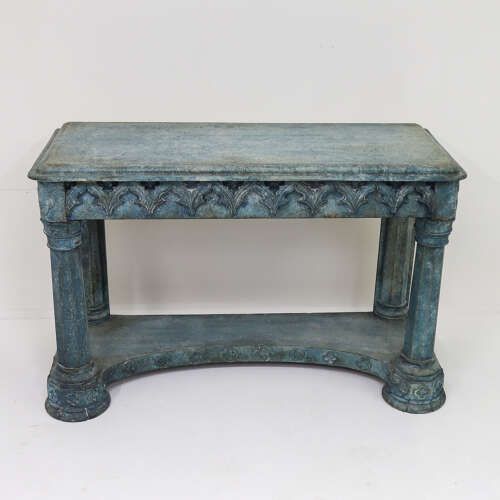


Victorian Gothic Console Table
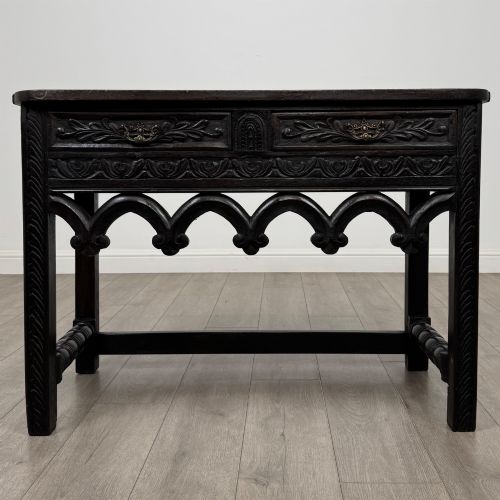
A victorian gothic console table brings nineteenth-century architectural verticality and dense timber carving into a hallway or reception room.
Victorian Gothic Console Table
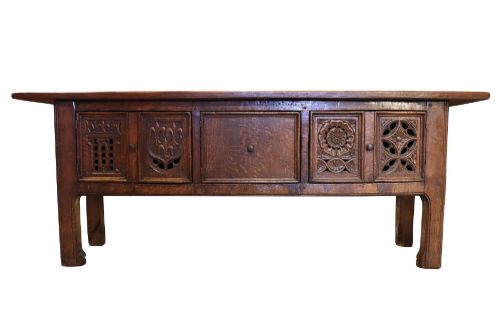
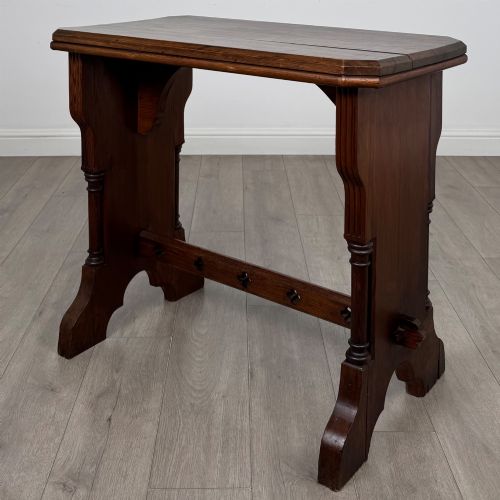
A victorian gothic console table is found primarily in nineteenth-century forms such as narrow side tables, hall tables, and serving tables. These pieces emerge from the Gothic Revival movement, translating ecclesiastical and architectural motifs into domestic furniture.
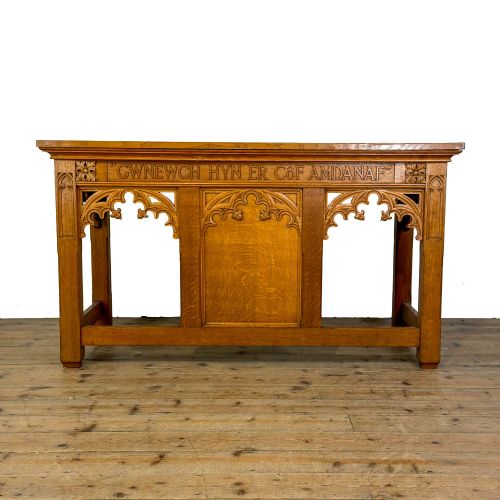
The pieces appearing on this page span the Victorian era, specifically drawing upon decades from the eighteen-fifties through to the turn of the twentieth century. They manifest as freestanding or wall-anchored console designs, frequently sharing traits with chapel altar tables and ecclesiastical furnishings.
Makers and vernacular workshops of the period adapted these heavy architectural idioms for domestic halls and reception rooms. The resulting furniture combines utilitarian surfaces with pointed arches, traceries, and deep relief carving.
Judging the work
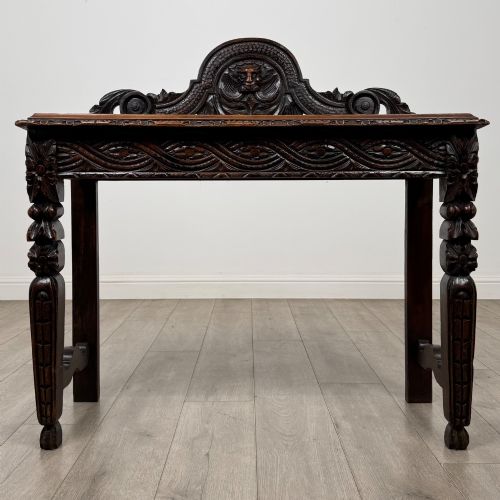
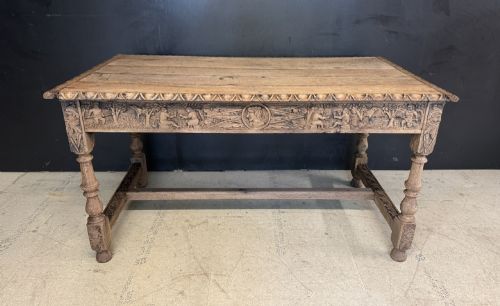
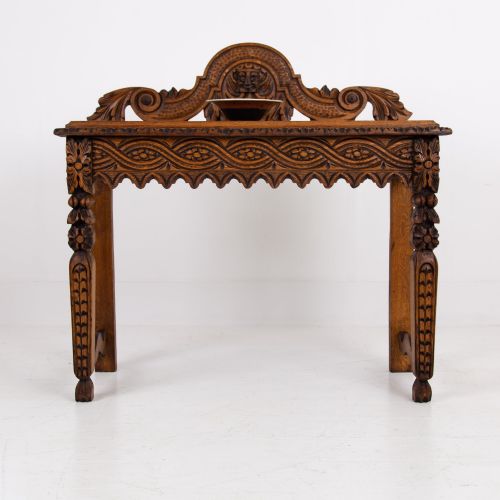
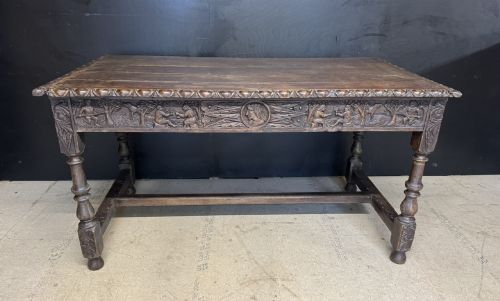
Quality rests entirely on the depth, sharpness, and ambition of the carving rather than surface decoration alone. Pieces displaying spirited execution in details like greenman masks or crisp tracery outrank mechanical or shallow surface incision.
Proportion and timber selection dictate the upper tier of the range, favouring dense, well-figured oak or clean pitch pine over plain deal. The integration of structural architectural elements determines whether a table succeeds as genuine revival design.
Victorian Gothic Console Table Retail Price Guide 2026
Typical asking prices for victorian gothic console table among the pieces listed under this phrase on Sellingantiques today, from the lower quarter to the upper quarter. They describe what is for sale here now, not the wider market.
Keep an eye out for hidden greenman carvings peering through the foliage on the friezes.
Phillips Bristol·AW Pugin·Charles Bevan
The Victorian Gothic Console Table Glossary
- Gothic Revival
- An architectural and decorative style drawing inspiration from medieval ecclesiastical design, featuring pointed arches and heavy massing. This movement dominated nineteenth-century furniture production.
- Console Table
- A table designed to stand against a wall, traditionally supported by brackets or legs at the front. In nineteenth-century interiors, these served narrow hallways and reception spaces.
- Pitch Pine
- A durable, resinous softwood utilised extensively for nineteenth-century domestic and ecclesiastical furniture. It exhibits a strong grain pattern and ages to a warm amber tone.
- Greenman
- A sculptural architectural motif depicting a face carved from or entwined with leaves and vines. It symbolises rebirth and appears frequently in nineteenth-century woodcarving.
- Tracery
- Openwork stonework or woodwork ornamentation characterised by intersecting ribs, typically found in gothic windows. Furniture makers adapted this geometric pattern for table friezes and panels.
Victorian Gothic Console Table: Frequently Asked Questions
Where should I place a console table?
These tables suit narrow entrance halls, corridors, and large reception rooms where depth is restricted. Their architectural presence anchors a wall without dominating the floor space.
Keep them away from direct heat sources and strong sunlight to protect the aged timber surfaces and traditional wax finishes.
How do I care for antique oak?
Dust regularly with a dry cloth and apply a quality beeswax feed occasionally to nourish the timber. Avoid modern silicone sprays that build up and degrade the finish over time.
Maintain a stable room humidity to prevent the solid timber from splitting or warping across the joints.
Are these tables completely original?
Nineteenth-century vernacular furniture often incorporates timbers and architectural elements salvaged from older buildings or churches. Surviving pieces frequently show honest signs of age, including historic marks and patination from decades of use.
Examine the underside and joints to understand how the construction methods align with the stated Victorian period.
How do I distinguish pine from oak?
Oak is a heavy hardwood displaying visible medullary rays and an open grain structure that deepens in colour with age. Pitch pine is a softer resinous timber with pronounced growth rings and a warm, golden appearance.
Both woods were finished dark during the nineteenth century, so look closely at the grain patterns to identify the species.