



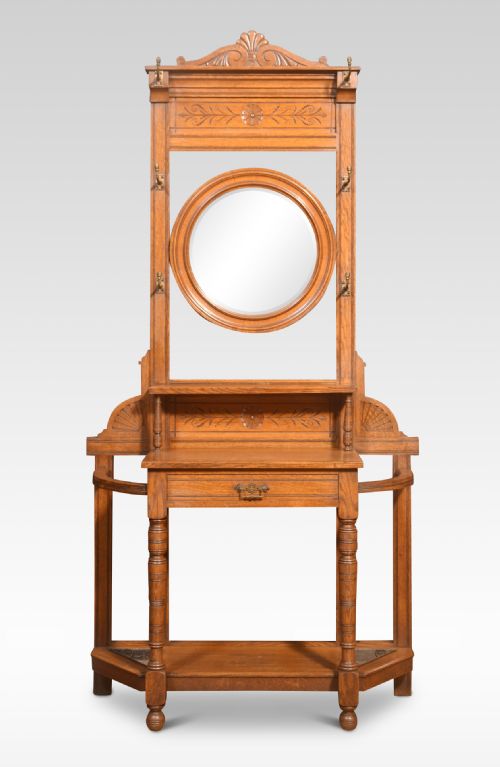
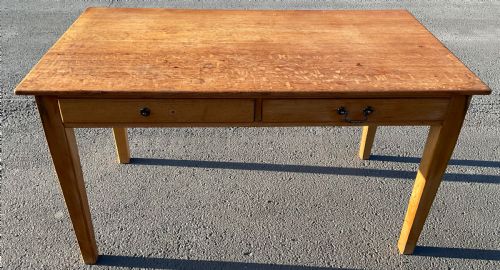
Golden Oak Console Table
A golden oak console table brings warmth and rich grain to a hallway or reception room, offering a practical surface with distinct character.
Golden Oak Console Table
A golden oak console table sits against a wall in a hallway, drawing room, or reception space, offering a narrow surface for display and storage. The pieces found here span from the eighteenth century through the Edwardian era up to nineteen thirty, encompassing various regional English and Scottish interpretations.
The form crosses over with writing tables, side tables, and altar tables, showing how adaptable oak furniture has been over generations. Golden oak stands out for its warm honey tone, which emerges either through natural ageing or specific finishing techniques applied to the timber.
Buyers encounter styles ranging from Georgian utility and Victorian Gothic revival to Arts and Crafts and Art Nouveau designs. This selection demonstrates that craftsmen utilised the timber's strong grain for both utilitarian hall stands and ornate carved console pieces.

How they were made
Cabinetmakers constructed these tables using solid oak, occasionally incorporating pollard oak for decorative veneer effects or ebonised wood for contrast. Metal details such as brass handles and wrought iron brackets provide structural support and visual definition against the pale wood.
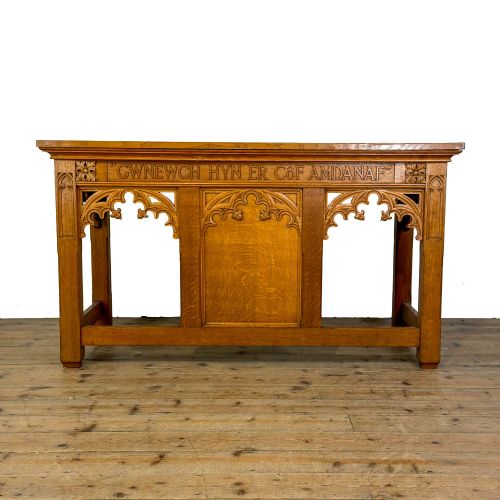
Construction methods rely on traditional joinery, allowing the heavy timber frames to remain stable over centuries of daily use. Carved elements, including Green Man motifs and Gothic tracery, demonstrate hand-tool proficiency across different historical periods.
Golden Oak Console Table Retail Price Guide 2026
Typical asking prices for golden oak console table among the pieces listed under this phrase on Sellingantiques today, from the lower quarter to the upper quarter. They describe what is for sale here now, not the wider market.
A stoic Green Man peers from the woodwork of a nineteenth-century hall table.
What varies in quality
The distinction between standard utility items and finer examples lies in the selection of timber and the depth of the carving. Tables featuring pollard oak or deliberate grain matching show a higher level of workshop ambition.
Proportion and structural integrity dictate the standing of a piece, with narrow console formats requiring careful balancing of legs and frieze drawers. Maker attribution, such as documented work from Dublin or Edinburgh workshops, elevates the standing of an individual table.
Williams and Gibton·Charles Bevan·Jenners
The Golden Oak Console Table Glossary
- Console table
- A side table designed to stand flat against a wall, typically secured or balanced for narrow hallway use. These pieces maximise surface area while occupying minimal floor space.
- Pollard oak
- Timber taken from trees that were pollarded, creating clustered grain patterns highly prized for decorative furniture panels. This material adds distinctive visual texture to tabletops and drawer fronts.
- Frieze drawer
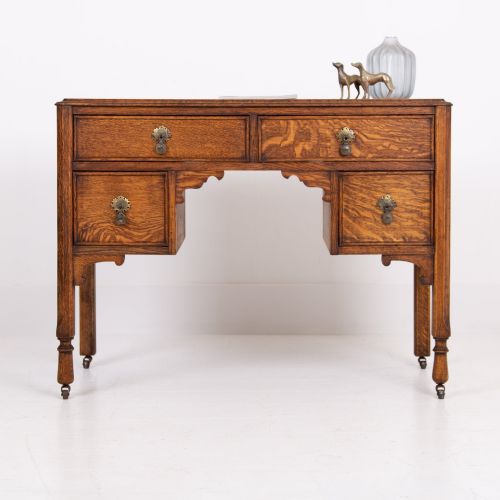
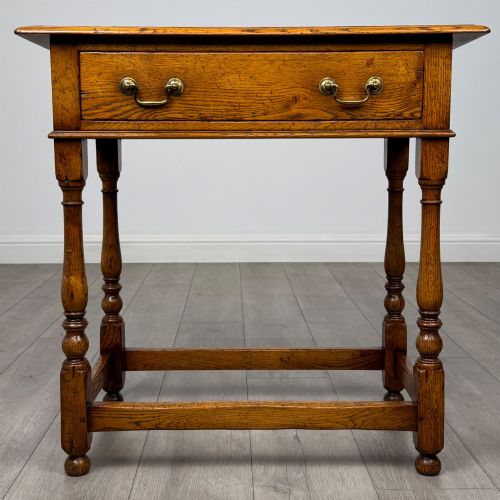
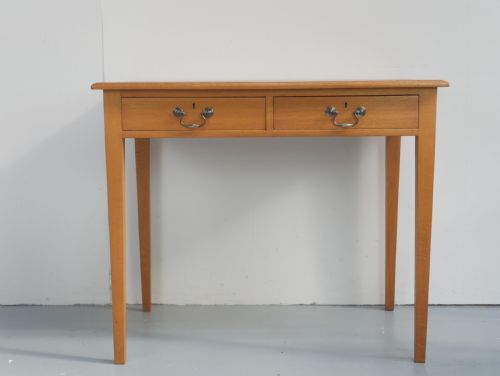
- A drawer built into the horizontal band beneath the table top, often fitted with brass pulls. It provides shallow storage for letters and small household items.
- Gothic Revival
- A nineteenth-century architectural and decorative style drawing on medieval forms, featuring pointed arches and heavy carved motifs. This aesthetic appears frequently on institutional and domestic hall furniture.
- Arts and Crafts
- A design movement valuing visible handcraftsmanship, simple construction, and local materials over industrial production. Tables from this tradition display honest joinery and unfussy grain presentation.
Golden Oak Console Table: Frequently Asked Questions
Where should I place a console table?
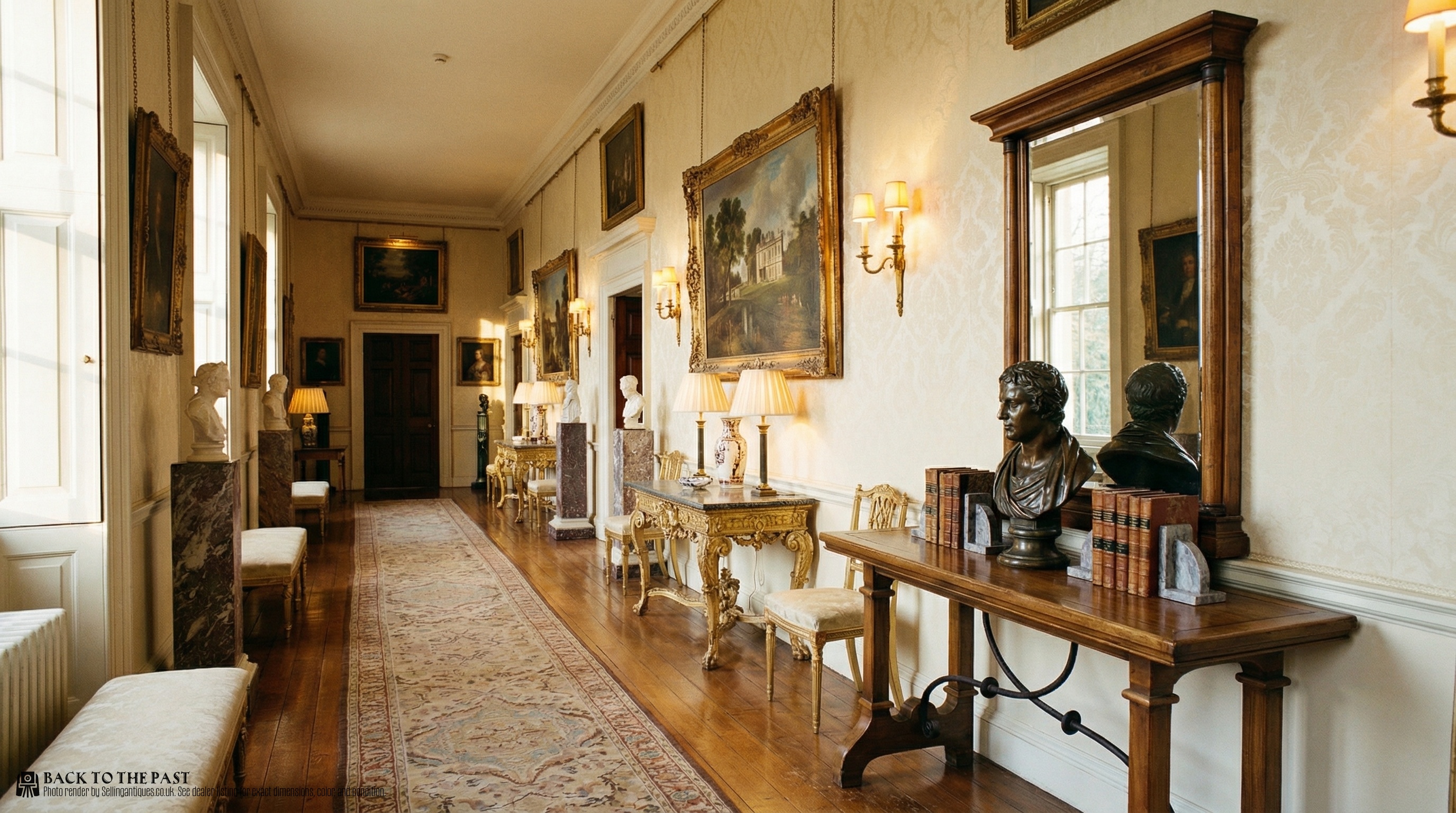
A console table works best in a narrow hallway, landing, or behind a sofa where floor space is limited. Its shallow depth allows it to hold lamps and decorative objects without blocking movement.
In larger rooms, placing one against a blank wall creates a natural focal point, especially when paired with a matching mirror.
How do I care for golden oak furniture?
Protect the timber by keeping it away from direct heat sources and strong sunlight, which can dry out the grain. Regular dusting with a soft, dry cloth maintains the finish without needing heavy polishes.
Applying a traditional beeswax occasionally helps nourish the oak and preserves its warm tone.
What is the difference between a console and a side table?
Console tables are specifically proportioned to stand against a wall, sometimes anchored for stability due to their narrow footprint. Side tables are generally freestanding and can be moved around a room easily.
In older houses, the terms often overlap depending on how the table was used in a hall or reception space.
How do I identify an Edwardian oak table?
Edwardian pieces often show lighter timber tones and may incorporate Arts and Crafts or Art Nouveau decorative motifs. Construction tends to be mechanised compared to earlier hand-built furniture, yet retains solid oak frames.
Hardware on these tables frequently includes simpler brass pulls or early pressed metal fixtures.