


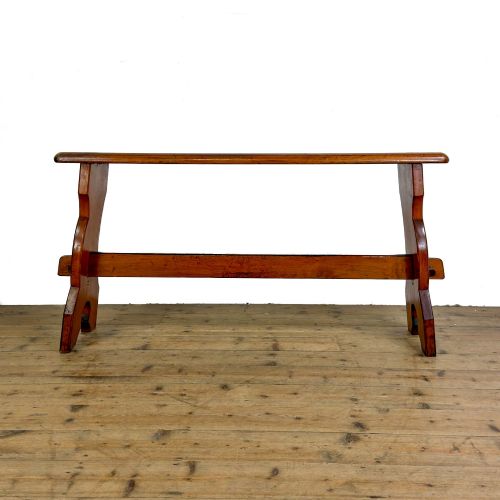
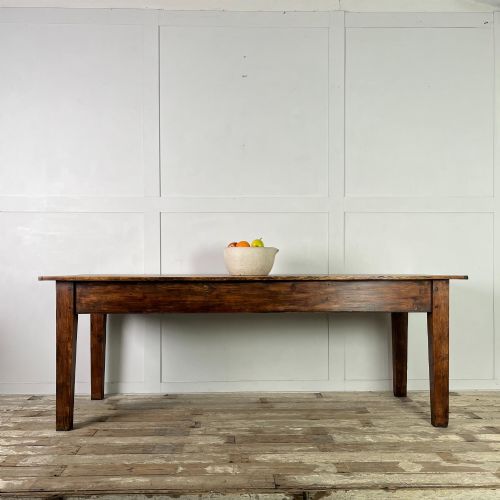
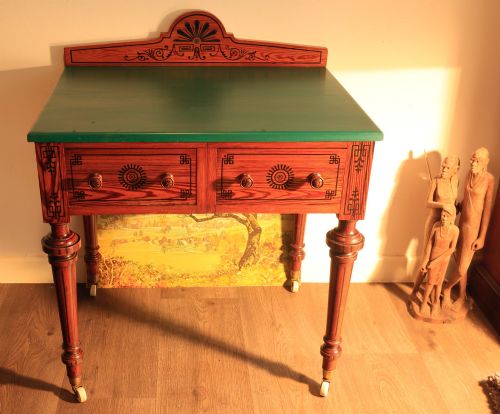


Pitch Pine Table
A pitch pine table brings dense resinous grain and sturdy Victorian utility to any room, offering a durable surface built to last.
Pitch Pine Table
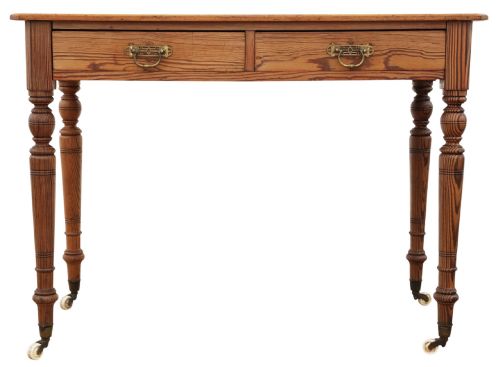
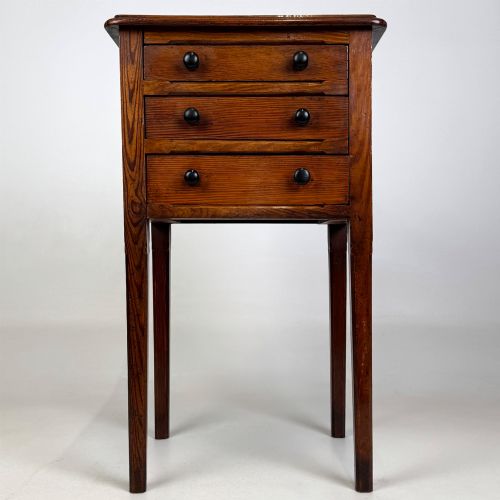
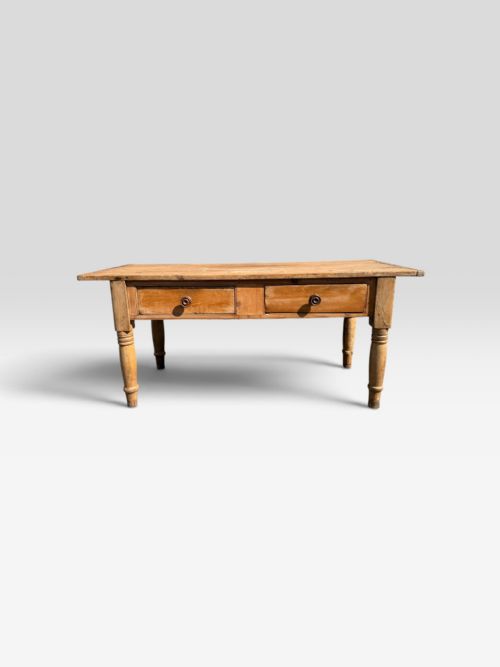
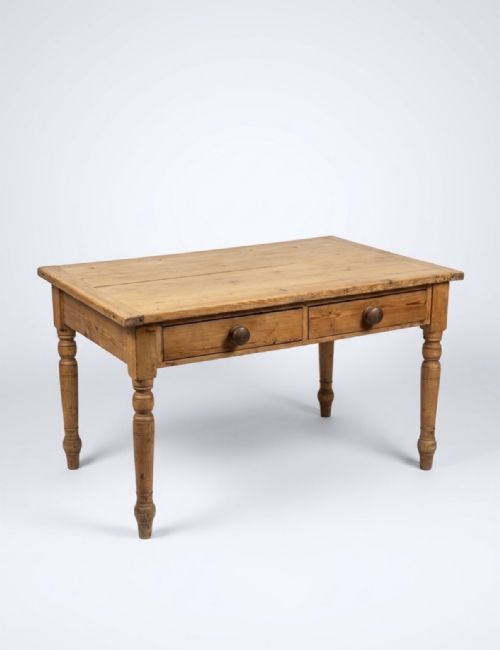
A pitch pine table encompasses a diverse range of nineteenth-century forms, from expansive farmhouse kitchen dining tables and refectory boards to smaller side tables, writing desks, and ecclesiastical altar pieces. The Victorian era dominates the selections, spanning periods from the mid nineteenth century through to nineteen ten, with farmhouse and Gothic Revival styles appearing frequently alongside utilitarian desks and servers.
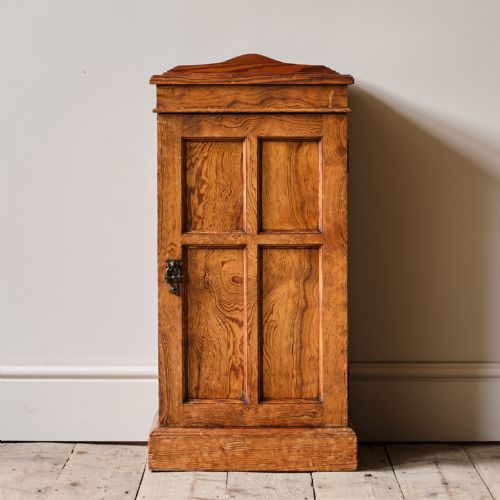
Buyers most commonly meet Victorian farmhouse tables, writing desks, and side tables constructed from solid pitch pine, often featuring drawer storage or painted surfaces. Pieces originate from domestic kitchens, vestries, and chapels, bringing robust construction and distinct resinous figuring into modern domestic settings.
Materials and Construction
Constructed primarily from pitch pine, these tables utilise timber prized for its high resin content, durability, and striking grain pattern. Secondary materials such as oak, iron, brass, ceramic, and paint appear across handles, bindings, and tabletops to support daily utility.
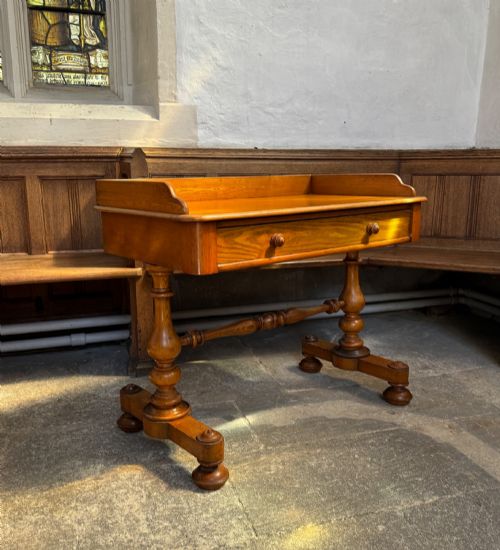
Joinery methods rely on solid wood construction designed to withstand heavy wear, incorporating turned legs, pedestals, and dovetailed drawers. Altar and Gothic Revival examples often feature carved details, heavy framing, and architectural mouldings reflecting ecclesiastical craftsmanship of the period.
Form variations range from heavy farmhouse dining boards and pedestal desks to narrow hall tables and chapel stands.
Quality and Character
Quality rests in the selection and figuring of the timber, where tight, straight grain lines and deep resinous warmth distinguish superior boards from plain utility timber. Finer examples display meticulous attention to proportion, particularly in Gothic Revival and Arts and Crafts pieces where architectural detailing remains crisp and deliberate.
The integrity of the construction and the preservation of original surfaces also dictate standing. Tables that retain their original brass fittings, unblemished structural framing, and honest patination from decades of service command greater appreciation than heavily altered pieces.
Maple and Co
The Pitch Pine Table Glossary
- Pitch Pine
- A durable nineteenth-century softwood characterised by high resin content and a prominent, highly figured grain pattern. It provides exceptional strength for heavy-use furniture.
- Gothic Revival
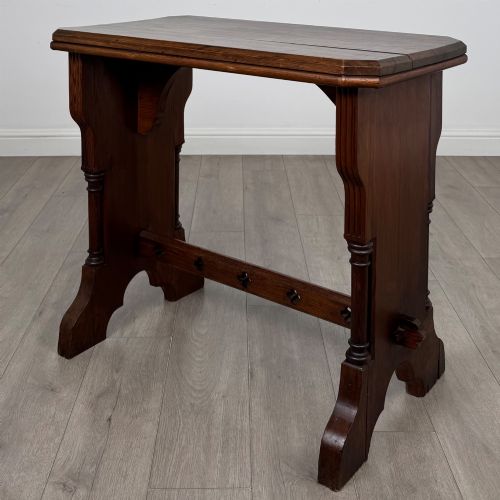
- A nineteenth-century architectural and decorative style inspired by medieval design, featuring pointed arches, heavy mouldings, and ecclesiastical motifs. This style appears frequently on ecclesiastical and altar tables.
- Refectory Table
- A long, narrow dining table traditionally used in communal dining halls and adapted in the nineteenth century for large domestic kitchens. They often feature robust stretcher bases.
- Pedestal Desk
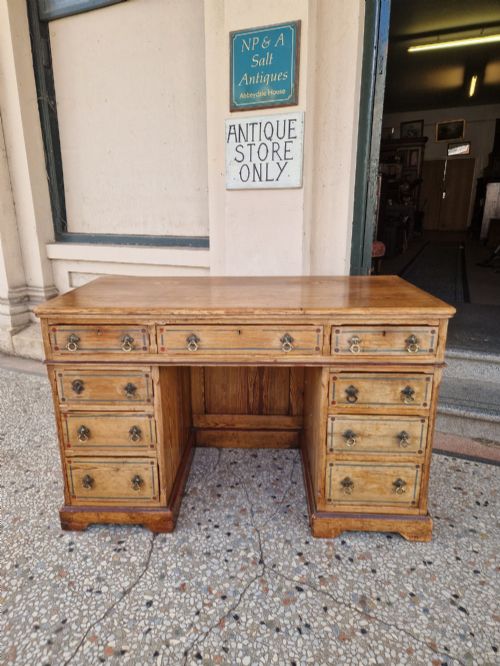
- A freestanding writing table supported by one or two banks of drawers beneath the work surface. These pieces often include kneehole openings and heavy timber construction.
- Washstand
- A domestic table designed to hold a wash basin and jug, typically featuring a marble or timber top and a low splashback. Many survive as versatile side or hall tables.
Pitch Pine Table: Frequently Asked Questions
What is pitch pine?
Pitch pine is a dense, durable softwood known for its high resin content and strong, prominent grain patterns. It was widely utilised in the nineteenth century for furniture requiring strength and resilience.
The high resin makes the timber heavier and more hardwearing than standard pine, giving antique tables a distinct reddish-brown warmth that deepens with age.
How do I care for a pitch pine table?
Maintain the surface by wiping it clean with a dry or slightly damp cloth, avoiding harsh chemical cleaners that strip the finish. Natural oils and waxes help preserve the wood and enhance the grain.
Keep the table away from direct heat sources and extreme humidity fluctuations to prevent the timber from drying out or splitting over time.
Are these tables suitable for everyday dining?
Many of these pieces, particularly farmhouse and kitchen tables, were built precisely for heavy daily use and domestic service. Their robust construction handles regular meals with ease.
Using placemats and coasters protects the historic surface from heat rings and moisture while allowing the timber patination to age gracefully.
How do I distinguish Gothic Revival styles?
Gothic Revival pieces incorporate architectural elements inspired by medieval buildings, such as pointed arches, quatrefoils, and chamfered framing. These details lend a heavier, more formal presence to desks and serving tables.
Such characteristics often link pieces to ecclesiastical workshops, vestries, or specific design influences like the work of Augustus Pugin.