



Honey Pine Hall Table
A honey pine hall table brings warmth and simple utility to an entryway through its honest timber and practical proportions.
Honey Pine Hall Table
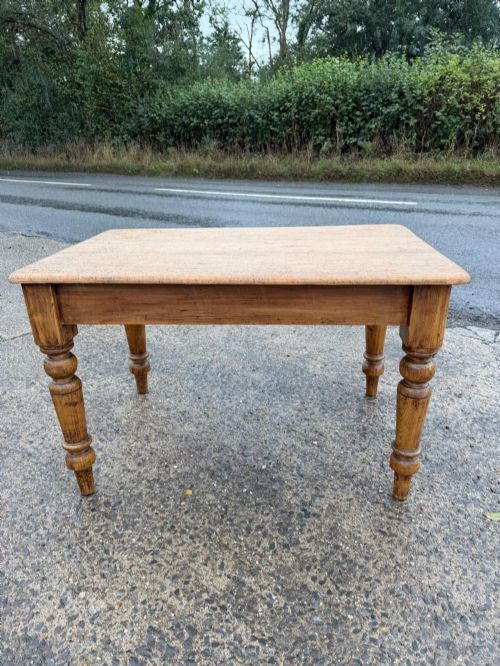
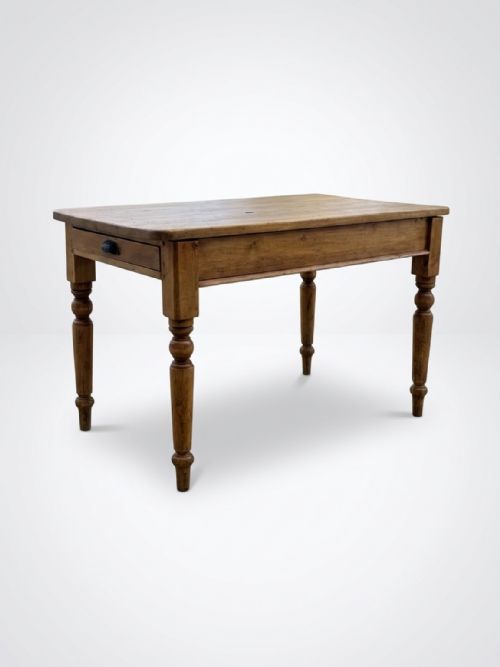
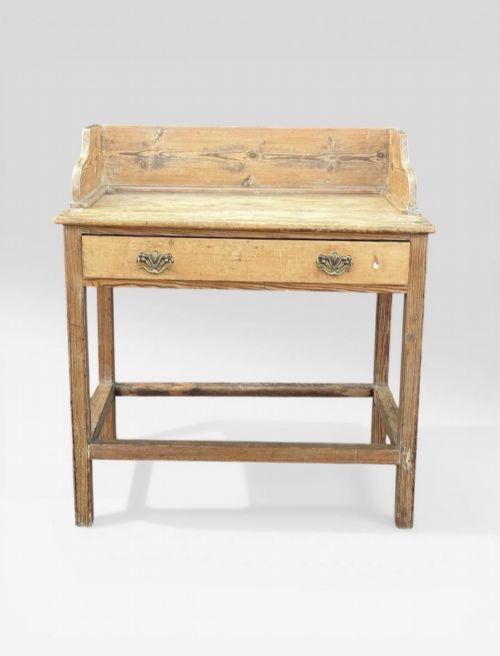
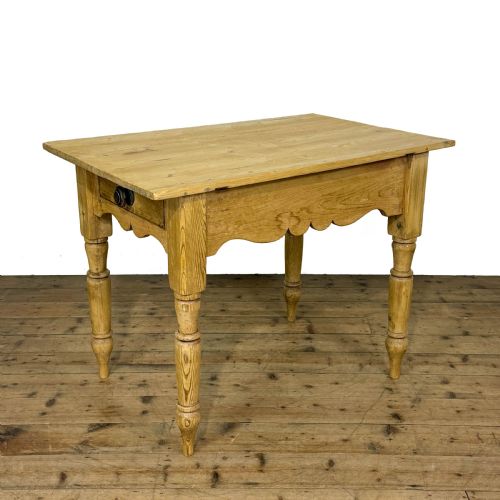
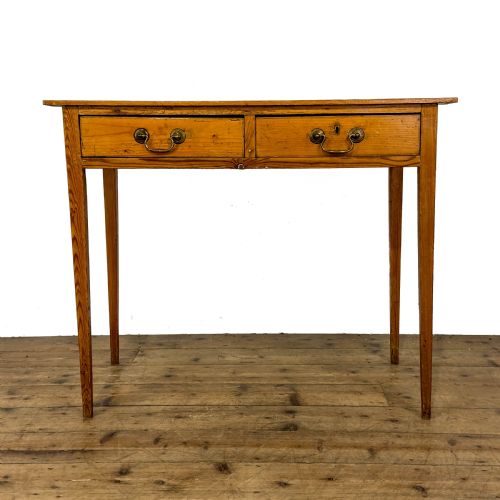
A honey pine hall table is a compact surface intended for narrow spaces like corridors, landings and entranceways. The selection spans pieces from the Georgian and Victorian eras, alongside items dated around 1870 and 1880, built for domestic service.
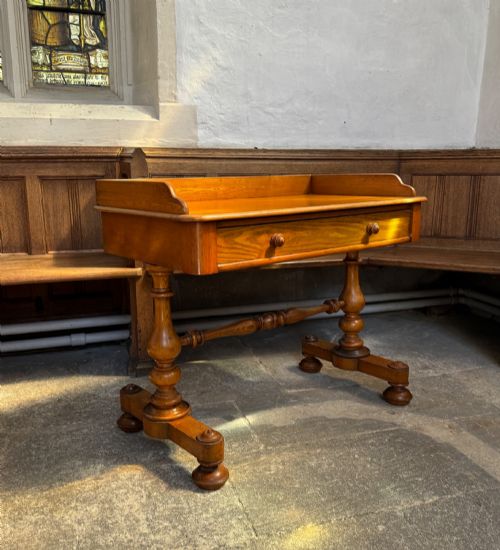
Most examples function as side tables, washstands, writing desks, console tables or small kitchen tables. Common stylistic descriptors include Victorian Country, rustic farmhouse, English country and Gothic Revival, reflecting their utilitarian origins.
How they were made
Construction relies heavily on pine and pitch pine, often paired with brass, metal, wood, bone and ceramic fittings. Joinery is straightforward and robust, suited to daily household tasks rather than formal display.
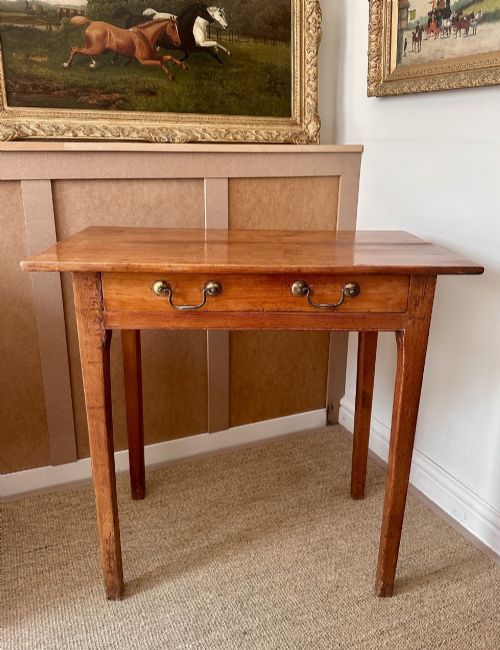
Surfaces frequently feature single drawers integrated into the front frieze, constructed with traditional joints to house small everyday items.
Object forms range from side tables and washstands to console tables, serving tables, and writing desks with single frieze drawers.
What varies in quality
Quality rests in the choice of timber, particularly denser pitch pine versus standard softwood, and the integrity of the original construction. Better examples retain their structural firmness and honest surface wear without excessive intervention.
Proportion and detailing separate ordinary utility items from finer vernacular work, such as pieces with bowfronts or considered Gothic Revival mouldings.
The Honey Pine Hall Table Glossary
- Frieze
- The horizontal band running beneath the top surface of a table. This is the structural part that frequently houses a single storage drawer.
- Pitch pine
- A dense, resinous variety of pine timber known for its durability and distinct grain pattern. It appears frequently in Victorian washstands and serving tables.
- Bowfront
- A convex, curved front profile found on select case pieces and sideboards. This shape softens the corners of furniture designed for narrow circulation spaces.
- Washstand
- A domestic table originally designed to hold a basin and jug for personal hygiene. These pieces adapt well to modern hallways due to their narrow depth.
Honey Pine Hall Table: Frequently Asked Questions
Where should I put a hall table?
These tables suit narrow entranceways, hallways, and landings where floor space is limited. Their shallow depth allows them to sit against a wall without obstructing movement.
They provide a convenient surface for post and keys while introducing the warmth of antique timber to transitional spaces in the home.
How do I care for pine furniture?
Keep pine furniture away from direct heat sources and sudden temperature changes to prevent the timber from splitting. Regular dusting with a dry cloth maintains the finish.
Avoid excessive moisture on the surface, using coasters and mats to protect the old wood from water rings and stains.
What is the difference between pine and pitch pine?
Standard pine is a lighter softwood commonly used for everyday vernacular furniture. Pitch pine contains a higher resin content, making the timber heavier, harder, and more durable.
Pitch pine often displays a more pronounced grain and a richer natural colouration than standard softwood.
Can I use a washstand as a hall table?
Period washstands make excellent hall tables because their original proportions were designed for compact rooms. Their built-in surfaces and occasional lower shelves offer practical display areas.
Adapting these pieces for modern entryways preserves their utility while repurposing them for contemporary living.