

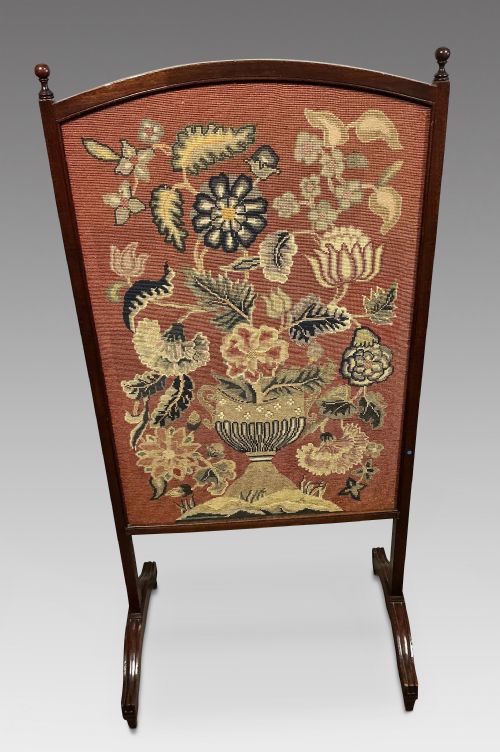


Victorian Embroidered Screen
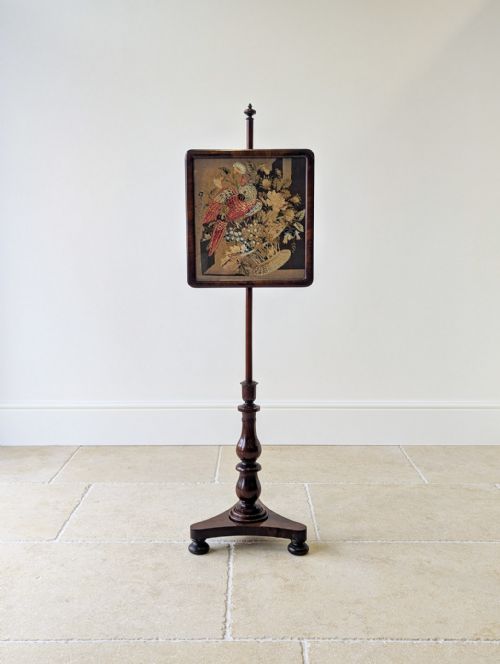
These victorian embroidered screen pieces are decorative domestic furnishings designed to shield a user from hearth heat, combining needlework with timber frames.
Victorian Embroidered Screen
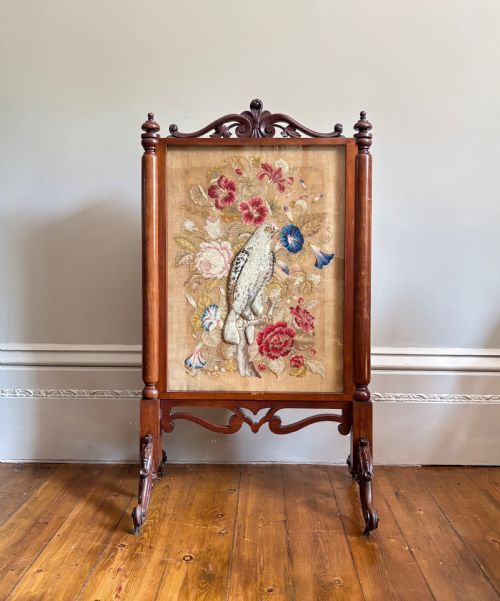
A victorian embroidered screen serves primarily as a decorative and functional fireside accessory, though tall folding room dividers and occasional table variants also appear. Buyers seeking this category encounter numerous pole screens alongside framed standing panels.
The materials span mahogany, rosewood, walnut, and brass frames supporting needlework, woolwork, Berlin work, tapestry, and silkwork panels. Many pieces originate from the nineteenth century, including specific periods like the Victorian, William IV, and Regency eras.
Materials and construction
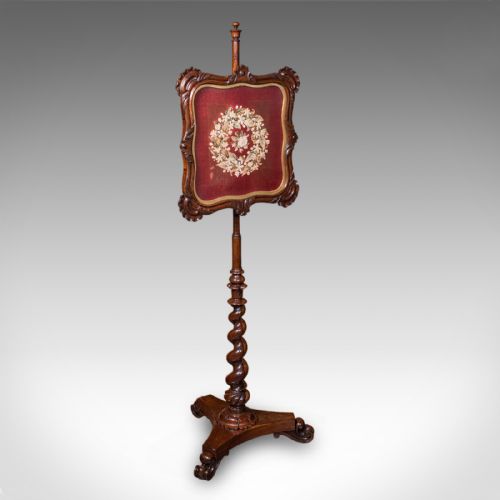
Frames take shape from dense timbers such as mahogany, rosewood, and walnut, often featuring carved details or gilded surfaces. Pole screens incorporate adjustable mechanisms for the heat reflector panel, while folding room dividers utilise multiple hinged sections.
Needlepoint, woolwork, Berlin work, and silkwork provide the central textile display, mounted securely into wooden or brass frameworks. Artisans combined joinery and textile crafts to produce both freestanding cheval screens and compact tabletop face screens.
Listings feature mahogany, rosewood, walnut, and brass alongside woolwork, silk, and needlepoint across nineteenth-century periods.
Judging the work
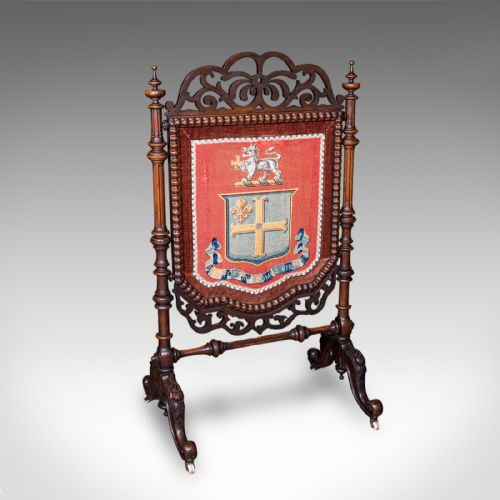
Quality rests upon the execution of the needlework panel and the crispness of the timber carving on the stand. Complex armorial designs, detailed tapestry work, and fine silk embroidery elevate a piece above standard floral woolwork.
The integrity of the adjustable mechanism in pole screens and the robustness of the frame joints distinguish superior examples. Timber selection also matters, with richly grained rosewood and figured walnut indicating higher craftsmanship than plain secondary woods.
The Victorian Embroidered Screen Glossary
- Pole screen
- A vertical standing screen with an adjustable embroidered panel mounted on a central wooden shaft. This design allowed sitters to slide the shield up or down to block hearth heat from their faces.
- Berlin work
- A type of coloured wool needlepoint stitched onto canvas using charted patterns. It became extremely popular during the nineteenth century for upholstery and decorative panels.
- Cheval screen
- A standing frame supported by two lateral feet or pillars that allows the panel to swing or remain fixed. These larger screens often doubled as room dividers or decorative wall art.
- Needlepoint
- Embroidery stitched onto an open-weave canvas mesh to completely cover the ground. It forms the durable pictorial surface seen on most nineteenth-century fire screens.
- Armorial
- A design displaying a family coat of arms or heraldic insignia. Such embroidered panels often denote specific lineage or commissioned domestic furnishings.
Victorian Embroidered Screen: Frequently Asked Questions
What is a pole screen?
A pole screen is a slender vertical stand holding an adjustable embroidered panel designed to protect the face from intense fireplace heat.
Sitters positioned these portable screens near the hearth and slid the panel up or down the central pole as needed.
How were fire screens used?
These pieces sat near open coal fires to deflect radiant heat away from individuals seated in the room.
They also served to shield delicate cosmetic waxes and pigments on the face from melting near the hearth.
What is Berlin work?
Berlin work is a specific style of needlepoint embroidery worked in coloured wools onto a canvas grid.
Craftspeople followed printed grid patterns imported from Germany to create intricate floral and pictorial panels.
How do I identify a Regency screen?
Regency pieces often display classical motifs, dark rosewood or mahogany timbers, and refined architectural proportions.
They typically date from the early nineteenth century and precede the heavier ornamentation of the later Victorian period.