



Victorian Ebonised Pier Cabinet
These nineteenth-century pieces of furniture combine dark-finished timber with glazed doors, offering a refined way to display ceramics and precious objects.
Victorian Ebonised Pier Cabinet
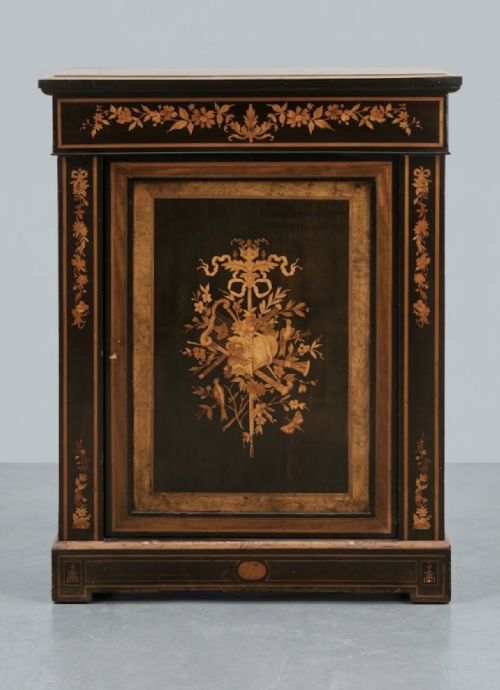
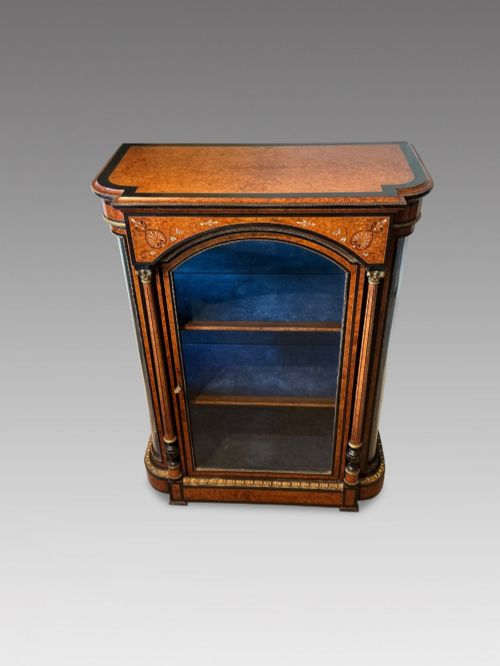
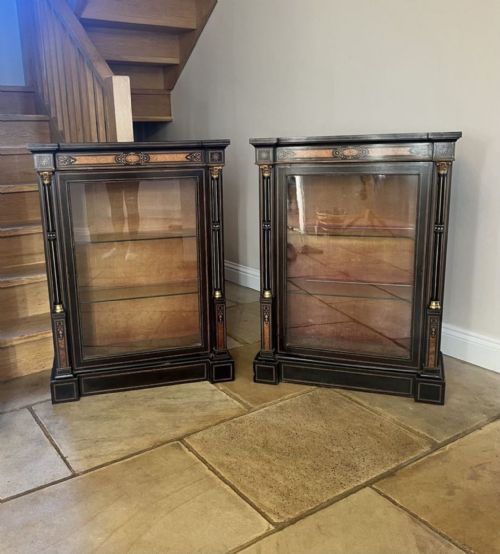
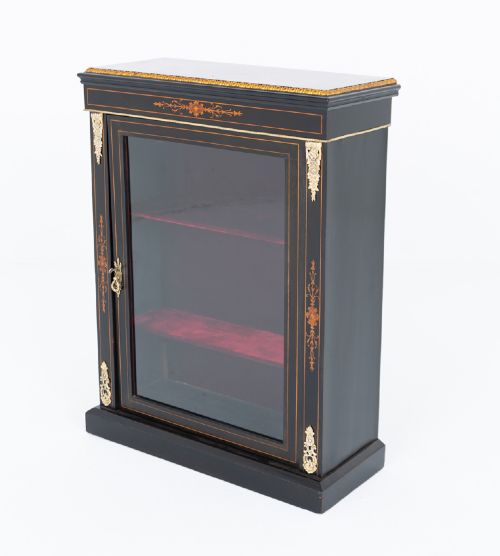
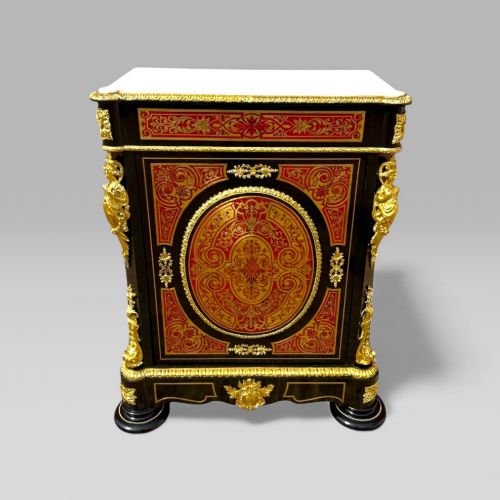
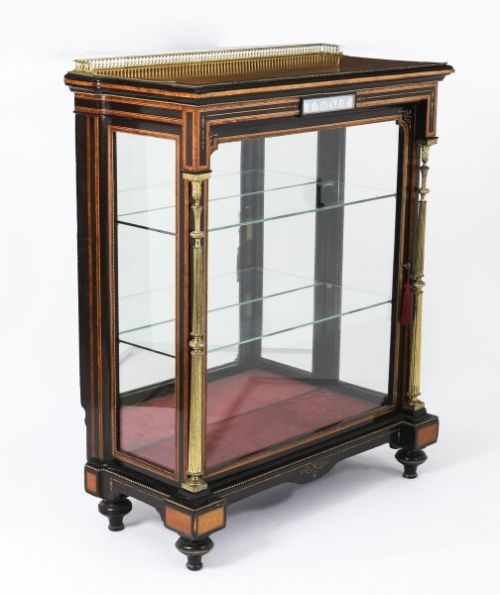
A victorian ebonised pier cabinet is a low display piece designed to sit against the wall between windows, emerging from nineteenth-century drawing rooms. The pieces recorded here span several decades from the middle to the late nineteenth century, reflecting various aesthetic influences including French Napoleon III and the Aesthetic Movement. Single doors dominate the selection, though pairs and music cabinets also appear.
Makers of the period utilised rich secondary timbers like amboyna, walnut, and burr walnut alongside the dark ebonised finish. Many examples incorporate glazed panels for viewing contents, while others integrate porcelain plaques or marble tops. The resulting furniture balances formal display requirements with compact proportions suitable for nineteenth-century domestic interiors.
Distinctions in execution and detail
Quality separates pieces through the precision of their marquetry and the depth of the ebonised finish. Superior examples display crisp ormolu mounts, well-matched amboyna or burr walnut panels, and integrated Sevres-style porcelain plaques rather than plain glass. The fineness of brass stringing and the tightness of veneer joints indicate workshop standards.
The integration of styles also marks the grade of the piece, from simple linear stringing to elaborate French boulle work with multiple inlaid materials. Balance in proportions and the preservation of original glass and surface polish dictate the standing of individual cabinets.
Music cabinets share the pier cabinet footprint, designed to hide sheet music behind glass while still looking dignified enough for the parlour.
The Victorian Ebonised Pier Cabinet Glossary
- Ebonised wood
- Timber treated with a dark stain or finish to imitate solid ebony. This technique was popular in nineteenth-century cabinet making to provide high contrast for gilt and brass inlays.
- Pier cabinet
- A narrow display cabinet designed to fit against the wall space between windows. These pieces often feature glazed doors and flat tops.
- Boulle
- An elaborate form of marquetry using brass and tortoiseshell inlaid in counter-changed patterns. Named after the French royal cabinet maker, it appears frequently on nineteenth-century revival pieces.
- Ormolu
- Gilded bronze mounts used decoratively on furniture edges and corners. The metal is cast and chased before receiving a gold wash.
Victorian Ebonised Pier Cabinet: Frequently Asked Questions
What is a pier cabinet?
A pier cabinet is a narrow display unit designed specifically for the wall space between two architectural openings or windows. Nineteenth-century drawing rooms utilised these pieces to showcase porcelain and small ornaments.
They stand lower than standard bookcases, keeping sightlines open across the room. The enclosed glass design protected delicate collections from dust and handling.
How do you date these cabinets?
Dating relies upon stylistic markers, construction methods, and materials recorded across the Victorian period. Pieces incorporating Aesthetic Movement motifs or heavy ormolu mounts typically point toward the later decades of the nineteenth century.
Earlier examples from the mid-nineteenth century tend toward simpler walnut and ebonised combinations with understated brass stringing. Examining the interior secondary woods and backboards helps confirm the period of manufacture.
Where were they placed originally?
These cabinets occupied the narrow masonry pillars between large Victorian drawing room windows where light fell across their glazed doors. Placing them in these spots made effective use of awkward wall spaces.
They also served as focal points against main reception room walls when paired symmetrically. Their modest depth ensured they did not obstruct movement in busy rooms.
How do you maintain the finish?
Maintaining ebonised and polished surfaces requires dusting with a dry, soft cloth to prevent abrasive particles from scratching the dark finish. Direct sunlight should be avoided to protect sensitive veneers like amboyna and tortoiseshell from fading.
Occasional application of appropriate furniture wax preserves the sheen without building up heavy residues. Care must be taken around gilt bronze mounts during cleaning.