


Victorian Ebonised Console Table
These Victorian ebonised console table pieces bring dark, dramatic surfaces and polished detail to a room.

Victorian Ebonised Console Table
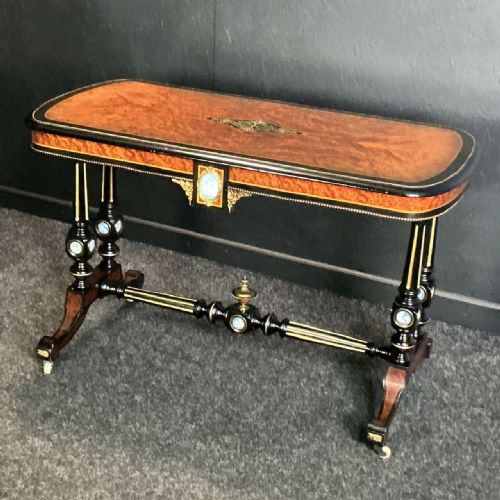
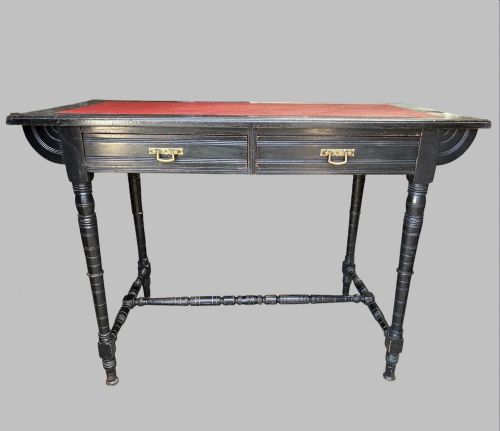
When you search for a victorian ebonised console table, you encounter nineteenth-century furniture defined by blackened timber surfaces and architectural forms designed to stand against a wall. The selections span console tables, side tables and card tables from the Victorian period, alongside pieces reflecting the Aesthetic Movement and French Revival styles. Many incorporate walnut, amboyna veneer, brass or ormolu mounts alongside the characteristic dark finish.
The versions most commonly met on this page include Aesthetic Movement designs and nineteenth-century card or games tables featuring ebonised wood. Alongside traditional console tables, the listings include writing desks, writing tables and two-tier occasional tables from the 1860s to the 1890s. Some examples combine the blackened finish with parcel gilt, porcelain plaques or mother-of-pearl detail.
Materials and construction
Cabinetmakers constructed these tables using solid timbers and secondary woods finished with ebonising, a process that stained or painted light wood to imitate expensive ebony. Makers applied veneers of burr walnut, amboyna and burr thuya to tabletops, contrasting the dark ebonised framing with rich, figured grain. Parcel gilding often highlighted carved elements, adding metallic gleam to the edges.
Many examples incorporate brass inlay, brass stringing and ormolu mounts set flush into the wooden surface. Certain pieces feature porcelain plaques inset into the top, reflecting French taste and meticulous marquetry techniques. Joinery methods relied on traditional frames and stretcher supports designed to bear weight while maintaining slender proportions.
The listings show pieces spanning the nineteenth century, with materials including amboyna veneer, burr walnut, brass and ormolu alongside ebonised wood.
Assessing quality and finish
Quality in these pieces rests upon the depth of the ebonised finish and the selection of underlying woods and veneers. Superior examples display crisp carving, precise brass inlay and well-figured burr walnut or amboyna panels rather than plain secondary timber. Maker marks, such as stamps from established cabinet-making firms, distinguish workshop production from standard commercial output.
The integration of decorative elements like porcelain plaques, parcel gilding and mother-of-pearl detail separates standard tables from exhibition-grade pieces. Construction integrity, including the stability of folding card table mechanisms and the smoothness of drawer action, indicates the original standard of manufacture. The preservation of the original blackened surface without heavy modern overpainting remains central to desirability.
Edwards & Roberts·Jenks & Woods·S&H Jewell
The Victorian Ebonised Console Table Glossary
- Ebonised wood
- Timber treated to resemble ebony through staining or painting. This finish became popular during the nineteenth century for furniture influenced by Japanese design and antique tastes.
- Aesthetic Movement
- A nineteenth-century design style emphasising visual beauty over narrative content. Pieces in this style often feature ebonised surfaces, geometric lines and Japanese-inspired decoration.
- Parcel Gilt
- Partial gilding applied to specific carved details or highlights on a piece of furniture. It creates contrast against dark ebonised or polished wooden surfaces.
- Amboyna Veneer
- A decorative wood veneer prized for its speckled, swirling grain pattern. It appears on tabletops and panels within nineteenth-century luxury furniture.
- Ormolu
- Gilded bronze mounts and decorative details fitted to furniture. French revival pieces frequently employ these cast metal ornaments.
Victorian Ebonised Console Table: Frequently Asked Questions
How were console tables used?
Console tables stood against walls in reception rooms and hallways, often supporting decorative objects, clocks or lamps. Their architectural shape was designed to furnish transitional spaces without obstructing movement.
In some instances, these tables featured folding tops that converted them into card or games surfaces for evening entertainment.
What is the Aesthetic Movement?
The Aesthetic Movement was a late nineteenth-century design current that prioritized visual beauty and craftsmanship over historical revival styles. Furniture from this movement often utilised ebonised finishes, simple geometric lines and subtle gilding.
Pieces associated with this style reflect an interest in Japanese art and simplified decoration.
How do I identify ebonised wood?
Ebonised wood is timber, such as beech or fruitwood, that has been stained, painted or chemically treated to achieve a deep black colour resembling ebony. Under magnification or in areas of wear, the underlying grain of the lighter timber may remain visible beneath the dark coating.
This technique allowed nineteenth-century cabinetmakers to produce dark furniture without using costly solid ebony.
Where should I place a console table?
A console table suits an entrance hall, a living room wall or the back of a sofa where floor space is limited. Because these tables are designed to be viewed primarily from the front and sides, they fit flush against flat wall surfaces.
Pairing a console table with a mirror or hanging artwork above creates a balanced focal point in a room.