


Burr Walnut Tier Table
A burr walnut tier table brings layered warmth and figured grain to a room, offering multiple surfaces for books or lamps.
Burr Walnut Tier Table
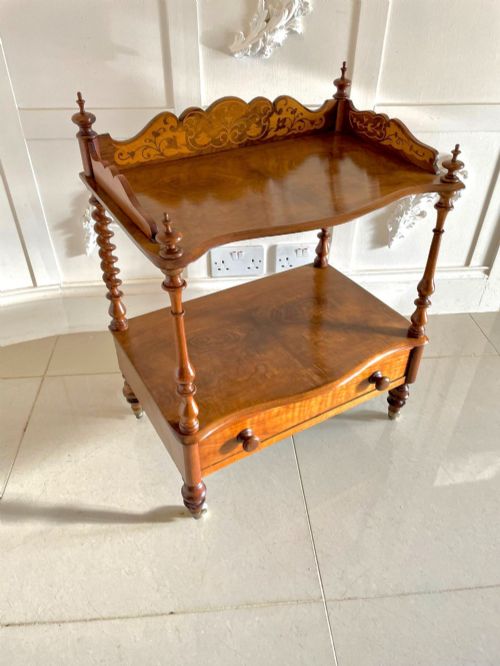
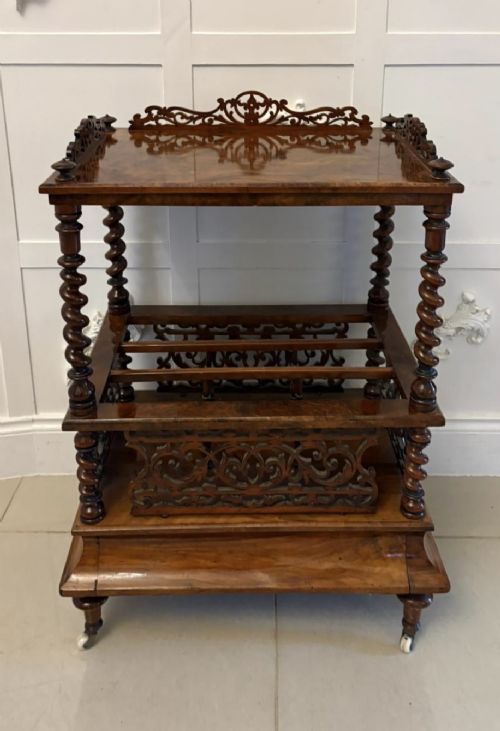
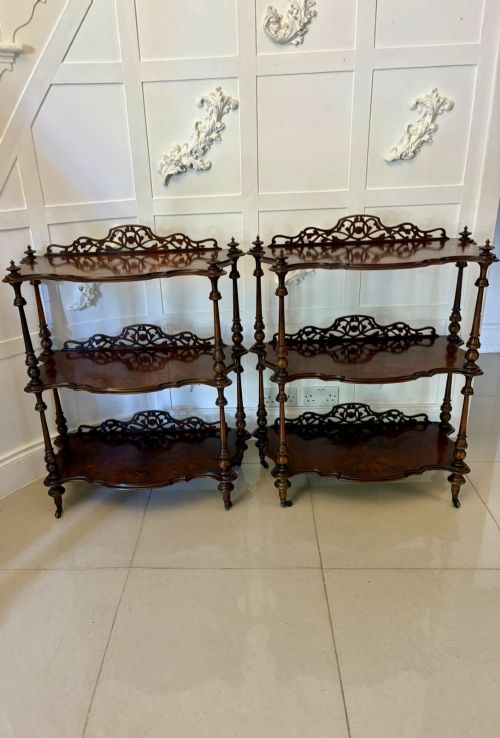
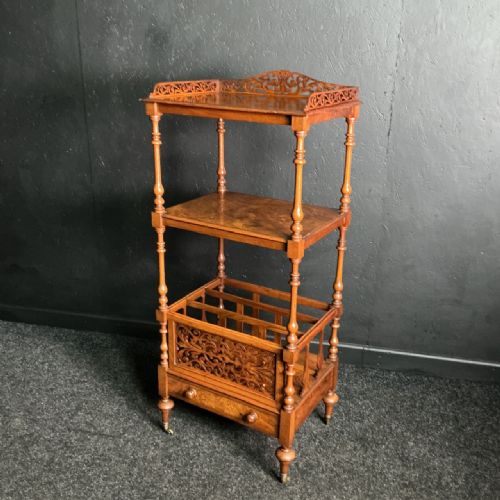
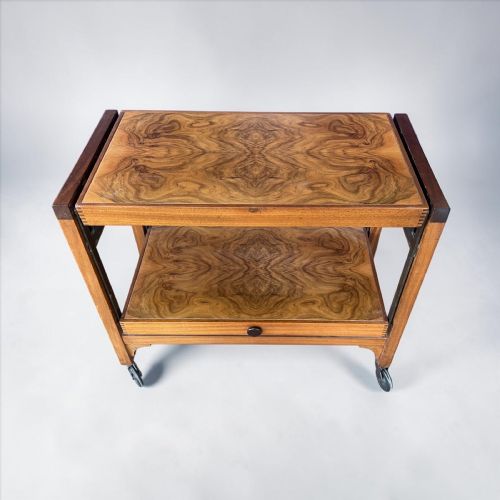
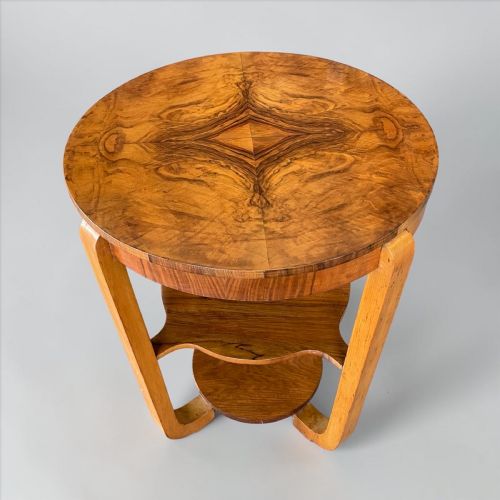
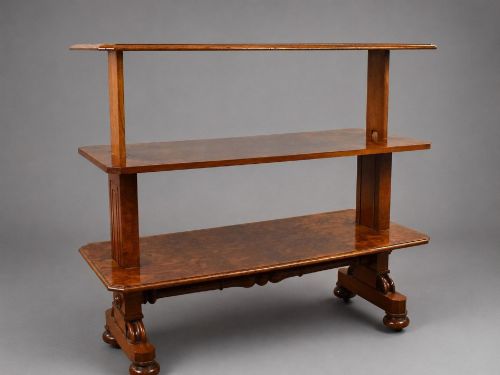
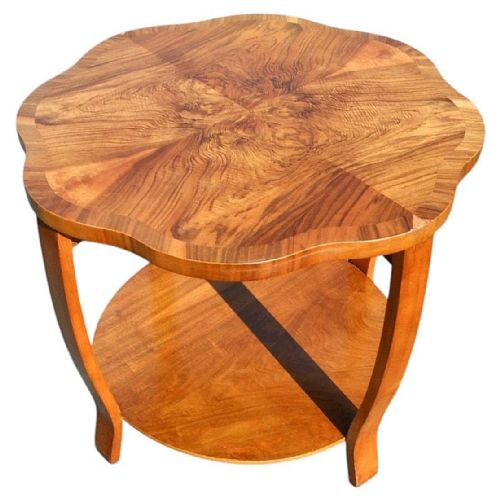
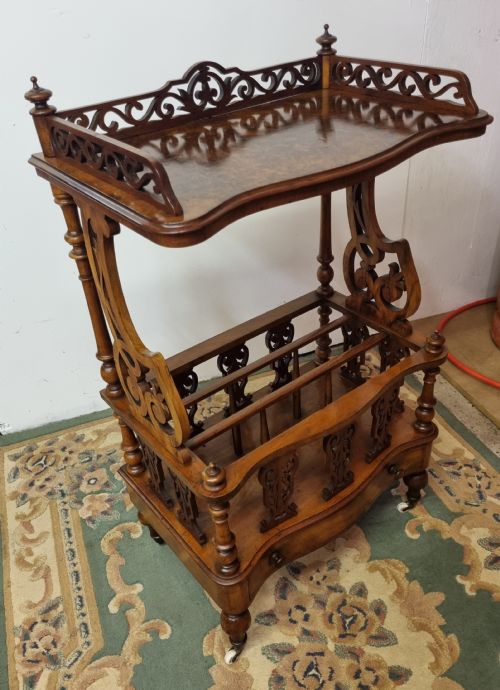
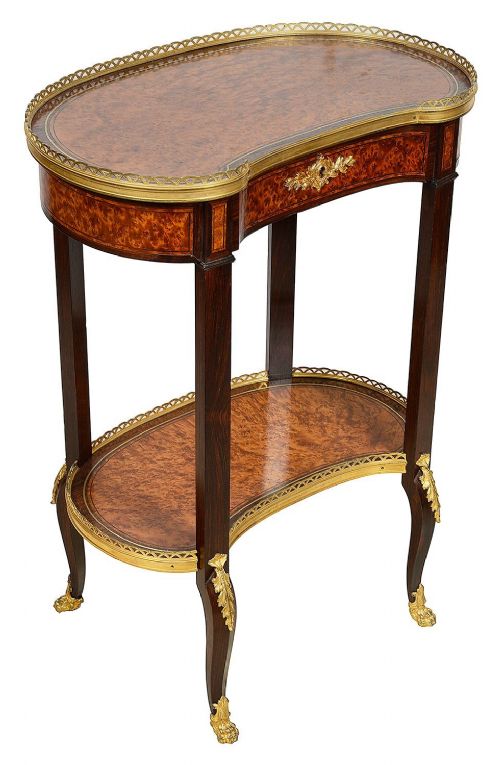
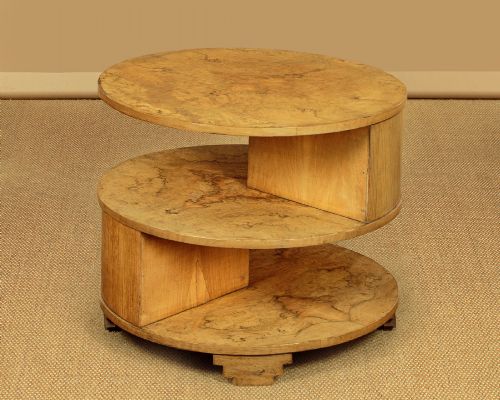
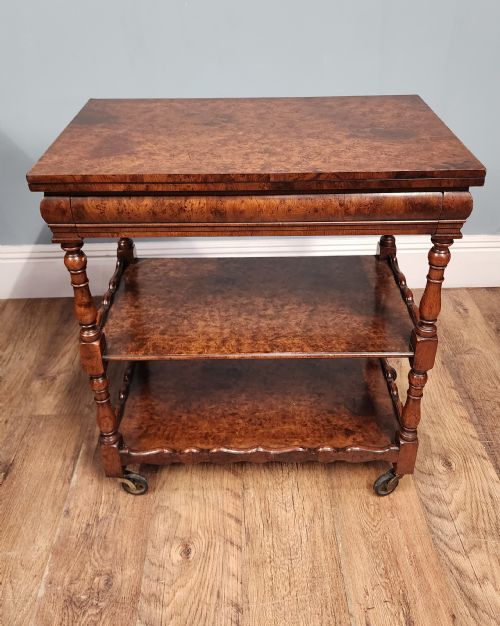
When searching for a burr walnut tier table, buyers encounter multi-surface pieces designed to hold books, drinks or display objects across stacked levels. The selection spans distinct eras, ranging from mid-nineteenth-century Victorian whatnots and étagères to streamlined 1930s Art Deco coffee and serving trolleys.
The Victorian examples often combine tiers with built-in magazine compartments as canterburys or feature barley twist supports, whilst twentieth-century variants lean towards clean lines in walnut veneer and chrome. These multi-tiered forms served practical domestic duties in drawing rooms and libraries, evolving from elaborate carving to modernist restraint.
How they were made
Cabinet makers applied fine burr walnut veneers over solid secondary timbers to capture the swirling, knotty patterns characteristic of the growth excrescences on walnut trees. This skilled veneering was paired with inlay work, ceramic or brass castors, and occasionally carved supports or gilded details.
Later pieces from the twentieth century utilised modern pressing techniques for plywood cores faced in figured walnut, sometimes integrating chrome or metal uprights alongside traditional timber construction.
Listings span the nineteenth century through to 1930, uniting Victorian walnut whatnots with Art Deco modernist tier tables.
What varies in quality
Quality rests in the intensity and book-matching symmetry of the burr walnut grain across the tiers, alongside the crispness of any inlaid banding or carved mouldings. Finer pieces demonstrate careful selection of veneers that wrap cleanly over edges without lifting or bubbling.
Structural integrity also separates standard utility items from exhibition pieces, evident in the rigidity of the upright columns, the quality of brass hardware, and whether secondary timbers like mahogany or oak were chosen for internal framing.
Tehan·Hille·Holland and Sons
The Burr Walnut Tier Table Glossary
- Burr walnut
- Timber cut from the wart-like growths on walnut trees, yielding complex, swirling grain patterns highly prized by cabinet makers.
- Whatnot
- A piece of furniture consisting of open shelves for displaying ornaments or holding books, popular in the Victorian era.
- Étagère
- A piece of furniture with a set of open shelves for displaying small objects, similar in function to a whatnot.
- Canterbury
- A low stand with partitions for holding sheet music, books or newspapers, frequently combined with table tiers and drawers.
- Veneer
- A thin layer of superior wood adhered to a base of cheaper timber to provide decorative patterned surfaces.
Burr Walnut Tier Table: Frequently Asked Questions
What is a burr walnut tier table used for?
These tables provide multiple surfaces for lamps, books, and display items while occupying a compact footprint in a living space.
Historically, they served in libraries and drawing rooms as practical stands for reading materials and afternoon tea.
How do I tell Victorian from Art Deco tier tables?
Victorian versions typically feature turned columns, inlaid stringing, fretwork galleries, and occasionally integrated canterbury sections for magazines.
Art Deco examples from the 1930s favour smooth curved tiers, unadorned figured grain, and sometimes metal or chrome supports.
Are these tables sturdy enough for daily use?
Most tier tables are constructed with multiple upright supports connecting the shelves, making them stable for everyday items like books and cups.
Heavier Victorian whatnots and larger étagères offer substantial weight, though care should be taken with delicate turned legs when moving them.
What is the difference between a whatnot and an étagère?
While both terms describe open shelving furniture, whatnots in this selection often include functional additions such as drawers, drop sides, or magazine racks.
Étagères generally focus on decorative stacked display surfaces without the added utility compartments.