


Ebonised Shelf Table
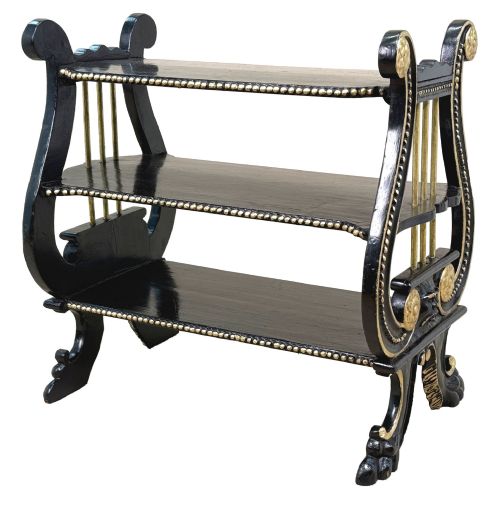
An ebonised shelf table is a dark-finished display piece that brings striking contrast and tiered storage to a room.
Ebonised Shelf Table
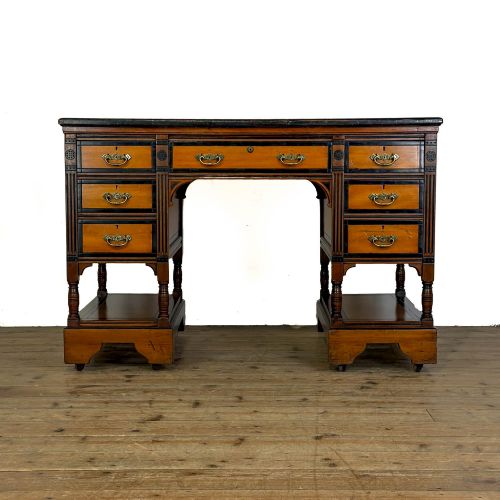
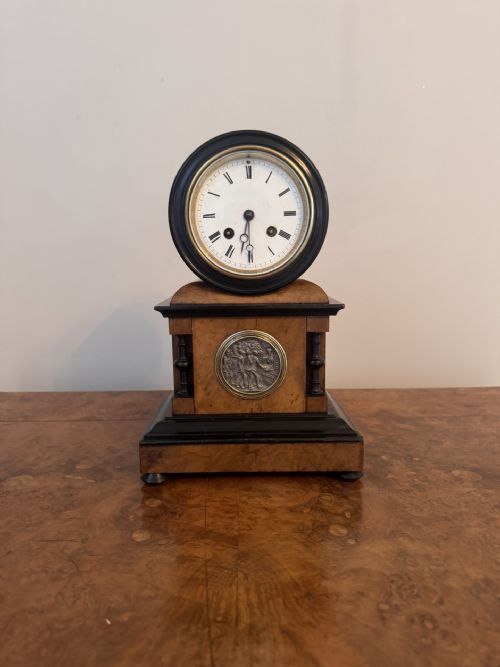
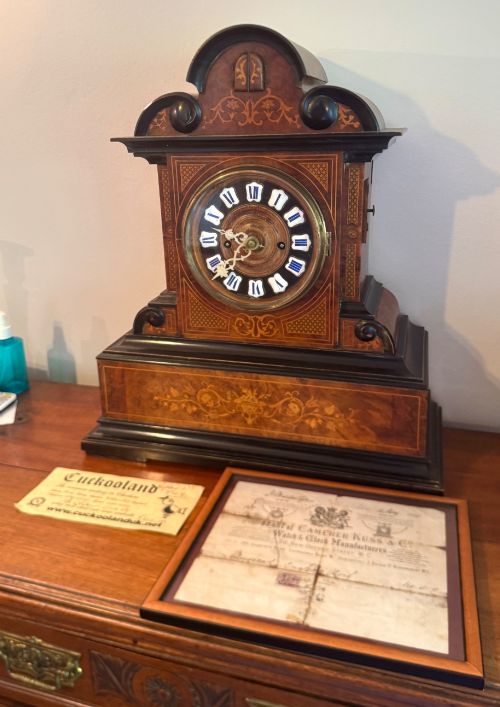
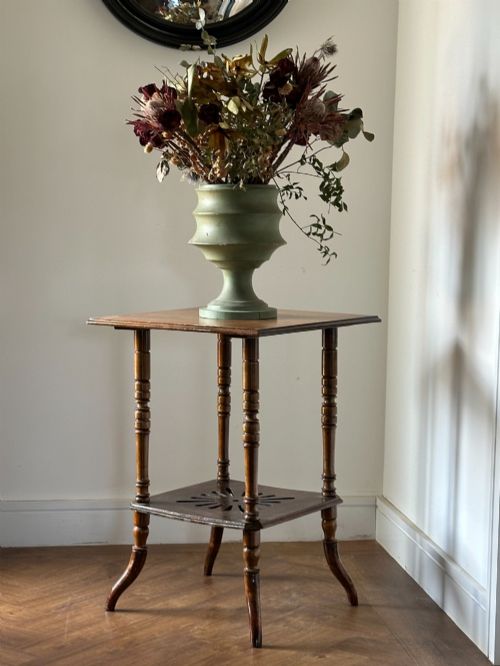
When you examine an ebonised shelf table, you are looking at nineteenth-century tiered furniture designed to display small decorative objects or books. The pieces on this page span the Victorian and Edwardian eras, encompassing varied forms such as étagères, occasional tables, and display shelves.
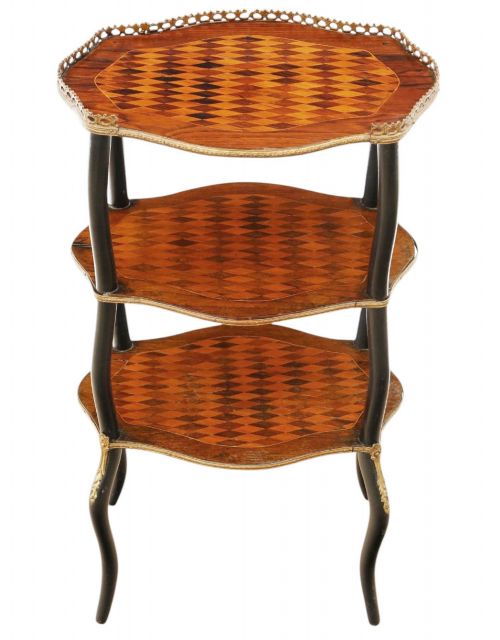
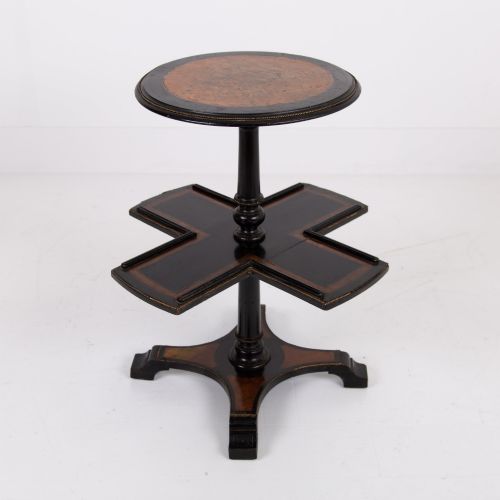
You are most likely to meet Victorian examples finished in dark ebonised wood, often combining open shelving with marquetry or parcel gilding. These items reflect the aesthetic tastes of the period, drawing on French and Anglo-Japanese influences to create compact display surfaces.
The form prioritises vertical display, using multiple tiers supported by slender columns or uprights. They function effectively in reception rooms and parlours where space is measured but decorative impact matters.
How they were made
Cabinetmakers constructed these tables using a timber carcass, frequently applying an ebonised finish to simulate expensive ebony. Woods such as walnut and oak served as foundations for dark staining or painting, while finer versions incorporated veneers of amboyna and burr walnut.
Decoration relied on contrasting materials applied to the surface. Craftsmen integrated brass mounts, ormolu, and intricate marquetry or parquetry inlays to break the dark expanse of the ebonised finish.
Structural elements like parcel gilding highlighted carved details or mouldings. The combination of dark wood with bright metal mounts and light wood veneers defined the visual language of the construction.
Listings feature items from the Victorian and Edwardian eras, utilising ebonised wood, walnut, amboyna veneer, and ormolu mounts.
What varies in quality
The standard of execution depends heavily on the precision of the timber preparation and the depth of the ebonised finish. Superior pieces reveal careful smoothing and polishing that retains a rich lustre, whereas lesser examples show flat, opaque paint or modern refinishing.
Material selection separates standard production from finer workshop output. The use of costly veneers like amboyna or burr walnut, combined with genuine ormolu mounts rather than plated brass, marks the upper tier of quality.
Joinery and stability dictate the longevity of tiered furniture. Tiers that remain level and upright without wobble indicate careful structural assembly by skilled hands.
John Bull of Bedford·Thomas A Paris·Desbois and Wheeler·D Robertson of Perth
The Ebonised Shelf Table Glossary
- Ebonised Wood
- Timber stained, painted, or polished to resemble solid ebony. This finish gained popularity during the Victorian period for its stark, dramatic appearance.
- Étagère
- A piece of furniture consisting of open shelves for displaying ornaments. Originating in France, these tiered stands became staples of nineteenth-century drawing rooms.
- Ormolu
- Gilded bronze used for decorative mounts and furniture trim. It provides bright metallic contrast against dark ebonised surfaces.
- Marquetry
- Decorative veneer work forming pictures or geometric patterns using various woods. Craftsmen applied these panels to tabletops and shelf surfaces to showcase skill.
- Parcel Gilded
- Partially gilded with gold leaf to highlight specific carved details or mouldings. This technique adds subtle highlights to dark woodwork.
Ebonised Shelf Table: Frequently Asked Questions
What is an ebonised shelf table?
An ebonised shelf table is a nineteenth-century tiered display piece finished in dark wood to resemble ebony.
These items provide multiple surfaces for ornaments and books while occupying a compact footprint.
How do I identify a Victorian piece?
Victorian examples display characteristic dark finishes combined with walnut or amboyna veneers and marquetry inlay.
Look for period construction methods and styles ranging from Aesthetic Movement to French Revival influences.
Where should I place an étagère?
An étagère suits drawing rooms, hallways, or parlours where you need vertical display space for small collections.
Position the piece against a wall or in a corner to showcase decorative objects safely.
What materials are used in finishing?
The primary finish is ebonising, which darkens the underlying timber to create a uniform black surface.
Cabinetmakers often enhanced this base with brass mounts, ormolu, parcel gilding, and contrasting wood veneers.