
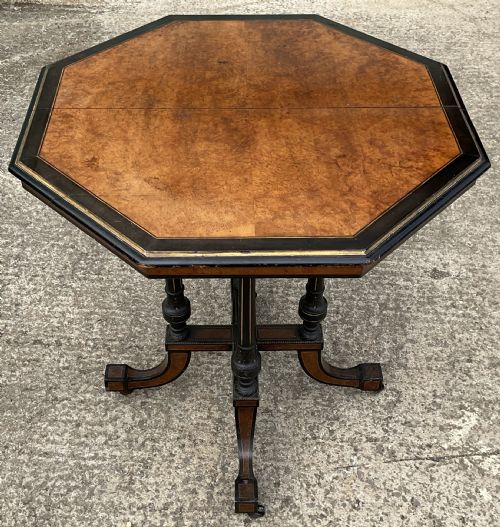
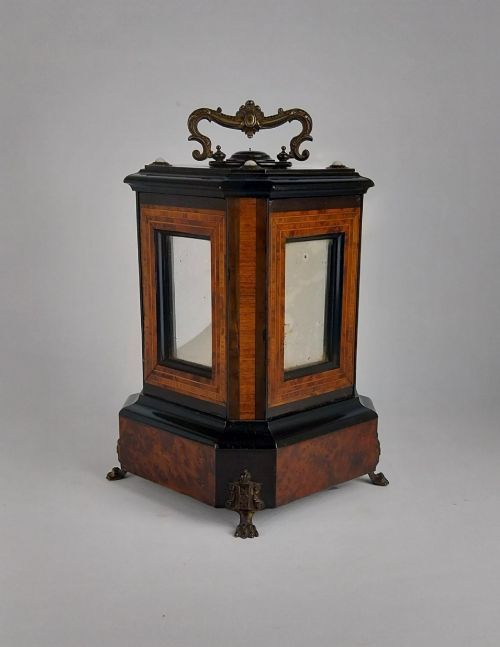


Ebonised Burr Walnut Table
An ebonised burr walnut table brings together dark timber and figured grain to anchor a room with nineteenth-century presence.
Ebonised Burr Walnut Table
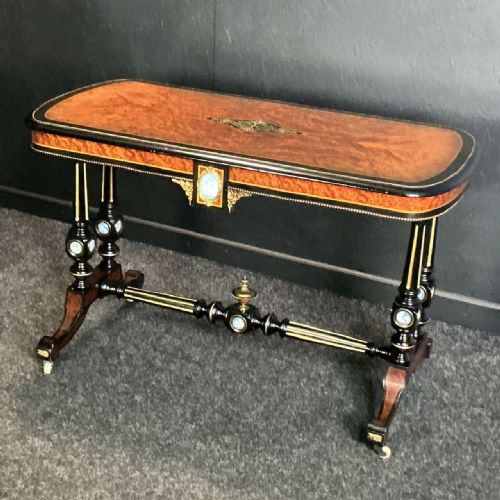
An ebonised burr walnut table draws the eye through the contrast of deep black framing and the swirling patterns of burr timber. You will find centre tables, card tables, and occasional tables originating mostly from the Victorian period and the Aesthetic movement.
Makers shaped these pieces for drawing rooms and parlours where display and hospitality mattered. The occasional table and the card table appear frequently, alongside larger centre tables designed to stand free in a room.
Nineteenth-century workshops produced these forms in quantity, using French influence or domestic English tastes. The survival of these surfaces shows how well cabinet makers handled contrasting materials during the Victorian era.
Proportion and execution
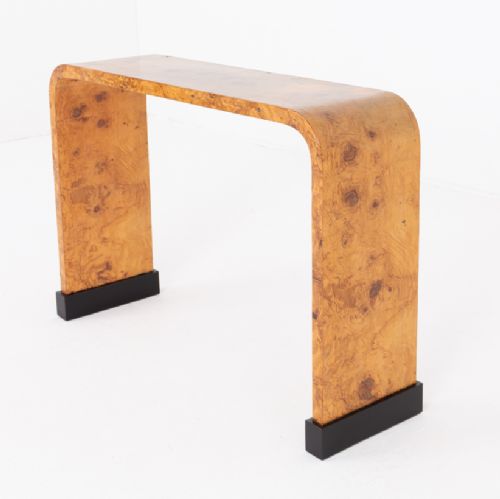
Quality rests in the crispness of the ebonising and the selection of the burr walnut veneer. Superior examples display symmetrical grain patterns across the top rather than mismatched offcuts patched together from lesser timber.
The finesse of the turning on pedestals and the tightness of the joinery separate standard workshop output from finer cabinet work. Original mounts and uncompromised surface patination elevate the standing of any piece.
The listings span the eighteenth to the twentieth centuries, with Victorian pieces forming the core alongside Aesthetic movement and Art Deco designs.
Edward’s And Robert’s·Walker and Hall·Gillows·S&H Jewell·Holland & Sons·Baldwin of Loughborough
The Ebonised Burr Walnut Table Glossary
- Ebonised
- Wood treated with stain, dye, or paint to imitate ebony. This dark finish gained immense popularity during the Victorian period.
- Burr walnut
- Timber taken from a growth on a walnut tree, yielding complex, swirling grain patterns. Cabinet makers prized this for table tops.
- Centre table
- A freestanding table finished on all sides so it could sit in the middle of a room. These served for display or holding lamps.
- Card table
- A folding table with a hinged top designed for games like whist. They often lined interiors with baize or velvet.
- Aesthetic movement
- A late nineteenth-century design style emphasising visual beauty over narrative meaning. It favoured ebonised surfaces and crisp lines.
Ebonised Burr Walnut Table: Frequently Asked Questions
How do I clean an ebonised burr walnut table?
Dust regularly with a dry, soft cloth to prevent grit from settling into the grain. Apply microcrystalline wax sparingly to protect the polished surface without building up residue.
Avoid placing these tables near direct sunlight or heat sources, which can dry out the veneer and cause splitting in the historic timber.
Were these tables used for dining?
Most pieces classified as centre or occasional tables served decorative functions rather than heavy dining use. Card tables accommodated parlour games, while larger breakfast or centre tables held lamps and books.
Using them for daily meals risks water rings and heat damage to the fragile burr walnut veneer.
How can I tell a Victorian piece from later ones?
Examine the construction methods, secondary timbers, and wear patterns underneath the table top. Victorian examples often show hand-cut dovetails and timber shrinkage appropriate to the nineteenth century.
Compare the style of the ebonising and any brass mounts against documented pieces from the same decade.
Why is the wood black on some parts?
Cabinet makers used ebonising to simulate expensive ebony wood, which was difficult to source in large quantities. This dark finish created a sharp visual boundary around the swirling brown tones of the burr walnut.
The contrast defines much of the Aesthetic movement and Victorian design vocabulary.