

Victorian Ebonised Chair
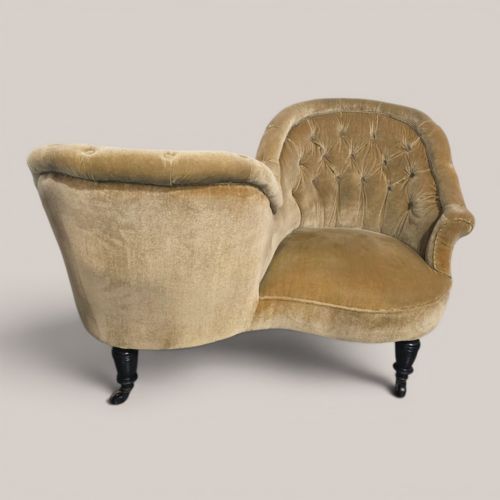
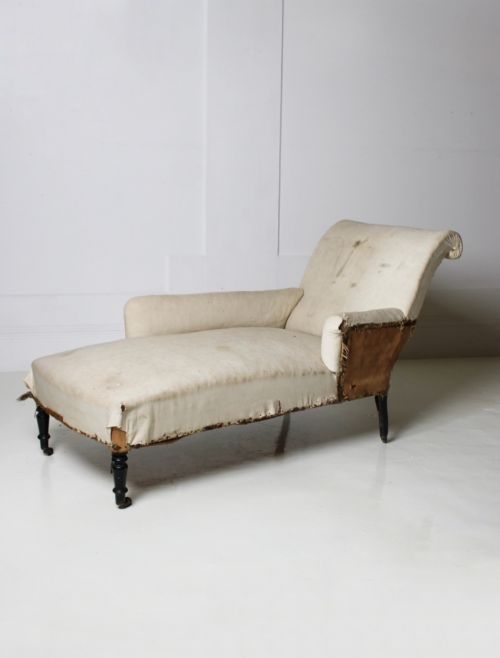
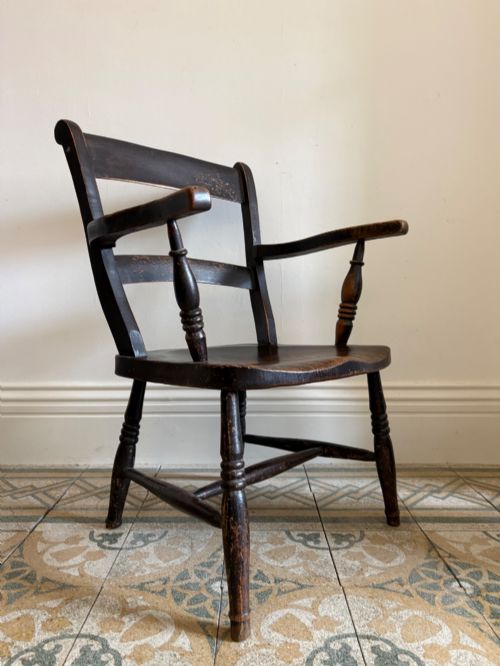
When you search for a victorian ebonised chair, you encounter dark, striking seating that brings nineteenth-century drawing rooms to life through polished blackened timber and contrasting upholstery.
Victorian Ebonised Chair
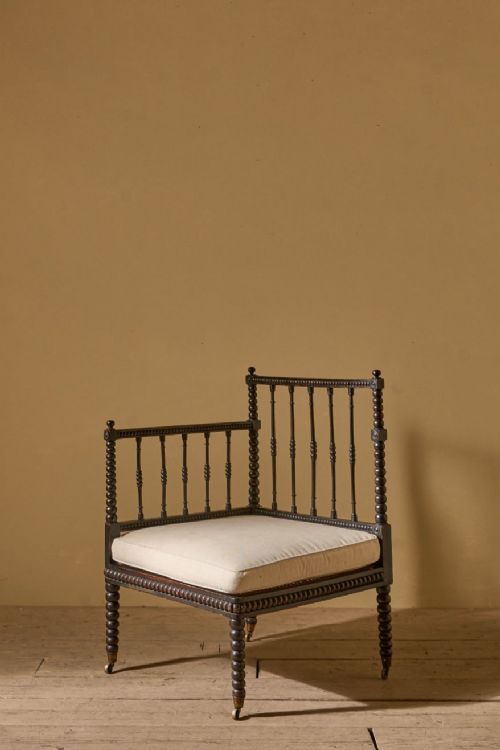
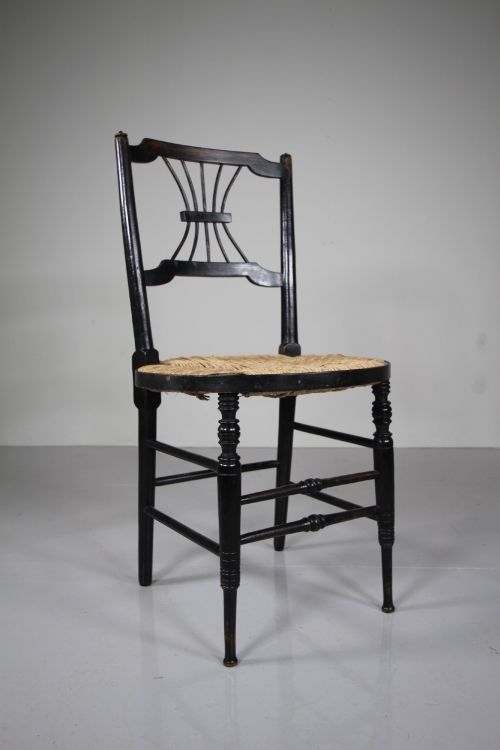
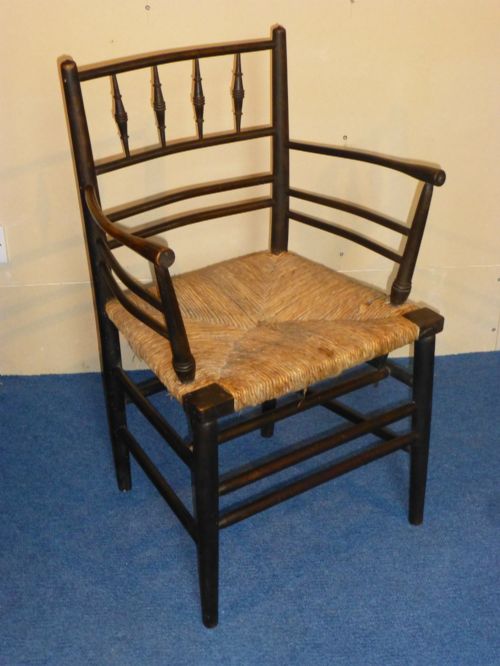
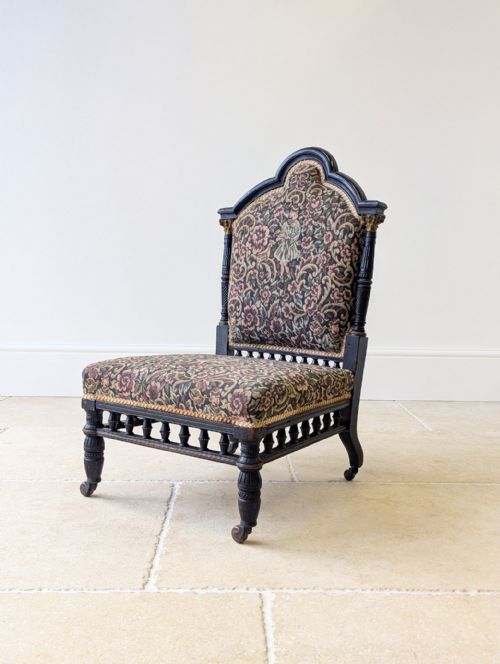
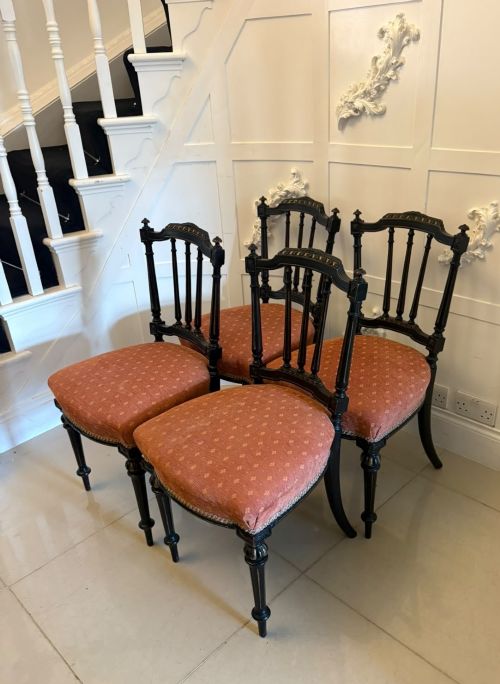
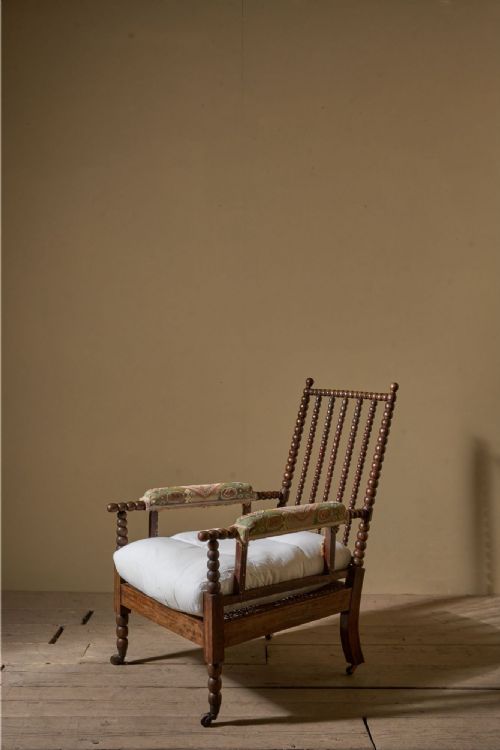
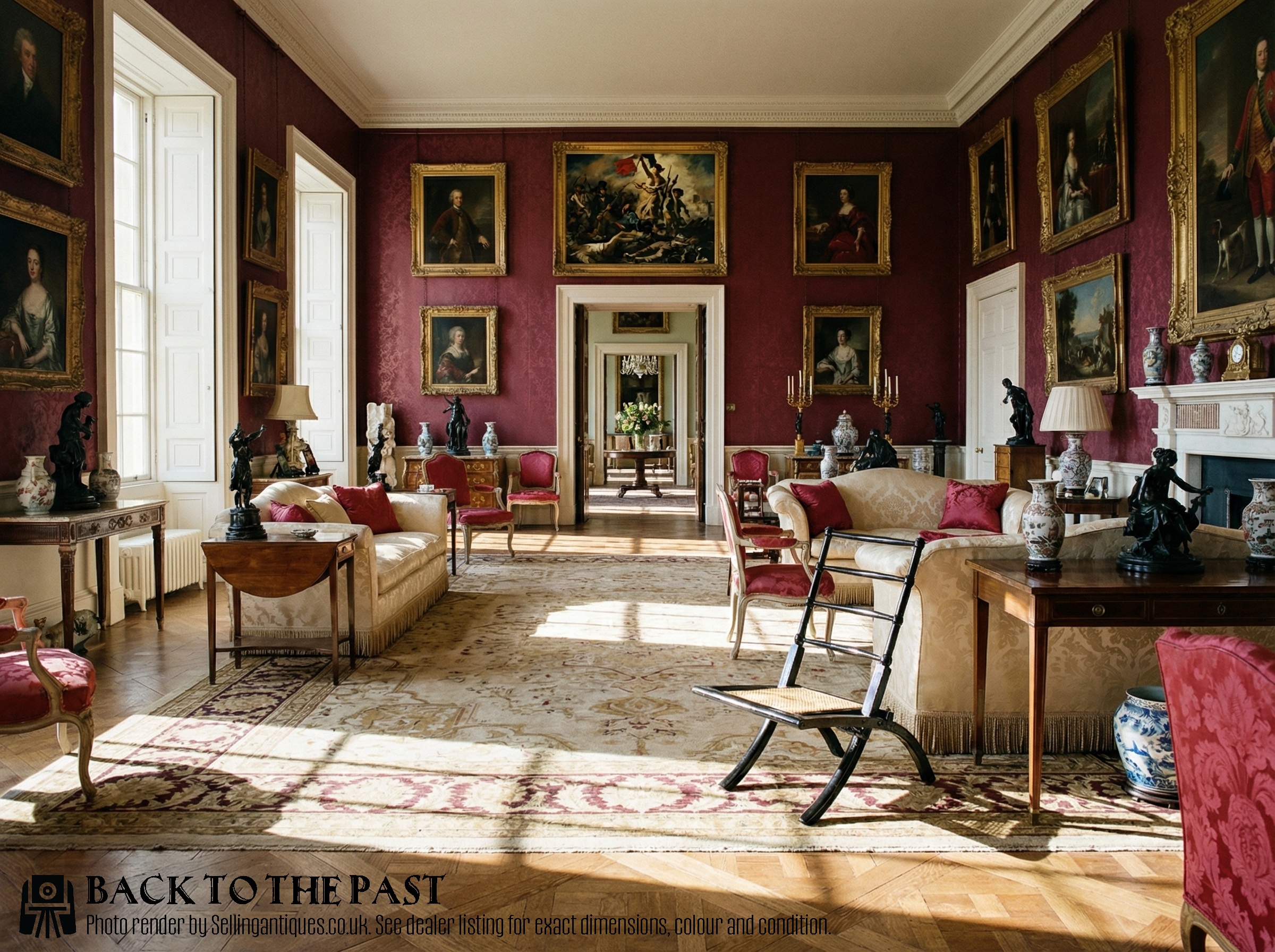
A victorian ebonised chair covers a wide variety of domestic seating produced across the nineteenth century, most frequently appearing as low salon chairs, nursing chairs, and upright dining designs. Makers utilised blackened finishes to emulate expensive ebony, creating dramatic silhouettes suited to formal reception rooms and intimate bedroom spaces alike.
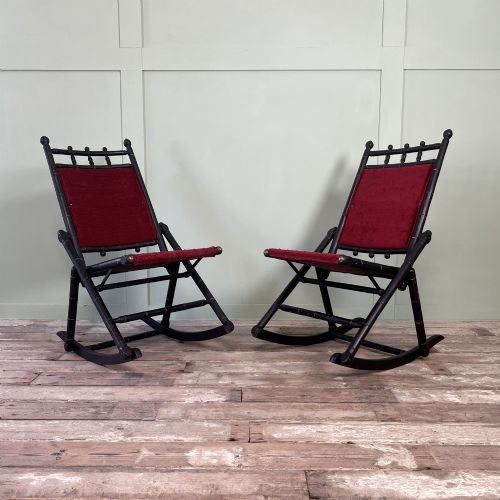
Beyond standard parlour seating, the category encompasses specialised forms like revolving piano stools, prayer chairs, and rocking chairs constructed during the peak of the Aesthetic Movement. These pieces often display slender proportions and careful turnings, reflecting the diverse utility of Victorian household furniture.
Materials and Construction
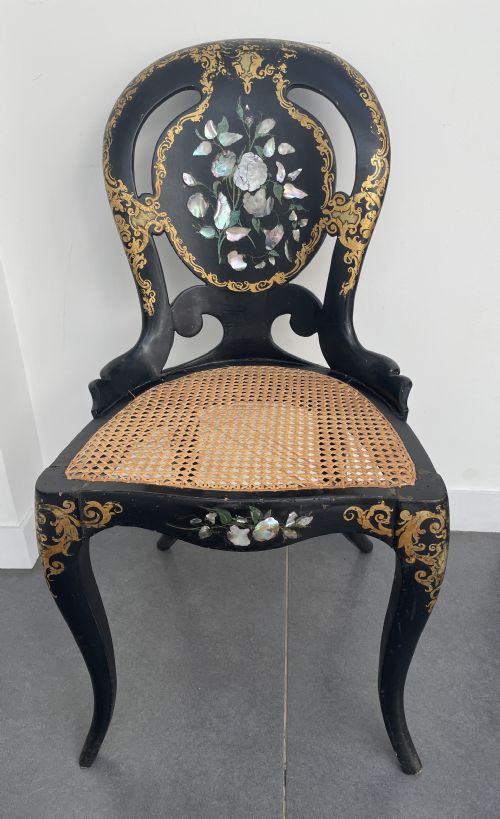
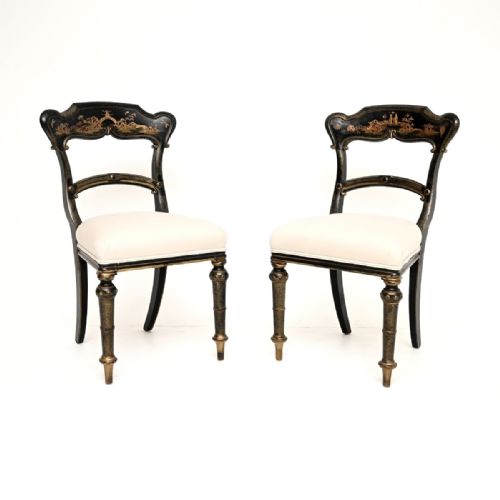
The primary construction relies on hardwoods such as beech, mahogany, or ash, treated with a dark stain or paint finish to achieve the signature ebonised surface. Craftsmen frequently enhanced these blackened frames with parcel gilt detailing, hand-painted Chinoiserie motifs, or inlaid mother of pearl panels.
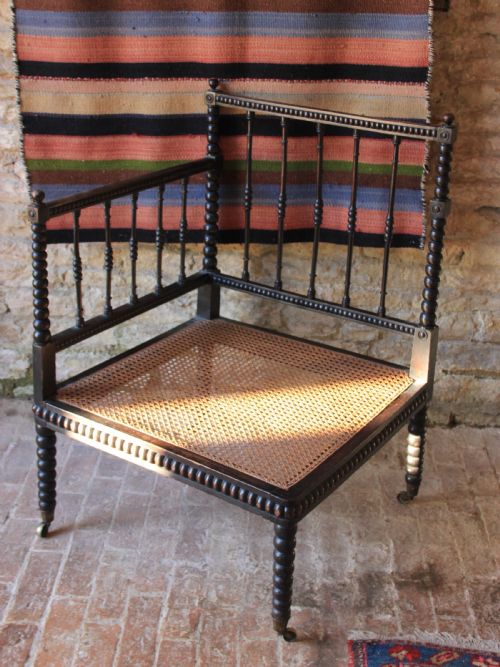
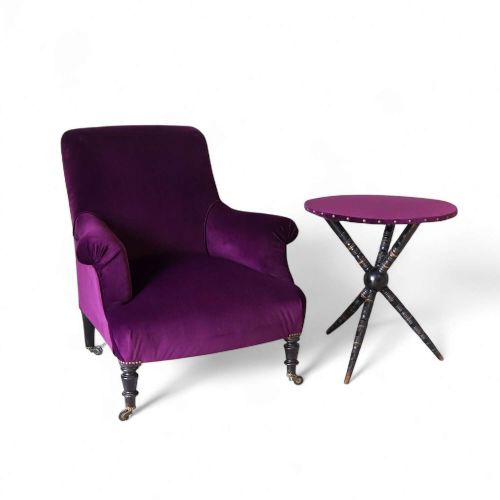
Upholstered elements utilise traditional stuffing techniques paired with period textiles including velvet, calico, and decorative woven fabrics. Turnings such as bobbin legs and spindle backs appear alongside bamboo-effect mouldings and carved wooden details.
Victorian Ebonised Chair Retail Price Guide 2026
Typical asking prices for victorian ebonised chair among the pieces listed under this phrase on Sellingantiques today, from the lower quarter to the upper quarter. They describe what is for sale here now, not the wider market.
The listings feature pieces spanning the nineteenth century, utilising materials such as cane, rush, brass, velvet, and ebonised wood across diverse styles.
Distinctions in Execution
Superior examples demonstrate meticulous joinery and refined carving in the timber frame, whereas simpler iterations rely on basic turned spindles and straightforward box construction. The complexity of the surface ornamentation, from delicate gilt highlights to intricate mother of pearl inlay, sets finer workshop pieces apart from standard commercial production.
The integrity of the ebonised finish and the quality of the period upholstery materials contribute heavily to the overall character of a surviving item. Pieces retaining original decorative schemes and stable structural frames command greater appreciation among collectors.
William Morris·Philip Webb·Morris and Co·Gillows·Collier and Plucknett·Marsh Jones of Leeds·Blythe and Sons·Lamb of Manchester
The Victorian Ebonised Chair Glossary
- Ebonised Wood
- Timber stained, painted, or polished to resemble genuine ebony wood. This finish gained immense popularity during the Victorian era for its dark, sophisticated contrast against bright fabrics.
- Aesthetic Movement
- A late nineteenth-century design style prioritizing visual beauty over narrative function. Pieces from this movement often feature stylized geometric elements and Japanese-inspired motifs.
- Bobbin Turning
- A method of woodturning that produces a series of rounded spheres resembling beads or spools along a chair leg or stretcher. It defines many vernacular and decorative nineteenth-century seating designs.
- Nursing Chair
- A low-seated upholstered chair designed originally for comfort and ease while tending to infants or sitting near low hearths. They frequently feature padded backs and short legs.
- Parcel Gilt
- A decorative technique involving the application of thin gold leaf to specific raised portions of an ebonised wooden surface. It highlights carved details and geometric mouldings.
Victorian Ebonised Chair: Frequently Asked Questions
How were these chairs used originally?
Victorian households placed these seating forms across parlours, drawing rooms, and bedrooms according to their specific domestic function. Low chairs served the hearth or dressing room, while open armchairs accommodated formal callers.
Dining sets gathered around heavy mahogany tables for evening meals, and specialised versions supported needlework or piano practice in private withdrawing rooms.
Where should I place one today?
An ebonised chair functions effectively as a striking accent piece in contemporary living spaces, drawing the eye through its dark silhouette. Placing one in a hallway or bedroom introduces historic character without cluttering the room.
Due to their compact proportions, many nineteenth-century parlor forms fit easily into corners or beside reading tables where space remains limited.
How do I identify the Aesthetic Movement style?
Aesthetic pieces emphasise flat surfaces, linear structures, and decorative motifs drawn from Japanese art and nature. You will often notice bamboo-style turnings, gilt highlights, and ebonised frames.
These designs discard heavy Victorian upholstery padding in favour of simpler, lighter profiles that prioritize artistic harmony over sheer comfort.
Are these chairs suitable for daily use?
Most surviving nineteenth-century examples support regular sitting, provided the underlying wooden frame and glued joints remain stable. Gentle daily use suits sturdy dining and salon models well.
Delicate occasional chairs with intricate mother of pearl inlay or slender bobbin turnings require more careful treatment to preserve their historic structural integrity.