
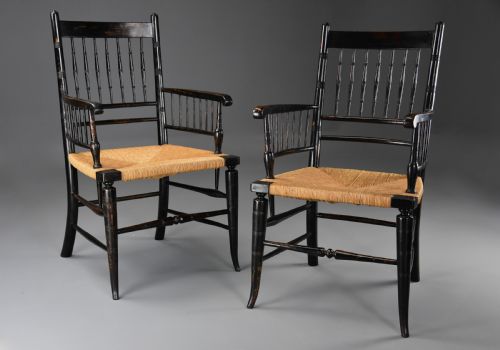
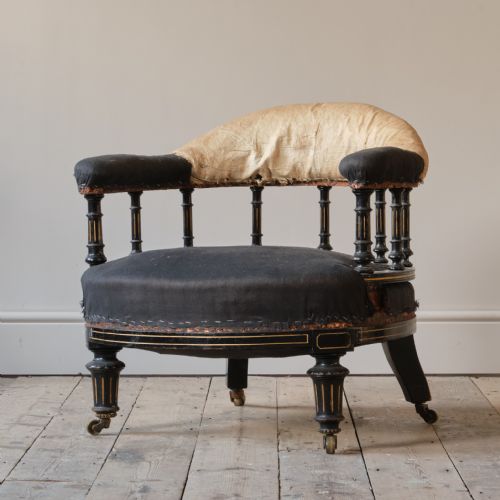


Ebonised Spindle Chair
An ebonised spindle chair brings dark, slender geometry and crisp nineteenth-century style to a room.
Ebonised Spindle Chair
An ebonised spindle chair is a seating form defined by turned wooden uprights and a dark stained or painted finish. When you search for an ebonised spindle chair, you encounter examples spanning from the eighteenth century through to the late Victorian era, with nineteenth-century pieces forming the largest share.
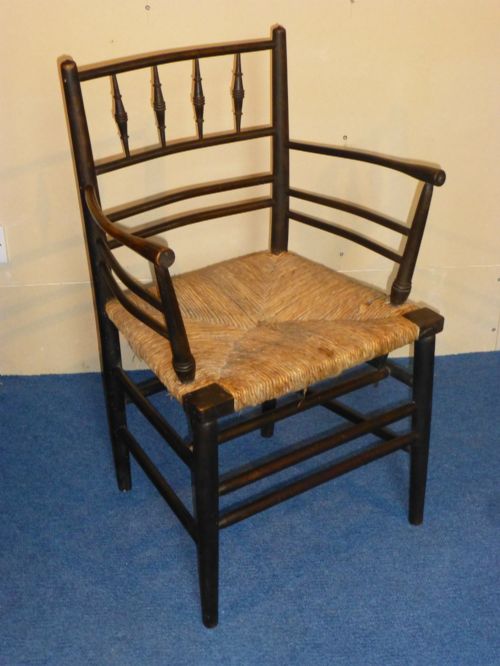
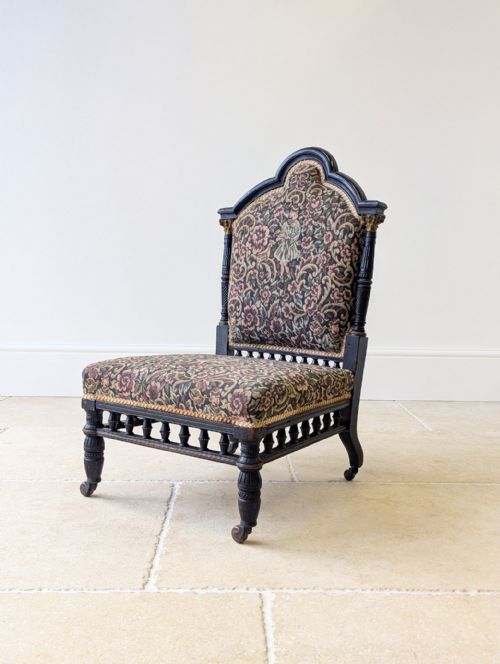
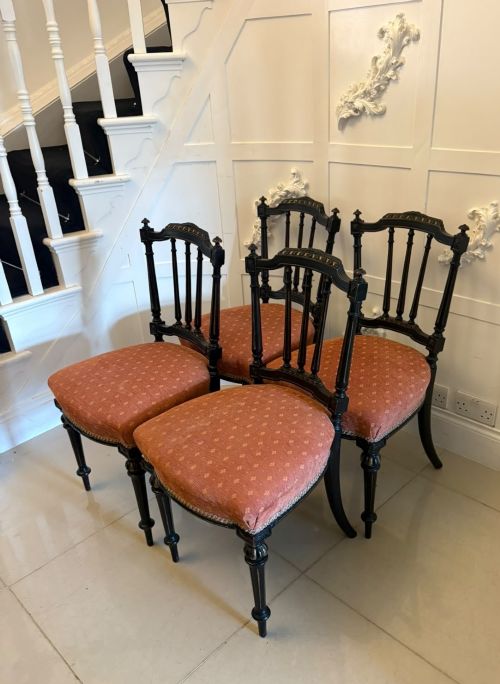
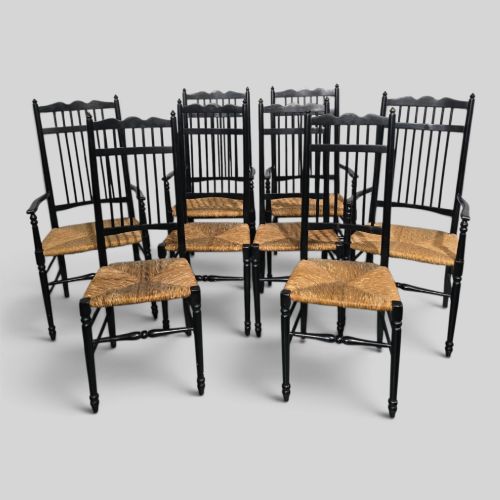
The selections on this page encompass various seating types designed for different rooms, including open armchairs, low salon chairs, dining sets, nursery seats, and rocking chairs. Stylistic influences range from the Aesthetic Movement and Arts and Crafts to Swedish Neo-Classical and Welsh vernacular traditions.
Makers and retailers such as Morris & Co, Philip Webb, Gillows, Liberty of London, and Ford Madox Brown appear within the record alongside anonymous vernacular makers. These pieces utilise turned wooden components to create lightweight yet structurally sound seating with distinctive vertical rhythms.
Materials and construction
Makers constructed these chairs primarily from timber finished with ebonising to imitate more costly ebony, frequently complemented by paint or gilt highlights. Seat surfaces incorporate woven rush, plain upholstery fabric, patterned velvet, or exposed turned wooden slats.
Turned wooden spindles form the characteristic backrests and structural supports, shaped on a lathe to create consistent profiles. Joinery relies on traditional pegging and mortise and tenon methods to secure the slender components together.
Listings feature ebonised wood, rush, brass, fabric, velvet, and gilt across Victorian, Aesthetic Movement, and Arts and Crafts styles.
Assessing quality
Quality in these chairs rests upon the crispness of the woodturning and the integrity of the structural joints. Finer examples display precise symmetry in the spindles and durable ebonising that has aged evenly without excessive flaking.
Attribution to documented firms or designers elevates certain pieces, whilst original surfaces such as untouched paint or early rush seating distinguish better-preserved examples from heavily restored ones.
Morris and Company·Philip Webb·Gillows·Liberty of London·Ford Madox Brown
The Ebonised Spindle Chair Glossary
- Ebonised
- Wood finished with a dark stain, paint, or polish to replicate the appearance of ebony. This treatment became particularly popular during the Victorian period for accentuating classical and aesthetic designs.
- Spindle
- A slender, turned wooden rod used decoratively and structurally in chair backs and underframes. These components are shaped on a lathe to form repeating vertical patterns.
- Aesthetic Movement
- A late nineteenth-century design style that emphasised visual beauty over narrative subject matter, often incorporating ebonised finishes and simplified forms. It drew inspiration from Japanese art and domestic simplicity.
- Rush
- Woven marsh grass utilised for traditional chair seats. This durable natural material provides a flexible and textured surface that contrasts with dark wooden frames.
- Vernacular
- Objects made by local craftsmen following regional traditions rather than high-style academic designs. These pieces often exhibit distinctive local turning techniques and sturdy construction.
Ebonised Spindle Chair: Frequently Asked Questions
What is an ebonised spindle chair?
An ebonised spindle chair is a nineteenth-century or earlier seat featuring dark, ebony-coloured woodwork and turned vertical spindles. These chairs emerged from design movements that favoured clean geometric lines and simplified construction.
They appear in various forms, from low salon chairs to sturdy dining sets and children's seating, reflecting diverse domestic uses.
How do I date an ebonised chair?
Dating relies on examining the construction methods, wood types, and stylistic markers such as Aesthetic Movement or Arts and Crafts details. Comparative study of turning profiles and documented maker output helps narrow down the decade.
Evidence from nineteenth-century productions shows distinct manufacturing standards that differentiate them from eighteenth-century vernacular items.
Were these chairs used for dining?
Yes, matching sets of dining chairs were produced in ebonised finishes alongside individual armchairs and salon seats. These dining examples provided uniform seating around period tables.
Their lightweight construction made them practical for regular movement within formal dining spaces.
What is rush seating?
Rush seating involves weaving dried marsh grass around a wooden seat frame to create a resilient, textured platform. This technique appears frequently on vernacular and Arts and Crafts chairs.
It offers a natural contrast to the dark, polished or painted ebonised wooden frames.
How do I care for ebonised wood?
Care involves dusting gently with a dry, soft cloth and avoiding excessive moisture or direct sunlight that might degrade the dark finish. Preservation of the original surface is paramount for maintaining historical integrity.
Professional conservation advice should be sought before applying any cleaning agents or oils.