


Crimson Velvet Seat
A crimson velvet seat brings rich texture and colour into a room, offering both traditional comfort and striking nineteenth-century presence.
Crimson Velvet Seat
A crimson velvet seat spans various Victorian and nineteenth-century forms, including armchairs, chaise longues, and footstools. You will most frequently encounter nineteenth-century walnut and mahogany examples alongside Edwardian and 1930s upholstered seating.
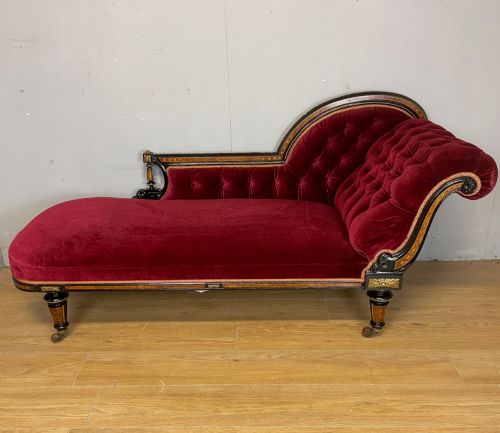
The selection ranges from an ebonised chaise longue with ormolu decoration to parlour chairs and fireside armchairs. Makers such as Gillows appear in the evidence, alongside sets of coronation armchairs and French Consulate style armchairs.
Moulded timber frames and buttoned upholstery define many of these pieces, which often incorporate brass details, inlaid walnut panels, or corduroy alongside the velvet. They function as both decorative furnishings and practical domestic seating.
How they were made
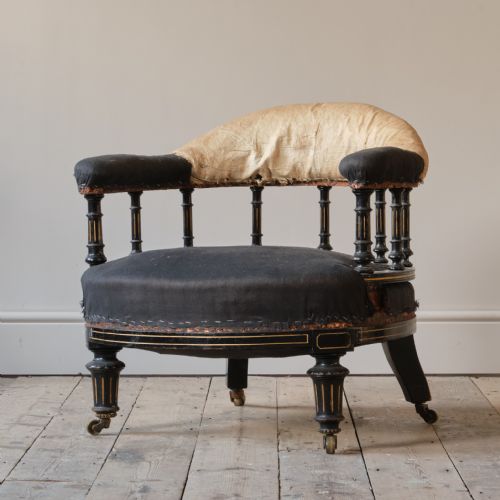
Makers utilised timber frames primarily of mahogany, walnut, and ebonised wood, often shaping them into distinct Victorian Rococo Revival or Queen Anne styles. These robust wooden skeletons support the upholstered sections and decorative elements.
Upholstery techniques combined velvet textiles with traditional padding, sometimes complemented by brass fittings or ormolu mounts. Inlaid walnut panels and intricate timber carving showcase the cabinetmaker's skill across the nineteenth-century pieces.
A set of four coronation armchairs awaits anyone planning a rather grand domestic procession.
What varies in quality
The refinement of the timber carving and the sophistication of the frame construction distinguish finer pieces from simpler domestic seating. Evidence of Gillows craftsmanship or sophisticated ormolu decoration elevates certain armchairs above standard production.
The integration of decorative elements like inlaid walnut panels and the execution of distinct regional or period styles determine the visual success of each seat.
Gillows
The Crimson Velvet Seat Glossary
- Ormolu
- Gilt bronze ornamentation applied to furniture. This technique adds metallic lustre to nineteenth-century wooden frames.
- Ebonised
- Timber treated to resemble ebony. The process creates a dense black finish popular on Victorian furniture.
- Chaise Longues
- An upholstered long chair for reclining. These forms combine seating with extended leg support.
- Aesthetic Movement
- A late nineteenth-century design style focusing on visual beauty. Pieces from this movement emphasise artistic craftsmanship over rigid historical revival.
Crimson Velvet Seat: Frequently Asked Questions
What periods do these seats come from?
The pieces span the nineteenth century, including Regency, William IV, and Victorian eras, alongside Edwardian examples and pieces from 1930.
Walnut and mahogany frames dominate the earlier periods, while later pieces reflect evolving domestic styles.
Are these seats comfortable for daily use?
Most examples are sturdy armchairs, parlour chairs, or fireside seats designed for sitting.
Upholstered construction provides traditional padding beneath the velvet covering.
How do I identify different styles?
Styles range from Victorian Rococo Revival and Queen Anne to the Aesthetic Movement and French Consulate manner.
Wooden frames, carved details, and upholstery methods help distinguish each design period.
What materials were used in the frames?
Makers relied on timber frames including mahogany, walnut, and ebonised wood.
Decorative additions often include brass fixtures, ormolu mounts, and inlaid walnut panels.