


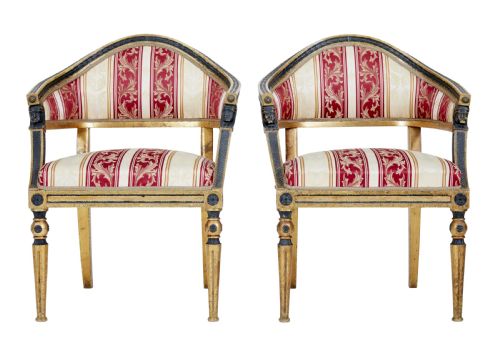


Gilt Ebonised Armchair
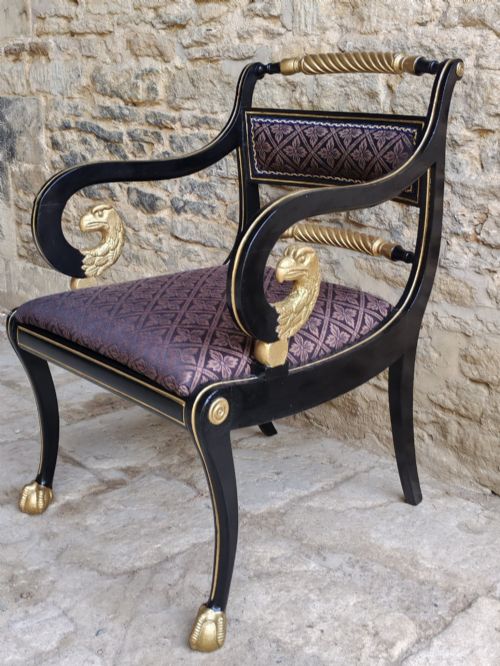
A gilt ebonised armchair brings striking dark timber and gleaming metal leaf together to create a seat with genuine presence in a room.
Gilt Ebonised Armchair
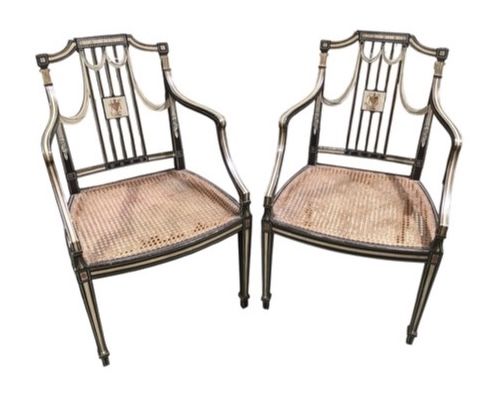
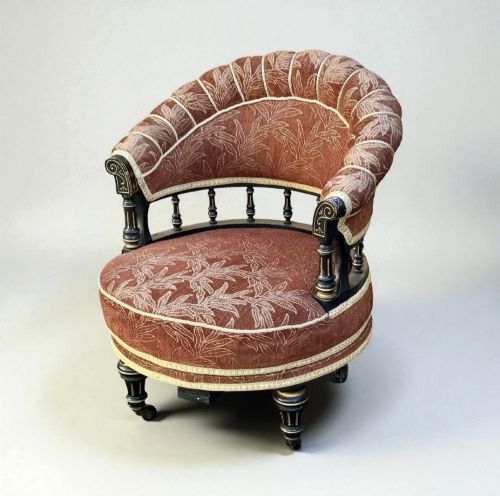
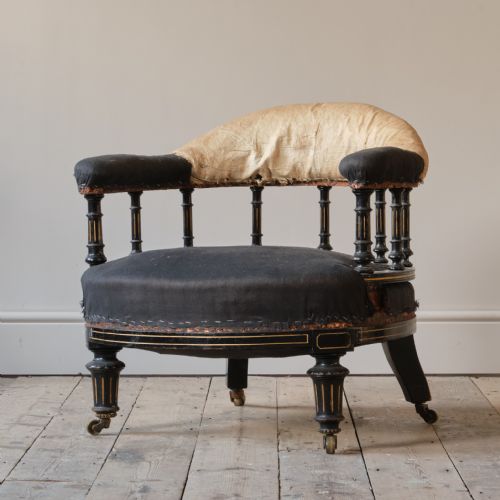
A gilt ebonised armchair combines dark, blackened woodwork with contrasting bright metallic highlights to create a seat of notable visual weight. The pieces gathered under this search phrase span forms such as library chairs, revolving desk chairs, tub chairs, nursing chairs, child chairs, and bedroom chairs.
Most examples you encounter here belong to the nineteenth century, including Victorian and Aesthetic Movement pieces, alongside Regency and French Empire designs or later revivals. Makers such as Gillows contributed to this tradition, producing seating that ranges from domestic bedroom chairs to grand library seats.
The styles shift across these decades from the classical lines of Regency and Empire to the stylised decoration of the Aesthetic Movement. These armchairs function as both practical seating and focal points, relying on the contrast between ebonised timber and parcel gilt or paint.
How they were made
The primary structure relies on timbers such as beech, shaped into frames, sabre legs, or lyre backs, then finished with a dark ebonised surface to imitate more costly exotic hardwoods. Artisans applied parcel gilt, paint, or brass mounts to accentuate carved details, mouldings, and structural joints.
Upholstery completed the construction, utilising fabrics ranging from standard textiles to plush velvet and woven cane for seat panels and backs. These materials were combined by nineteenth-century cabinet makers and upholsterers to balance structural rigidity with comfort.
Child chairs in this finish prove that Victorian toddlers were expected to sit with absolute decorum.
What varies in quality
The refinement of the carved woodwork and the crispness of the parcel gilding distinguish finer examples from standard production pieces. Workshop attribution, such as work bearing the mark of Gillows, elevates a chair through superior timber selection and joinery.
The integrity of the ebonised finish and the preservation of original brass mounts or decorative paintwork dictate the visual success of the piece. Chairs retaining their original upholstery style or cane work demonstrate a higher degree of historical survival.
Gillows
The Gilt Ebonised Armchair Glossary
- Ebonised wood
- Timber treated with stain, paint, or chemical processes to simulate expensive ebony. This dark finish provides a stark background for gilt highlights.
- Parcel gilt
- A technique where only specific raised portions, carvings, or mouldings of an object receive a covering of gold leaf. It creates a controlled contrast against the dark wood base.
- Aesthetic Movement
- A late nineteenth-century design style focusing on art for art's sake, often featuring ebonised surfaces with gilt and incised decoration. It drew inspiration from Japanese and classical motifs.
- Sabre leg
- A concave, outwardly curving furniture leg tapering towards the foot, frequently seen on Regency seats. This form mimics the curve of a cavalry sabre.
- Lyre back
- A chair back shaped in the form of a classical Greek lyre musical instrument. It is constructed with central brass or wooden members imitating the strings.
Gilt Ebonised Armchair: Frequently Asked Questions
What is a gilt ebonised armchair?
A gilt ebonised armchair is a seat constructed from darkened wood and highlighted with gold leaf, paint, or brass. These pieces date predominantly from the nineteenth century and encompass various stylistic revivals.
They function as decorative and functional furniture, appearing in formats ranging from library chairs to smaller bedroom and nursing chairs.
How do I identify an Aesthetic Movement armchair?
Aesthetic Movement armchairs typically feature ebonised wood surfaces combined with parcel gilt decoration and incised detailing. They often reflect late nineteenth-century design principles that favoured flattened motifs and artistic craftsmanship.
These chairs can appear as open armchairs, child chairs, or nursing seats, often retaining simpler structural lines than their heavily carved Victorian counterparts.
Where were these armchairs used in a home?
Depending on their scale, these chairs served different domestic spaces, from formal libraries and drawing rooms to private bedrooms and nurseries. Larger library or desk chairs provided sturdy seating for reading and writing.
Smaller variants, such as tub chairs and nursing chairs, were designed for sitting closer to firesides or dressing areas, balancing portability with comfort.
How do I tell Regency from Victorian examples?
Regency chairs often display classical architectural influences, sabre legs, or lyre backs, reflecting early nineteenth-century neoclassical tastes. Victorian pieces tend to be heavier in construction, encompassing varied revival styles and forms like revolving desk chairs.
Later pieces from around nineteen twenty often replicate these earlier Regency aesthetics with ebonised and decorated frames.