

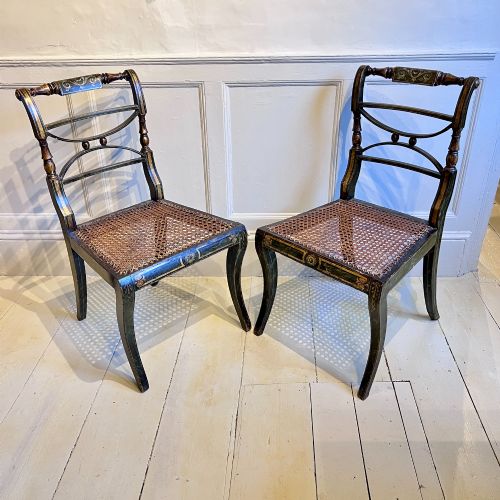


Ebonised Occasional Chair
An ebonised occasional chair brings dark, striking form to a room, offering a compact seat rooted in Victorian and nineteenth-century design.
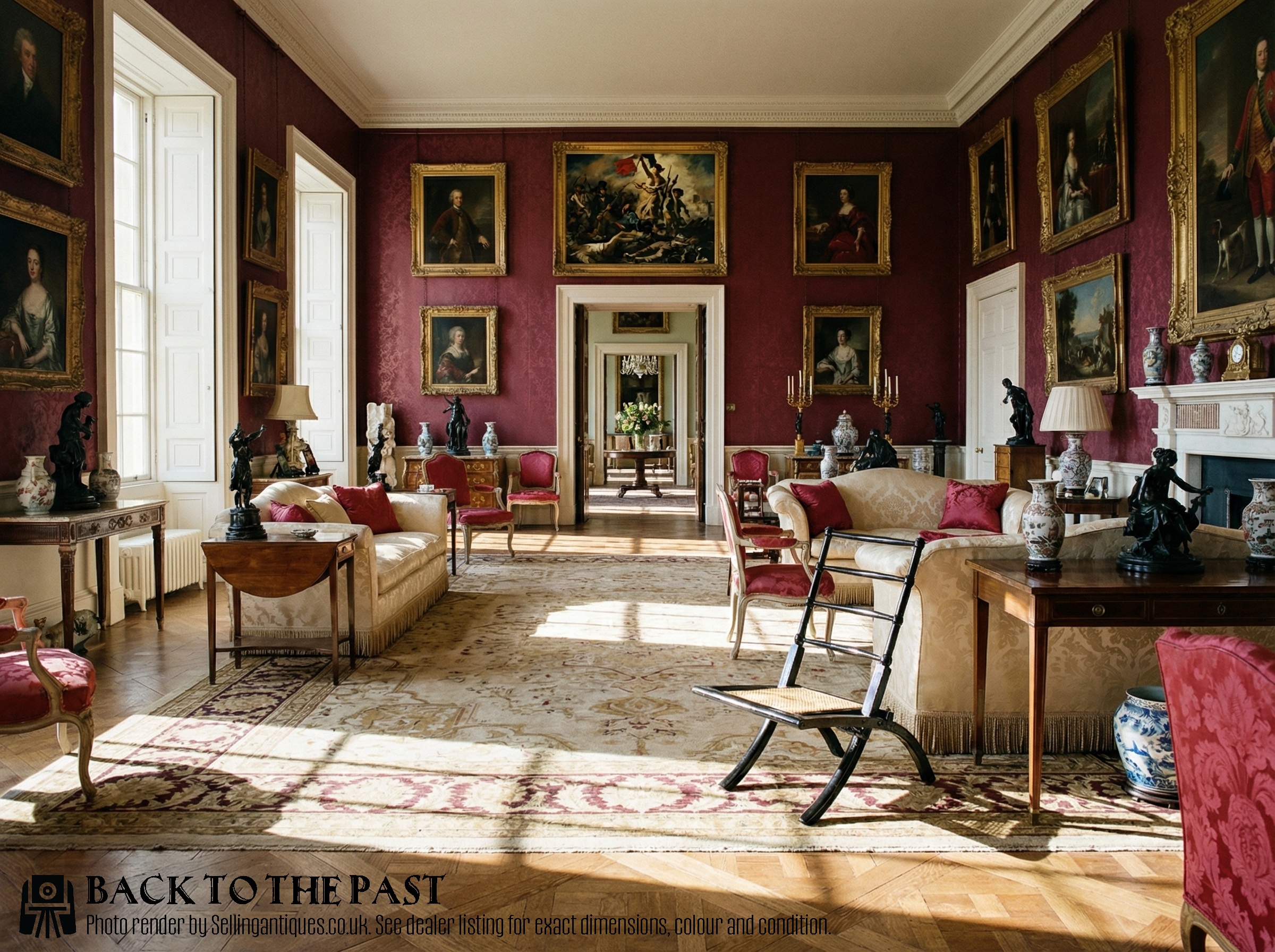
Ebonised Occasional Chair
The ebonised occasional chair encompasses a range of seating from the nineteenth century, including Victorian salon chairs, nursing chairs, and aesthetic movement armchairs. These pieces serve as functional accents in bedrooms and reception spaces, bringing dark wood finishes and distinct silhouettes into the interior.
Most examples found here date from the Victorian era and the late nineteenth century, though earlier Regency influences and revivals appear among the side chairs and armchairs. Forms vary from simple bobbin corner chairs to elaborately decorated shield-back open-arm chairs and cane-seat designs.
How they were made
Construction relies on wood treated with dark paint or ebonisation to simulate costly ebony, frequently enhanced with parcel gilt, mother-of-pearl inlay, and papier-mâché. These decorative elements define the aesthetic movement and Victorian pieces recorded in the listings.
Seating surfaces utilise woven cane or traditional upholstery supported by sturdy wooden frames, occasionally incorporating brass details. Makers combined painted decoration with carved wooden structures to achieve the striking visual contrast characteristic of the style.
Ebonised Occasional Chair Retail Price Guide 2026
Typical asking prices for ebonised occasional chair among the pieces listed under this phrase on Sellingantiques today, from the lower quarter to the upper quarter. They describe what is for sale here now, not the wider market.
Mother-of-pearl inlay glints from dark painted surfaces, reminding us that Victorian parlor chairs were built to catch the lamplight.
What varies in quality
The refinement of the surface decoration and the precision of the woodwork distinguish different tiers of these chairs. Pieces featuring delicate parcel gilt, mother-of-pearl inlay, or painted Chinoiserie motifs demonstrate a higher level of craftsmanship than plain ebonised surfaces.
Structural complexity also marks the division between standard production and superior examples, such as those associated with documented nineteenth-century makers. The integrity of the cane-work, the joinery of the frame, and the retention of original decorative paint layers determine the overall standing of an individual piece.
Collier and Plucknett·E W Godwin
The Ebonised Occasional Chair Glossary
- Ebonised wood
- Timber treated with a dark stain or black paint to resemble ebony. This finish was widely utilised during the Victorian period to create a dramatic, formal appearance.
- Aesthetic movement
- A nineteenth-century design style emphasising decorative art for its own sake, often featuring Japanese-inspired motifs, ebonised surfaces, and clean architectural lines. Pieces from this movement frequently display refined craftsmanship and understated elegance.
- Papier-mâché
- A composite material made from paper pulp or layers of paper mixed with glue, moulded and then lacquered. It provided a smooth, durable base for painted decoration on Victorian chair backs.
- Parcel gilt
- The practice of applying thin gold leaf to specific raised portions of a wooden object. This technique highlights carved details and contrasts sharply against dark ebonised surfaces.
- Caning
- A seating material woven from stripped rattan or split cane vines. It offers a lightweight, flexible surface commonly found on nineteenth-century side chairs.
Ebonised Occasional Chair: Frequently Asked Questions
What is an ebonised occasional chair?
An ebonised occasional chair is a small nineteenth-century seat finished in dark paint or stain to imitate ebony. These chairs were designed to be moved easily between rooms as extra seating.
They include Victorian salon chairs, nursing chairs, and aesthetic movement armchairs, often featuring cane seats or painted decoration.
How do I identify an aesthetic movement chair?
Aesthetic movement chairs typically display ebonised wood finishes combined with Japanese-inspired motifs, geometric lines, or contrasting highlights. Makers such as E W Godwin produced notable examples during the nineteenth century.
Look for refined construction, structural simplicity, and surface details that distance the piece from heavy, traditional Victorian upholstery.
Were these chairs used in bedrooms?
Many nineteenth-century occasional chairs served as bedroom or nursing chairs, providing a compact seat near a dressing table or fireplace. Their lighter proportions made them suitable for private chambers rather than formal reception rooms.
Examples often include low seats, open arms, or cane panels designed for comfort and ease of movement.
What materials are used on these chairs?
The primary material is wood treated with ebonising paint or stain, occasionally complemented by parcel gilt or mother-of-pearl inlay. Papier-mâché also appears on specific Victorian chair components.
Seating surfaces commonly consist of woven cane or traditional textile upholstery supported by wooden frames.