




Victorian Earthenware Jars
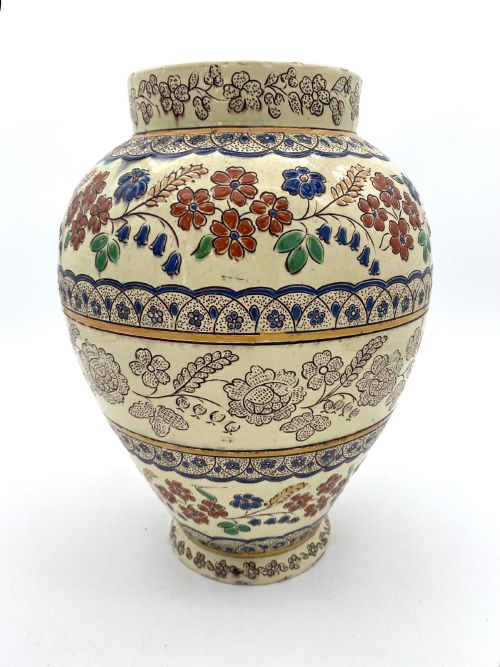
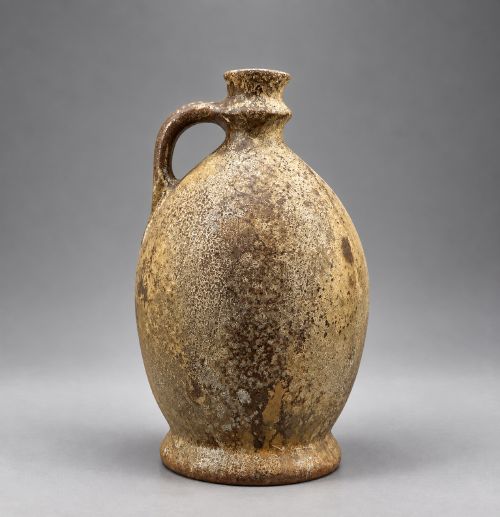
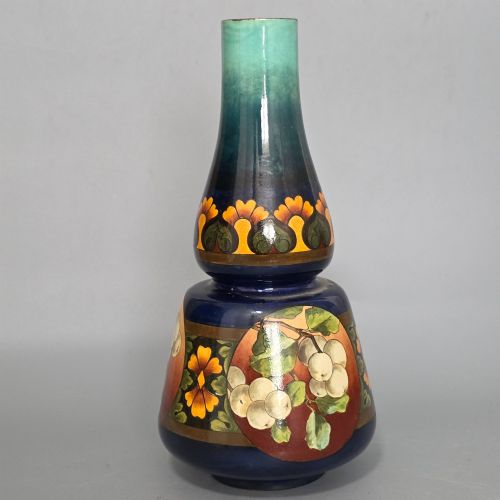
These Victorian earthenware jars span practical lidded tobacco vessels and decorative covered urns produced during the nineteenth century.
Victorian Earthenware Jars
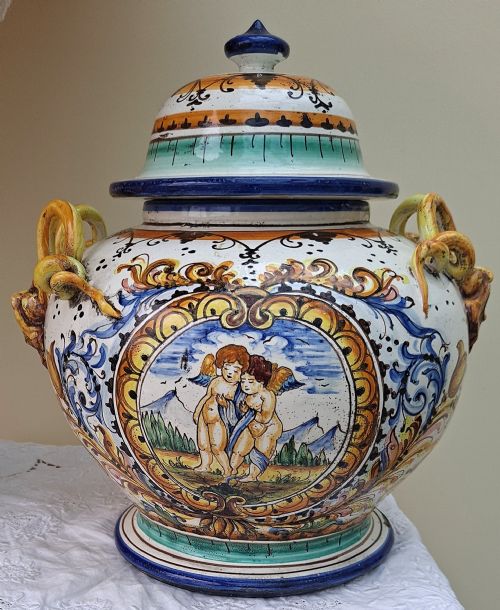
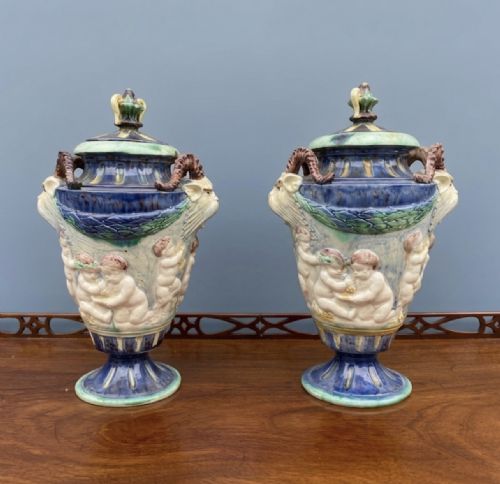
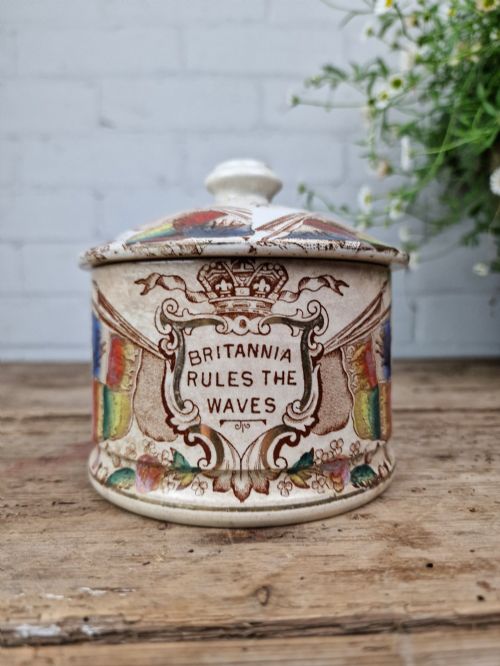
Victorian earthenware jars encompass utilitarian and decorative containers shaped from porous clay bodies throughout the nineteenth century. The selection ranges from lidded tobacco jars and pate pots to covered majolica urns and tea caddies.
The objects derive from English potteries, Staffordshire works, and continental makers, reflecting both domestic storage needs and ornamental interior display. Forms vary from simple cylindrical tobacco pots to elaborate revivalist vases with fitted covers.
Manufacturing methods and materials
Potters built these pieces using earthenware, terracotta, and ceramic bodies, frequently finished with lead glaze or tin glaze to seal the porous clay. Surface decoration incorporates colourful enamel paints, salt glazing, and cream sprigging.
Specialised techniques include majolica glazing, transfer printing, and hand-painted motifs executed by factory decorators. Covered forms required precise throwing and moulding so that lids fit the rims of the jars securely.
Victorian Earthenware Jars Retail Price Guide 2026
Typical asking prices for victorian earthenware jars among the pieces listed under this phrase on Sellingantiques today, from the lower quarter to the upper quarter. They describe what is for sale here now, not the wider market.
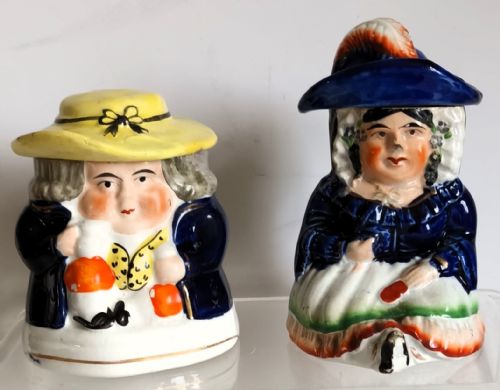
Pierrot makes a surprising ceramic appearance, keeping watch from a nineteenth-century tobacco jar alongside traditional ladies and gentlemen.
Assessing quality in the pieces
Quality rests upon the crispness of moulded relief work, the evenness of the glaze application, and the precision of hand-painted details. Finer examples display clean potting lines and well-defined decorative motifs without glaze pooling or firing cracks.
The reputation of the pottery or the skill of the modeller shapes the distinction between standard production wares and exhibition pieces. Complex glazing styles such as majolica require expert kiln temperature control to achieve rich colour separation.
Doulton Lambeth·Minton·Carlton Ware·Devon pottery
The Victorian Earthenware Jars Glossary
- Earthenware
- Porous pottery fired at relatively low temperatures that requires a glaze to become impermeable to liquids. It forms the structural body for the majority of these nineteenth-century storage vessels.
- Majolica
- A colourful lead-glazed earthenware pioneered during the nineteenth century using opaque tin-rich or coloured glazes. This technique produced vibrant, glossy surfaces on decorative urns and figural containers.
- Tobacco jar
- A specialised lidded container designed to keep pipe tobacco moist and fragrant. These domestic pieces often feature snug-fitting inner lids and robust ceramic walls.
- Sprigging
- A decorative technique where moulded clay reliefs are applied to the surface of an unfired ceramic body using slip. It creates raised white or contrasting ornamentation against the base clay.
- Lead glaze
- A glossy coating composed of silica and lead oxide fused to the earthenware body during firing. It provides a waterproof seal and enhances the brightness of underlying colours.
Victorian Earthenware Jars: Frequently Asked Questions
What were Victorian earthenware jars used for?
These vessels served various domestic and display functions, ranging from the daily storage of pipe tobacco and butter to ornamental placement on mantelpieces as covered urns and vases.
Many lidded examples were kept in smoking rooms or parlours, while decorative majolica and faience pieces functioned primarily as visual ornaments within Victorian interiors.
How do I date a Victorian earthenware jar?
Dating relies upon stylistic markers, registry diamond marks, factory backstamps, and the specific glazing techniques prevalent during the nineteenth century. Pieces often correspond to broader design movements such as Arts and Crafts or Renaissance Revival.
Comparing the potting body, glaze chemistry, and decorative motifs against documented factory production periods helps narrow down the decade of manufacture.
How should I clean a glazed earthenware jar?
Maintenance requires gentle dusting with a soft dry cloth and the avoidance of chemical cleaning agents that might harm historic glazes or enamel paintwork. Submersing porous earthenware in water should be avoided if hairline cracks are present.
Displaying the pieces away from direct sunlight protects coloured enamels from fading over time.
What is the difference between majolica and standard earthenware?
Majolica is a specific type of earthenware distinguished by its brightly coloured lead glazes applied directly to an absorbent clay body and fired at high temperatures. This creates a dense, glossy surface with rich polychrome effects.
Standard earthenware might feature simpler lead glazes, salt glazing, or enamel painted decoration without the characteristic heavy relief moulding found on majolica pieces.