





Antique Hunting Scene Ceramics
Antique hunting scene ceramics bring rural sport and narrative relief moulding to the table through stoneware, earthenware and jasperware.
Antique Hunting Scene Ceramics
Antique hunting scene ceramics encompass functional vessels and decorative display pieces decorated with rural pursuits, hounds and quarry. These items capture traditional sporting motifs across domestic pottery forms.
The pieces on this page span from the Georgian period through the Victorian era, showing styles such as English Country Pottery and Victorian Neoclassical. Common forms include jugs, decorative plates, jardiniere vessels, mugs, tankards, cheese domes and tea sets.
Buyers encounter earthenware, stoneware and terracotta bodies adorned with transfer printing, relief moulding and applied figures. Makers such as William Adams and Sons, Spode, James Dudson and Doulton produced notable examples of these sporting wares.
How they were made
Potters shaped clay, stoneware and earthenware on the wheel or pressed them into moulds to create bodies like jugs, jars and jardiniere vessels. Relief moulding built up three-dimensional figures of hounds and huntsmen directly onto the damp surface before firing.
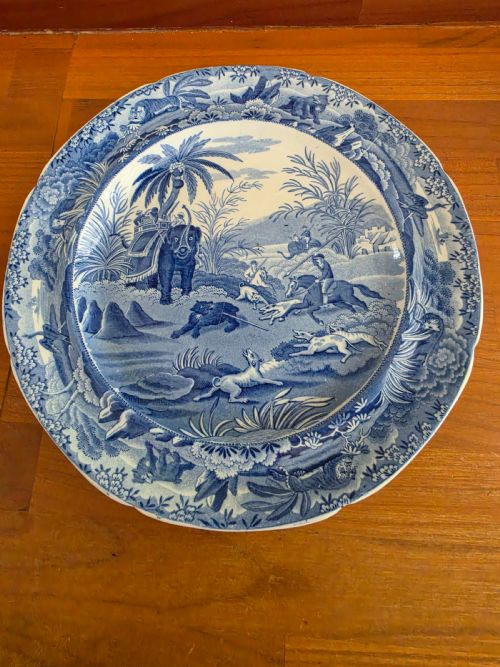
Transfer printing applied intricate narrative scenes in blue or black monochrome onto plates and loving mugs prior to glazing. Some pieces received applied silver rims or decorative glazes to finish the ceramic body.
Antique Hunting Scene Ceramics Retail Price Guide 2026
Typical asking prices for hunting scene ceramics among the pieces listed under this phrase on Sellingantiques today, from the lower quarter to the upper quarter. They describe what is for sale here now, not the wider market.
Object forms featured in these listings include teapots, cheese bells, ale jugs, jardiniere vessels and loving mugs.
What varies in quality
The crispness of the relief moulding determines the definition of the figures, hounds and foliage in the sporting narrative. Sharp, deep impressions separate superior cabinet pieces from softer, worn secondary pressings.
The clarity of the transfer-printed transfer lines and the evenness of the glaze dictate visual success. Superior examples maintain bright, clean contrasts across the ceramic body without blurring or pooling in the recesses.
William Adams and Sons·Spode·James Dudson·Doulton
The Antique Hunting Scene Ceramics Glossary
- Jasperware
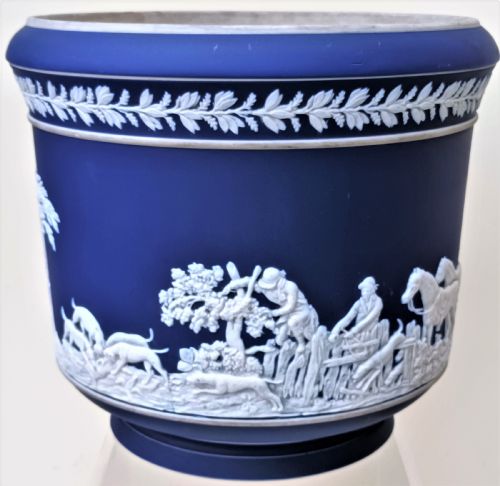
- A fine-grained, unglazed stoneware developed with contrasting applied white ceramic reliefs against a coloured body. Blue varieties feature prominently among nineteenth-century examples.
- Relief moulded
- A technique where decorative motifs are raised above the flat surface of the vessel during moulding. This process creates tactile hunting scenes on jugs and cheese bells.
- Tyg
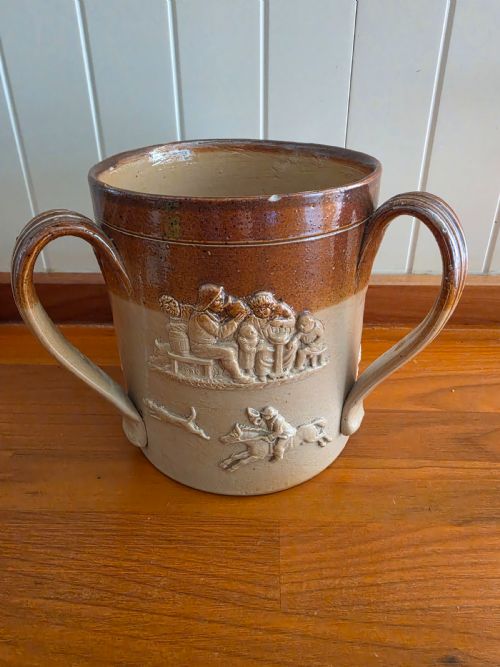
- A large drinking vessel featuring three or more handles designed for passing around a company. Early nineteenth-century stoneware examples often incorporate multiple handles.
- Transfer printing
- A method of applying engraved decorative patterns onto pottery by paper transfers from a copper plate. This allowed detailed hunting narratives to cover plates and mugs consistently.
- Pratt Ware
- Earthenware produced with specific underglaze colours, often featuring moulded scenes. Marked pairs of pate jars demonstrate this colourful nineteenth-century technique.
Antique Hunting Scene Ceramics: Frequently Asked Questions
What were hunting scene ceramics used for?
These ceramics served both practical dining functions and decorative display roles within nineteenth-century homes. Vessels like tygs, ale jugs and loving mugs held drinks during communal gatherings.
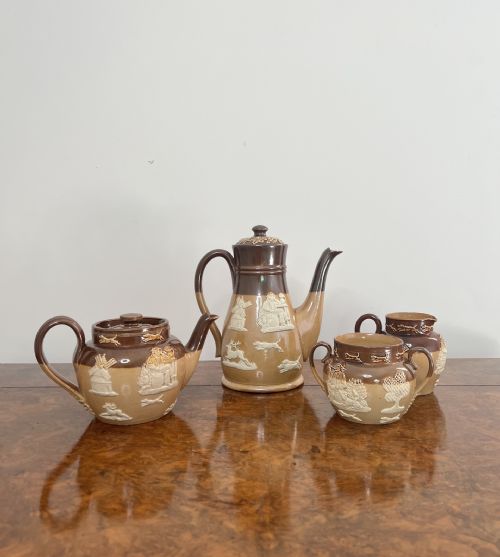
Other items such as cheese domes, tea sets and decorative plates brought sporting narratives into everyday domestic interiors.
How do I date an antique hunting ceramic?
Dating relies on stylistic markers, manufacturing techniques and occasional registry or date marks stamped into the clay. Georgian pieces typically show simpler relief moulding, while Victorian examples often utilise rich blue jasperware or detailed transfer printing.
Examining the base and the composition of the earthenware or stoneware helps place the piece within the nineteenth century.
How should I display jasperware jardiniere vessels?
These decorative planters benefit from placement in well-lit areas where light can catch the sharp white relief details against the coloured stoneware body. Pairing them with simple foliage keeps the focus on the moulded hunting scenes.
Ensure they rest on stable surfaces away from high-traffic edges due to their heavy ceramic construction.
What is a loving mug?
A loving mug is a large drinking vessel traditionally fitted with two or more handles to allow communal passing among guests. Those decorated with hunting scenes often feature humorous interior additions such as ceramic frogs.
They stood at the centre of celebrations and sporting dinners during the Georgian and Victorian periods.