


Victorian Earthenware Dog
These victorian earthenware dog figures are charming ceramic mantel ornaments that bring classic nineteenth century character to any room.
Victorian Earthenware Dog
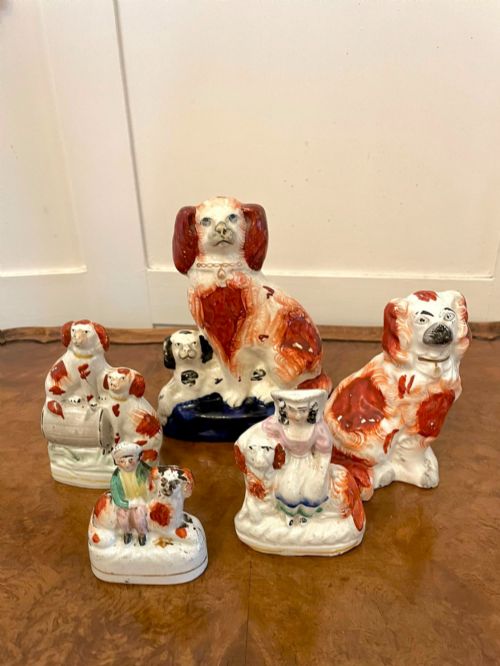
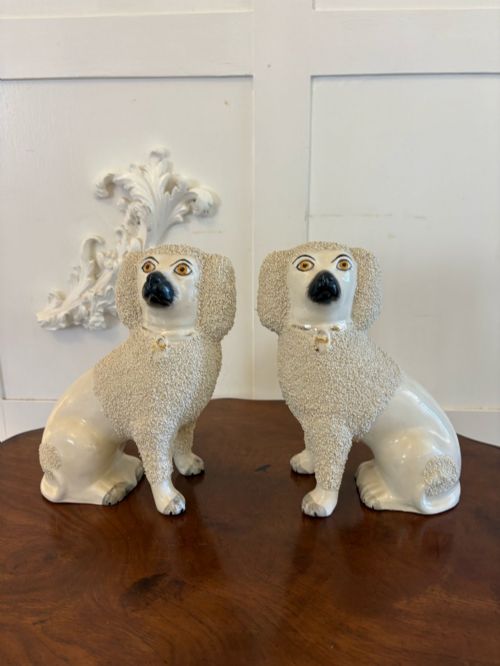
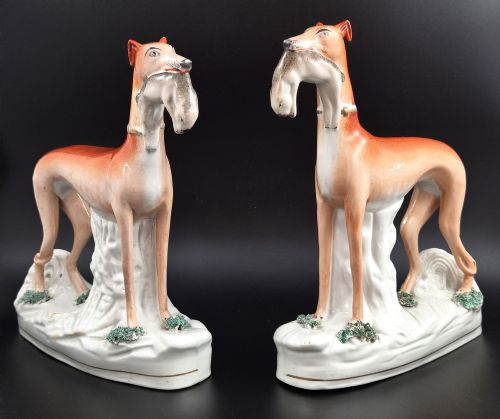
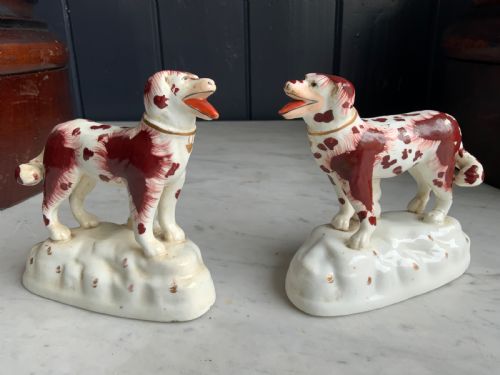
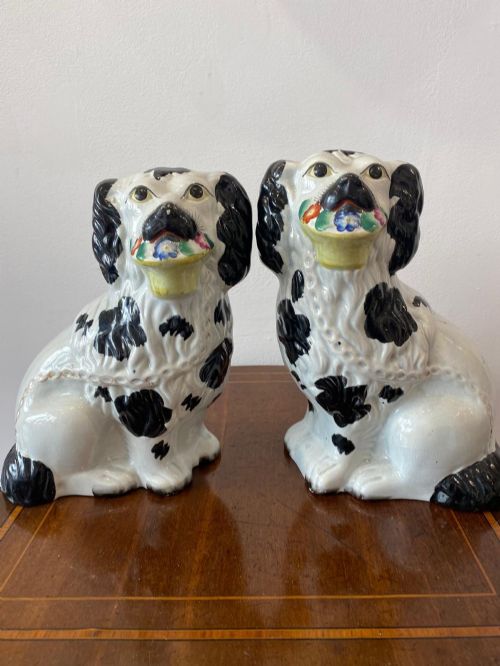
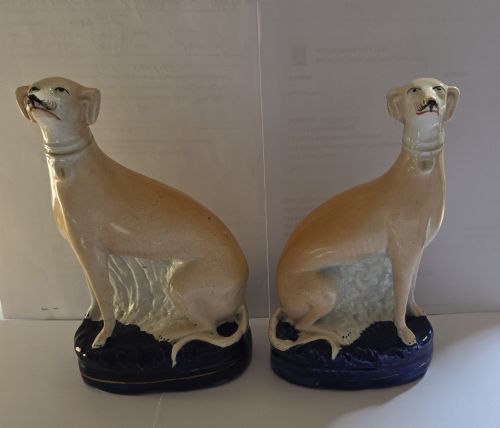
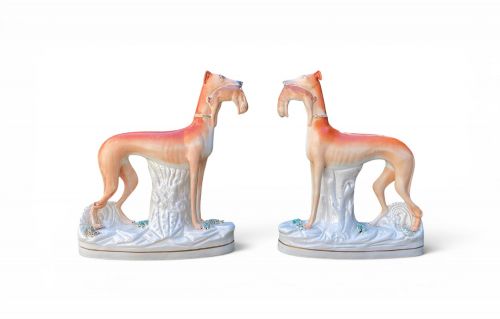
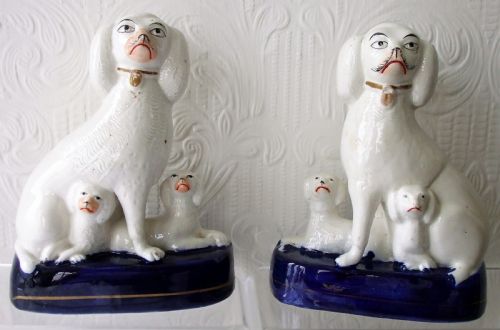
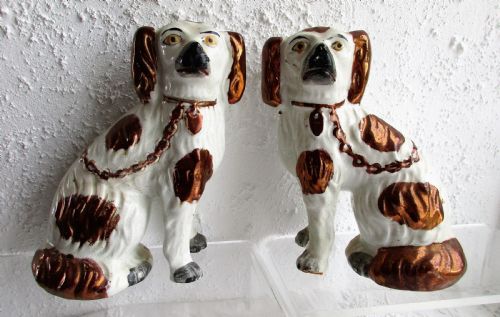
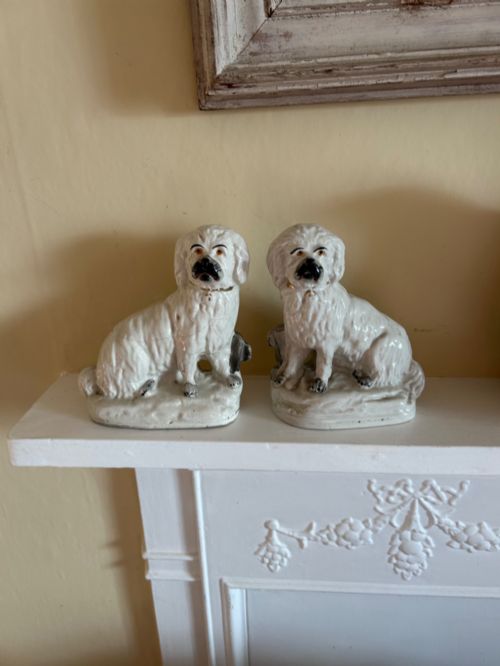
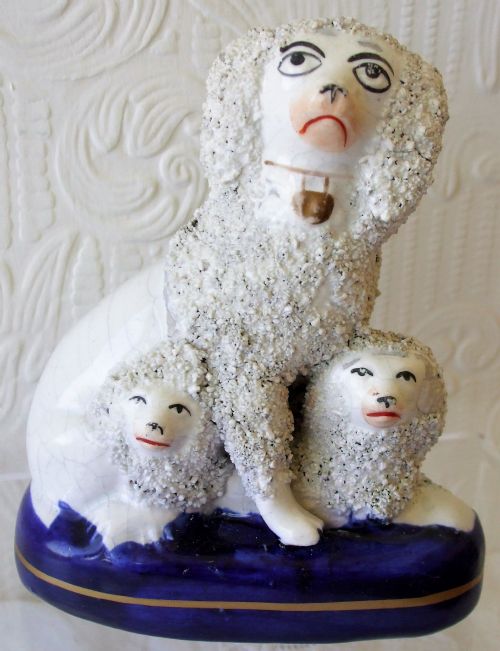
A victorian earthenware dog is typically found as a decorative figurine, most frequently modelled as a seated spaniel, greyhound, poodles, or pug.
The pieces on this page span the nineteenth century, including specific dates across the eighteen sixties, seventies, and eighties, alongside broader Victorian classifications.
Collectors frequently encounter these subjects as pairs, though individual figures, money boxes, and quill holders also appear across the listings.
Materials and construction
Potters shaped these earthenware figures using ceramic clay before applying lead glaze and hand-painted enamel colours to finish the surface.
Some greyhound figures double as quill holders, ready to assist with Victorian correspondence.
Judging quality and character
Quality rests upon the crispness of the moulding and the delicacy of the hand-painted details upon the ceramic surface.
Pairs matched in size, posture, and glaze finish command greater interest than mismatched survivors from different kilns.
Thomas Parr·Wooley
The Victorian Earthenware Dog Glossary
- Earthenware
- A porous type of pottery fired at lower temperatures than stoneware or porcelain. It requires a glaze to render it impermeable to liquids.
- Lead glaze
- A shiny, glossy coating containing lead oxide applied to pottery before firing. It gives these figures their characteristic reflective surface.
- Enamel paint
- Coloured glassy material fused to the ceramic surface during a secondary firing. It provides the distinct black, red, and white markings on the animals.
- Quill holder
- A hollow ceramic base or figure fitted with an opening designed to hold writing feathers. These functional pieces combine utility with mantel decoration.
- Comforter spaniel
- A popular nineteenth century Staffordshire pottery figure type modelled after King Charles spaniels. They were traditionally placed on mantelpieces facing inward.
Victorian Earthenware Dog: Frequently Asked Questions
What are Staffordshire dogs?
Staffordshire dogs are ceramic mantel figures produced by various potteries in England during the nineteenth century. They most commonly depict seated spaniels, greyhounds, and poodles.
Potters painted them by hand with enamel colours, often adding gilt highlights to collars and lockets.
How were these dogs used?
These figures served primarily as decorative ornaments placed on mantelpieces in Victorian homes. Pairs were traditionally positioned facing inward toward each other.
Some specialist variants functioned as money boxes or quill holders on a desk.
Are all these dogs Victorian?
While the majority date from the Victorian era and the wider nineteenth century, the listings also include pieces from the Regency period and around nineteen hundred.
Makers continued traditional Staffordshire pottery methods across several decades.
How do I identify poodles and spaniels?
Spaniels are generally modelled with smooth white bodies and patches of red, black, or liver, often wearing a chain and padlock.
Poodles frequently feature textured clay work representing curly fur, sometimes referred to as woolly poodles.