


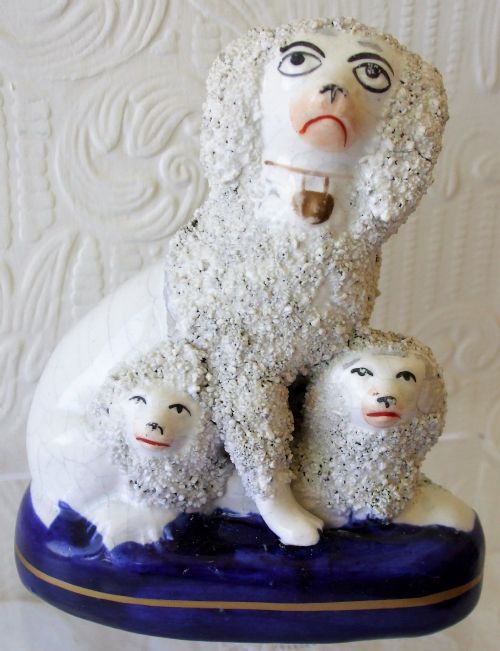
Victorian Earthenware Dog Ornaments
These victorian earthenware dog ornaments bring nineteenth-century hearths to life through glazed pottery pairs and single figures.
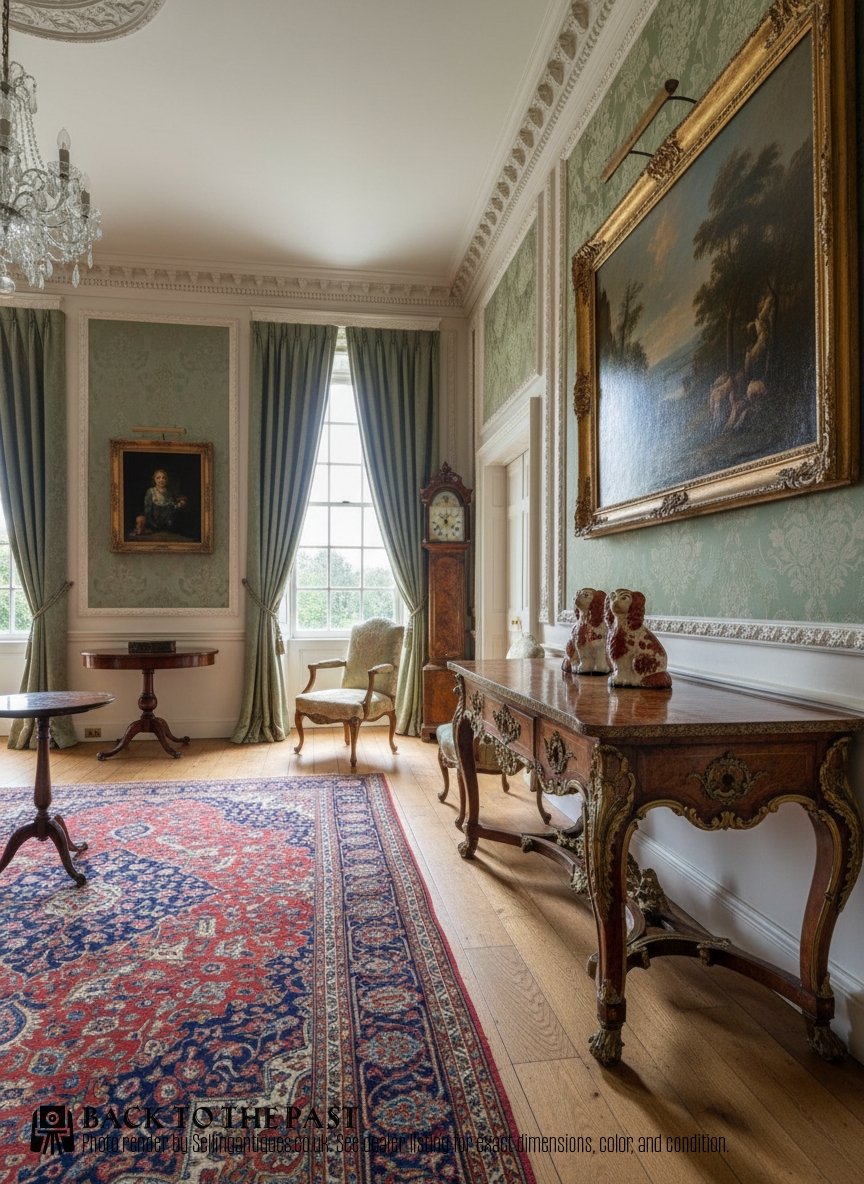
Victorian Earthenware Dog Ornaments
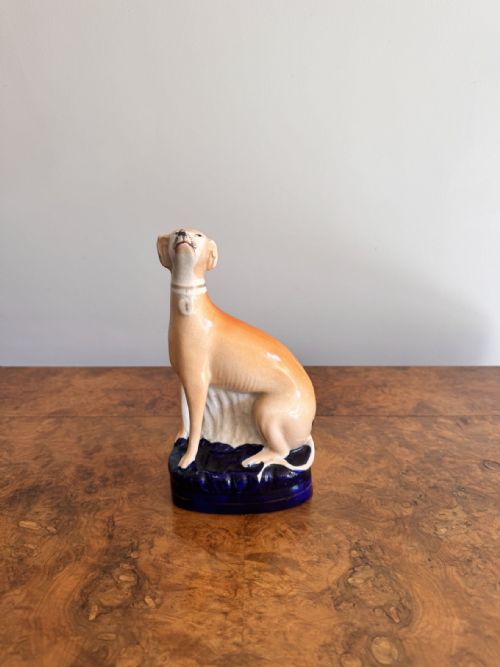
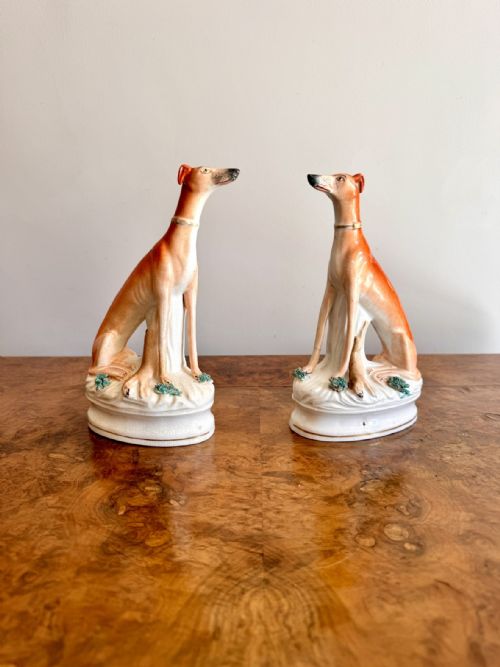
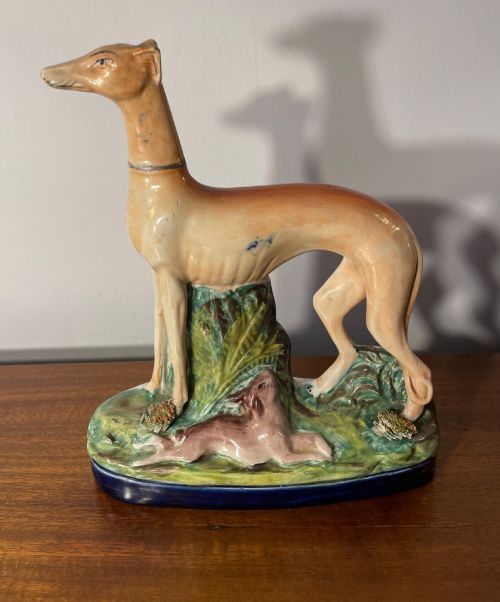
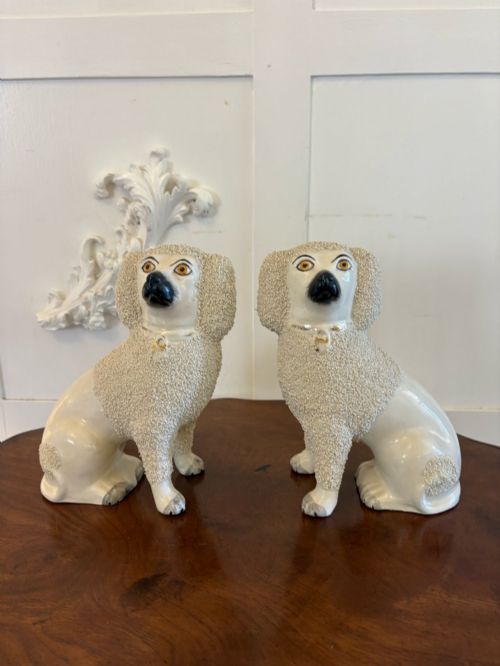
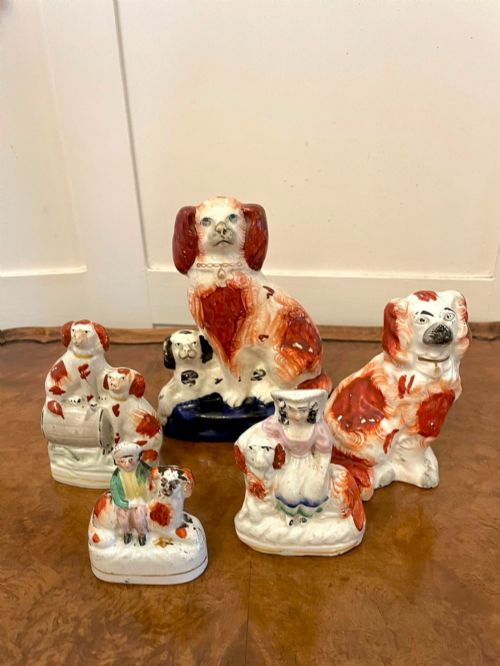
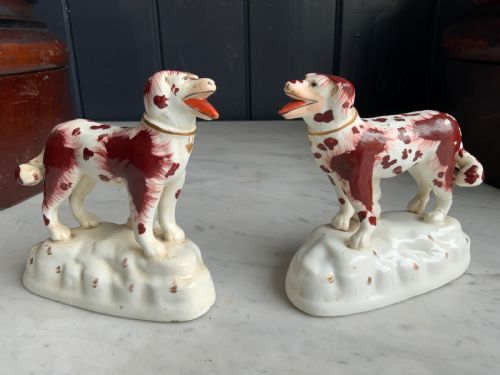
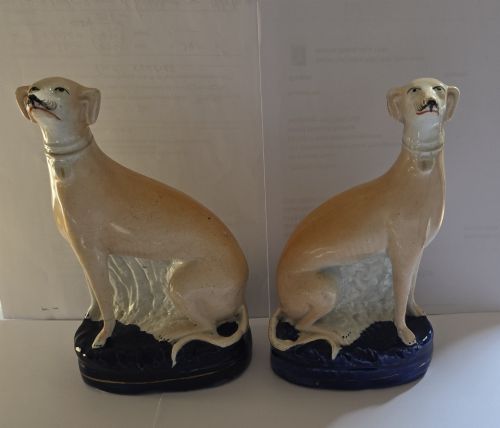
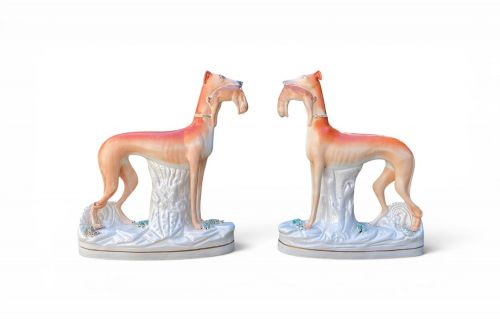
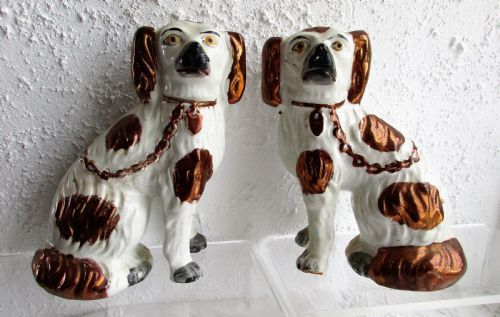
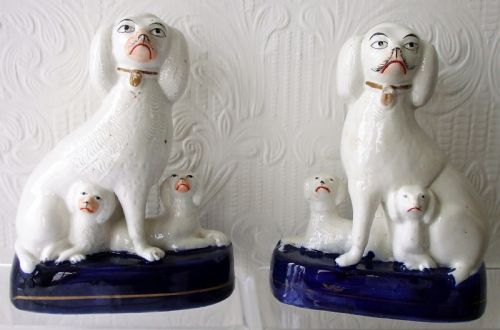
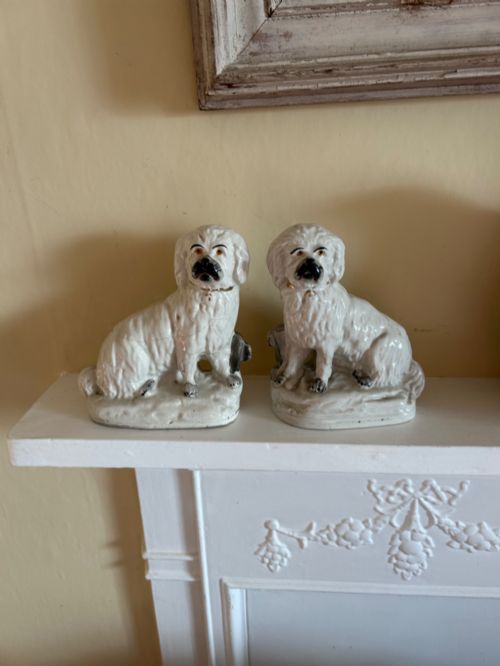
Victorian earthenware dog ornaments appear predominantly as pairs of mantelpiece figures, with spaniels, poodles, greyhounds, and whippets dominating the offerings.
The pieces span the nineteenth century, including specific dates from the eighteen-thirties through to nineteen hundred, alongside items assigned to the Victorian and Georgian periods.
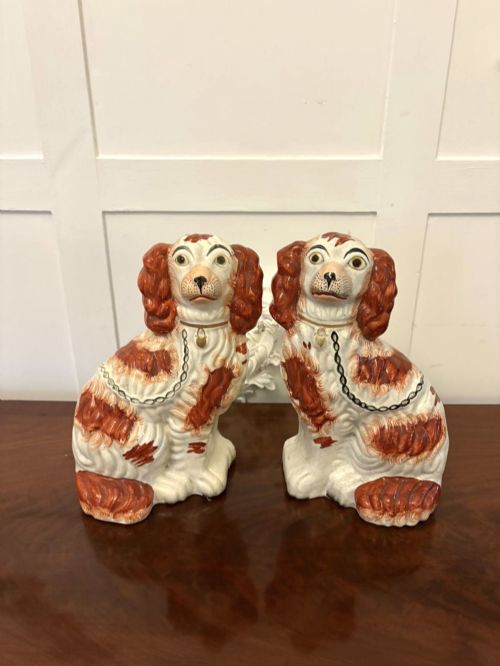
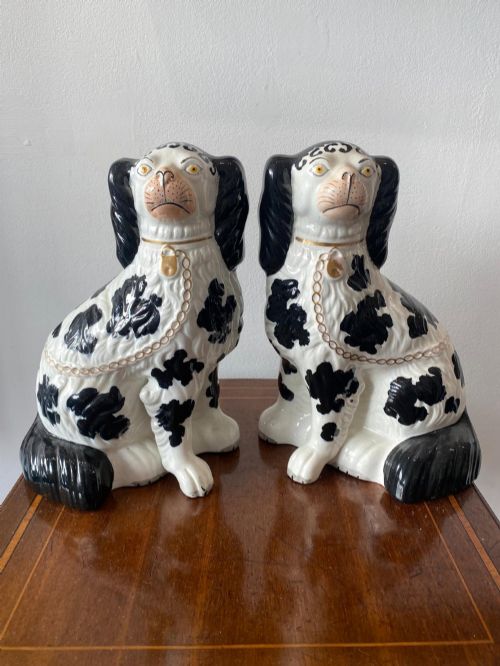
Makers shaped these pottery figures as seated dogs, comforter spaniels, and figure groups with pups, often finished with gilt or gold leaf details.
Materials and construction
Potters shaped these figures from ceramic earthenware, applying lead glaze and enamel paint to build the surface colour and sheen.
Victorian Earthenware Dog Ornaments Retail Price Guide 2026
Typical asking prices for victorian earthenware dog ornaments among the pieces listed under this phrase on Sellingantiques today, from the lower quarter to the upper quarter. They describe what is for sale here now, not the wider market.
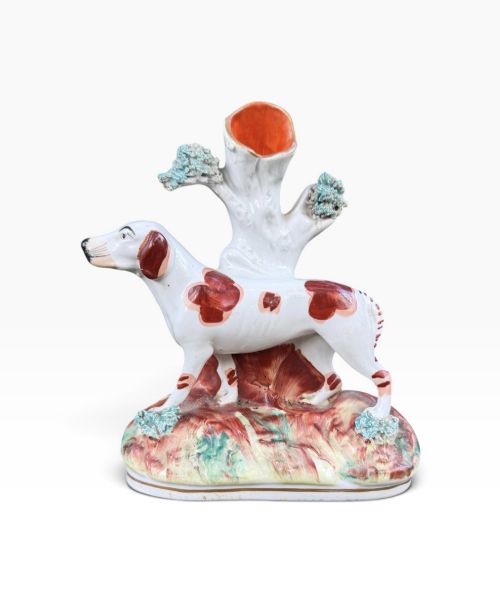
Some nineteenth-century ceramic greyhounds doubled as quill holders, ready to assist with correspondence between bouts of staring from the mantelpiece.
Distinctions in quality
The standard of modelling defines the better examples, where the sculptor captured the alert posture and attentive expression of the breed rather than a stiff silhouette.
Fine painting and crisp application of enamel and glaze preserve the facial markings and distinct coat textures across matched pairs.
Thomas Parr·Wooley
The Victorian Earthenware Dog Ornaments Glossary
- Earthenware
- Porous pottery fired at lower temperatures, serving as the primary body material for these nineteenth-century figures.
- Lead glaze
- A glossy coating containing lead oxide applied to pottery before firing to give a smooth, vitreous finish.
- Enamel paint
- Opaque vitreous colours fused to the glazed surface during a secondary low-temperature kiln firing.
- Comforter spaniel
- A popular nineteenth-century mantelpiece dog ornament modelled after the small toy spaniels kept by Victorian society.
- Gold leaf
- Extremely thin sheets of beaten gold applied to collars and lockets for decorative emphasis.
Victorian Earthenware Dog Ornaments: Frequently Asked Questions
What are victorian earthenware dog ornaments?
These ceramic figures represent various canine breeds produced across the nineteenth century for domestic display, mostly styled as decorative mantel ornaments.
Potters formed them in moulds using earthenware and decorated them with glazes and enamels.
How were these dog figures used?
Victorian households placed these ceramic dogs upon mantelpieces, often arranged in facing pairs to anchor the fireplace display.
Certain specialised forms also doubled as quill holders for desk use.
How do I identify different dog breeds?
Makers delineated breeds through distinct physical traits such as the curly coats of poodles, the long snouts of greyhounds, and the floppy ears of spaniels.
Painting and gold-accented lockets further distinguish the specific canine types.
How do I live with antique pottery dogs?
Display these glazed earthenware figures away from direct sunlight and areas prone to sudden temperature shifts to protect the enamel surfaces.
Dust them gently with a dry, soft cloth to maintain the lead glaze.