


Victorian Earthenware Dog Figurine
These Victorian earthenware dog figurine examples bring character to a mantelpiece, depicting spaniels, greyhounds, poodles and pugs moulded in clay.
Victorian Earthenware Dog Figurine
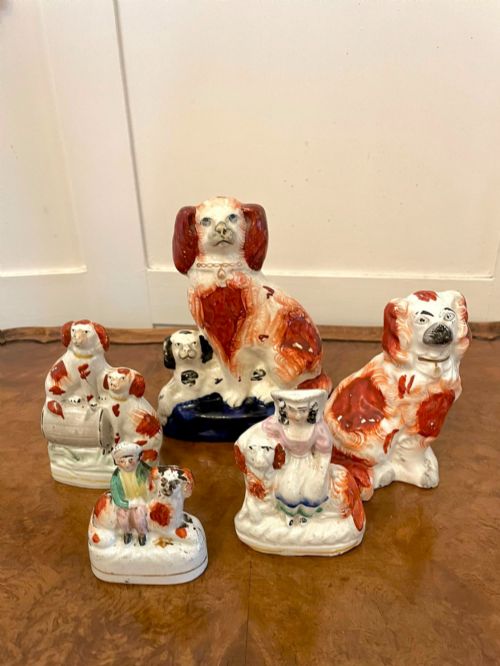
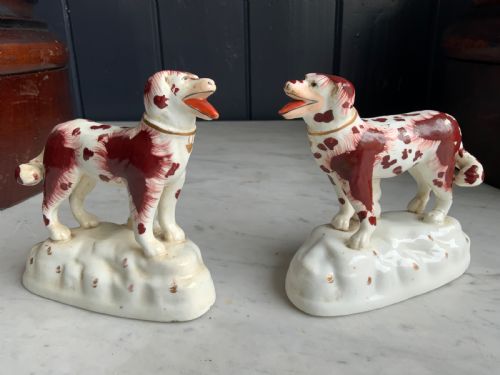
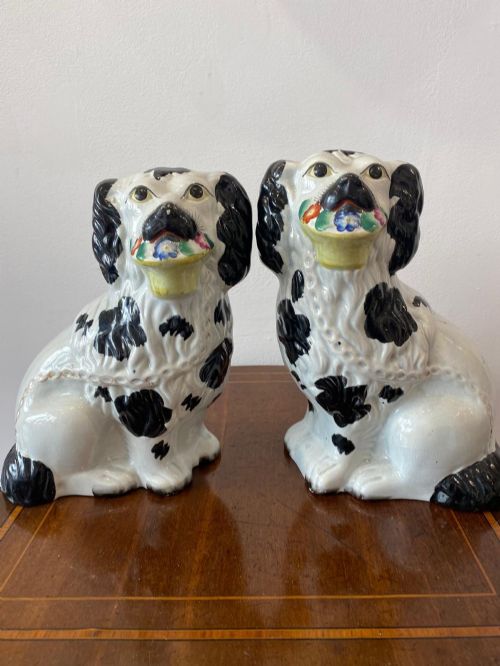
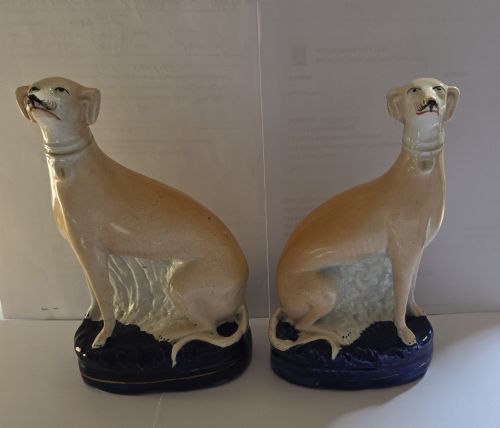
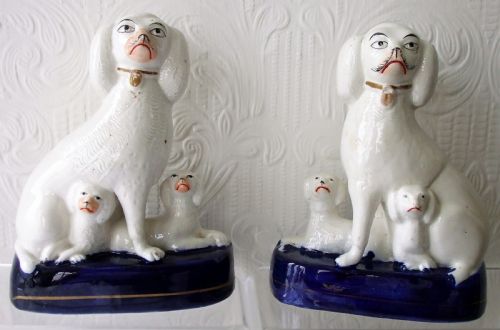
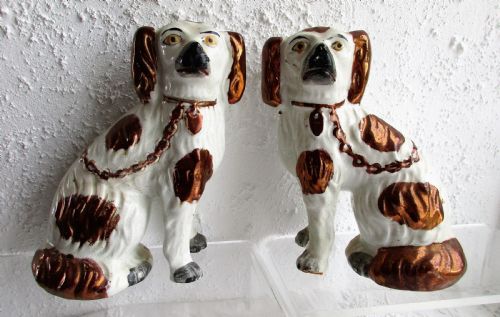
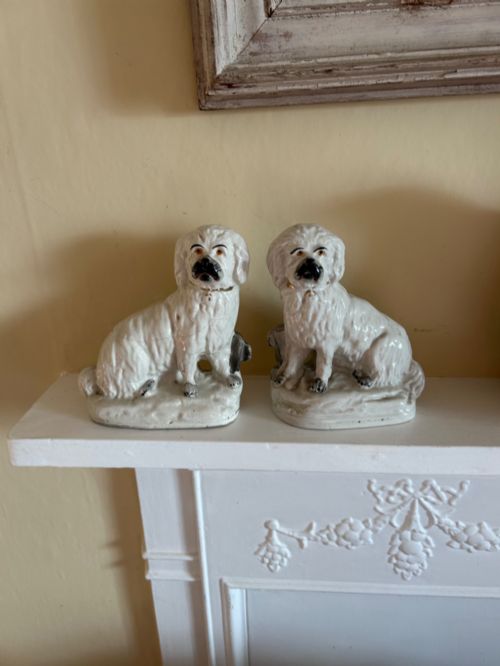
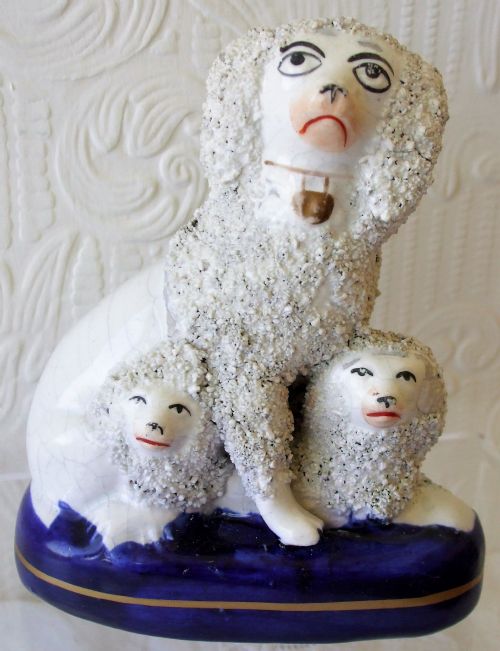
When searching for a victorian earthenware dog figurine, collectors encounter pottery animals made across the nineteenth century, most frequently appearing as pairs of seated spaniels or greyhounds. These decorative objects take the form of individual figures, pairs and figure groups depicting breeds such as poodles, pugs, dalmatians, maltese terriers and whippets. Originating primarily from English potteries, these ceramic sculptures served as ornamental garnitures on mantelpieces and sideboards in homes of the period.
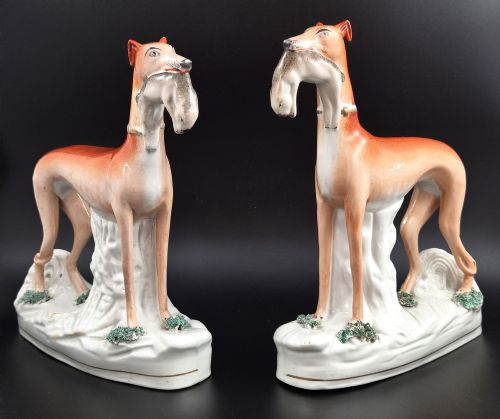
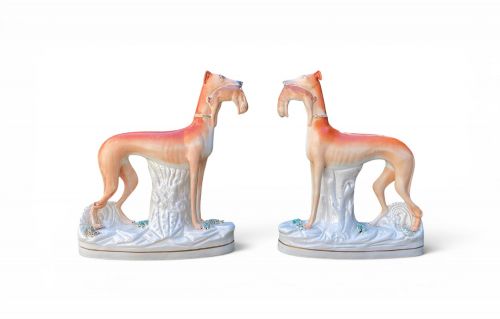
The objects span periods from the Georgian era through the Victorian decades and into the turn of the twentieth century. Forms range from standard mantel dogs to specialised pieces such as greyhound quill holders and hunting dogs accompanied by hares. The inventory includes miniature poodles alongside unusually large greyhound and spaniel figures.
How they were made
Potters shaped these figures from earthenware and ceramic bodies, utilising press moulds to form the animal shapes. Artisans applied lead glazes to seal the porous clay and provide a smooth, glossy surface finish across the pottery body.
Several greyhound figures double as quill holders, ready to assist with Victorian correspondence.
What varies in quality
Brushwork and glaze application dictate visual appeal, distinguishing carefully hand-painted enamel decoration from hurried factory output. The precision of gilt highlights and the consistency of the underlying glaze contribute to the refinement of the finished figure.
Thomas Parr·Wooley
The Victorian Earthenware Dog Figurine Glossary
- Earthenware
- A porous type of pottery fired at lower temperatures, requiring a glaze to become impermeable to liquids. This material forms the solid body of nineteenth-century Staffordshire animal figures.
- Lead glaze
- A shiny coating containing lead compounds applied to pottery before firing to create a glossy finish. This glaze gives the ceramic dogs their characteristic reflective sheen.
- Enamel paint
- Vitreous pigments applied over the fired glaze and subjected to a low second firing to bond with the surface. These paints provide the coloured markings on coats, eyes and collars.
- Gilt
- A thin layer of gold or gold leaf applied to ceramic details such as padlocks, chains and collars. This decorative addition enhances the formal appearance of Victorian mantel ornaments.
- Figurine
- A small modelled statuette representing a human or animal form. These decorative pottery objects were produced primarily for interior display.
Victorian Earthenware Dog Figurine: Frequently Asked Questions
What breeds do these figures represent?
Makers modelled a variety of popular dogs, with spaniels, greyhounds and poodles appearing most frequently in the listings. Other represented breeds include pugs, dalmatians, maltese terriers and whippets.
Pairs often depict hunting dogs or spaniels intended to sit at either end of a fireplace mantel. Certain pieces incorporate additional functional elements, such as greyhound figures designed to hold writing quills.
How are pairs matched?
Matched pairs generally face one another, designed to sit symmetrically on opposite sides of a hearth or shelf. These pairings reflect the Victorian preference for balanced interior display.
Individual figures and collections of unusual groupings also occur, alongside pairs that feature companion animals like hares alongside greyhounds.
How do I date these figures?
Dating relies on stylistic clues, manufacturing techniques and the specific type of glaze or enamel decoration used. Pieces span the Georgian era through the Victorian period and into the early twentieth century.
Marked examples or pieces attributed to specific makers like Thomas Parr provide firmer chronological reference points than unmarked decorative pottery.
Where were these figures displayed?
Victorian households placed these ceramic dogs prominently on mantelpieces, fireplace surrounds and drawing-room sideboards. They functioned purely as decorative objects to demonstrate taste and comfort in the home.
Comforter spaniels, in particular, gained popularity as fireside companions placed atop mantel shelves.