


Victorian Desk Barometer
A victorian desk barometer measures atmospheric pressure from a desk or table, combining precise scientific function with domestic craftsmanship.
Victorian Desk Barometer
When you search for a victorian desk barometer, you enter a field of scientific instruments housed for domestic interiors. These instruments range from small pocket barometers mounted on stands to larger aneroid barometers and combined desk compendiums.
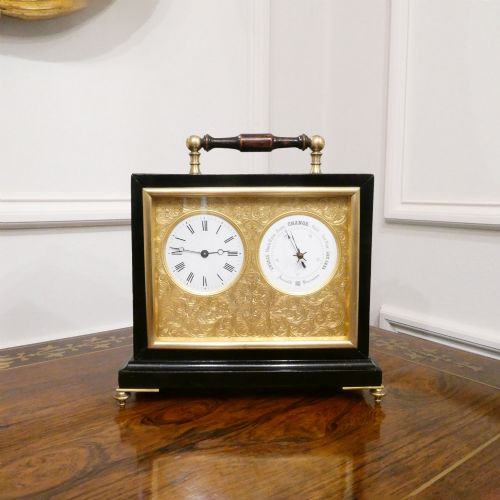
The pieces on this page span the Victorian period alongside Edwardian and late nineteenth-century examples. Formats include pocket barometers on ebonised stands, marine-style barometers, and architectural cases integrating thermometers and clocks.
Oak, mahogany, and burr walnut form the primary casework for these instruments, often accented with brass bezels and silvered or enamel dials. Makers such as Negretti & Zambra and CW Dixey appear frequently in the record.
How they were made
Cabinetmakers constructed the desktop cases using solid hardwoods such as mahogany, oak, and walnut, frequently employing turned bases or carved architectural details. Selected pieces feature inlaid woodwork in the Sheraton manner or ebonised finishes.
Instrument makers integrated brass fittings, glass crystals, and steel components to house the delicate aneroid movements. Dials typically received silvered or enamelled treatments with engraved graduations for pressure and weather reading.
Victorian Desk Barometer Retail Price Guide 2026
Typical asking prices for victorian desk barometer among the pieces listed under this phrase on Sellingantiques today, from the lower quarter to the upper quarter. They describe what is for sale here now, not the wider market.
Selected desktop weather stations squeezed barometers, thermometers, and clocks into miniature architectural pavilions for the Victorian study.
What varies in quality
Quality rests upon the precision of the movement and the reputation of the maker, with signed instruments by firms like Negretti & Zambra or CW Dixey holding particular distinction. Engraved inscriptions detailing original ownership or presentation add documentary interest to specific pieces.
The integration of the case materials dictates overall refinement, distinguishing standard production models from elaborately carved oak, burr walnut, or silver-mounted examples. Well-preserved silvered dials and original glass retain the integrity of the instrument.
GAUPP & CO HONGKONG & SINGAPORE·Robson of Newcastle·Negretti & Zambra·Callaghan & Co of London·Pillischer London·RICHARD FRERES·Lynch and Bateman·CW Dixey London·Carpenter & Westley·Naudet for V&H Doninelli of Nice
The Victorian Desk Barometer Glossary
- Aneroid barometer
- A barometer that measures atmospheric pressure by the expansion and contraction of a flexible metal box, without using liquid. This mechanical design allowed barometers to become portable and suited for desktop placement.
- Barograph
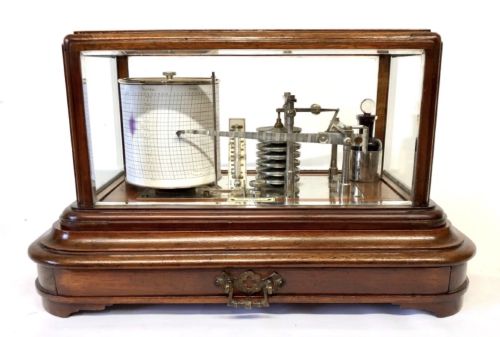
- A meteorological instrument that records barometric pressure continuously over time on a rotating drum. These mechanisms often sit inside glazed mahogany or oak cases.
- Desk compendium
- A desktop accessory combining a barometer with other instruments such as a clock, thermometer, or compass. These multifarious desk pieces suited executive and domestic writing tables.
- Silvered dial
- A brass dial treated with a silver compound to produce a matte finish for engraved numbers and weather descriptions. This finish reduces glare and aids legibility.
- Hypsometer
- A scientific instrument used to determine altitude by measuring the boiling point of a liquid. It represents the more specialised apparatus found alongside weather instruments.
Victorian Desk Barometer: Frequently Asked Questions
What is a victorian desk barometer?
A victorian desk barometer is a scientific weather instrument housed in a portable case designed to sit on a table, desk, or mantelpiece. These instruments measure changes in atmospheric pressure to help forecast local weather conditions.
Most examples utilise an aneroid movement rather than liquid mercury, making them stable enough for everyday domestic placement. They often incorporate thermometers, clocks, or compasses into the woodwork.
How do you read a desk barometer?
You read an aneroid barometer by observing the movement of the pointer against the graduated scale on the dial. A rising needle typically indicates improving weather, while a falling needle points towards unsettled conditions.
Many instruments feature a secondary manually adjustable pointer called a indicator hand. You align this marker over the current reading to track whether pressure rises or falls over the course of the day.
Where were these barometers placed?
These instruments found homes on library desks, writing tables, and hall furniture within nineteenth-century houses. Their portable nature allowed owners to move them between rooms as needed.
Some smaller pocket versions stood on ebonised or brass desk stands, while larger marine and architectural models occupied prominent positions on study surfaces.
What woods were used for the cases?
Cabinetmakers utilised dense hardwoods capable of enduring daily handling on a desk surface. Mahogany, oak, and walnut appear frequently across surviving examples.
More decorative pieces incorporated burr walnut veneers, ebonised wood finishes, or inlaid stringing in the Sheraton style. Brass and bronze mountings frequently reinforced the wooden structures.