


Antique Desktop Barometer
An antique desktop barometer records air pressure shifts with mechanical grace, making it a functional centrepiece for a study or library.

Antique Desktop Barometer
An antique desktop barometer combines scientific utility with period craftsmanship, bringing atmospheric measurement into the home or office. Buyers looking at this selection encounter various domestic and scientific instruments designed to sit on tables, desks, or mantelpieces.
The most common formats on this page include robust oak or mahogany cased barographs featuring chart drawers and bevelled glass, alongside combination desk sets and mantel clocks. These pieces originate from the Victorian, Edwardian, and later periods.
Forms range from complex barographs recording weekly pressure patterns to compact desk compendiums and specialised marine instruments adapted for interior use. Each version reflects the Victorian and Edwardian fascination with meteorological observation and precision engineering.
Materials and construction methods
Cabinetmakers housed these precision movements in sturdy timber frames, utilising rich veneers and solid cuts of mahogany, oak, walnut, and ebonised wood. Brass mounts, hinges, and bezels secure the glass components while adding structural contrast to the timber housings.
Dials and charts employ silvered metal, white enamel, and clear bevelled glass to display meteorological data legibly. Specialised makers integrated mercury tubes, aneroid capsules, and clockwork mechanisms into compact wooden cases with integrated chart drawers.
The documented periods span the Victorian and Edwardian eras, extending into the nineteen-thirties.
Distinctions in quality and execution
Superior examples separate themselves through the crispness of the maker's signature engraving on the silvered dial and the weight of the brass fittings. Fine cabinetry featuring well-figured mahogany or quarter-sawn oak distinguishes better pieces from standard utility instruments.
The presence of original bevelled glass panels, intact chart drawers, and functioning mechanical linkages elevates an instrument's standing. Finer makers invested care in precise calibration movements and substantial timber housings that maintain structural stability over decades.
Negretti & Zambra London·Short & Mason London·Depree and Young Ltd Exeter·Air Ministry
The Antique Desktop Barometer Glossary
- Barograph
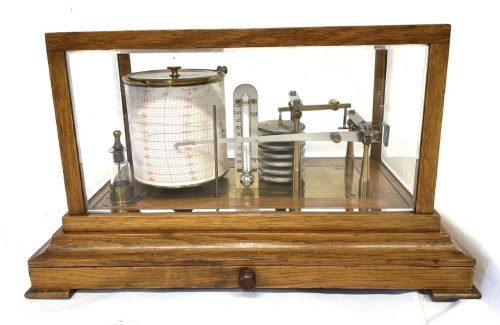
- A self-recording aneroid barometer that charts atmospheric pressure onto a revolving drum over a week. This mechanical instrument uses a stack of metal vacuum capsules to drive an inked pen across specialised paper charts.
- Aneroid barometer
- A device for measuring air pressure without liquid, using a flexible-walled metal capsule that expands or contracts with changes in barometric pressure. These movements connect via levers to a dial indicator.
- Desk compendium
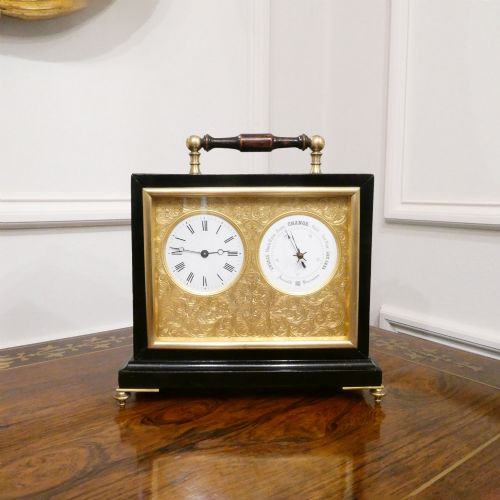
- A multi-functional desktop object incorporating a timepiece alongside meteorological instruments such as a barometer and thermometer. These combined pieces served administrative desks and officers' studies.
- Silvered metal
- A brass or copper dial plate treated with a silver compound to produce a matte, reflective surface that takes fine engraved lettering clearly. This finish characterises better scientific instrument faces.
- Beveled glass
- Glass panes shaped with an angled edge around the perimeter to catch light and fit securely into brass door frames. This detail appears on higher-grade instrument cases.
Antique Desktop Barometer: Frequently Asked Questions
What is a barograph?
A barograph is a mechanical weather instrument that continuously records atmospheric pressure on a paper chart. It uses an aneroid mechanism connected to an inked arm.
These devices rotate via a clockwork drum, providing a visual history of weather changes over a seven-day period.
How do I read an aneroid barometer?
Read the primary dial by noting where the pointer rests relative to weather descriptions like rain, change, or fair. Setting the secondary index needle over the main pointer allows you to track pressure movement.
Movement toward higher numbers indicates improving weather, while falling readings suggest incoming storms.
Where should I place a desktop barometer?
Position your instrument away from direct sunlight, radiators, and exterior doors to prevent artificial temperature swings. A stable desk, sideboard, or mantelpiece in a principal room provides an ideal environment.
Keep the piece clear of heavy vibrations that might disturb the delicate internal mechanical linkages.
How do I date these instruments?
Examine the timber casework, dial typography, and maker signatures to establish a chronological baseline. Victorian pieces often feature heavy mahogany or walnut cases, while Edwardian examples favour lighter oak or refined inlays.
Recorded styles and inscribed maker marks help narrow the manufacturing era to specific decades.