


Brass Desk Compendium
A brass desk compendium gathers the working tools of a Victorian or Edwardian writer into one handsome, fitted station.
Brass Desk Compendium
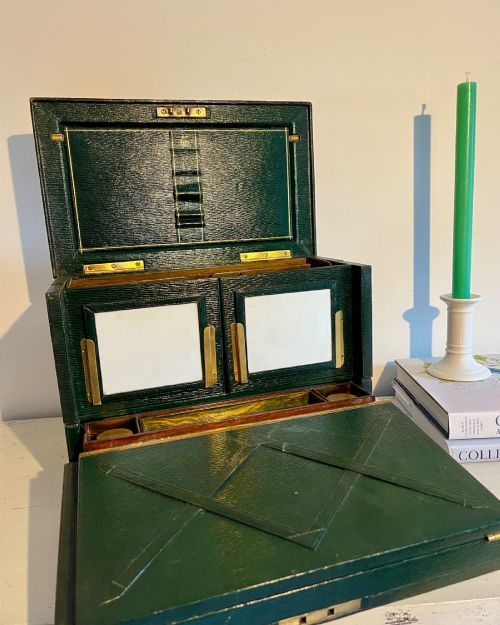
When you search for a brass desk compendium, you are looking at substantial desktop organizers and combination pieces designed to hold writing materials, timepieces, or smoking requisites. The selection typically includes stationery boxes, fall front cabinets, and desk clocks spanning the Victorian and Edwardian eras. These objects combine utilitarian storage with decorative metalwork, often housing inkwells, stamps, and calendars alongside central timepieces or thermometers.
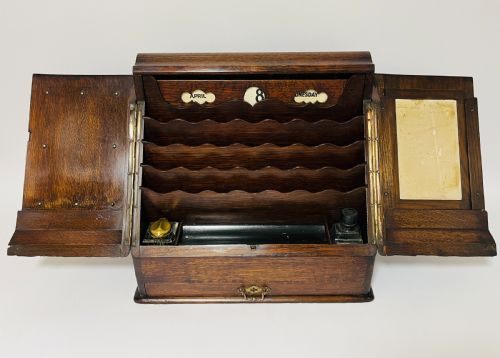
The pieces on this page appear in various timber carcases, principally oak, mahogany, burr walnut, and coromandel, heavily mounted or bound in brass. Forms range from simple sloping boxes to architectural cabinets, novelty designs such as Davy lamps, and industrial desktop accessories. They originate from the nineteenth and early twentieth centuries, reflecting the formal correspondence habits of past offices and studies.
Materials and construction
These items are constructed from dense hardwood carcases such as oak, mahogany, or walnut, which provide the structural weight necessary to support heavy metal mounts. Selected timbers are frequently quarter-sawn or veneered in burr walnut and coromandel to display rich grain patterns across the sloping fronts and fall doors.
Brass is heavily employed for strapwork, hinges, lock plates, handles, and complete structural housings, sometimes complemented by silvered bronze, porcelain panels, or inset glass. Mechanics such as drop fronts, locking mechanisms, and internal stationery dividers are fitted with precision, securing the compartments and hinged doors tightly against the timber frame.
The object forms include architectural desk clocks, gentleman's cigar cabinets, novelty Davy lamps, and drop-front stationery boxes.
Assessing quality and execution
The distinction between standard examples and the finest work lies in the ambition of the design and the precision of the metalwork. Superior pieces incorporate complex architectural housings, heavy cast bronze mounts, or intricate novelty forms rather than plain timber boxes with simple brass corners.
Internal fittings also separate the ranges, with better items offering fully appointed interiors featuring leather linings, matched inkwells, concealed secret drawers, and functioning locks with maker stamps. The integration of multiple instruments, such as combining a clock, barometer, and thermometer within a single brass framework, indicates a higher order of nineteenth-century manufacturing ambition.
Guilmet·Houghton and Gunn
The Brass Desk Compendium Glossary
- Compendium
- A multi-functional desk accessory combining several instruments or storage compartments, such as a clock, thermometer, and stationery tidy, into a single coordinated object.
- Stationery box
- A desktop cabinet or lidded box specifically partitioned to hold writing paper, envelopes, and correspondence cards upright.
- Fall front
- A hinged door or panel that drops forward to reveal interior letter slots, pen trays, and small compartments.
- Novelty desk compendium
- An accessory shaped to resemble an unrelated object, such as a miner's safety lamp or an architectural building, while functioning as a desk tidy.
- Coromandel
- A dense, heavily figured exotic timber from Asia with dark brown and black stripes, utilised for luxury nineteenth-century cabinet work.
Brass Desk Compendium: Frequently Asked Questions
What is a brass desk compendium?
A brass desk compendium is a multi-functional Victorian or Edwardian desktop accessory that houses writing materials, timepieces, or smoking requisites within a unified frame. These pieces combine fitted timber or metal housings with functional instruments for the study.
They serve as both practical organizers and decorative statements, often featuring compartments for stationery alongside integrated clocks or thermometers.
How were stationery cabinets used?
Stationery cabinets were kept on large partner desks or writing tables to store writing paper, envelopes, and correspondence accessories neatly out of sight. The fall fronts and lidded compartments kept paper clean and organised before the era of mass-produced envelopes.
In gentleman's studies, similar compendiums were adapted to hold cigars, tobacco, and matches alongside writing gear.
How do I date a desk compendium?
Dating relies on observing the timber choice, mount styles, and manufacturing techniques characteristic of periods like the Victorian and Edwardian eras. Mid-Victorian pieces often feature heavy brass strapwork and coromandel or walnut veneers, while later Edwardian examples lean toward lighter oak frames.
Maker signatures, patent stamps on locks, and the specific styling of integrated clock faces or thermometer scales also help narrow down the decade of production.
How should I care for a wooden and brass compendium?
Maintain the timber by applying a microcrystalline wax periodically to nourish the surface without building up sticky residue. Avoid placing the compendium in direct sunlight or near heat sources to prevent the wood or veneers from splitting.
Brass mounts can be cleaned gently with a dry or very slightly damp cloth, avoiding harsh chemical polishes that might strip the aged patina or damage adjacent wood and leather.