


Victorian Decorative Centrepiece
A victorian decorative centrepiece anchors a table with dramatic presence, combining the ambition of nineteenth-century design with utilitarian display.
Victorian Decorative Centrepiece
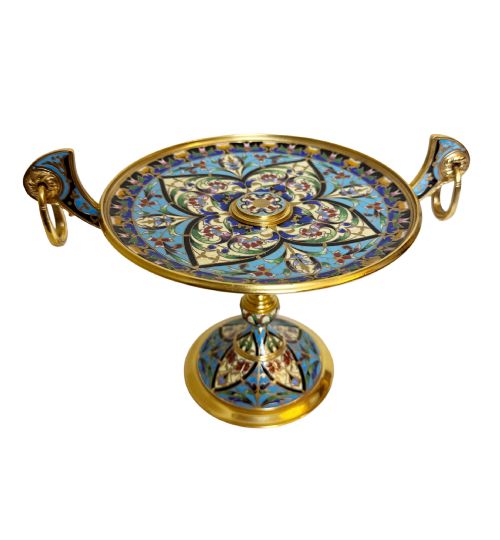
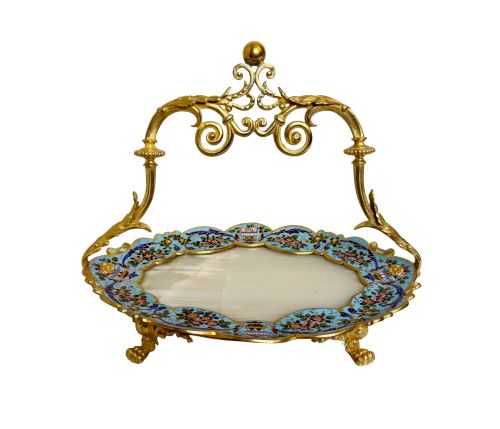
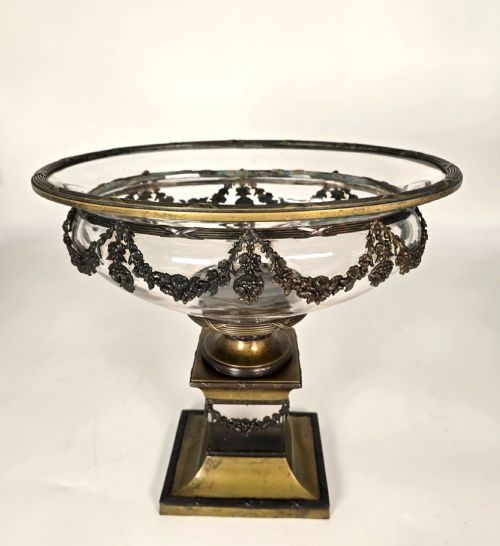
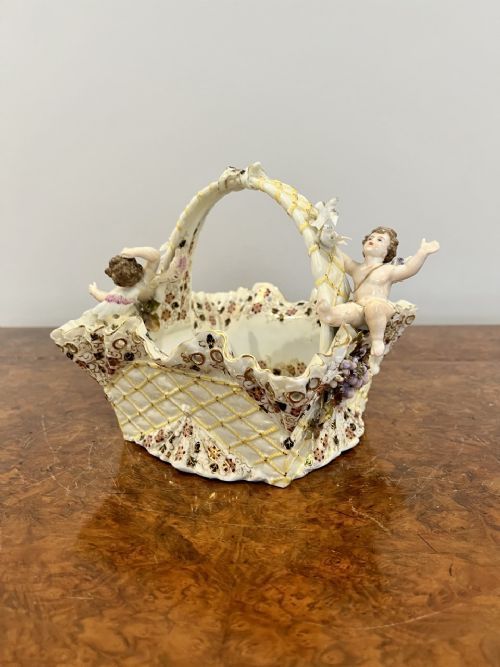
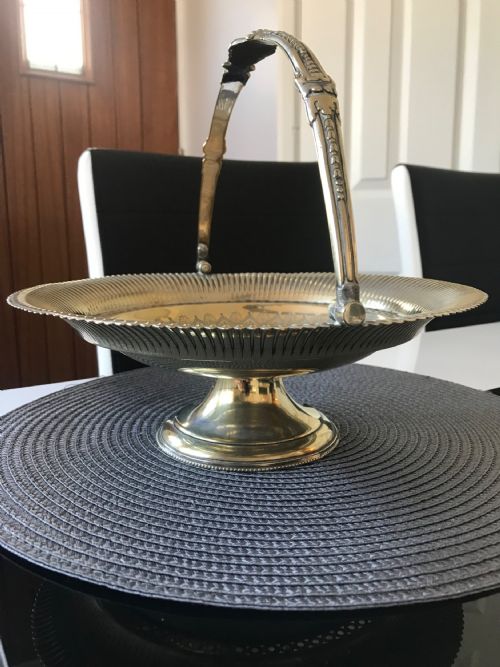
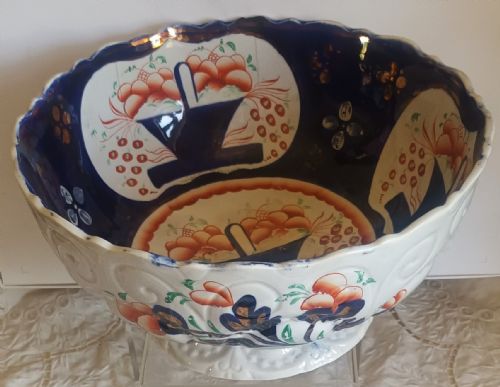
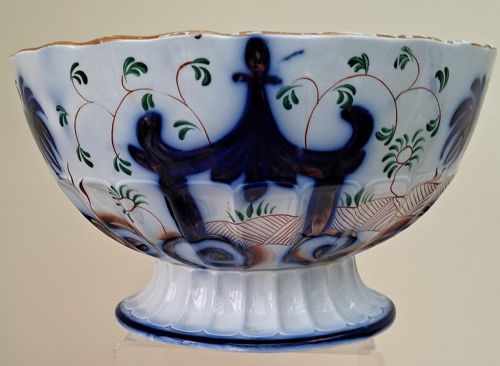
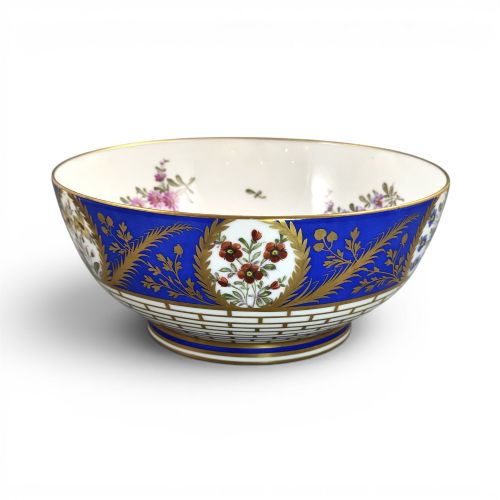
A victorian decorative centrepiece typically takes the form of a footed bowl, tazza, comport, basket, or urn designed to command the middle of a dining table or sideboard. These objects originate from British, French, and wider continental workshops spanning the nineteenth century, reflecting varied aesthetic currents from classical revival to aesthetic movement principles.
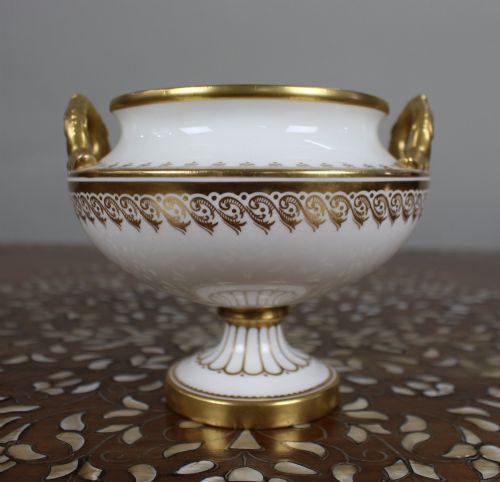
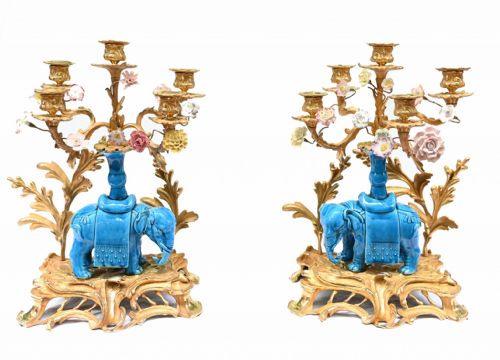
The versions most frequently encountered here include porcelain bowls, gilt bronze mounts, ceramic dishes, and silver-plated or sterling vessels often drawing on French rococo, neoclassical, or empire tastes. They range from modest pottery bowls decorated in traditional patterns to heavy bronze and enamel pedestals meant for formal display.
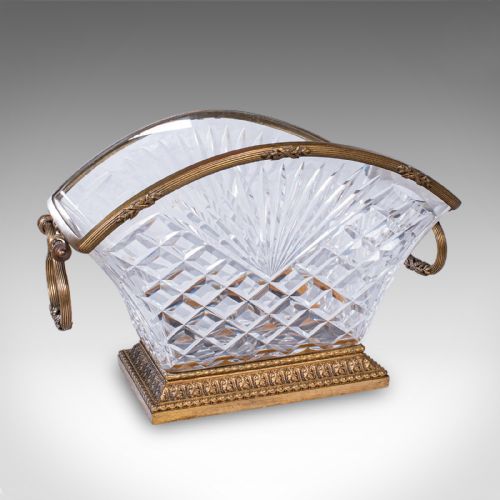
Makers and decorators utilise diverse materials to achieve visual weight, pairing glass or ceramic bodies with metal handles, rims, and bases. Whether configured as open fruit baskets, handled vases, or shallow tazzas, these pieces serve primarily to punctuate a room with scale and ornamental detail.
Materials and Technique
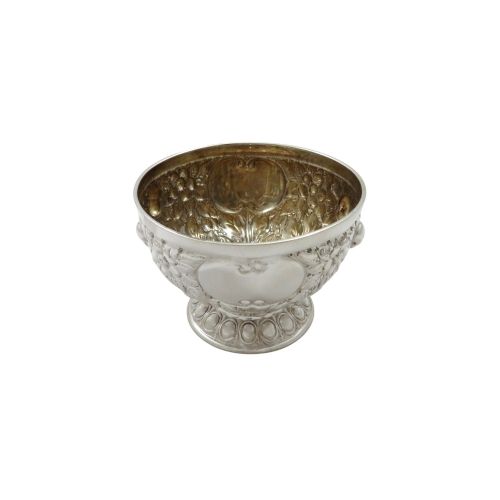
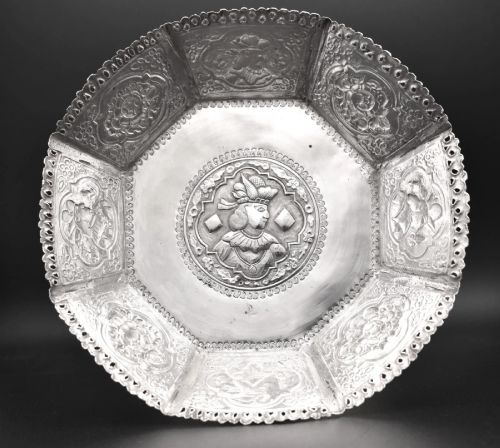
Makers construct these centrepieces using combinations of metal casting, ceramic firing, and glass blowing, frequently mounting porcelain or glass bodies in frames of ormolu, brass, or gilt bronze. Champlevé enamel work adds vibrant colour panels to metal armatures, while silver plating and repoussé techniques provide tactile surface relief on bowls and trays.
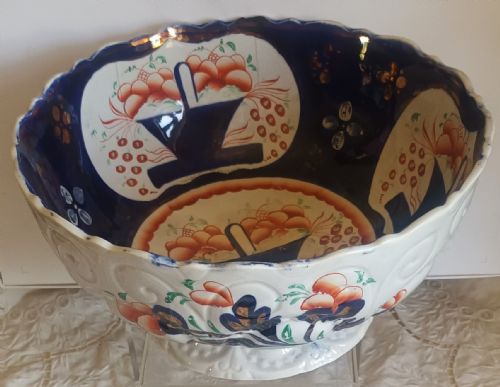
Ceramic bodies incorporate earthenware, ironstone, and porcelain, sometimes hand-painted or finished with transfer-printed patterns like gaudy welsh motifs. Glass elements appear both as heavy pedestal bowls and cut glass dishes secured by metal collars and mounts.
The assembly relies on secure structural fittings such as pins, screws, and mounts that bind mixed media objects together. Metals receive finishes ranging from mercury gilding to patinated bronze, while silver pieces display detailed engraving and chasing.
Listings feature periods from 1800 to 1920, with porcelain, brass, gilt bronze, and silver plate forming the predominant material base.
Assessing Quality
Quality reveals itself in the crispness of metal chasing, the weight and stability of the mounts, and the refinement of hand-painted or enamelled details on ceramic and glass surfaces. Superior examples demonstrate a cohesive integration between the vessel body and its metal or ceramic base.
The handling of mixed media distinguishes finer works, particularly where champlevé enamel or ormolu mounts fit seamlessly against porcelain or glass without awkward gaps or inferior alloy discoloration. Heavy gauge metals and robust construction indicate higher ambition in the workshop.
Elkington And Co·Doulton Burslem·Sevres·Meissen·Baccarat·Samson Paris
The Victorian Decorative Centrepiece Glossary
- Tazza
- A shallow ornamental bowl or cup mounted on a stem and foot, commonly utilised for serving fruit or displaying decorative items on a table.
- Comport
- A footed dish or bowl used traditionally for serving dessert, fruit, or confectionery at formal dinners.
- Ormolu
- Gilt bronze, where a finely ground high-carat gold-mercury amalgam is applied to a bronze object, producing a durable golden finish.
- Champlevé
- An enamelling technique where troughs or cells are carved into the surface of a metal object and filled with vitreous enamel before firing.
- Cairoware
- Metalware produced in nineteenth-century Egypt, typically brass inlaid with silver and copper to create intricate Islamic geometric designs.
Victorian Decorative Centrepiece: Frequently Asked Questions
What was a centrepiece used for?
These pieces served as the visual focal point for formal dining tables, often holding fruit, flowers, or sweetmeats during multi-course meals.
Beyond dining utility, they acted as status symbols that demonstrated the host's taste and means through expensive materials and elaborate craftsmanship.
How do I clean a metal and enamel bowl?
Gentle dusting with a soft, dry cloth is usually sufficient for everyday maintenance, avoiding abrasive commercial polishes that can strip delicate finishes.
Moisture should be kept away from enamel and mixed metal joints to prevent corrosion and protect the underlying structure.
How can I tell French styles apart?
French rococo revival pieces display asymmetrical scrollwork, naturalistic floral motifs, and curved lines, while neoclassical works emphasise symmetry, urn shapes, and strict geometric proportions.
Empire taste items draw on heavier Roman and Egyptian motifs, featuring bold animal forms, patinated bronze, and striking ormolu mounts.